
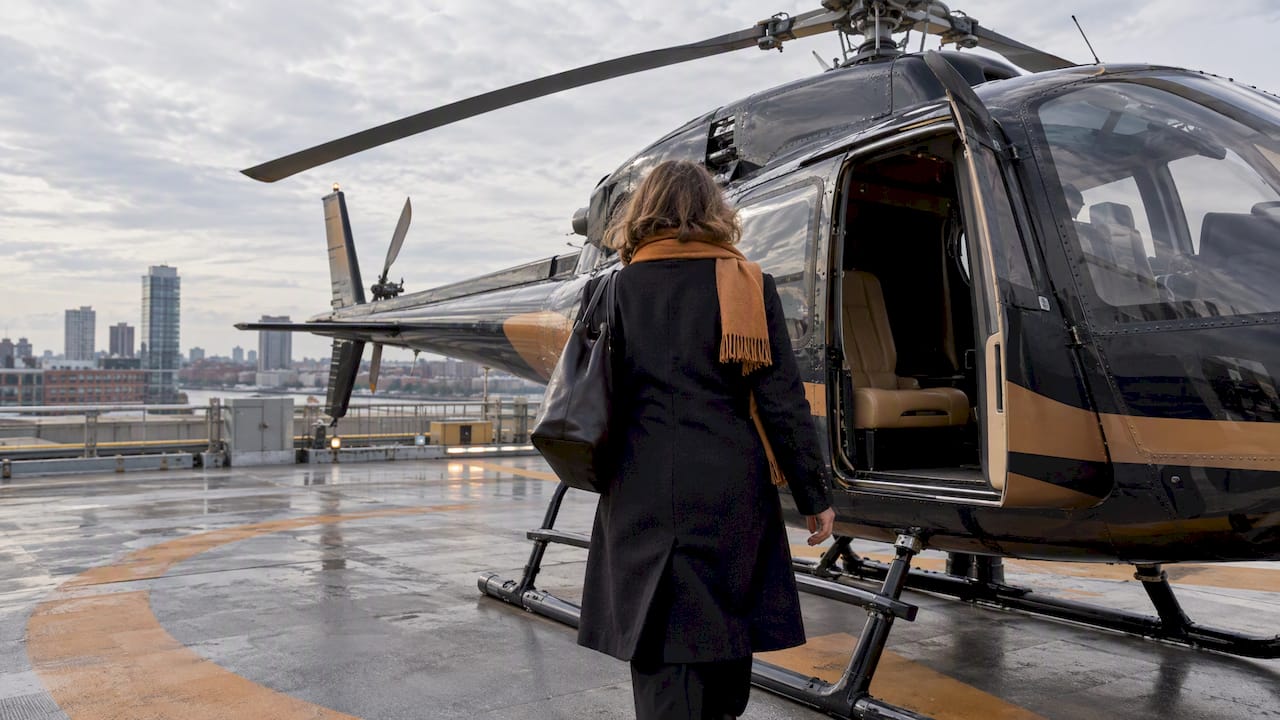
Most short airport helicopter hops run a few hundred dollars per person on a shared, seat-based flight, while a fully private charter typically costs several hundred to low thousands of dollars per flight hour depending on the aircraft. For a quick solo or small-group airport run, a shared seat usually makes the most sense; for groups, tight schedules, or custom routing, a private charter is worth the premium. Heliport fees, repositioning, and operator authorization can all shift the final quote.
TL;DR:
- Shared seats usually suit one or two travelers on short, fixed routes; compare the fare with charter costs only after adding separate heliport fees.
- A private charter can lower the per person price when three or four travelers split the hourly rate, but minimum flight time may apply.
- Repositioning flights, heliport charges, standby time, and peak demand surcharges can raise the final bill, so request a written itemized quote before booking.
- Paid shared passenger flights require FAA Part 135 certification; verify the operator’s certificate, and confirm luggage limits, weather cancellations, payment terms, and deposits in writing.
Table of Contents
- How per-person fares compare to private charter rates
- What actually drives the price of your flight
- What real routes and charter rates look like
- A checklist before you accept a quote
- Why agency-coordinated transfers remove the guesswork
- When a helicopter transfer is actually worth it
- Let us arrange your transfer as part of a bespoke trip
- FAQ
- Sources
How per-person fares compare to private charter rates
Shared, seat-based transfers work like an air shuttle: an operator sells individual seats on a scheduled or semi-scheduled flight between fixed points, such as a city heliport and a major airport. For short urban hops, published per-person fares commonly land in the low hundreds, with heliport or terminal fees sometimes billed separately at check-in.
Private charter pricing works differently. Operators quote a rate per flight hour, and that single number covers the whole aircraft regardless of how many seats you fill. Light piston helicopters tend to sit at the lower end of charter pricing, while turbine aircraft, which carry more passengers and fly faster, sit higher.
To translate an hourly rate into a per-person cost, divide the total flight-hour charge by the number of travelers sharing the aircraft, then add any repositioning or heliport fees that apply to the trip. A few things to keep in mind when comparing quotes:
- A shared seat is usually cheaper for one or two travelers making a short, fixed-route trip.
- A private charter often becomes cost-competitive per person once a group fills most of the available seats.
- Hourly charter rates can include a minimum flight time, so a short hop may still be billed at an hour or more.
- Repositioning the aircraft from its base to your pickup point can add flight time that you pay for.
Reading a quote carefully, rather than comparing a per-person fare directly against a charter’s hourly rate, is the fastest way to avoid sticker shock.
What actually drives the price of your flight
A handful of variables explain why two quotes for what looks like the same trip can differ sharply.
Aircraft type sets the baseline. A piston helicopter like a Robinson R44 or R66 generally costs less per hour to operate than a turbine twin, which carries more passengers, flies faster, and typically comes with higher insurance and maintenance costs that operators build into the hourly rate.
Flight time and distance are the core cost components, since you are essentially paying for the aircraft’s time in the air. Positioning flights, sometimes called deadhead legs, where the helicopter has to fly to your pickup point before your trip even starts, can add billable minutes you don’t see until the final invoice. Many operators also apply a minimum flight-time charge regardless of how short your actual route is.
Passenger count changes the math on a private charter: adding seats lowers the per-person cost but may force compromises on routing or timing if the aircraft has a strict weight limit. Beyond flight time, expect line items for heliport or handling fees, fuel or surge surcharges during peak demand, and pilot standby charges if your schedule requires the aircraft and crew to wait.
Operators also factor in overhead that doesn’t show up as a separate line but is baked into the rate: insurance, which can run from roughly $3,000 to $6,000 annually for small piston helicopters up to $15,000 or more for turbine corporate aircraft, plus the maintenance and recordkeeping obligations tied to commercial certification.
Pro Tip: Ask for a written breakdown of flight time, positioning charges, and fees before you confirm; a clean hourly rate with no detail usually means extras get added later.
What real routes and charter rates look like
Numbers help more than averages, so here’s how pricing typically plays out on real routes.
- A short hop from a city-center heliport to the nearest major airport often runs in the low hundreds per person, plus a heliport fee that may or may not be included in the quoted fare.
- A similar route booked as a group charter can bring the per-person cost down once three or four travelers split the hourly rate.
- Hourly charter rates for light piston aircraft commonly fall in a comparable range to the shared per-person fares once you divide by passenger count, which is why group bookings often favor charter.
It’s worth separating airport-transfer pricing from sightseeing-tour pricing. A scenic tour is priced as a fixed experience over a set number of minutes, while a transfer is priced on point-to-point flight time and distance, so the same operator can list very different numbers for what looks like a similar flight length.
A checklist before you accept a quote
Treat any quote as a draft until you’ve confirmed these details.
- Ask whether the flight operates under FAA Part 135, the certification required to sell seats on a paid passenger helicopter flight, and request the operator’s certificate number.
- Confirm exactly how flight time is calculated, including whether positioning or repositioning charges are included in the quoted rate.
- Ask how the per-passenger split works if you’re booking a shared seat, and whether that price already includes heliport or handling fees.
- Get explicit luggage and weight policies in writing, since helicopters have tighter payload limits than ground transport.
- Review the weather and cancellation policy, along with the payment schedule and any deposit required to hold your booking.
A reputable operator should answer every one of these questions without hesitation.
Why agency-coordinated transfers remove the guesswork
Booking a helicopter transfer on your own means verifying certification, cross-checking heliport logistics, and managing timing between flights, often under time pressure. An agency-coordinated approach confirms that an operator holds proper authorization before a booking is confirmed, aligns pickup timing with your inbound or outbound flight, and arranges the ground handling details that make the difference between a smooth connection and a missed one.
For travelers who want more than transportation, that coordination can include a VIP meet-and-greet, luggage handling from curb to cabin, and lounge access where it’s available. The added coordination earns its keep most clearly on complex itineraries: multi-segment trips, time-sensitive event arrivals, or group transfers where several moving pieces have to line up on the same clock.

When a helicopter transfer is actually worth it
Helicopter transfers earn their cost on time-critical itineraries, multi-leg connections, or small groups splitting a charter. If you’re traveling light with flexible timing, ground transport is usually the smarter call. Rule of thumb: pay for the helicopter when the time saved is worth more than the fare difference.
— Michael
Let us arrange your transfer as part of a bespoke trip
Comparing hourly rates and per-person fares is useful groundwork, but the part that actually protects your trip is verification: confirming an operator’s authorization, matching timing to your flights, and handling the logistics so nothing falls through between your hotel and the tarmac. That coordination is where we come in.

We source FAA-authorized operators and build the transfer into your broader itinerary planning, so pickup timing, luggage handling, and ground connections are set before you land. Working with us means you gain:
- Confirmed operator credentials before you ever see a quote.
- Door-to-door coordination between your helicopter leg and the rest of your trip.
- VIP pickup, luggage handling, and security logistics managed on your behalf.
If you’re weighing a helicopter transfer against other premium options, our guide to luxury transfer services breaks down the alternatives, and travelers flying longer distances may also want to compare private jet charter costs. Reach out through Hiddendoortravel to request a transfer quote and have your full itinerary coordinated around it.
FAQ
How much does helicopter insurance cost?
Annual premiums typically range from roughly $3,000 to $6,000 for small piston helicopters up to $15,000 to $50,000 or more for turbine corporate aircraft. Hull value, pilot experience, and intended use all affect where an individual aircraft lands in that range, and underwriting criteria tied to hull value shape the final premium.
How much does a private helicopter cost?
Pricing depends on whether you mean purchasing an aircraft or chartering one by the hour. For charter purposes, hourly rates for light piston helicopters commonly start in the four figures and rise significantly for turbine aircraft, with the total also affected by positioning and minimum flight-time charges.
What is the average cost for a helicopter ride?
A short shared-seat airport transfer typically costs a few hundred dollars per person, while a private charter is quoted as an hourly flight rate that, when divided among passengers, can vary widely. The right comparison depends on whether you’re booking an individual seat or chartering the whole aircraft.
How much to fly a helicopter for 1 hour?
Expect hourly private charter rates that vary by aircraft type, with turbine helicopters priced well above light piston models. Confirm whether that rate includes positioning time, since many operators bill a minimum flight duration regardless of actual trip length.
Sources
- FAA – Part 135 operating rules (commuter and on-demand operations)
- Helicopter insurance cost — Travers Aviation
- Helicopter insurance — Alexander Aviation