

Luxury spa retreat planning is the process of selecting a high-end wellness experience that combines destination choice, facility evaluation, wellness programming, and exclusive offerings for genuine rejuvenation. Unlike a single spa visit, a retreat is defined by duration, structure, and measurable outcomes. The industry standard separates retreats from day spas by minimum stay length: retreats require at least 2 nights, with the most effective programs running 5–14 nights to allow meaningful nervous system regulation. Hiddendoortravel has spent years placing clients in the world’s finest wellness properties, and the difference between a forgettable spa day and a life-changing retreat almost always comes down to planning quality.
How do you choose the right type of luxury spa retreat for your goals?
The three core luxury spa retreat types are destination spas, resort spas, and hybrid models. Each serves a different traveler profile, and choosing the wrong one is the most common planning mistake.
Destination spas are fully immersive. Every element of the property, from meals to daily schedules, centers on wellness. Guests follow structured programs with little room for deviation. This model works best for people who need external accountability to disconnect from work and daily habits.
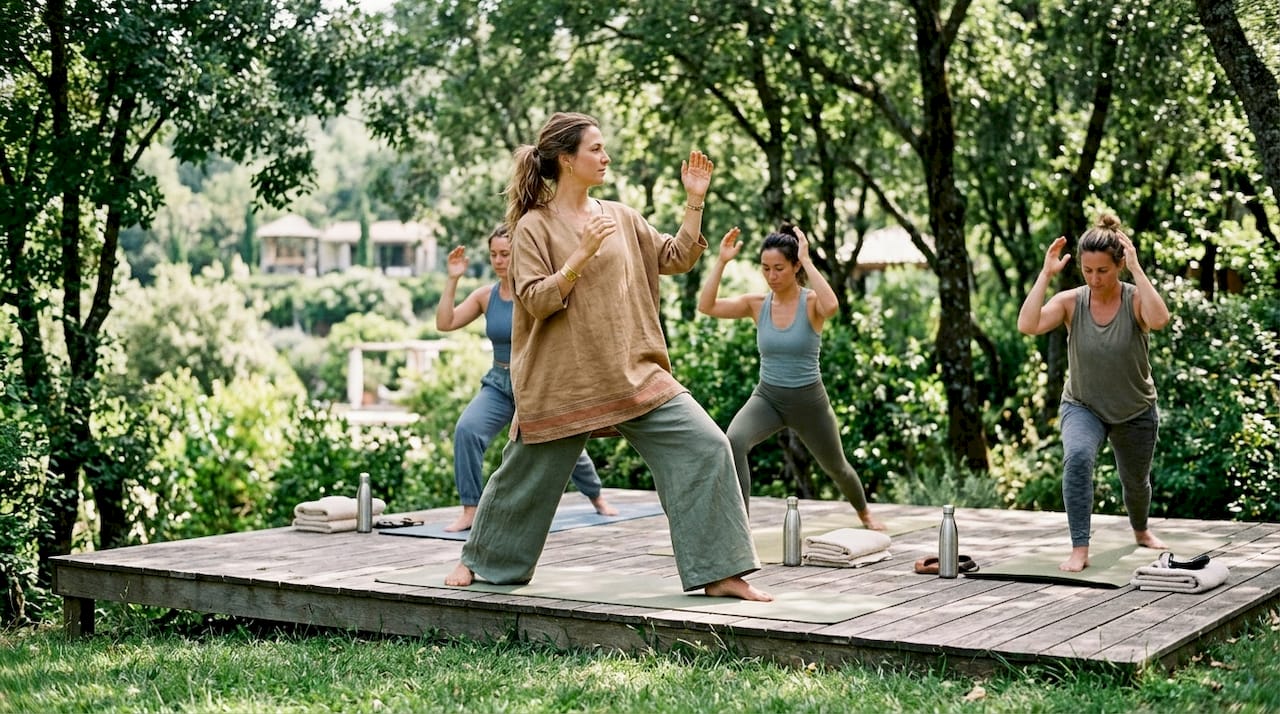
Resort spas sit inside broader hotel properties. The spa is one amenity among many, including restaurants, pools, and excursions. Guests book treatments à la carte and build their own schedule. This model suits travelers who want wellness as part of a wider vacation rather than the entire focus.
Hybrid models blend both approaches. A typical hybrid offers stays starting at 3 nights with around 140 minutes of daily therapy included, or shorter resort-style stays with roughly 80 minutes of treatment per night. Hybrids give you structure without sacrificing flexibility.
- Destination spa: Best for deep reset, accountability, and structured behavioral change
- Resort spa: Best for relaxation within a broader luxury vacation
- Hybrid model: Best for travelers who want guided wellness without a rigid daily schedule
- Private villa with spa services: Best for complete privacy and fully customized programming
Pro Tip: If you have never done a multi-day retreat before, start with a hybrid model. You get the structure of a program without the intensity of a full destination spa commitment.
The right choice depends on one question: do you need the property to hold you accountable, or do you need the freedom to self-direct? Answering that honestly before you book saves significant money and disappointment.
What amenities and spa facility standards should you look for?
Facility quality in a luxury spa is measurable, not subjective. World-class hotel spas include at least five thermal elements: a Finnish sauna, steam room, hammam or bio sauna, cold plunge pool, and jacuzzi or warm immersion pool. These five elements form the foundation of contrast therapy, which drives circulation, reduces cortisol, and accelerates muscle recovery. A property missing two or more of these is not operating at a five-star spa standard, regardless of how it markets itself.
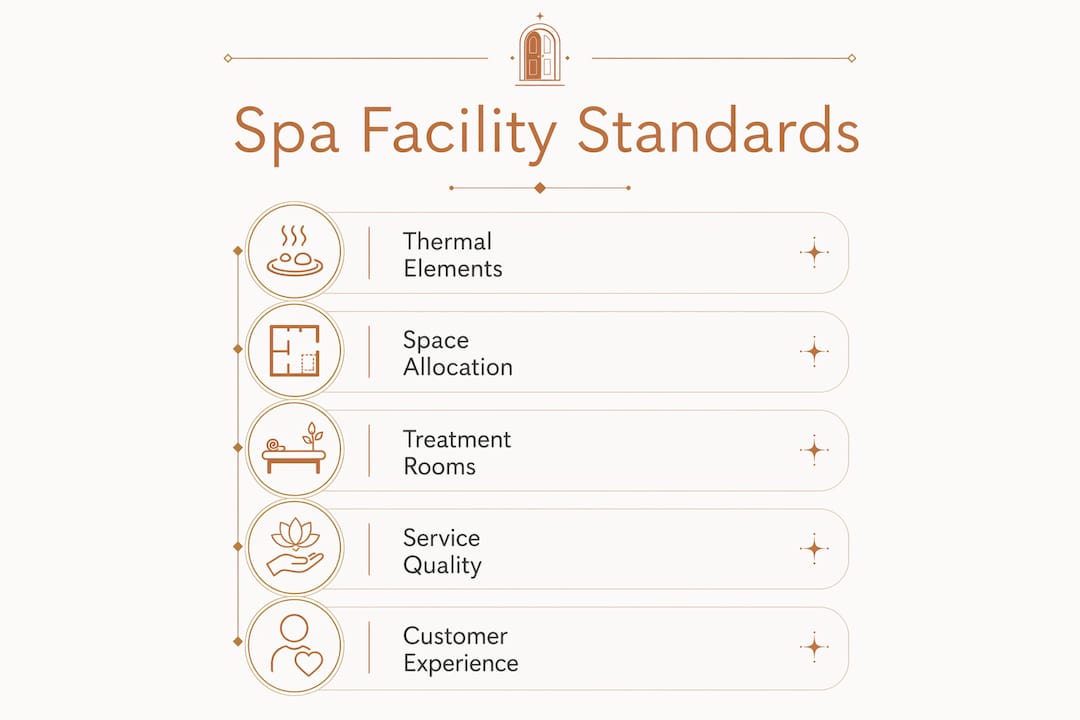
Space allocation is equally telling. The industry standard for five-star resorts is 1.5–2.2 square meters of spa area per guest room, with one treatment room for every 25–35 hotel rooms. These ratios prevent overcrowding and preserve the exclusivity that justifies a luxury price point. A spa that feels rushed or crowded has almost certainly violated these benchmarks.
| Facility Standard | Five-Star Benchmark |
|---|---|
| Thermal elements | Minimum 5 (sauna, steam, hammam, cold plunge, jacuzzi) |
| Spa area per guest room | 1.5–2.2 m² |
| Treatment rooms per hotel rooms | 1 per 25–35 rooms |
| Minimum retreat stay | 2 nights (5–14 nights for full effect) |
Beyond the numbers, look at how the spa flows. A well-designed facility moves guests from wet areas to treatment rooms to relaxation lounges without crossing paths with staff service corridors. That separation is a design detail that separates genuinely elite properties from those that simply look the part in photographs.
Pro Tip: Ask the property directly for its treatment room count and total spa square footage before booking. A confident, specific answer signals operational maturity. Vague answers signal the opposite.
The role of customer service in a luxury spa context goes beyond friendliness. It includes how staff anticipate needs, manage transitions between experiences, and personalize each guest’s time in the facility.
How should you evaluate wellness programs and exclusive experiences?
The difference between a spa menu and a wellness program is structure. A spa menu lists treatments you pick from. A wellness program assigns a sequence of therapies, nutrition guidance, movement sessions, and rest periods based on your intake assessment. For a luxury wellness getaway to produce lasting results, the program must be built around your specific goals, not a generic template.
The science behind duration matters here. The nervous system requires at least 48 hours to downregulate before wellness programming can take meaningful effect. A one-day retreat cannot deliver behavioral change. It can deliver relaxation, but that is a different outcome. Multi-day programs are the only format that creates the physiological conditions for lasting results.
When evaluating exclusive experiences, look for these markers of genuine quality:
- Personalized intake consultation: A qualified practitioner assesses your health history, stress levels, and goals before designing your program
- Sequenced thermal and treatment protocols: Therapies are ordered deliberately, not randomly scheduled around availability
- Curated movement and mindfulness sessions: Yoga, breathwork, or guided meditation integrated into the daily schedule, not offered as optional add-ons
- Nutritional alignment: Meals designed to support the specific therapies you are receiving, not just “healthy food”
- Post-retreat guidance: A written plan for continuing wellness practices at home, which separates serious programs from luxury theater
A typical high-quality retreat day runs from a morning movement session through breakfast, a mid-morning treatment, a guided rest period, lunch, an afternoon therapy, and an evening wind-down practice. That sequencing is deliberate. Disrupting it with unrelated excursions or late-night dining undermines the program’s effectiveness.
Hiddendoortravel specifically vets properties on whether their programs are genuinely sequenced or simply a collection of bookable treatments dressed up as a retreat. The distinction is not always visible from a property’s website.
What are the best practices for planning a high-end spa retreat?
Effective high-end spa planning follows a clear sequence. Skipping steps creates gaps that show up as disappointment on arrival.
- Define your primary goal first. Stress reduction, physical recovery, sleep improvement, and digital detox each point toward different retreat types and program structures. Clarity here drives every subsequent decision.
- Set a minimum stay of 5 nights. Three nights is the absolute floor for any meaningful program. Five to seven nights is where most guests report genuine transformation. Anything shorter functions as an expensive spa visit, not a retreat.
- Research facility standards before aesthetics. Photographs sell properties. Thermal element counts and treatment room ratios reveal operational reality. Check both before shortlisting a property.
- Build your itinerary around the program, not around activities. Excursions, dining experiences, and local exploration belong in the margins of a retreat schedule, not at its center. Overloading a retreat itinerary is the single most common mistake Hiddendoortravel sees from first-time retreat planners.
- Confirm the intake process. A property that does not conduct a health and goals assessment before your arrival is not running a program. It is running a spa with a marketing rebrand.
- Plan arrival and departure days as buffer days. Arriving the evening before your program starts and leaving the morning after it ends protects the integrity of the experience. Travel stress on program days erodes results.
- Coordinate lodging and culinary experiences as part of the retreat design. Nutrition is not separate from wellness. Properties that integrate gastronomy into their programming deliver measurably better guest outcomes.
For travelers considering multi-destination wellness trips, the same principles apply at each stop. Consistency in program quality across locations requires advance vetting at every property, not just the primary one.
Key Takeaways
Effective luxury spa retreat planning requires matching retreat type to personal goals, verifying facility standards, and choosing programs built on sequenced therapy rather than à la carte menus.
| Point | Details |
|---|---|
| Retreat type selection | Choose destination, resort, or hybrid based on whether you need accountability or flexibility. |
| Facility standards matter | Look for five thermal elements and the 1.5–2.2 m² spa area per guest room benchmark. |
| Duration is non-negotiable | The nervous system needs at least 48 hours to downregulate; plan for 5–7 nights minimum. |
| Program structure over menu | Sequenced wellness programs produce lasting results; à la carte spa menus do not. |
| Intake assessment signals quality | A property that skips a pre-arrival health consultation is not running a true retreat program. |
What I have learned from placing clients in the world’s best spa retreats
The most common misconception I encounter is that luxury equals transformation. It does not. A $2,000-per-night property with a beautiful spa and no coherent program structure will leave you rested but unchanged. The properties that actually deliver on the promise of a retreat are the ones that have done the hard operational work behind the scenes.
Spa feasibility and operational flow are not glamorous topics, but they determine whether a property can consistently deliver what it promises. Failed spas almost always ignored these fundamentals during design. The ones that last 10 or 20 years built their layouts around staff efficiency and guest flow, not just visual impact.
I also think the industry undersells duration. Clients regularly push back on a 7-night recommendation, asking whether 3 nights would be sufficient. The honest answer is no, not for any goal beyond basic relaxation. The 48-hour nervous system threshold is not marketing language. It is physiology. You cannot rush it with a more expensive property or a more intensive treatment schedule.
The retreats that clients remember years later share one quality: the program was designed around them specifically, not around the property’s operational convenience. That level of personalization requires advance planning, direct communication with the property, and often a knowledgeable intermediary who knows which properties actually deliver on that promise versus which ones simply claim to.
— Michael
How Hiddendoortravel supports your spa retreat planning
Planning a private spa vacation at this level involves more variables than most travelers expect. Property vetting, program alignment, itinerary sequencing, and pre-arrival coordination all require direct relationships with the right properties.
Hiddendoortravel works with a curated network of luxury spa properties across the world’s best wellness destinations. Every recommendation is based on direct knowledge of the property’s operational standards, not marketing materials. The team handles intake coordination, itinerary design, and on-trip support so your focus stays on the experience itself. If you are ready to plan a retreat that delivers real results, the luxury travel experts at Hiddendoortravel are the right starting point.
FAQ
What is the minimum stay for a luxury spa retreat?
Retreats require at least 2 nights to qualify as a true retreat, but 5–7 nights is the standard for meaningful wellness outcomes. Single-day experiences cannot produce lasting behavioral change.
What are the five thermal elements in a world-class spa?
The five standard thermal elements are a Finnish sauna, steam room, hammam or bio sauna, cold plunge pool, and jacuzzi or warm immersion pool. A five-star spa facility includes all five.
How do destination spas differ from resort spas?
A destination spa centers the entire property around wellness programming with structured daily schedules. A resort spa is one amenity within a broader hotel, with treatments booked à la carte.
How much spa space should a luxury property have per guest room?
The five-star benchmark is 1.5–2.2 square meters of spa area per guest room, with one treatment room for every 25–35 hotel rooms. Properties below these ratios risk overcrowding and reduced exclusivity.
Why should I use a travel agency for spa retreat planning?
A specialist agency like Hiddendoortravel has direct relationships with vetted properties and can confirm operational standards, program quality, and personalization capacity before you book. That knowledge is not available from a property’s website alone.