
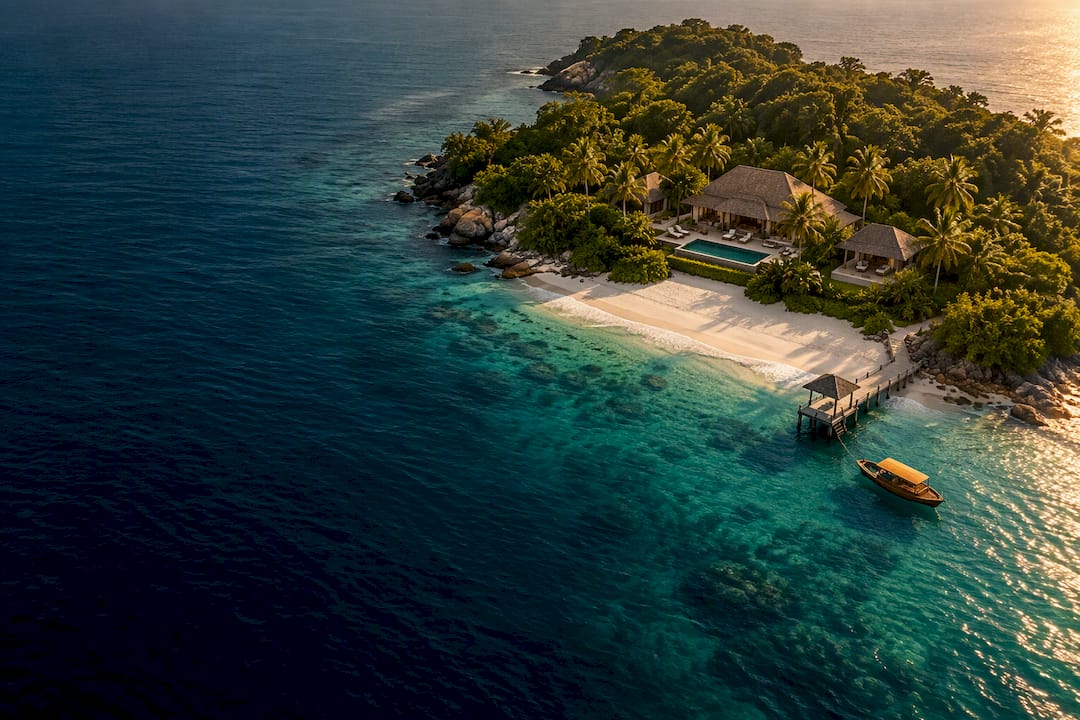
Private island rentals typically range widely in price, from very affordable options for simple off-grid listings to much higher rates for fully staffed luxury buyouts. The number on the listing page is rarely the number on your final invoice: staff, meals, transfers, and local fees usually add a meaningful chunk on top. Seasonality and minimum-stay rules push peak-date pricing even higher, so the base rate is a starting point, not a budget.
TL;DR:
- Budget private islands can cost as little as $200 to $300 per night, typically offering self-catered cabins with minimal staff and basic amenities.
- Additional expenses for transfers, activities, gratuities, taxes, and service charges often add significantly to the initial quote and can increase total costs by thousands.
- Seasonal peaks and major events may require minimum stays of a week or more, and booking early improves chances of securing lower rates during off-peak times.
- Itemized quotes are essential, as comparing flat nightly rates can be misleading without clarity on included services and additional fees.
- Engaging a specialized travel agency can help negotiate inclusions, coordinate logistics, and ensure transparency, especially for complex or high-end buyouts.
Table of Contents
- Private island rental cost bands and what they actually buy
- What’s included in the quote and what gets added later
- How to estimate your total trip budget
- Where to book a private island and how the process works
- When timing changes the price you pay
- What to confirm before you sign a rental agreement
- When renting an island actually justifies the price
- How Hidden Door Travel can help you book with confidence
- Sources
- FAQ
Private island rental cost bands and what they actually buy
Pricing on private islands splits into rough tiers, and knowing which one you’re shopping in saves you from comparing incompatible listings. A travel-cost explainer notes there’s no single average because pricing spans inexpensive off-grid listings all the way through trophy islands renting for tens of thousands per night.
At the budget end, a MarketWatch feature documented an island rentable for around $200 to $300 a night in certain markets, and InsideHook has cataloged similar Airbnb and VRBO listings that prove private-island stays exist across a genuinely wide price spectrum, not just at the top.
- Budget tier: Simple cabins or lodges on small islands, often self-catered, with minimal staff and basic amenities.
- Mid-range tier: A staffed house or villa on a private island with meal service included but activities and transfers billed separately.
- Luxury tier: A fully staffed island with a chef, housekeeping, and curated excursions bundled into a higher nightly rate.
- Ultra-luxury tier: Full-island buyouts with private security, multiple villas, and concierge-level service for large groups or events.
Group size changes the math more than most travelers expect. A villa priced at a flat nightly rate for eight guests becomes a bargain per person for a full house, but the same island booked for a wedding buyout often adds incremental staff and inventory fees as guest counts rise. Two travelers renting a luxury island built for twelve will pay a steep per-person premium compared to a group that fills every bed.
What’s included in the quote and what gets added later
A quoted nightly rate almost never covers the full trip. Base rates typically include the accommodation itself, basic housekeeping, and sometimes a caretaker or minimal staff presence. Everything else tends to appear as a line item once you request a formal proposal.
Commonly excluded costs include meals and provisioning, premium staff gratuities, boat or seaplane transfers, activity charters like diving or fishing excursions, and local permit fees where the island sits within a protected marine area. Mandatory service charges and local taxes usually show up as a percentage added near the bottom of the invoice rather than folded into the nightly figure, so a quote that looks suspiciously clean is worth a second look.
- Staff and gratuities: Chef, housekeeping, and boat crew wages are sometimes included, but gratuities almost always are not.
- Transfers and logistics: Boat, seaplane, or helicopter transport from the mainland is frequently billed separately and can rival the nightly rate on remote islands.
- Activities and charters: Snorkeling trips, fishing excursions, and private chef upgrades are usually priced per activity or per day.
- Taxes and service charges: Local government taxes and a property service charge, often 10 to 20% combined, typically appear as separate invoice lines.
Pro Tip: Ask for an itemized quote before you compare properties. Two islands with identical nightly rates can differ by thousands once staff, transfers, and taxes are added.
How to estimate your total trip budget
Building a realistic number takes a few extra steps beyond multiplying nights by the listed rate.
- Start with the base rate. Multiply the nightly or weekly price by your planned length of stay.
- Add mandatory fees. Include service charges, local taxes, and any listed cleaning or resort fee.
- Add transfers and logistics. Boat, seaplane, or private charter costs, plus visa or entry fees if the island sits in another country.
- Add activities and provisioning. Estimate meals, excursions, and any premium staff requests separately from the base rate.
- Build in a contingency. Set aside roughly 15 to 20% for last-minute charters, weather delays, or added staff.
Say a small getaway books a mid-range island at $3,000 a night for four nights, a base of $12,000.
A larger buyout for a milestone event might book a luxury island at $15,000 a night for seven nights, a base of $105,000. Layer in staff gratuities, activity charters, and taxes and the total can climb past $130,000, which works out closer to $6,500 per person across a twenty-guest event once transfers and provisioning are folded in.

Where to book a private island and how the process works
Three main channels handle private island rentals, and each shifts the balance of price, service, and risk. Specialty brokers and bespoke travel agencies work directly with property owners and can negotiate bundled services. Vacation-rental platforms like Airbnb and VRBO list smaller private islands directly, often at lower price points but with less negotiating room. Direct booking through an island’s own operator sits somewhere between the two, depending on how established the property is.
- Inquiry and quote: Contact the owner, agent, or platform listing and request a fully itemized proposal, not just a nightly rate.
- Contract review: Confirm what’s included, cancellation terms, and any minimum-stay requirement before signing.
- Deposit and logistics: Expect a deposit to hold your dates, then plan transfers, visas, and any required charters separately.
- Insurance: Ask whether trip or event insurance is available or required, particularly for remote islands with limited access during weather events.
A bespoke planner adds the most value on complex bookings: multi-vendor events, destination weddings, or trips requiring coordinated air and boat transfers. Our guide to private archipelago access breaks down how listing types differ from full-service agency bookings.
When timing changes the price you pay

Private island pricing moves with the calendar more than most luxury accommodations. Peak seasons, holidays, and major event windows inflate nightly rates and often trigger stricter minimum-stay rules, sometimes requiring a full week or more during high demand periods.
Repeat tenants frequently hold first-refusal rights on the same island for the same peak dates year after year, which can shrink the availability window for new bookers even when a listing appears open months in advance.
- Book off-peak when possible. Shoulder-season stays often carry lower nightly rates and shorter minimum-stay requirements.
- Stay flexible on dates. A three-day shift in your travel window can open availability that peak-date bookers have already locked.
- Plan your booking window early. Popular islands during holiday weeks or festival dates are often reserved a year or more ahead by returning guests.
What to confirm before you sign a rental agreement
A private island contract carries more moving parts than a standard vacation rental, and a few questions upfront prevent expensive surprises later.
- Confirm the scope of staff services. Ask exactly which roles are included, chef, housekeeping, boat crew, and which are add-ons.
- Review cancellation and force majeure terms. Remote islands face weather disruptions more often than mainland properties, so know your refund rights.
- Check the deposit schedule. Ask when payments are due and whether the deposit is refundable under any circumstances.
- Ask about insurance. Confirm whether the property requires proof of travel insurance or offers a policy as an add-on.
- Get every inclusion in writing. Verbal assurances about meals or activities mean little without a written line item.
Negotiation levers exist even at the luxury end: flexible dates, multi-night discounts, and bundled activity packages are often available if you ask before signing rather than after.
Pro Tip: Request the cancellation policy in writing before you pay a deposit. Verbal flexibility promised during a call rarely survives a dispute.
When renting an island actually justifies the price
A private island earns its premium for milestone events, weddings, anniversaries, or reunions where privacy and full control of the property matter more than convenience. Groups with security concerns or guests who simply want zero shared space also get real value from a full buyout.
For a couple’s getaway or a smaller group without a specific privacy need, a high-end resort or villa often delivers comparable comfort with far less logistics risk, no charter transfers, no staffing coordination, and far more flexibility if plans change.
— Michael
How Hidden Door Travel can help you book with confidence
Booking a private island without hidden fees or logistics gaps takes someone who’s negotiated these contracts before. A specialized travel agency can assist with itemized quotes, vendor negotiations on staff and transfers, insurance options, and provide on-trip support if plans change after arrival.

- Quote review: We help clients compare base rates against actual inclusions to understand the real total before commitment.
- Vendor negotiation: We assist in negotiating staff, transfers, and activity costs as bundled packages rather than separate add-ons.
- Logistics and insurance: Coordination of transfers, permits, and insurance options is provided to ensure comprehensive coverage from booking through arrival.
If you’re weighing a private island against other luxury options, request a tailored quote through our Customized All Inclusive Experiences page and we’ll build the real numbers around your dates and guest list.
Sources
Matching a quoted rate to what a property actually delivers takes direct knowledge of the destination, not just a listing page. Hidden Door Travel brings over 20 years of industry experience to aligning rate expectations with real service standards on high-value buyouts, where a mismatch between price and inclusions is most costly.
Our team works from extensive destination knowledge and industry experience to identify gaps a public listing won’t show, such as missing transfer costs or unclear staffing arrangements. Readers can see how this plays out in practice in our breakdown of why luxury travel costs more and our look at remote luxury destination examples.
- 10 Private Islands You Can Rent on Airbnb and VRBO
- How much does a private island cost? Complete guide
- How to rent a gorgeous private island for $200 a night
FAQ
How much did Johnny Depp pay for his island?
Specific purchase or rental prices for that property are not publicly documented in verified sources. Reported figures for celebrity-owned islands vary widely across outlets and are rarely confirmed by an official record, so treat any specific number with caution.
What is the cheapest private island I can find?
Listings on platforms like Airbnb and VRBO have offered private islands for as low as $200 to $300 a night in certain markets. These budget options are typically simpler, self-catered properties without the staff or amenities found at luxury tiers.
What’s the cheapest island to live on?
Living costs on remote islands depend heavily on local infrastructure, import costs, and property type, and no single verified figure applies across markets. This question is better answered by relocation-specific research than by rental pricing data, since renting and living costs follow very different rules.
Is it possible to rent a private island?
Yes, private islands are rented through specialty brokers, bespoke travel agencies, and platforms like Airbnb and VRBO, with options across a wide price spectrum. Availability and minimum-stay rules vary by property and season, so booking well ahead of peak dates improves your odds.
Does a travel agency cost more than booking direct?
Hidden Door Travel charges service fees for trip planning and may earn commissions from suppliers, which is detailed on our services page. For complex, high-value bookings, that fee often offsets the cost of hidden fees or logistics mistakes a direct booking can miss.