
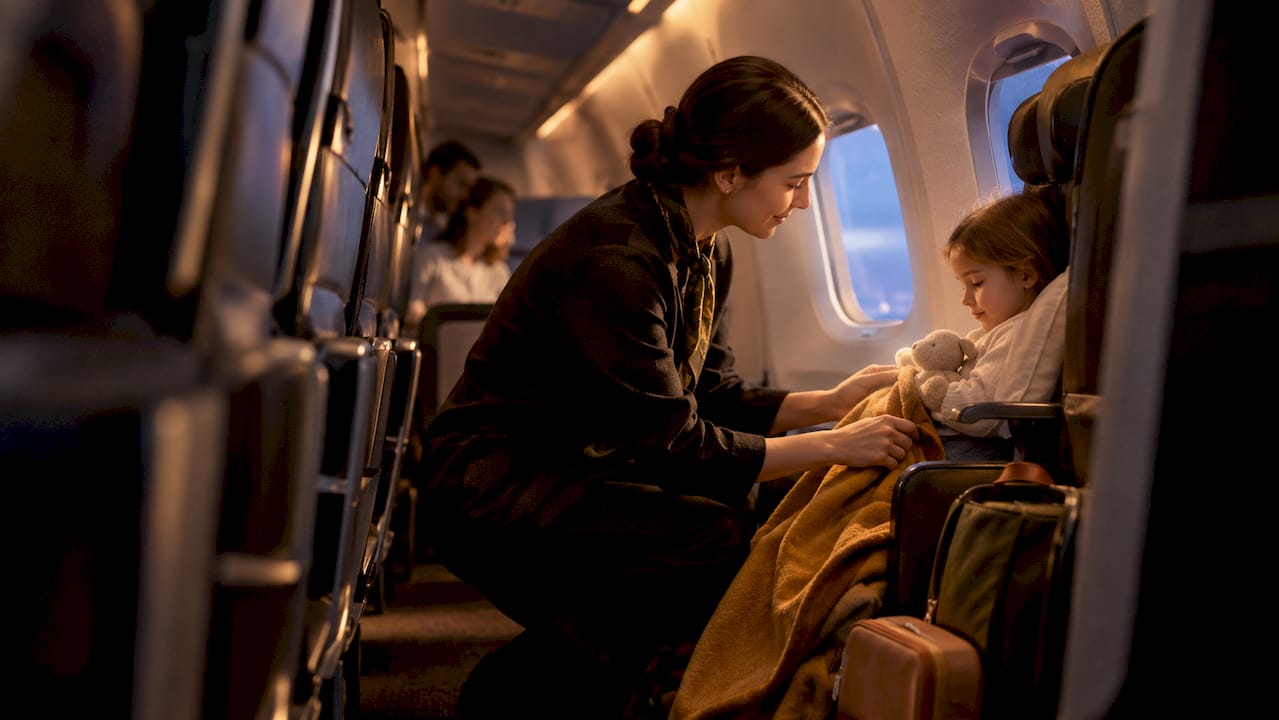
Bringing a nanny on a family trip works well for many households, especially with young kids or a packed schedule, but the law treats it as a work trip, not a favor. Under the Fair Labor Standards Act, you must pay for hours worked, including much of the travel itself. Agree on the schedule, cover trip expenses, and put the terms in writing before you leave.
TL;DR:
- Nannies must be paid for all hours worked during travel, including transit and on-duty periods, with overtime required after 40 hours per week.
- Travel stipends, usually between $50 and $200 per day, should be agreed upon separately from wages to compensate for being away from home.
- Covering expenses such as airfare, ground transportation, private lodging, meals, and attraction fees is necessary to treat the trip as a work-related responsibility.
- Clear, written schedules specifying duty hours, boundaries, and overnight care expectations help prevent conflicts and protect both parties’ rights.
- For international trips or complicated itineraries, hiring a professional travel planner can streamline visa processes, accommodations, and risk management, saving significant time and effort.
Table of Contents
- Deciding whether to bring the nanny along
- Pay, hours, and legal essentials under the FLSA
- Practical compensation models and example calculations
- Which travel expenses and accommodations you should cover
- Schedule, boundaries, and protecting downtime during the trip
- Travel-day and packing tactics to reduce stress
- International and destination-specific matters to check early
- When to hire a travel planner for nanny logistics
- A planner’s take on traveling with household help
- Hidden Door Travel: for families who’d rather not manage it all themselves
- Sources
- FAQ
Deciding whether to bring the nanny along
A nanny earns her keep on trips where the childcare load is heavy or constant. Infants and toddlers who need naps, feedings, and close supervision rarely mesh well with sightseeing or wedding logistics, and multiple kids at different ages make solo parenting on vacation exhausting fast. Long stays, destination weddings, and trips built around adult events (a business conference, a friend’s wedding, a milestone celebration) also tend to justify the extra hand.
Other trips call for leaving the nanny home. A three-day weekend where grandparents are already coming, a trip built around adult-only time, or simply a nanny who would rather not travel are all good reasons to skip it. Some families also want full privacy on vacation and prefer hiring locally instead.
If you decide to ask, treat it as a real proposal, not an assumption. Give as much notice as possible, ideally several weeks, since a nanny may need to arrange her own affairs before committing to travel.
- Share a rough agenda: destination, dates, and what a typical day looks like.
- Sketch her role clearly: is she solely responsible for the kids, or assisting alongside you?
- Ask directly whether she wants to go, and make it easy to decline without awkwardness.
- Discuss pay and expenses early so nothing feels sprung on her later.
Once she agrees in principle, move straight into the details that protect both sides: pay, hours, and the written agreement that ties it together.
Pay, hours, and legal essentials under the FLSA
The starting point for any nanny travel arrangement is federal wage law. Under the Fair Labor Standards Act, nannies must be paid for all hours worked, and travel during normal working hours counts as work, as does any time she is responsible for the children during transit. Hours over 40 in a workweek require overtime pay at time and a half.
The federal minimum wage is $7.25 an hour as of 2026, and FLSA rules require overtime pay when hours cross that 40-hour threshold, a baseline every travel pay plan should sit above.
Travel time itself gets nuanced treatment. The Department of Labor’s FAQ on the Domestic Service Final Rule explains that travel away from home is its own category: travel that falls within the nanny’s normal workday counts as work time, while travel outside her usual hours, such as an overnight flight where she is simply a passenger, may not count as work unless she is actively on duty caring for the children during that stretch. A long-haul flight where she is managing toddlers the whole way is different from one where the kids sleep and she is free to do the same.

Live-in arrangements carry a separate wrinkle. Fact Sheet #79B allows employers to exclude bona fide sleep and meal periods from paid hours, but only if those periods are genuinely uninterrupted. The guidance sets five consecutive hours of sleep as the benchmark. If the nanny gets less than that, or her sleep is broken up by a crying baby or a scared kid wandering in, the entire sleep period becomes compensable work time, not just the interruption itself.
Recordkeeping ties all of this together. Track hours daily during the trip rather than trying to reconstruct them afterward, since disputes over pay almost always trace back to fuzzy time logs. Also check your state’s rules before you finalize a number: many states set minimum wage and overtime thresholds above the federal floor, and where state and federal rules differ, the nanny is generally owed whichever standard pays her more.
Practical compensation models and example calculations
Families tend to settle on one of a few structures, each suited to a different kind of trip.
- Hourly plus overtime: pay her normal rate for regular hours and time and a half past 40 in the workweek, the most literal application of FLSA rules and a good fit for trips with predictable daily schedules.
- Guaranteed daily rate: agree on a flat day rate that covers a set number of hours, with overtime kicking in if the day runs long, useful for busy multi-activity trips where hours vary.
- Daily travel stipend on top of wages: a separate add-on, often reported in the $50 to $200 a day range according to one family’s account of travel-nanny arrangements, meant to compensate for the inconvenience of being away from home rather than to replace her wage.
- Overnight or on-call fee: a flat rate for nights she’s responsible for the kids even if she isn’t actively working every hour, separate from the sleep-time rules above.
Some families combine a guaranteed hourly wage with overtime for hours past 40, a pattern reported among families who travel with nannies regularly.
A couple of quick examples show how this plays out. Say a nanny works 10 hours a day on a weekend ski trip, Friday through Sunday: that’s 30 hours, under the 40-hour overtime threshold, so straight pay applies for all of it. Now say a one-week beach trip has her working 9 hours a day for 7 days, 63 hours total: the first 40 hours get her regular rate, and the remaining 23 hours are paid at time and a half, on top of whatever stipend or per diem you’ve agreed to separately.
Approve hours the same day they’re worked, ideally with a quick end-of-day sign-off between you and the nanny on a shared note or spreadsheet.
Pro Tip: Keep a simple shared log, even a notes app works, where the nanny writes her start and end time each day; review and initial it together before bed.
Which travel expenses and accommodations you should cover
Treating this as a work trip means covering the costs that come with the job, not just the wage for it.
- Airfare, checked baggage, and any seat upgrades needed to manage kids in transit.
- Ground transport: rideshares, rental cars, or transfers she needs to do her job.
- Lodging, ideally a private room rather than a shared one.
- Meals or a daily food per diem, especially on days she’s on duty through mealtimes.
- Entry fees for any attraction she attends while working, such as a theme park or museum.
- Passport renewal or visa costs tied specifically to the trip.
Private or adjoining rooms are the standard recommendation across staffing-agency guidance on nanny travel, and for good reason: a nanny sharing a room with the kids she’s also caring for gets no real break, even during hours she’s technically off. If budget forces a shared space, at minimum discuss it with her directly rather than assuming she’s fine with it. The same goes for meals: decide upfront whether she’ll eat with the family, on her own schedule, or some mix, so there’s no ambiguity once you’re on the ground.
Confirm her insurance coverage before departure too. Check whether her health coverage extends to travel, especially internationally, and make sure emergency contacts and any medical needs are documented somewhere accessible to both of you. If you’re headed somewhere remote, travel insurance built for complex trips is worth a look for the whole party, nanny included.
Schedule, boundaries, and protecting downtime during the trip
A written schedule prevents the single most common source of tension on nanny trips: nobody agreeing in advance what counts as work.
- Define “on duty” hours explicitly (say, 7 a.m. to 7 p.m.) and write them into a travel addendum alongside “off duty” hours where she’s free to explore or rest.
- Map out a typical paid day: wake-up and breakfast duty, activity supervision, nap or quiet time, dinner, and bedtime routine, with total hours tallied so both sides know what a normal day costs.
- Handle overnight care as its own line item, separate from the sleep-time rules under federal live-in worker guidance: if she’s expected to respond to a wakeful toddler at 2 a.m., that interrupts her sleep period and becomes paid time.
- Build in a full day off after the trip ends, before she’s expected back at her normal routine, since travel days rarely feel like rest even when technically off duty.
A shared schedule document, even a simple shared note, keeps both sides working from the same plan. A short nightly check-in, five minutes over coffee or tea, catches small misunderstandings before they become bigger ones.
Travel-day and packing tactics to reduce stress
Travel days are where plans fall apart if nobody’s assigned clear jobs. Sort out documents, meds, chargers, and entertainment well before the morning of departure.
- Pack a dedicated travel bag for each child with snacks, a change of clothes, medication, and a couple of screen-free entertainment options for the wait times.
- Assign roles clearly: who handles check-in and boarding passes, who manages the stroller and car seat, who keeps eyes on the kids at the gate.
- Confirm ahead of time who does the handoff at security or during a layover, so nobody assumes the other person has it covered.
- Log start time the moment the nanny takes over childcare duties, even if that’s before the flight, and note any delays that stretch the paid day longer than planned.
- Build a few minutes of actual rest into the nanny’s day, a coffee, a quiet seat away from the gate, since long travel days without any break lead to burnout fast.
A packing checklist built for complicated trips can help you avoid the last-minute scramble that turns a travel day into a stressful one for everyone involved.
International and destination-specific matters to check early
International trips add layers that domestic travel doesn’t. Some countries require a formal work visa or specific employment documentation for domestic staff, and reporting on international nanny travel notes that these requirements can create lead times stretching months, not weeks. Start that process as early as you can once international travel is even a possibility.
Hotels and villas vary widely in how they handle staff. Some properties require you to declare a nanny at check-in, others restrict staff to separate quarters, and a few simply don’t have private rooms available at all. Confirm the property’s policy directly before booking rather than assuming.

Local language and customs also shape what the role looks like day to day. A nanny navigating a country where she doesn’t speak the language may need more support from you, not less, and destinations with different cultural norms around childcare can change what’s expected of her in public spaces.
Pro Tip: When visa timelines or local staff rules get complicated, hiring a travel nanny through a local agency at the destination is often faster and simpler than bringing your own.
When to hire a travel planner for nanny logistics
Some trips are complicated enough that managing visas, insurance, and staff-friendly lodging yourself becomes its own job. A travel planner can coordinate visa assistance, source private rooms or staff-friendly villas, arrange private transfers, and set up medevac and risk-management coverage for families headed somewhere remote or medically complex.
That kind of support tends to earn its cost on multi-destination itineraries, trips to countries with unfamiliar visa categories for domestic staff, or any trip where a family member has a medical condition that makes a fast evacuation plan non-negotiable. Experienced travel planners bring years of expertise booking bespoke trips and direct relationships with destination partners, the kind of groundwork that shortens the runway on a complicated booking.
A planner’s take on traveling with household help
Treating a nanny’s trip as a real job, not a bonus vacation, is what keeps these arrangements from souring. Families who skip the conversation about hours and pay almost always end up renegotiating mid-trip, usually at the worst possible moment. A written addendum, even a short one, settles most disagreements before they start.
The families who get this right ask questions early and pay fairly without being asked twice. That’s not complicated. It’s just respect, made specific.
— Michael
Hidden Door Travel: for families who’d rather not manage it all themselves
Some parents want to handle every detail of a nanny’s travel arrangement themselves, and plenty do it well. Others would rather hand the logistics to someone who does this daily. Hidden Door Travel plans customized all-inclusive experiences for families juggling childcare, visas, and complicated itineraries at once.

- Visa support for staff traveling internationally, started early enough to avoid delays.
- Guidance on travel insurance and medevac coverage for remote or high-risk destinations.
- Sourcing hotels and villas with private staff rooms already confirmed.
- Concierge coordination for transfers, activities, and the small logistics that eat up planning time.
This isn’t a replacement for doing your own homework on pay and hours, it’s an option for the parts that eat the most time. See how Hidden Door Travel works with families planning their next trip.
Sources
This article draws on the Department of Labor’s fact sheet on hours worked, its live-in worker guidance, and its Domestic Service Final Rule FAQ. For planning, see this family travel planning guide and this practical nanny travel guide.
This article is general information, not a substitute for advice from a qualified lawyer. Consult a qualified legal professional about your own circumstances before acting on anything here.
- Fact Sheet #79D: Hours worked under the Fair Labor Standards Act (FLSA) for domestic service workers
- The Ultimate Guide to Bringing Your Nanny on Vacation – Modern Household Staffing
FAQ
How much should you pay a nanny to travel with you?
Pay should cover her normal hourly wage for all hours worked, including much of her travel time under FLSA rules, plus overtime past 40 hours in a workweek. Many families also add a daily travel stipend, commonly $50 to $200 a day, to cover the inconvenience of being away from home.
What is the hardest age to travel with a baby?
There’s no official ranking, but many parents find the early infant months and the mobile toddler stage each bring their own challenges, from feeding schedules to a child who won’t sit still. A nanny’s usefulness often depends more on the specific trip and child than on a fixed age range.
Is $20 an hour a good nanny wage?
Whether a rate is fair depends heavily on your location, the nanny’s experience, and local cost of living, since state minimum wage and overtime rules vary and often exceed the federal floor. Travel or temporary nanny placements can run notably higher, with some agency rate guidance citing $40 or more an hour for specialized travel roles.
Do you have to pay a nanny while you’re on vacation?
Yes, if she’s working during the trip, meaning she’s caring for the kids or on duty during travel, that time counts as paid work under federal wage law. The only exception involves genuinely uninterrupted sleep or meal periods for live-in arrangements, and even those become paid time if interrupted.