
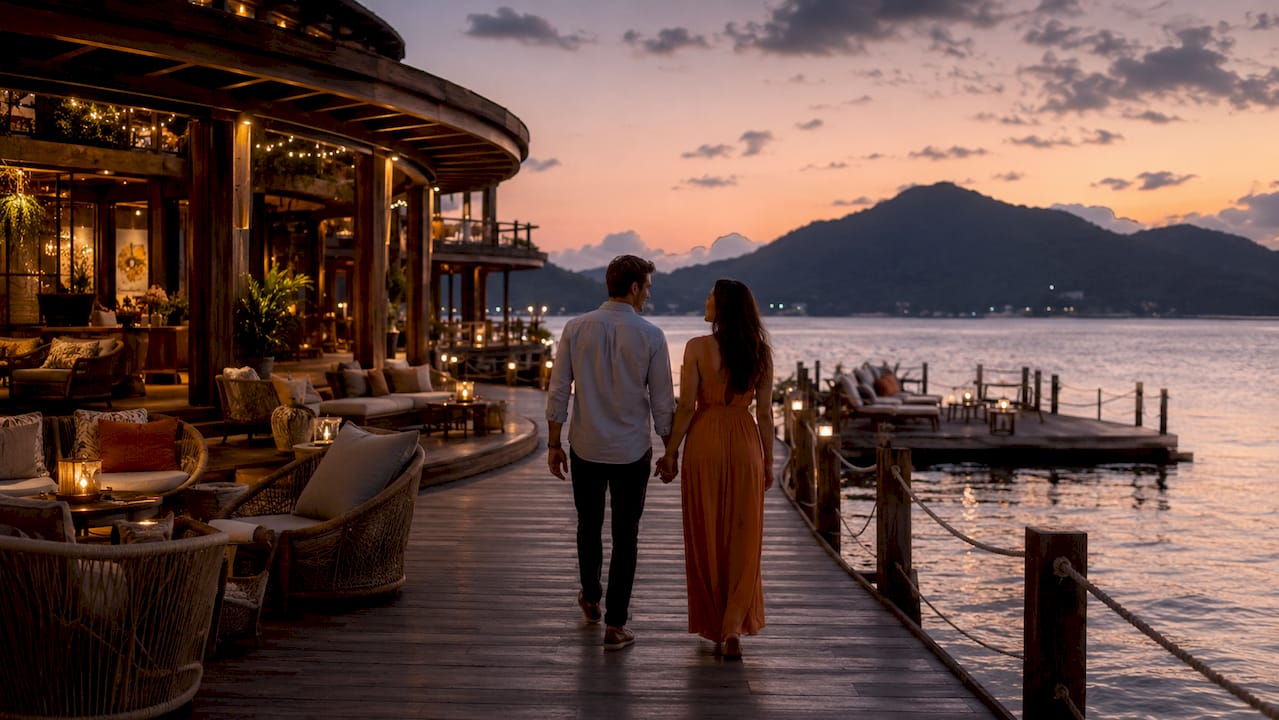
A floating boutique hotel is a luxury accommodation on water built on a stationary or limited-mobility platform, offering fewer than 20–50 rooms with deeply personalized service and a strong connection to its waterfront setting. The industry term for this category is “floatel,” though floating boutique hotel has become the widely used descriptor among travelers and planners. Unlike cruise ships, these properties stay in one place or move rarely, making immersion the point rather than transit. Companies like MEYER Floating Solutions have helped define the category by blending marine engineering with genuine hospitality architecture.
What is a floating boutique hotel, and how is it defined?
A floating boutique hotel combines the intimacy of a boutique property with the engineering demands of a water-based platform. The result is a property that feels like a luxury land hotel in terms of service and design, but sits on a lake, river, harbor, or open coast. The stationary nature is the defining distinction from cruise ships. Guests arrive, settle in, and experience a single location deeply rather than waking up in a new port each morning.
The floating hotel concept draws from two disciplines that rarely overlap: boutique hospitality and maritime engineering. Architects must account for wave motion, corrosion, and utility connections while still delivering the warm, curated aesthetic that boutique travelers expect. MEYER Floating Solutions describes this as adaptive reuse of waterfront spaces, where the goal is environmental harmony rather than novelty. That framing matters because it separates serious floating boutique properties from gimmicky water-themed concepts.
What structural types of floating boutique hotels exist?
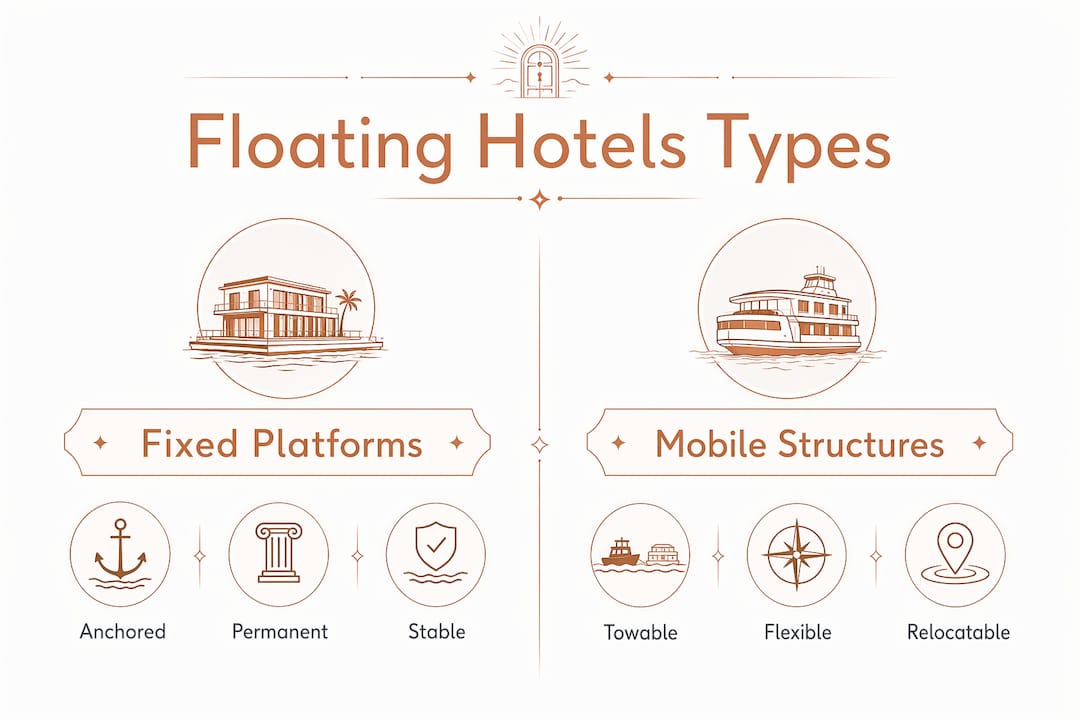
Floating hotels fall into four main structural categories, and each delivers a meaningfully different guest experience.
| Type | Key feature | Best for | Main challenge |
|---|---|---|---|
| Permanently anchored | Fixed mooring, shore utilities | Coastal resorts, harbors | Limited repositioning |
| Mobile/towable | Can relocate seasonally | Remote bays, private events | Higher logistics cost |
| Inland lake/river | Minimal wave impact | River towns, lake districts | Freshwater regulations |
| Semi-submersible hybrid | Partially submerged hull | Open-water stability | Complex engineering |
Permanently anchored platforms are the most practical for consistent luxury service. They connect to shore power, water, and waste systems through umbilical lines or bridges, which keeps operational costs lower and amenity quality higher. Inland lake and river hotels benefit from calm water, making them the easiest category to build and maintain at a boutique scale.
Mobile and towable structures trade convenience for flexibility. A property can relocate to a Norwegian fjord in summer and a Mediterranean bay in winter, which is a compelling proposition for exclusive-use bookings. Semi-submersible hybrids sit partially below the waterline to reduce wave motion, a design approach borrowed from offshore oil platforms and now appearing in high-end hospitality concepts.
The choice of structure directly affects guest comfort and cabin size. Fixed platforms feel closest to a traditional luxury hotel. Vessel-class properties feel more nautical and intimate, which some guests prefer and others find limiting.
How does the boutique hotel experience on water differ from cruise ships?
The boutique ethos on water is defined by personalized service, not the novelty of floating. The concept of “philoxenia,” a Greek term meaning genuine hospitality toward guests, is the service standard that separates true floating boutiques from properties that simply use water as a backdrop. Highly rated floating properties prioritize local environmental harmony, curated art from regional artists, and staff who know guests by name within hours of arrival.
Cruise ships operate at the opposite end of the scale. A large cruise vessel carries thousands of passengers, rotates through multiple ports, and delivers a standardized experience across every sailing. A floating boutique hotel carries 20–50 guests, stays in one location, and builds its entire program around that specific place. The difference in scale is not just logistical. It changes what hospitality actually means.
Here is what a genuine floating boutique hotel experience includes:
- Curated local programming: guided dives, private fishing charters, or cultural dinners sourced from the surrounding community
- Personalized room configuration: suite layouts adjusted before arrival based on guest preferences
- On-site naturalist or cultural guide: a staff member dedicated to connecting guests with the specific ecosystem or heritage of the location
- Chef-driven menus: ingredients sourced from local fishermen, farmers, or foragers within the region
- Minimal guest-to-staff ratio: typically 1:1 or better, compared to 1:3 or higher on large cruise ships
Pro Tip: When evaluating a floating boutique property, ask the operator how many guests are on-site at full capacity. Any property above 50 guests is no longer operating at boutique scale, regardless of how it markets itself.
The personalized travel service model that defines boutique hospitality on land translates directly to water. The platform changes; the philosophy does not.
What operational and engineering challenges are unique to floating boutique hotels?
Running a floating boutique hotel requires expertise that no land-based hotel manager needs. The operational challenges are specific, technical, and directly affect guest experience if mismanaged.
- Stability management: Floating platforms must account for shifting weight distribution as guests move, weather changes, and tidal variation. Fixed platforms handle this better than vessel-class properties, but both require ongoing monitoring.
- Corrosion control: Saltwater environments accelerate metal degradation. Maritime-certified systems and continuous protective coatings are non-negotiable for any property operating in coastal or tidal waters.
- Wastewater treatment: Marine regulations in most jurisdictions prohibit direct discharge. Floating boutique hotels must install onboard treatment systems, which add cost and require specialist maintenance.
- Energy independence: Some properties run entirely off-grid. Qatar’s Eco-Floating Hotel uses vawtau wind turbines to generate all electricity and incorporates rainwater harvesting and zero-waste principles. Others connect to shore power, which is simpler but limits location flexibility.
- Weather sensitivity: Unlike land hotels, floating properties must have protocols for high winds, storm surges, and unusual wave activity. Guests need to know what happens to their stay if conditions deteriorate.
Infrastructure connectivity varies widely across the category. Some floating hotels are entirely off-grid using desalination, solar, and wind power. Others depend on shore utilities delivered through underwater lines. The off-grid model appeals to eco-conscious travelers and enables truly remote locations, but it demands more from the engineering team and raises the operational cost floor.
Pro Tip: Before booking, ask the property directly about its energy source and waste management approach. Properties that answer this question confidently and specifically are the ones that have actually solved it. Vague answers are a warning sign.
Sustainable operations are increasingly a selling point rather than just a compliance requirement. Travelers seeking sustainable luxury travel options are actively choosing floating boutique hotels that demonstrate genuine environmental commitment over those that simply use eco language in their marketing.
How to choose and book a floating boutique hotel
Booking a floating boutique hotel requires more research than a standard luxury hotel reservation. The category is diverse, and the wrong choice produces a very different experience from what you expected.
- Clarify your travel intention first. Stationary hotels focus on immersion and relaxation in one location. Small-ship river cruisers offer active exploration and changing scenery. These are fundamentally different experiences despite both being described as floating boutique hotels.
- Choose your water type. Coastal properties deliver ocean views and marine activities. River properties offer cultural access to towns and landscapes along the route. Lake properties provide calm water and often dramatic mountain or forest scenery.
- Evaluate the booking model. Some floating boutique hotels offer exclusive-use bookings, where your group takes the entire property. Others sell individual suites. Exclusive-use is ideal for celebrations, corporate retreats, or families who want complete privacy.
- Assess pricing honestly. Premium pricing reflects the genuine cost of maritime engineering, maintenance, and logistics. Properties priced significantly below market rate for the category are cutting corners somewhere, usually in maintenance or staffing.
- Check sustainability credentials. Ask for specifics on energy, waste, and sourcing. Properties with genuine programs will answer in detail. Those without will deflect.
- Use a specialist agency. Floating boutique hotels are not well represented on standard booking platforms. A luxury travel agency with direct relationships in this niche will access properties and terms that are simply not available through general search.
The elite travel agency advantages in this category are real and measurable. Agencies with direct operator relationships can negotiate exclusive-use rates, arrange pre-arrival customization, and flag properties that market well but underdeliver on the water.
Key takeaways
A floating boutique hotel delivers genuine luxury hospitality on water through intimate scale, personalized service, and deep connection to place, not through the novelty of floating alone.
| Point | Details |
|---|---|
| Definition clarity | A floating boutique hotel is a stationary or limited-mobility water platform with 20–50 rooms and boutique-level service. |
| Four structural types | Permanently anchored, mobile/towable, inland lake/river, and semi-submersible hybrids each offer different guest experiences. |
| Boutique vs. cruise | Scale and service philosophy separate floating boutiques from cruise ships; boutique means fewer guests and deeper personalization. |
| Engineering demands | Corrosion control, wastewater treatment, and energy independence are non-negotiable operational requirements. |
| Booking approach | Use a specialist agency with direct operator relationships to access the best properties and exclusive-use terms. |
Why floating boutique hotels are the future of immersive luxury travel
I have spent years helping travelers find experiences that genuinely surprise them, and floating boutique hotels do that more consistently than almost any other category. The reason is not the water. It is the forced intimacy. When a property holds 30 guests and sits in a specific bay or river bend, everything about the experience has to be built around that place. There is no generic program to fall back on.
What I find most compelling is how the engineering constraints actually improve the hospitality. A property that has solved off-grid energy and water management has also, by necessity, built a team that pays close attention to every system. That operational discipline tends to show up in the service as well. The boutique luxury ethos on water is defined most critically by personalized service and local cultural connection. The floating environment is the stage, not the whole show.
The trend toward sustainability in this category is genuine, not performative. Properties like Qatar’s Eco-Floating Hotel are proving that full energy independence and zero-waste operations are achievable at a luxury standard. That matters to the travelers I work with, who want their spending to reflect their values without sacrificing comfort. I expect the next five years to produce a significant expansion in this category, particularly in Southeast Asia, Scandinavia, and the South Pacific, where the combination of extraordinary waterways and strong hospitality culture makes the concept almost inevitable.
— Michael
Plan your floating boutique hotel stay with Hiddendoortravel
Finding the right floating boutique hotel takes more than a search engine. The best properties in this category are not listed on standard booking platforms, and the difference between a memorable stay and a disappointing one often comes down to who made the reservation.
Hiddendoortravel specializes in exactly this kind of bespoke placement. Our team has direct relationships with floating boutique operators across coastal Europe, Southeast Asia, and the South Pacific. We handle exclusive-use negotiations, pre-arrival customization, and the logistical details that make a water-based stay genuinely comfortable rather than just novel. If you are ready to book a stay that most travelers will never find on their own, our luxury travel experts are the right starting point.
FAQ
What is the difference between a floating hotel and a cruise ship?
A floating boutique hotel is stationary or moves rarely, with 20–50 rooms and highly personalized service focused on one location. A cruise ship carries thousands of passengers, moves between ports daily, and delivers a standardized experience at scale.
How do I book a floating boutique hotel?
Most floating boutique hotels are not available on standard booking platforms. A specialist luxury travel agency with direct operator relationships is the most reliable way to access these properties and negotiate the best terms.
Are floating boutique hotels safe in bad weather?
Reputable floating boutique hotels have established protocols for high winds, storm surges, and unusual wave conditions. Fixed-platform properties are more stable than vessel-class options, and operators are required to brief guests on safety procedures at check-in.
What does exclusive-use booking mean for a floating hotel?
Exclusive-use means your group books the entire property rather than individual suites. This model is common in the floating boutique category and is ideal for private events, family gatherings, or corporate retreats where complete privacy is the priority.
Are floating boutique hotels eco-friendly?
Many are, and the best ones can demonstrate it specifically. Qatar’s Eco-Floating Hotel generates all electricity from wind turbines and uses rainwater harvesting and zero-waste systems. When evaluating a property, ask for specifics rather than accepting general sustainability claims.