

A bespoke travel itinerary is a fully custom-designed travel plan built around your specific interests, pace, and needs. Unlike a package tour, it treats every element of your trip as a variable you control. Custom-designed itineraries yield 40% higher traveler satisfaction compared to traditional packages. That gap exists because every activity, meal, and rest period reflects what you actually want. Designing a bespoke travel itinerary takes more effort than booking a standard tour, but the result is a trip that fits you precisely. This guide walks through every stage of that process, from gathering preferences to finalizing a day-by-day plan that holds up in the real world.
What does designing a bespoke travel itinerary actually require?
The foundation of any personalized itinerary is a clear picture of what you want. Write down your preferences before you open a single booking site. Include cuisine styles, activity types (cultural, outdoor, culinary, relaxed), preferred pace, accessibility needs, and who is traveling with you. These details shape every decision that follows.
Research destination options using travel blogs, Reddit forums, and destination-specific Facebook groups. These sources surface practical details that official tourism sites omit, such as which neighborhoods are walkable, which attractions require advance booking, and which local markets are worth a detour. For unique travel experiences, the best ideas often come from travelers who have been there recently.

Set a rough budget by category before you start booking anything. Divide your total into accommodation, transport, activities, and meals. This prevents the common mistake of overspending on hotels and running short on experiences.
Key tools for custom travel planning
| Tool type | Primary function | Best use case |
|---|---|---|
| Mapping apps (Google Maps, Maps.me) | Route visualization and transit timing | Clustering activities geographically |
| Itinerary planners (Wanderlog, TripIt) | Day-by-day schedule organization | Structuring fixed and flexible slots |
| AI draft generators (ChatGPT, Gemini) | First-draft itinerary creation | Overcoming the blank-page problem |
| Local forums (Reddit, Facebook Groups) | Real-time traveler feedback | Verifying route practicality |
| Budget trackers (Trail Wallet, TravelSpend) | Category-level spending control | Staying within per-day limits |
AI tools combined with manual refinement produce more practical and satisfying plans than either approach alone. The AI handles the blank-page problem by generating a working draft. You then apply your preferences, local knowledge, and judgment to make it genuinely yours.
Pro Tip: Use an AI tool to generate a three-day draft for your destination, then delete anything that does not match your actual preferences. You will end up with a skeleton that takes 20 minutes to personalize rather than three hours to build from scratch.
How do you build a day-by-day personalized itinerary?
Start by locking down your fixed anchors. Flights, hotel check-in times, and reservations are structural points around which everything else fits. Enter these into your itinerary planner first, before adding a single activity. They define the real boundaries of each day.
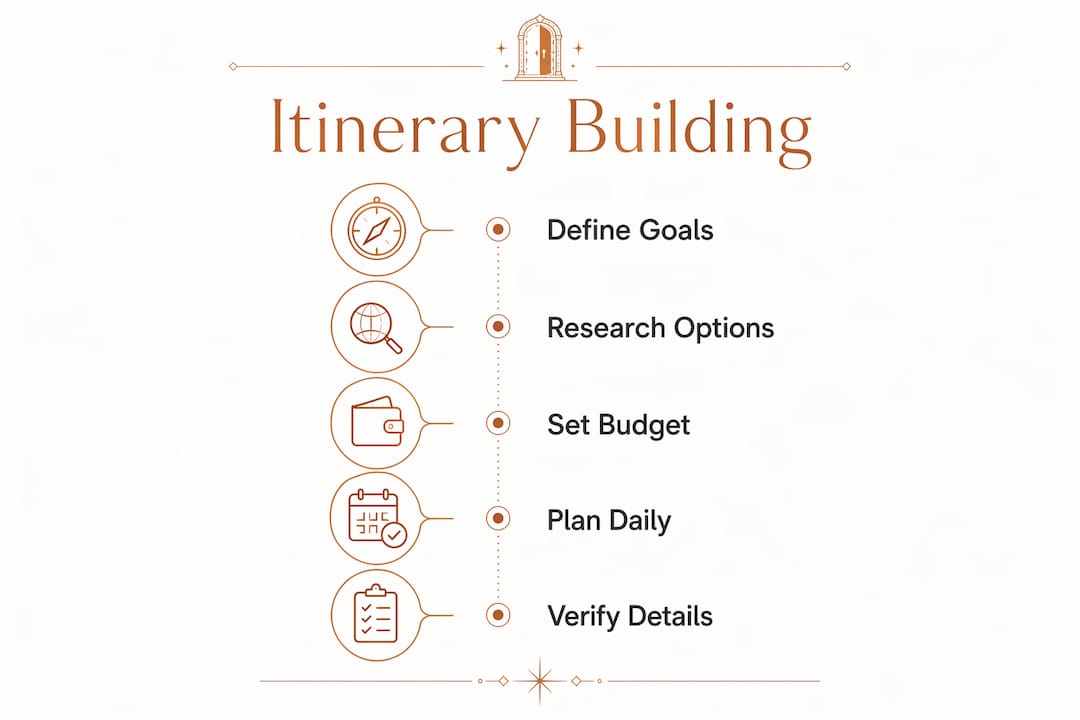
The 60/40 planning balance is the gold standard for avoiding burnout. Plan roughly 60% of each day with scheduled activities and leave 40% open. That open time is not wasted. It absorbs delays, creates space for spontaneous finds, and prevents the exhaustion that ruins the final days of a trip.
Step-by-step sequence for building your plan
- Enter all fixed anchors into your itinerary planner: flights, accommodation check-in and check-out, and any pre-booked reservations.
- Divide each day into morning and afternoon blocks. Assign activities to blocks rather than specific times to preserve flexibility.
- Cluster activities geographically. Group everything in the same neighborhood or district into the same half-day block.
- Add meals and rest periods as anchors. A lunch break near your midday location and a dinner reservation close to your evening activity reduce transit and decision fatigue.
- Visualize routes using a mapping app. Plot each day’s sequence and check that the geographic flow makes sense.
- Verify booking requirements. Check which attractions require advance tickets, which have limited hours, and which are closed on specific days.
- Review transport connections. Confirm that public transit or taxis can realistically move you between locations within your planned timeframes.
Clustering activities by neighborhood within half-day blocks is the single most effective way to reduce transit time. A traveler who visits three museums in the same district in one morning will enjoy the day far more than one who crosses a city twice to hit the same three sites.
Common pitfalls to avoid during this stage:
- Scheduling more than two major attractions per half-day block
- Ignoring opening hours and assuming sites are always accessible
- Forgetting to account for travel time between neighborhoods
- Booking restaurants far from your evening activity location
- Leaving accommodation check-in for late afternoon without confirming early check-in availability
Pro Tip: Do a mental walk-through of each day before you finalize it. Imagine waking up, getting ready, and moving through each activity in sequence. You will catch hidden issues, like a 45-minute transit gap you had not noticed, before they become real problems.
How do you refine and verify your itinerary before departure?
The mental walk-through is the most underused step in personalized itinerary creation. Walking through each day’s sequence mentally reveals inefficiencies that look fine on paper but fail in practice. Backtracking, tight connections, and unrealistic timing all surface during this review.
After your own review, take your planned routes to local forums. Post your day-by-day sequence in a destination-specific Reddit or Facebook group and ask for feedback. Locals and recent visitors will flag closures, seasonal issues, and better alternatives that no travel guide covers.
Seasonal and weather considerations belong in your verification checklist. A beach day planned for a region’s rainy season, or a mountain hike scheduled during peak heat, can derail an otherwise solid plan. Build at least one backup option for each outdoor or weather-dependent activity.
Verifying transport schedules and booking requirements before departure is the difference between an itinerary that works and one that collapses on day two. Check operational days, last entry times, and any booking windows that close weeks in advance.
Pre-departure verification checklist
- Confirm all attraction opening hours and operational days
- Verify advance booking requirements for popular sites
- Check local transport schedules and last service times
- Review weather forecasts and seasonal conditions
- Identify backup activities for weather-dependent plans
- Confirm accommodation check-in and check-out procedures
- Save offline maps and key addresses for areas with poor connectivity
For trips that include culinary experiences, pairing your dining choices with your activity clusters makes a real difference. A guide on combining lodging and gastronomy shows how thoughtful pairing of meals and locations reduces transit and deepens the overall experience.
What mistakes do experienced planners avoid?
Over-ambitious scheduling is the most common error in tailored travel guides and self-built itineraries alike. Travelers consistently underestimate how long transitions, meals, and unplanned moments take. A day with six scheduled activities rarely delivers six satisfying experiences. It delivers exhaustion.
Ignoring local transport schedules is the second most damaging mistake. A ferry that runs twice a day, a train that stops service at 8:00 PM, or a bus route that skips certain stops on weekends can collapse an entire day’s plan. Always verify schedules from official sources, not travel blogs that may be months out of date.
Pricing transparency is a principle that applies to self-built itineraries too. Break your budget into line items for every trip component: accommodation per night, transport per leg, activity entry fees, and average meal costs. This level of detail gives you real control over where to spend and where to cut.
“The best bespoke itineraries are not the ones packed with the most experiences. They are the ones where every experience was chosen deliberately, with enough breathing room to actually enjoy it. Structure creates freedom when it is applied with restraint.”
Balancing spontaneity and structure is a skill, not a formula. The 60/40 rule gives you the framework. What you do with the 40% open time is entirely yours. Some travelers use it to revisit a place they loved. Others follow a recommendation from a stranger at breakfast. Both outcomes are only possible because the structure held the rest of the day together.
For travelers who want to understand how culinary experiences fit into bespoke planning, treating meals as anchors rather than afterthoughts changes the entire character of a trip.
Key Takeaways
Designing a bespoke travel itinerary requires clear preferences, geographic clustering, a 60/40 activity-to-free-time ratio, and thorough pre-departure verification to deliver a trip that actually satisfies.
| Point | Details |
|---|---|
| Start with written preferences | Document cuisine, pace, activity types, and companions before researching any destination. |
| Use the 60/40 rule | Schedule 60% of each day and leave 40% open to prevent burnout and allow spontaneity. |
| Cluster activities geographically | Group activities by neighborhood within half-day blocks to cut transit time and fatigue. |
| Verify before you finalize | Check transport schedules, booking requirements, and local forums before departure. |
| Use AI as a starting point | Generate a draft with AI tools, then refine it manually to match your actual preferences. |
What I have learned from watching travelers plan their own trips
The travelers who get the most out of bespoke planning are not the ones with the most detailed spreadsheets. They are the ones who know what they actually want before they start. I have seen beautifully structured itineraries fall apart because the traveler never asked themselves whether they prefer slow mornings or early starts. That single preference reshapes an entire day.
The hybrid approach to planning, using AI for the first draft and human judgment for everything after, has become the most practical method I have seen in 2026. AI removes the paralysis of the blank page. But it cannot know that you hate crowds, that you need a quiet hour after lunch, or that you would rather spend three hours in one museum than thirty minutes in five. That knowledge is yours alone, and it is what makes a plan genuinely bespoke.
The deepest satisfaction I have observed comes from itineraries where the traveler felt connected to the destination rather than processed by it. That connection comes from thoughtful itinerary design that respects both the place and the person visiting it. Creativity matters. So do constraints. The best plans honor both.
— Michael
When professional expertise makes the difference
Designing your own itinerary is genuinely rewarding. There are trips, though, where the stakes are high enough that professional expertise pays for itself many times over. Hiddendoortravel works with travelers who want a fully curated luxury experience built by specialists with deep destination knowledge and established supplier relationships.
Every itinerary Hiddendoortravel produces includes line-item pricing transparency, so you see exactly where your budget goes and can adjust any element. The team handles verification, contingency planning, and real-time support throughout your trip. For travelers who want the result of expert bespoke planning without spending weeks building it themselves, Hiddendoortravel’s luxury travel experts are the direct path to a trip that exceeds expectations.
FAQ
What is a bespoke travel itinerary?
A bespoke travel itinerary is a fully personalized travel plan designed around your specific interests, pace, and preferences. It differs from a package tour in that every element is chosen to match you, not a general audience.
How much of each day should I schedule in advance?
The 60/40 rule is the standard: plan roughly 60% of each day with scheduled activities and leave 40% open. This balance prevents burnout and creates space for spontaneous experiences.
What is the biggest mistake in custom travel planning?
Over-scheduling is the most common error. Packing too many activities into a single day reduces enjoyment and leaves no room for the unexpected moments that often become the highlights of a trip.
How do I verify my itinerary before I travel?
Check all attraction opening hours, transport schedules, and advance booking requirements from official sources. Post your planned routes in local forums to get feedback from recent visitors before you finalize anything.
When should I use a professional travel planner instead of designing my own itinerary?
Use a professional when the trip is complex, high-value, or involves destinations where local knowledge significantly affects the experience. Hiddendoortravel specializes in bespoke luxury trips where expert curation delivers results that self-planning rarely matches.