
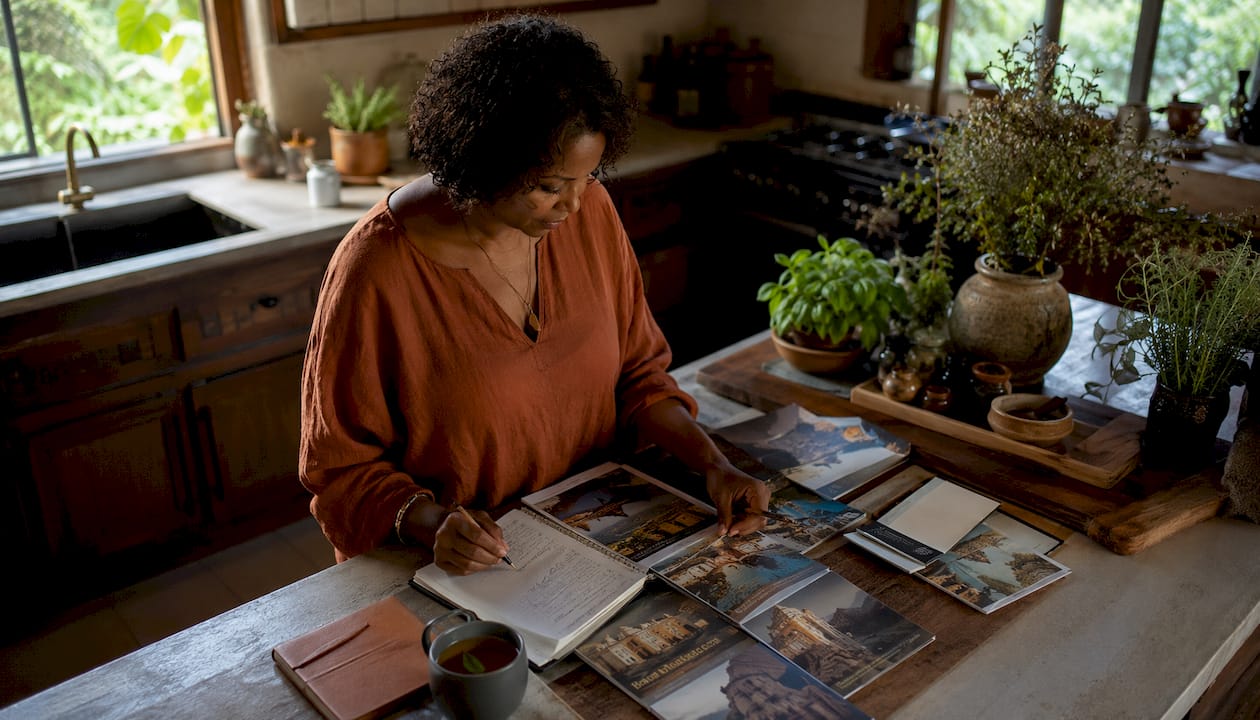
Curated cultural experiences are intentionally designed, interest-driven activities that connect travelers to local knowledge, communities, and creative practice through guided access, meaningful interaction, and ethical partnership. Unlike generic sightseeing, they are shaped by an expert or cultural gatekeeper who selects, narrates, and contextualizes what you encounter. The experience-led travel shift is real: arts-focused tourists, culinary enthusiasts, heritage explorers, and community-program participants are all driving demand for depth over breadth. Here is a quick catalogue of what these experiences actually look like:
- Heritage dinner with storytellers — a private meal in a historic home where a local historian narrates the family’s role in regional history
- Artist studio access — a small-group visit to a working painter or ceramicist’s studio, with a guided critique and hands-on session
- Chef-led market-to-table cooking — a morning at a farmers market with a local chef, followed by a cooking session and shared meal
- Festival backstage access — a curated pass to rehearsals, costume prep, or performer meet-and-greets at a traditional festival
- Hands-on craft workshops — weaving, pottery, or natural-dye sessions led by a master artisan, not a demonstration performer
- Museum after-hours with curators — a private evening tour of a collection led by the curator who acquired or researched the works
- Homestay cultural exchange — a structured multi-day stay with a local family, including shared meals, language practice, and community activities
- Community-led conservation walks — guided hikes with Indigenous or local environmental stewards who explain land management and cultural significance
- Residency open studios — access to artist residency programs during open-studio periods, with direct conversation with resident artists
- Culinary heritage tours — guided visits to producers, fermenters, or traditional food makers, framed around a region’s culinary history
Hiddendoortravel builds itineraries around exactly this kind of access, connecting travelers to local cultural gatekeepers rather than packaged sightseeing circuits.
Table of Contents
- What makes an experience “curated” vs. a generic tourism product
- Curated cultural experience examples organized by theme
- How to design a curated cultural experience step by step
- How to match curated experiences to traveler types and budgets
- How Hiddendoortravel curates bespoke cultural experiences
- How to evaluate a curated experience before you book
- Key Takeaways
- Why curation is the only honest word left in travel
- Hiddendoortravel’s bespoke cultural curation service
- Useful sources and further reading
What makes an experience “curated” vs. a generic tourism product
The word “curated” gets applied to almost everything now, which makes it nearly meaningless unless you know what to look for. A genuinely curated cultural experience has a human expert at its center: someone who has made deliberate editorial choices about what to include, who leads it, and what the traveler is meant to understand by the end.
Curation is a professional filtering process. It matches travelers to high-quality, relevant cultural encounters through editorial expertise rather than automated aggregation. The difference between a curated experience and a packaged tour is the same as the difference between a gallery show and a warehouse sale: one reflects judgment, the other reflects volume.
The core attributes worth checking for:
- Editorial selection: someone with genuine cultural knowledge chose this specific maker, venue, or community — not an algorithm or a commission structure
- Local cultural gatekeeper involvement: the experience is co-designed or led by a community member, institution, or practitioner with standing in that culture
- Clear learning or participatory outcome: you leave knowing or being able to do something you could not before
- Small group or bespoke format: intimacy is structural, not incidental — typically fewer than 12 participants
- Benefit sharing: the community or practitioner receives a fair share of revenue, not just a flat appearance fee
Platforms that use editorial expertise consistently outperform automated event aggregators for traveler satisfaction and relevance. In listings and marketing copy, the signals of true curation are specific: “private studio visit,” “curator-led talk,” “in partnership with [named cultural institution].” Vague phrases like “exclusive access” or “authentic local experience” with no named partner are usually a flag, not a feature. A curated travel experience earns that label when the selection process is visible and the community relationship is named.
Curated cultural experience examples organized by theme
The following examples are grouped by theme. Each one notes what makes it genuinely curated, the typical format, and a practical booking note. U.S. callouts are included in each theme.
Heritage and history
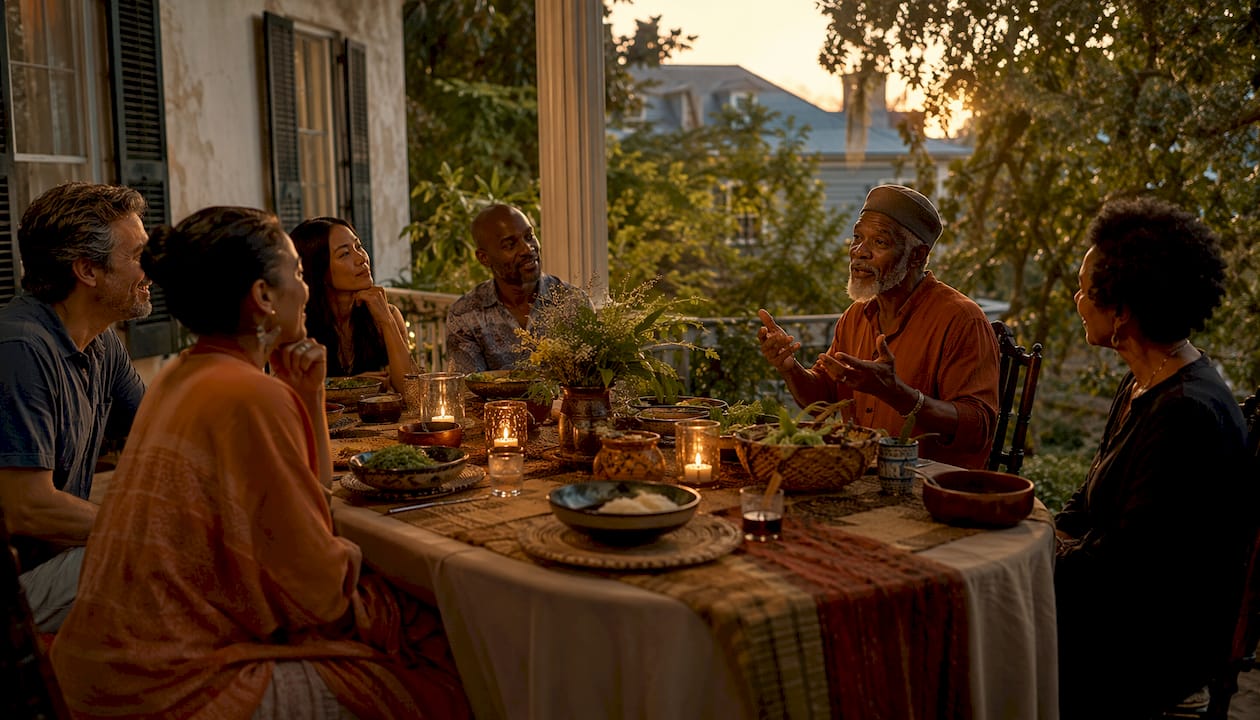
A private heritage dinner in Charleston, South Carolina pairs guests with a Gullah Geechee cultural historian who narrates the region’s African American foodways through a multi-course meal prepared by a community cook. The historian, not a tour guide, leads the narrative. Group size is typically 6–10. Book through cultural nonprofits or boutique agencies rather than mass booking platforms.
In New Orleans, curated cemetery tours led by preservation historians from Save Our Cemeteries go well beyond ghost-tour theatrics. The historian contextualizes burial architecture, Creole Catholic traditions, and the social history of each family vault. These run in groups of 8–12 and are bookable directly through the organization.
Craft and making
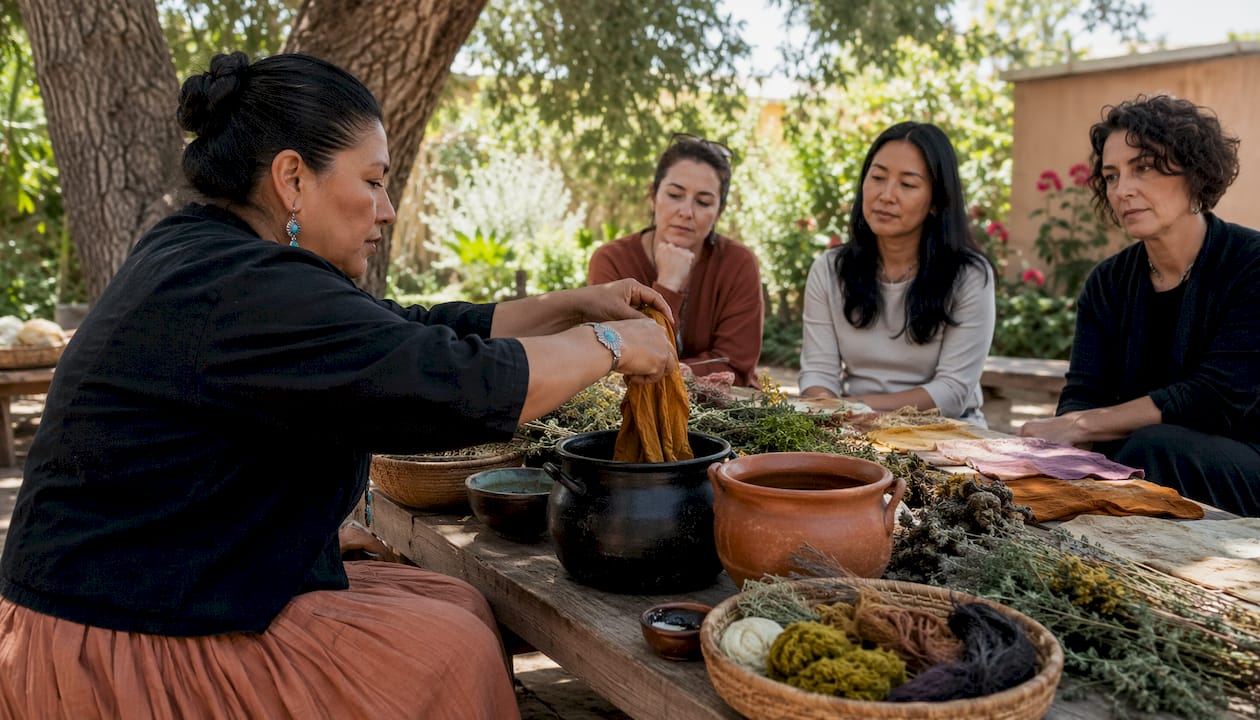
A natural-dye workshop in Santa Fe, New Mexico, led by a Navajo textile artist, teaches participants to harvest plants, prepare mordants, and dye wool using traditional methods. The artist explains the cultural significance of each color and pattern. Sessions are limited to 6 participants and typically run four hours.
In Oaxaca, Mexico, mezcal-and-craft pairings combine a visit to a palenque (traditional distillery) with a session at a nearby weaving cooperative, framed by a local cultural guide who explains the relationship between the two crafts. Culinary experience travel formats like this one work best when the food or drink element is tied explicitly to a production story, not just a tasting.
Foodways and culinary culture
A chef-led market-to-table experience in Portland, Oregon begins at the Portland Saturday Market, where a local chef walks participants through ingredient sourcing, producer relationships, and seasonal cooking logic before returning to a shared kitchen. The chef’s relationship with specific vendors is the curatorial thread. Groups of 4–8 work best.
For a deeper dive into how culinary experiences are structured and priced, the culinary traveler’s guide from Wild Foodz is a useful reference. Cooking classes, farm visits, and market tours each offer different engagement levels and learning outcomes.
Music and performance
A backstage access program at the Newport Folk Festival in Rhode Island gives a small group of participants access to sound checks, artist green rooms, and a post-show conversation with a performer. The curatorial layer here is the festival’s artistic director, who selects which artists and sessions are included. These are typically offered as add-ons to standard tickets and sell out quickly.
In Nashville, Tennessee, a curated session at a recording studio on Music Row pairs a small group with a session musician who explains the history of the studio, plays original recordings, and demonstrates how a track is built. The musician’s personal history with the space is what makes it curated rather than a facility tour.
Rituals and festivals
A curated Día de los Muertos program in San Antonio, Texas, organized in partnership with the Guadalupe Cultural Arts Center, includes altar-building workshops, a marigold procession, and a conversation with families who maintain the tradition. The partnership with a named cultural institution is the credibility signal. Advance registration is required and groups are capped at 20.
Participatory workshops
Bookbinding and letterpress workshops at the Center for Book Arts in New York City are led by practicing book artists who contextualize the craft within the history of print culture. Participants produce a finished object. Sessions run 3–6 hours and are open to beginners. The Center’s curatorial programming distinguishes these from craft-store classes.
Museum behind-the-scenes
The Smithsonian Institution in Washington, D.C. offers curator-led collection tours through its Behind the Scenes program, where a department curator walks a group of 6–10 through storage areas, conservation labs, or research collections not open to the public. The curator’s research narrative is the experience. These require advance booking and are often tied to membership tiers.
A similar model operates at the Art Institute of Chicago, where conservation staff lead private tours of the conservation studio during active restoration projects. Participants see works in progress and hear the decision-making behind treatment choices.
Artist residencies and open studios
The Headlands Center for the Arts in Marin County, California holds open-studio weekends where visitors can meet resident artists, view works in progress, and attend informal artist talks. The residency’s curatorial selection of artists gives the program its depth. Free to attend; donations support the residency program.
Homestays and community programs
A structured homestay program in rural Vermont, organized through a working farm cooperative, places guests with farming families for 3–5 days. Guests participate in daily farm work, share meals, and attend a community gathering. The cooperative vets families and sets ethical terms for guest participation, including fair compensation for hosts.
How to design a curated cultural experience step by step
Travel marketers and destination management organizations often ask where to start. The answer is always the community, not the itinerary.
-
Start with community relationships. Identify the cultural practitioners, institutions, or community leaders whose knowledge anchors the experience. These relationships must exist before any product is built. Cold outreach to “local artisans” for a launch date is not curation.
-
Co-design with cultural gatekeepers. Invite community partners into the design process. What do they want visitors to understand? What is off-limits? What benefit do they expect? This conversation shapes the narrative and the ethical terms simultaneously.
-
Craft a narrative arc. Every curated experience needs a through-line: a question the traveler is trying to answer, a skill they are building, or a story they are entering. Without a narrative, a collection of activities is just a schedule.
-
Pilot with small groups. Run the first iteration with 4–6 participants and a debrief session afterward. What landed? What felt staged? Adjust before scaling. The role of a travel curator includes this iterative refinement, not just initial design.
-
Set pricing that shares benefits. Price the experience to cover community partner compensation at a fair rate, not a token fee. A rough benchmark: community partners should receive at least 30–40% of the net experience fee, though the right figure depends on their role and local market norms.
-
Train your guides on narrative, not just logistics. A guide who knows the bus schedule but not the cultural context is a logistics coordinator, not a curator. Training should include the history, the community relationships, and the ethical boundaries of the experience.
-
Build in impact measurement. Collect participant feedback, track community partner satisfaction, and document any cultural or economic outcomes. Personalized travel satisfaction data consistently shows that depth of engagement predicts repeat booking and referral more reliably than logistics quality.
Ethical checklist before launch:
- Community partner has reviewed and approved all marketing materials
- Revenue share terms are in writing
- Experience does not require participants to observe private rituals without explicit community consent
- Photography and social media policies are communicated to guests in advance
- An exit ramp exists if the community partner withdraws consent
Pro Tip: Avoid the “living museum” trap. If community members are performing their culture for an audience rather than sharing it with participants, the experience has crossed into tokenism. The test: would the community partner describe this as something they do, or something they perform for tourists?
Editorial curation platforms like kulturKBH demonstrate that prioritizing editorial judgment over automated aggregation produces more relevant, satisfying cultural discovery. The same principle applies to experience design: human selection beats algorithmic assembly every time.
How to match curated experiences to traveler types and budgets
Not every traveler wants to spend a full day in a ceramicist’s studio. Matching the experience to the audience is as important as designing the experience itself.
Traveler segmentation research identifies four common profiles in cultural tourism. Arts-focused and participatory seekers want depth and direct involvement. Heritage explorers want context and narrative. Casual cultural tourists want a meaningful hour or two without a full commitment. Incidental cultural tourists are open to culture if it is convenient and low-pressure.
| Traveler Type | Sample Curated Experience | Typical Duration | Pricing Shape |
|---|---|---|---|
| Arts-focused / participatory seeker | Artist studio visit + hands-on session | Half-day (3–5 hrs) | High |
| Heritage explorer | Curator-led museum behind-the-scenes | 2–3 hours | Medium |
| Casual cultural tourist | Chef-led market tour + tasting | 2 hours | Low–Medium |
| Incidental cultural tourist | Festival backstage pass (add-on) | 1–2 hours | Low |
| Multi-day immersion seeker | Homestay with community program | 3–5 days | High |
Packaging guidance worth noting: introvert-friendly options like museum after-hours tours and small demonstration workshops are among the fastest-growing formats precisely because they remove the social pressure of large group settings. For limited-schedule travelers, a 90-minute private curator session often delivers more satisfaction than a half-day group tour. Offer tiered formats: a solo or duo private option, a small-group version (6–10), and a semi-private add-on for travelers who want depth without the full bespoke price. The types of experiential travel packages available in 2026 reflect this tiering logic across most major destinations.
How Hiddendoortravel curates bespoke cultural experiences
Hiddendoortravel’s approach to cultural curation starts with a single question: who in this destination has knowledge that cannot be Googled? The agency’s curatorial process identifies local practitioners, cultural institutions, and community organizations before building any itinerary, then designs the guest experience around those relationships rather than around attractions.
A sample 3-day cultural micro-itinerary illustrates the model:
Day 1 — Arrival and orientation: Private transfer with a local cultural historian who provides a 45-minute narrative briefing on the destination’s current cultural scene, key figures, and what to watch for. Evening: a curated dinner at a family-run restaurant where the owner narrates the menu’s regional history.
Day 2 — Deep access: Morning visit to a working artist’s studio, arranged through a long-term agency partnership with a local arts organization. Afternoon: a private conservation walk with a community environmental steward. Evening: an informal gathering with local creatives at a neighborhood cultural space, not a tourist venue.
Day 3 — Making and reflection: A half-day hands-on craft session with a master artisan, followed by a closing conversation with the agency’s local cultural liaison about what the guest experienced and what to read or follow up on afterward.
Curation checklist Hiddendoortravel applies to every experience:
- Named cultural partner with a documented community relationship
- Narrative arc briefed to the guest before arrival
- Group size capped to preserve intimacy (typically 2–8 guests)
- Community partner compensation agreed in writing before booking
- Guest debrief built into the final day
- Photography and sharing protocols communicated at booking
The outcome guests consistently report is not just satisfaction with logistics but a sense of having genuinely met a place. That distinction drives the agency’s referral rate and its exclusive access positioning. Some of the most sophisticated curated offerings, like those operated by Grey Cube Projects through their Cultural Constellations Bogotá program, reinvest trip revenue into non-profit curatorial research and artist residencies, strengthening community relationships and the program’s legitimacy as a cultural broker. Hiddendoortravel applies the same reinvestment logic: community partnerships are maintained year-round, not activated only when a guest is booked.
How to evaluate a curated experience before you book
The word “curated” is now on almost every experience listing. Here is how to tell whether it is real.
Questions to ask the provider:
- Who leads this experience, and what is their relationship to the community or cultural institution involved?
- Is there a named local partner, and can you share their contact or website?
- What is the maximum group size?
- How is the community partner compensated?
- What will I be able to do or understand by the end that I could not before?
- Is photography permitted, and has the community partner set any restrictions?
- What is the cancellation policy if the community partner needs to withdraw?
- Is the experience the same every time, or does it adapt to the group and season?
Red flags:
- “Exclusive access” with no named venue, curator, or partner
- High markup with no visible community benefit or partner credit
- Staged interactions (performers in costume who do not otherwise live or work this way)
- No cancellation flexibility despite community partner involvement
- Generic descriptions that could apply to any destination (“authentic local experience”)
Verification steps:
- Search the named cultural partner independently. Do they have a website, social presence, or institutional affiliation?
- Look for curator bios or practitioner profiles in the listing, not just guide headshots
- Check for NGO, museum, or cultural-institution mentions in the booking description
- Ask for references or past participant reviews that mention specific people or places, not just “amazing experience”
A private guided cultural tour that cannot answer questions 1, 2, and 4 above is not curated. It is packaged.
Key Takeaways
Genuinely curated cultural experiences require a named community partner, a clear narrative arc, and a benefit-sharing arrangement that is agreed before the first guest arrives.
| Point | Details |
|---|---|
| Spot real curation | Look for a named cultural partner, a curator bio, and explicit community benefit in the listing. |
| Design starts with community | Build community relationships before building the itinerary; co-design with gatekeepers, not after them. |
| Match experience to traveler type | Arts-focused seekers want half-day depth; casual tourists often prefer a 90-minute focused session. |
| Ethics are structural, not optional | Benefit sharing, consent, and photography policies must be agreed in writing before launch. |
| Hiddendoortravel’s approach | The agency identifies local cultural practitioners first, then builds bespoke itineraries around those relationships for 2–8 guests. |
Why curation is the only honest word left in travel
Most of what gets called “curated” today is just selection with a marketing budget behind it. A hotel’s “curated minibar” is a purchasing decision. A tour operator’s “curated itinerary” is often a fixed schedule with a local driver. Real curation requires the curator to have skin in the game: a relationship with the community, a point of view about what matters, and the willingness to say no to things that do not belong.
What most travel writing misses is that curation is a discipline of exclusion, not inclusion. The value is not in how many experiences you pack into a trip. It is in what you leave out. A three-day itinerary that includes one genuinely deep encounter with a local practitioner will outlast a ten-day trip full of checked boxes in the traveler’s memory. The research on personalized travel satisfaction bears this out: depth of engagement predicts referral and repeat booking more reliably than destination prestige or logistics quality.
The ethical dimension is where most operators cut corners, and where the real differentiation lives. Benefit sharing is not a nice-to-have. When a community partner receives a token fee while the operator charges a premium, the experience is extractive regardless of how immersive it feels to the guest. The most durable curated programs, from the Grey Cube Projects model in Bogotá to Hiddendoortravel’s bespoke approach, treat community relationships as long-term assets, not seasonal activations.
Hiddendoortravel’s bespoke cultural curation service
Travelers who want the experiences described in this article without the research burden of vetting every provider, negotiating with cultural partners, and designing a coherent narrative arc have a direct alternative. Hiddendoortravel handles the entire curatorial process: identifying the right local practitioners, securing access that is not publicly bookable, and building a day-by-day itinerary with a clear cultural through-line.
The agency’s luxury travel experts specialize in small-group and private bespoke cultural trips, typically for 2–8 travelers, across destinations where the agency maintains active community partnerships. An initial inquiry takes about 15 minutes: share your destination, travel dates, cultural interests, and any access preferences (introvert-friendly, mobility considerations, language needs). The agency responds within 48 hours with a preliminary curatorial brief and a call to refine it. No generic itinerary templates. Every trip is built from the community relationship outward. Contact Hiddendoortravel through the luxury travel agency page to start the conversation.
Useful sources and further reading
The following sources informed this article and are worth consulting directly for deeper research:
- Euromonitor International — traveler segmentation and the expanding role of cultural explorers in global tourism; primary source for audience typology and experience-led travel trends
- Phocuswright — travel experiences market sizing and operator/consumer behavior; source for data on introvert-friendly formats and small-group experience growth
- kulturKBH — Copenhagen’s free editorial cultural guide; a practitioner model for city-level editorial curation over automated aggregation
- Grey Cube Projects / Cultural Constellations Bogotá — operational template for small-scale curated itineraries that reinvest revenue into cultural research and artist residencies
- Culture Curious — platform demonstrating how editorial expertise outperforms automated feeds for cultural event discovery and traveler satisfaction
- Worldpackers — practical examples of bookable cultural experience formats including cooking classes, homestays, farm volunteering, and festival participation
- A Little Adrift — practitioner-level guidance on cultural immersion techniques, including cooking classes, local festival attendance, and homestay programs
- THE CURATED Lisbon — agency model combining editorial calendars, private tours, and membership access to local creative scenes; useful for marketer-facing design reference
- Wild Foodz / Hotel Entree Brugge — culinary experience definitions, formats, and sensory design guidance for foodways programming