
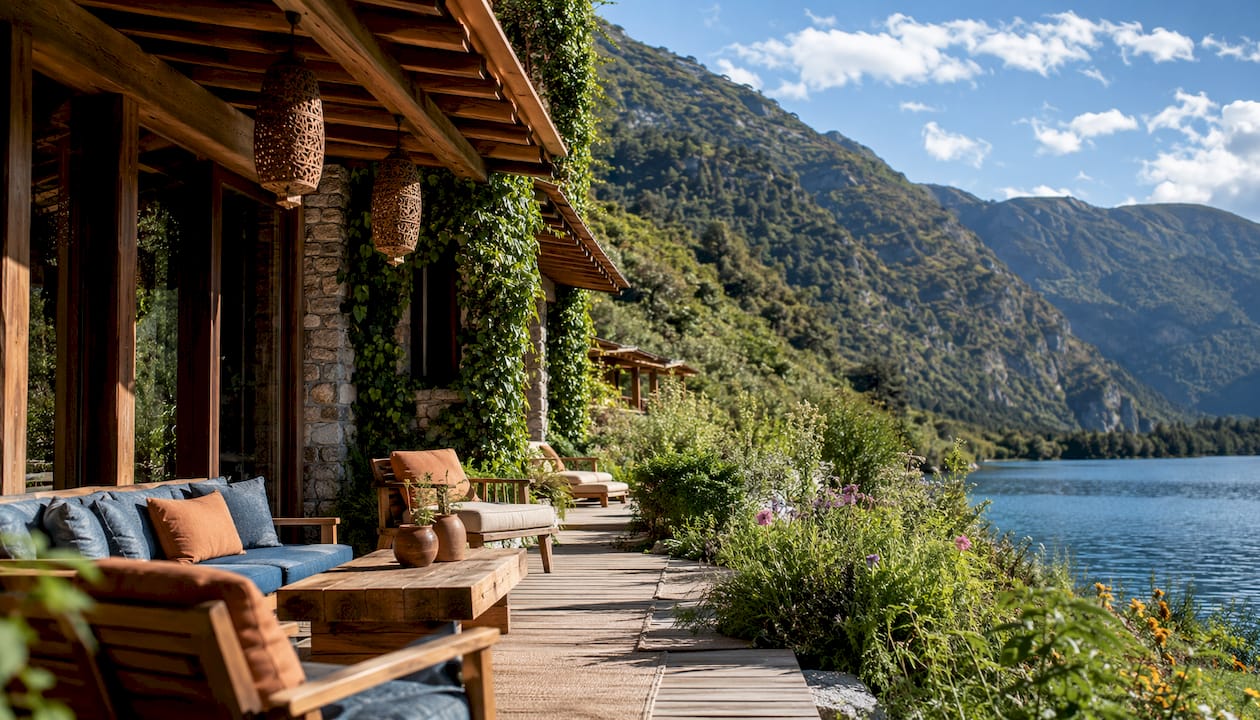
The best luxury eco lodges worldwide, by region
The finest luxury eco lodges in 2026 share one quality that separates them from greenwashed resorts: every comfort you experience is built on a foundation of genuine ecological accountability. Think B Corp certification in the Amazon, carbon-free hydro turbines in Costa Rica, and candlelit rooms carved from desert rock salt in Egypt. These are not marketing claims. They are operating realities at properties where sustainable luxury travel means something measurable.
Below is a curated selection organized by region, covering properties that sustainability editors, travel publications, and third-party certifiers have recognized as leaders.
North America
1 Hotel South Beach, Miami, Florida
Built around reclaimed wood, living walls, and locally sourced materials, 1 Hotel South Beach treats the Florida coastline as something worth protecting rather than exploiting. The property runs on renewable energy, sources food from regional farms, and has partnered with ocean conservation organizations to fund coral restoration. Its design language, raw timber, stone, and native plantings, reads less like a hotel lobby and more like a curated piece of the surrounding ecosystem.
1 Hotel Central Park, New York City
The urban counterpart proves that eco-friendly accommodation does not require a remote jungle. Reclaimed barnwood paneling, organic cotton linens, and a rooftop farm that supplies the kitchen are standard here. The property holds LEED certification and has become a reference point for what luxury green hotels can accomplish in a dense metropolitan context.
Andaz Maui at Wailea Resort, Hawaii
Andaz Maui integrates Hawaiian cultural values into its sustainability model, partnering with local farmers and artisans while maintaining the kind of oceanfront luxury that affluent travelers expect. Native plant landscaping replaces water-intensive turf, and the property actively supports indigenous Hawaiian cultural programs.
South America
La Selva Eco-Lodge, Ecuador
Located within Ecuador’s Yasuní Biosphere Reserve, La Selva sits 70 km into the rainforest from the nearest urban center, on the shores of Lake Garzacocha. It was among the first Amazon rainforest lodges in Ecuador and today holds Certified B Corporation status, balancing profit with environmental stewardship. Panoramic staterooms overlook the lake and forest canopy, while naturalist guides lead guests through one of the most biodiverse ecosystems on the planet.
Pousada Trijunção, Brazil
Set on an 81,544-acre working conservation farm in Brazil’s Cerrado biome, this seven-suite luxury pousada sits at the heart of a vital ecological corridor connecting to Grande Sertão Veredas National Park. Guests track maned wolves and jaguars, investigate blue hyacinth macaw nests, and participate in genuine citizen-science fieldwork through the hotel’s ongoing partnership with NGO Onçafari. The Cerrado holds more than a fifth of the world’s biodiversity, and Pousada Trijunção functions as a working node in its preservation.
Golfo Dulce Retreat, Costa Rica
Accessible only by boat, this four-suite lodge protects 1,000 acres of tropical jungle within Piedras Blancas National Park. Its entire electricity supply comes from a carbon-free hydro turbine fed by rainforest springs. Reclaimed hardwoods and stone sinks define the interiors, and the same spring water that powers the turbine feeds the jungle pool and outdoor showers.
Asia-Pacific
MahaRaja Eco Dive Lodge, Raja Ampat, Indonesia
MahaRaja was named by Lonely Planet as one of the world’s best eco-luxury resorts and described as the only truly eco-friendly dive resort in the world. Located on Dokri Island in Raja Ampat, it reinvests most profits into local ecological and social programs for the Papuan community. Every activity, from eco diving to village visits, is designed to minimize environmental impact while maximizing genuine connection with the surrounding marine ecosystem.
Ulaman Eco Luxury Resort, Bali, Indonesia
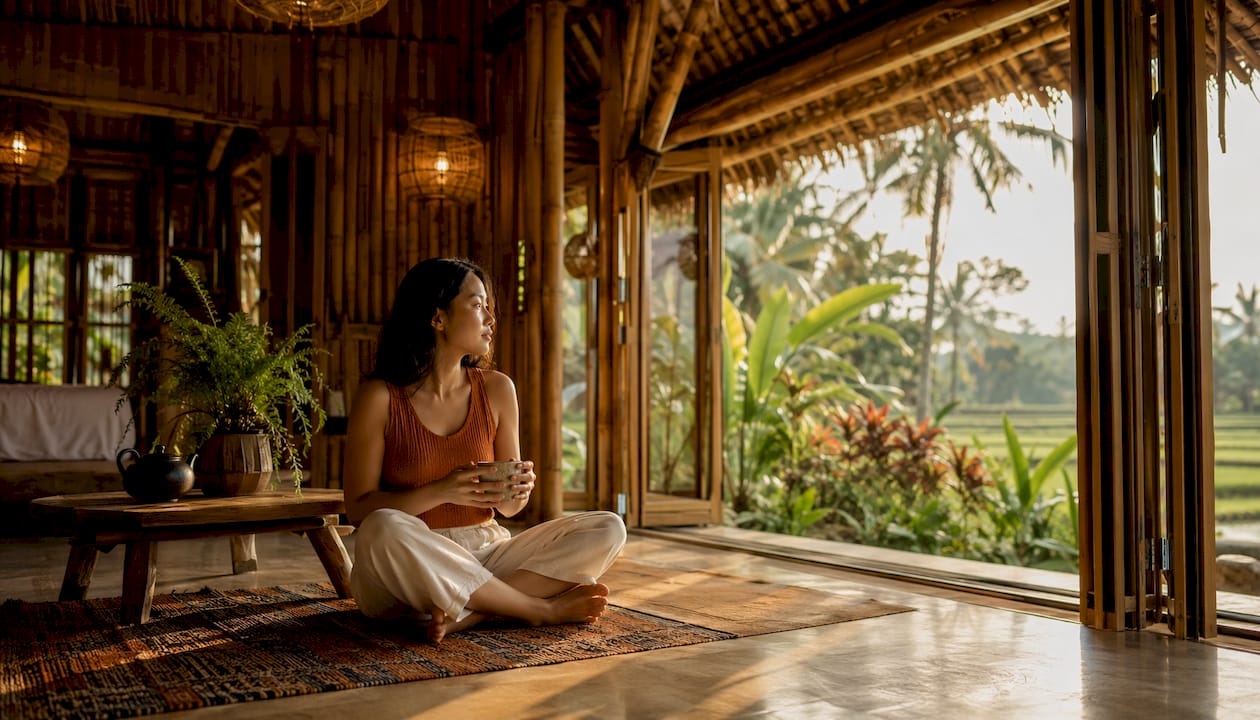
Ulaman’s bamboo architecture rises from rice paddy terraces outside Ubud, with villas built around a bio-filtered lake and a waterfall. The award-winning resort operates permaculture farms, runs a full wellness program, and maintains five-star service standards without the energy footprint of a conventional luxury property. Guests consistently describe it as unlike anything else in Bali.
Lchang Nang Retreat, Ladakh, India
Situated along the old Silk Road in the Nubra Valley, Lchang Nang’s 17 vernacular-style cottages are built from locally sourced river stones, mud, and wood, with no concrete used in construction. The retreat runs entirely on a 20KW solar plant and operates the region’s first high-altitude passive solar hydroponic greenhouse for food production. Glacial melt supplies all water on the property, UV-filtered for drinking.
Song Saa Private Island, Cambodia
A marine-positive private island resort in the Gulf of Thailand, Song Saa was Cambodia’s first all-villa luxury resort. All 24 villas feature biophilic design and local crafts, each with an infinity pool and open-air shower. Guests participate in coral restoration with resident marine biologists, and the resort’s organic garden supplies the kitchen with herbs and produce rooted in Khmer culinary tradition.
Africa and the Middle East
Adrère Amellal, Siwa Oasis, Egypt
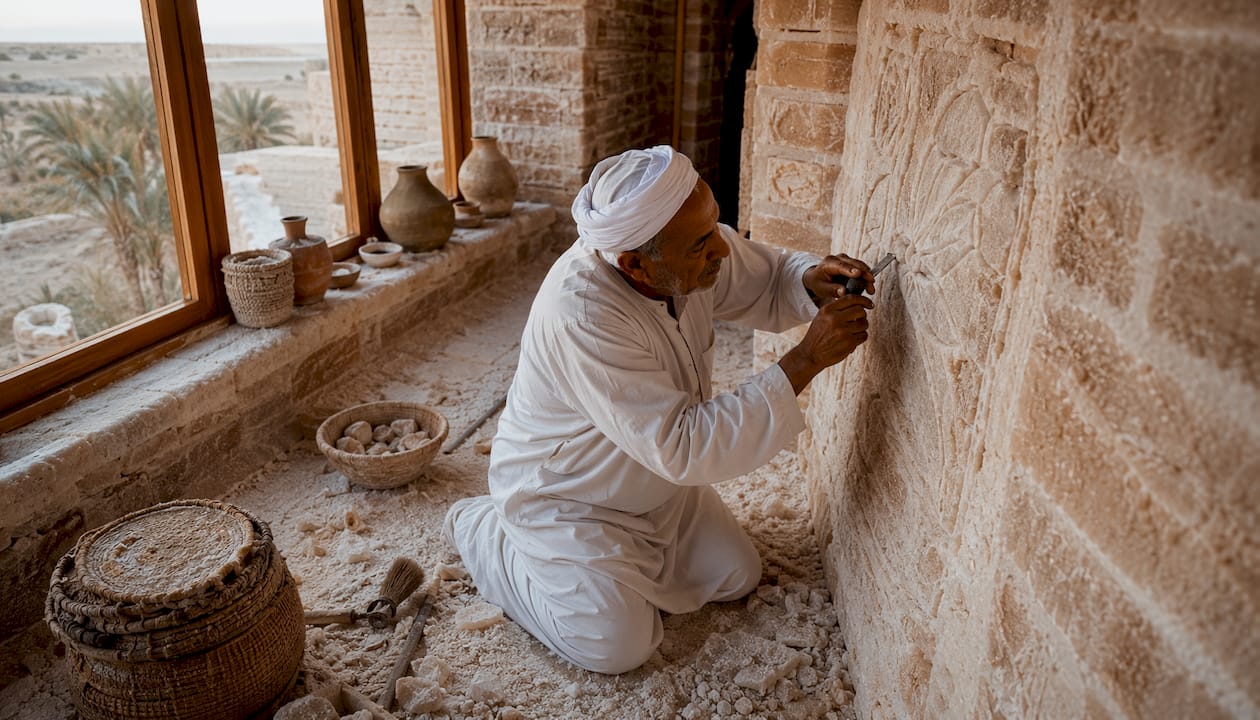
Adrère Amellal operates without electricity. Its 40 rooms are carved from rock salt and palm wood, lit only by beeswax candles and starlight. Organic gardens supply the kitchen, spring-fed pools offer respite from the desert heat, and Siwan artisans built every piece of furniture on the property. It is one of the most radical examples of off-grid luxury anywhere in the world.
Six Senses Zighy Bay, Oman
Set between the Musandam mountains and a powder-white beach, Six Senses Zighy Bay runs an on-site Earth Lab where guests learn composting, foraging, and low-impact food practices. Village-inspired architecture, Arabic hammams, and an ice cave round out a wellness program that takes sustainability education seriously without making it feel like homework.
Europe
Kalliokumpu Eco Lodge, Finnish Archipelago
Kalliokumpu operates on 100% solar power, uses a deep well and small-scale wastewater treatment system, and serves foraged island cuisine from its Archipelago Kitchen. Three glamping tents and a Tiny Cabin sit on a 4,500-square-meter natural property surrounded by forest and sea. The Finnish sauna culture, kayaking through the world’s largest archipelago, and near-total silence define the experience here.
How these lodges blend sustainability with genuine luxury
Understanding what separates a truly sustainable property from one that simply uses the word requires looking at four concrete areas: architecture, energy and water systems, community investment, and certifications.
Architecture that works with the environment
The best eco lodges treat their buildings as part of the ecosystem rather than impositions on it. Biophilic and vernacular architecture achieves thermal regulation naturally, reducing or eliminating the need for energy-intensive HVAC systems while creating spaces that feel deeply connected to their surroundings. At Lchang Nang, concrete-free cottages built from river stones and mud blend into the Ladakhi landscape so completely that the grey stone exteriors are adorned with traditional shingsak wood carvings above the windows. Golfo Dulce Retreat uses reclaimed hardwoods throughout its structures, with double-height open-air living areas that rely on natural ventilation rather than air conditioning.
Ulaman in Bali takes bamboo architecture to a different level entirely, with villas that guests describe as stepping into an Avatar film set. Song Saa’s 24 villas use biophilic design and hand-chosen local crafts, each positioned to maximize natural light and ocean breezes. Adrère Amellal is the most extreme example: every room is unique, built from rock salt, palm wood, and hand-cut stone by Siwan artisans, with no electricity and no conventional construction materials anywhere on the property.
Pro Tip: When evaluating eco-lodge architecture, ask specifically whether the building materials were sourced locally and whether passive design replaces mechanical climate control. A lodge that uses reclaimed or vernacular materials but still runs central air conditioning has not fully committed to the principle.
Energy, water, and food systems
The gap between a lodge that claims sustainability and one that practices it shows up most clearly in energy and food sourcing. Lchang Nang’s 20KW solar plant powers the entire property, with solar-heated panels in each room that consume less energy than an electric kettle. Golfo Dulce Retreat’s carbon-free hydro turbine, fed by its own rainforest springs, supplies 100% of its electricity needs. Kalliokumpu runs on 100% solar power with a deep well and on-site wastewater treatment.
Food systems tell an equally revealing story. Lchang Nang’s passive solar hydroponic greenhouse, the first of its kind at high altitude in the region, grows greens, tomatoes, and herbs for the kitchen. Adrère Amellal’s organic gardens supply vegetables, herbs, and fruits grown without pesticides, prepared in honey-glazed clay pots using traditional methods. La Selva’s chefs combine international technique with Ecuadorian ingredients sourced from the surrounding region. The connection between lodging and gastronomy at these properties is not incidental. It is a core part of the sustainability model.
Community investment and conservation partnerships
MahaRaja Eco Dive Lodge reinvests most of its profits into local ecological and social programs for the Papuan community, and every guest activity is designed around genuine connection with that community. Pousada Trijunção partners with NGO Onçafari for ongoing citizen-science fieldwork, meaning guests are not passive observers but active contributors to wildlife monitoring data. Song Saa was born from a desire to regenerate two degraded islands in the Koh Rong Archipelago, and its marine biologists work with guests on coral restoration year-round.
Jicaro Island Ecolodge in Lake Nicaragua, part of the Cayuga Collection, was built using timber salvaged from Hurricane Felix and connects guests with local artisans and fishing families. Pousada Trijunção’s conservation farm functions as an ecological corridor, and guests who join the fieldwork contribute directly to species monitoring in one of the world’s most threatened biomes.
| Lodge | Primary Certification or Recognition | Key Sustainability Feature |
|---|---|---|
| La Selva Eco-Lodge | Certified B Corporation | Carbon-neutral, Amazon biodiversity |
| MahaRaja Eco Dive Lodge | Lonely Planet recognized eco-luxury resorts | Community profit reinvestment |
| Golfo Dulce Retreat | Off-grid, TripAdvisor top-rated | Carbon-free hydro turbine |
| Lchang Nang Retreat | Architectural Digest recognized | 20KW solar plant, passive solar greenhouse |
| Pousada Trijunção | NGO Onçafari partnership | Citizen-science conservation fieldwork |
| Adrère Amellal | Heritage preservation model | Zero electricity, rock salt architecture |
| Song Saa Private Island | Marine-positive certification | Coral restoration with resident biologists |
| Kalliokumpu Eco Lodge | 100% solar powered | Nordic foraging cuisine, zero-waste systems |
What actually defines a luxury eco lodge
The term “eco lodge” gets applied loosely. A property with solar panels and a recycling bin is not the same thing as one that has restructured its entire business model around ecological accountability. A genuine luxury eco lodge, sometimes called a sustainable luxury retreat in the industry, meets criteria in both categories simultaneously.
On the sustainability side, the defining markers are:
- Third-party certification. B Corp status, LEED certification, or recognized eco-tourism standards from bodies like Rainforest Alliance or The Long Run verify that claims are independently audited rather than self-reported.
- Community economic participation. Profits flow to local communities, local workers build and staff the property, and local suppliers provide food and materials.
- Biodiversity preservation. The lodge actively monitors, protects, or restores the ecosystem it occupies, often through NGO partnerships or on-site conservation programs.
- Regenerative systems. Energy, water, and food systems are designed to minimize extraction and, where possible, restore natural cycles.
On the luxury side, the markers are equally specific:
- Bespoke service. Staff-to-guest ratios that allow genuinely personalized attention, not the scripted hospitality of a large resort.
- Design integrity. Spaces that are beautiful because of their materials and setting, not despite them. Vernacular architecture done well is more striking than generic five-star interiors.
- Privacy and exclusivity. Limited room counts, remote locations, and experiences that cannot be replicated at scale.
- Wellness depth. Spa programs, cuisine, and activities that connect to the specific place rather than importing generic luxury wellness formats.
The regenerative luxury travel model takes this further, asking whether a stay leaves the destination better than it found it. That is the standard the best properties in this list are working toward.
Expert insights on what separates impact-driven lodges from marketing claims
The distinction between a lodge that talks about sustainability and one that practices it is measurable. True eco lodges act as living laboratories funding conservation and indigenous-led initiatives, verified through direct NGO partnerships, guest participation in ecological monitoring, and transparent reinvestment of profits into community welfare.
La Selva Eco-Lodge illustrates what genuine guest participation looks like in practice. Naturalist guides lead guests to identify over 120 bird species and 6 monkey species, including pygmy marmosets, during a single stay. That is not a curated wildlife show. It is citizen science, and the data guests help collect contributes to ongoing biodiversity monitoring in the Yasuní Biosphere Reserve.
Pousada Trijunção operates on a similar model. The property’s partnership with NGO Onçafari means guests join actual fieldwork tracking maned wolves and jaguars across the Cerrado. The conservation farm’s 81,544 acres function as a corridor between protected areas, and the lodge’s operating model is built around maintaining that function.
Pro Tip: Before booking, ask the property directly: what percentage of profits goes to community or conservation programs, and can you name the NGO partners? A lodge with genuine impact will answer that question immediately and specifically. One that pivots to vague language about “giving back” probably does not have a real answer.
The architectural dimension matters too. Experienced eco lodge designers prefer biophilic and vernacular construction both for sustainability and guest comfort, achieving thermal regulation naturally and avoiding the energy drain of conventional climate control. Adrère Amellal’s rock salt and mud architecture keeps rooms cool through passive thermal mass. Lchang Nang’s solar-heated panels warm rooms in sub-zero Ladakhi winters without drying the air. These are not aesthetic choices. They are engineering solutions that happen to be beautiful.
The food dimension of sustainable hospitality is increasingly where lodges differentiate themselves. Lchang Nang’s high-altitude passive solar hydroponic greenhouse produces food in conditions where conventional farming is impossible. Adrère Amellal’s pesticide-free organic gardens feed a kitchen that prepares traditional Siwan dishes in clay pots. These are not farm-to-table marketing claims. They are the result of specific infrastructure investments that took years to build.
What separates the best properties from the rest is that their sustainability systems are not add-ons. They are the reason the lodge exists at all.
Key Takeaways
The most credible luxury eco lodges in 2026 combine third-party verified sustainability with genuine community investment, architectural integrity, and immersive conservation experiences that no conventional resort can replicate.
| Point | Details |
|---|---|
| Verify certifications independently | Look for B Corp, LEED, Rainforest Alliance, or The Long Run status rather than self-reported eco claims. |
| Community investment is measurable | The best lodges name their NGO partners and specify how profits flow to local communities. |
| Architecture signals commitment | Vernacular materials, passive cooling, and off-grid energy systems indicate genuine ecological design, not cosmetic sustainability. |
| Guest participation adds real value | Lodges like La Selva and Pousada Trijunção turn stays into citizen-science contributions, not just wildlife viewing. |
| Hiddendoortravel specializes in this | Hiddendoortravel curates bespoke itineraries to verified luxury eco lodges, providing insider access and tailored planning for eco-conscious travelers. |
Why the “luxury vs. sustainability” framing is the wrong question
The debate about whether luxury and sustainability can genuinely coexist misses the point. The properties in this article do not compromise luxury for sustainability or the reverse. They have figured out that the most interesting, most memorable, and most defensible form of luxury in 2026 is one that leaves something behind.
Staying at Adrère Amellal, where there is no electricity and your room is carved from the same salt rock that has been in the Siwa Oasis for sixty million years, is more luxurious than any five-star hotel with a spa menu and a rooftop pool. Not because it is comfortable in the conventional sense, though it is, but because it is irreplaceable. You cannot get that experience anywhere else. That irreplaceability is what affluent travelers are actually paying for, and it is only possible because the lodge has refused to modernize in ways that would destroy what makes it extraordinary.
The same logic applies to La Selva. The B Corp certification and the carbon-neutral operations are not marketing tools. They are what allows the lodge to sit 70 km into the Yasuní Biosphere Reserve and maintain the biodiversity that makes the experience worth having. Without the ecological commitment, there are no pygmy marmosets. Without the pygmy marmosets, there is no reason to go.
What I find most telling about the properties that genuinely earn the luxury eco lodge label is that their sustainability systems are usually invisible to the guest. You do not notice the hydro turbine at Golfo Dulce Retreat. You notice that the jungle is intact and the water in your outdoor shower is cold and clean. The engineering disappears into the experience. That is the standard worth holding every property to, and it is the one that most lodges claiming the eco label quietly fail.
Hiddendoortravel brings bespoke access to the world’s best sustainable lodges
Knowing which properties are genuinely impact-driven and which are trading on eco branding is the hardest part of planning a sustainable luxury trip. The lodges in this article are not easy to find, book, or sequence into a coherent itinerary without insider knowledge of their availability, access logistics, and what each one actually delivers on the ground.

Hiddendoortravel specializes in exactly this. As a bespoke luxury travel agency with deep experience in sustainable high-end destinations, Hiddendoortravel builds itineraries around properties with verified ecological credentials, not just attractive photography. That means access to lodges like La Selva, MahaRaja, and Pousada Trijunção, paired with the kind of on-the-ground knowledge that turns a good trip into an extraordinary one. For travelers who want the experience without the research burden, the luxury travel experts at Hiddendoortravel are the right starting point.