
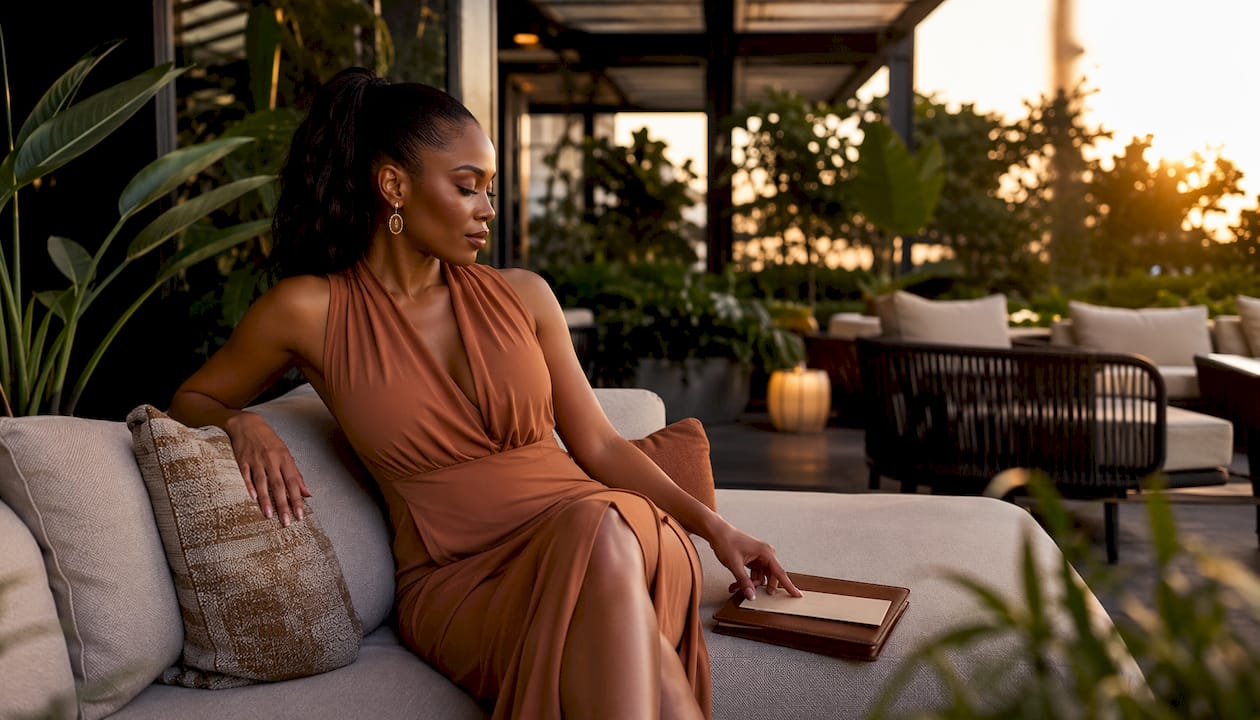
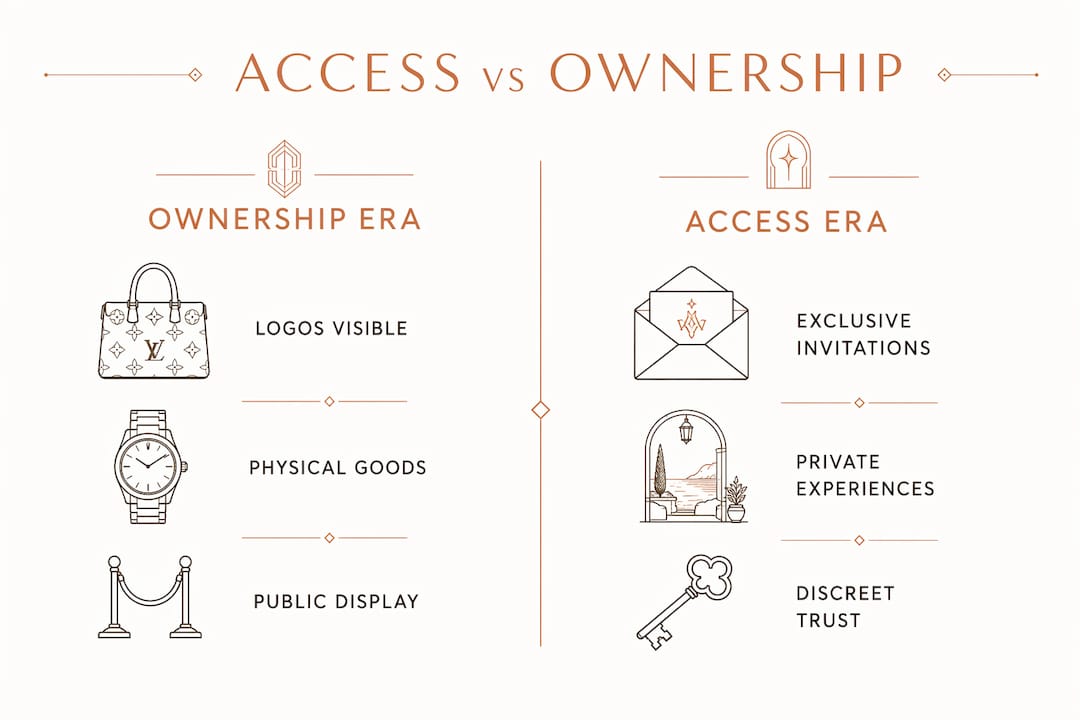
Access is the defining element of luxury, and it always has been. What has changed is that people are finally saying it out loud. Owning a Birkin bag signals wealth. Being on the list to buy one signals something else entirely: proximity to a world most people cannot enter regardless of how much money they have. That gap between wealth and access is where modern luxury actually lives.
The concept has a formal name in marketing circles: the exclusivity paradox. It describes the central tension luxury brands navigate — how to grow without becoming ordinary. The answer, increasingly, is to sell access rather than objects. Private channels, invitation-only communities, curated client relationships, and experiences that cannot be found on any booking platform are now the highest-margin offerings in the luxury economy.
- Hermès controls who can purchase its most coveted pieces through curated client relationships, not open sales
- Full resort buyouts and private yacht charters are among the fastest-growing requests in elite travel
- Invitation-only digital communities are replacing public social media as the preferred channel for ultra-high-net-worth engagement
- Scarcity, when deliberately managed, creates emotional value that no price tag alone can replicate
How the luxury spectrum runs from logos to silence
Luxury has never been a single thing. It runs along a spectrum, and where a person sits on that spectrum tells you a great deal about what they actually want.
Visible luxury occupies one end. Louis Vuitton’s monogram canvas and Bottega Veneta’s intrecciato weave are both immediately recognizable, but they function differently. The LV monogram announces itself; the Bottega weave rewards those who already know. Both are status signals, but they speak to different audiences.
- Louis Vuitton built one of the most recognized brand identities on earth through consistent visual codes and broad aspirational marketing
- Bottega Veneta, particularly under creative director Matthieu Blazy, has leaned into craft over logo, attracting buyers who find conspicuous branding gauche
Quiet luxury occupies the other end, and it is where the real cultural shift is happening. The Row, founded by Mary-Kate and Ashley Olsen, produces clothing with no visible branding whatsoever. The price points are extreme; the recognition is near-zero to outsiders. That is the point. Loewe, under Jonathan Anderson, operates similarly: the craftsmanship is extraordinary, the references are literary and artistic, and the customer who gets it feels genuinely distinguished from the one who does not.
- The Row and Loewe both signal membership in a cultural circle, not just a spending bracket
- Celine under Hedi Slimane has navigated this tension deliberately, maintaining a cool remove that keeps the brand from feeling accessible even as it scales
Cultural context shapes all of this. In markets where new wealth is still establishing itself, visible luxury tends to dominate. In older-money circles, the quieter signals carry more weight. Neither is wrong; they serve different social functions.
How scarcity and control shape the value of luxury experiences

Exclusivity is not accidental. The most powerful luxury brands engineer it.
Hermès does not simply have a waiting list for its Birkin and Kelly bags. It has a relationship requirement. Clients who have spent across multiple categories over time earn the opportunity to be offered a bag. The bag itself is almost secondary to what the process communicates: you belong here, and most people do not. That emotional architecture is worth more than any product specification.
“Relationship-based access and private, invite-only community features remain especially prized by top-tier spenders, in line with the anti-laws of luxury.” — Wharton School, 2025
Private fashion shows operate on the same logic. Celine and Louis Vuitton both hold presentations that are not open to press or public in the traditional sense. The guest list is the message. Being in the room is the product.
Scarcity in luxury travel works identically. Full resort buyouts and private island charters are not just about privacy; they remove the friction of sharing space with strangers, which is itself a form of luxury. The Virtuoso Luxe Report 2026 confirms that the most requested ultraluxe experiences are all-inclusive private formats, celebration buyouts, and privacy itself.
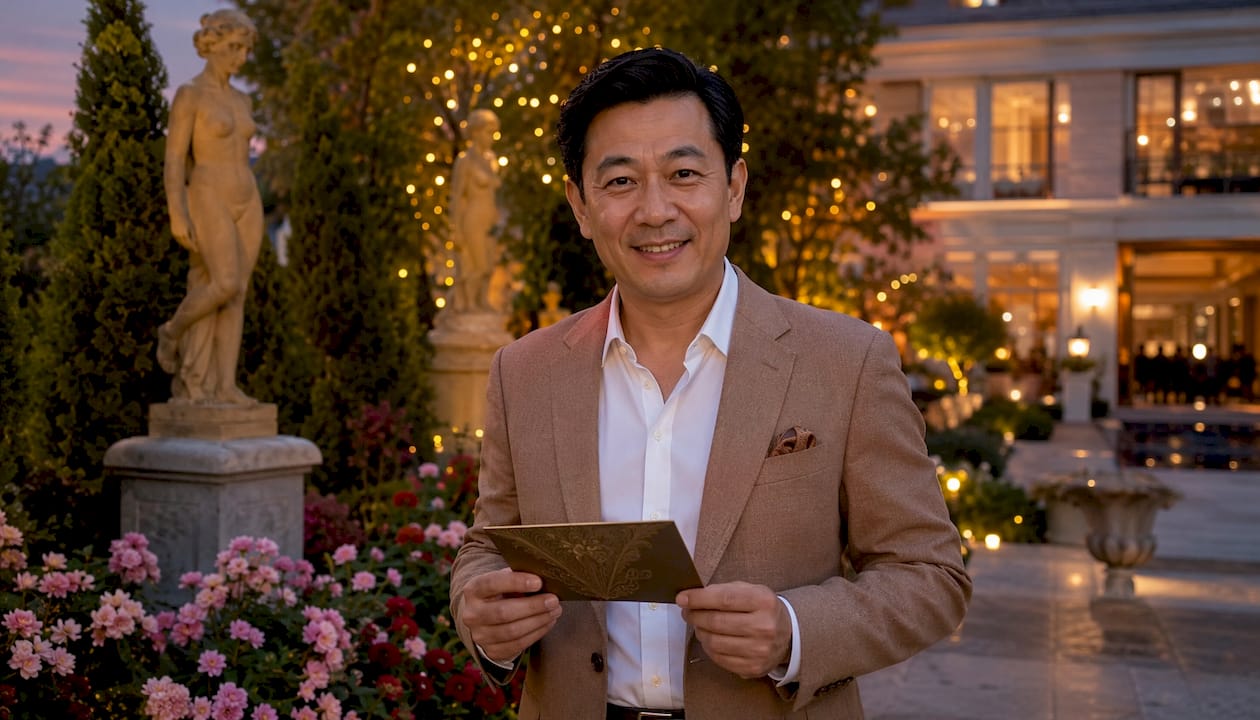
Control over access also builds perceived value through anticipation. When something is hard to get, the getting of it carries weight. That psychological mechanism is not manipulation; it is how humans assign meaning to things.
How luxury brands balance digital reach with exclusivity
The internet created a genuine problem for luxury. Visibility is now free, which means it is worth less. A brand that appears everywhere feels like it belongs everywhere, and belonging everywhere is the opposite of exclusive.
“The ultra-high-net-worth segment increasingly values ‘quiet access’ — membership in invitation-only digital communities and moments difficult to photograph or share, preserving rarity.” — Wharton School, 2025
Hermès has responded by restricting its most meaningful digital interactions to private invitation-only channels, keeping public-facing content beautiful but deliberately limited in depth. Louis Vuitton uses its public digital presence for brand storytelling while reserving its most exclusive client communications for private, relationship-based channels. Celine has maintained a deliberate coolness online, posting infrequently and never in a way that feels eager.
The quiet luxury trend in fashion has a direct digital parallel: brands that resist the pull toward constant content creation and broad social media engagement tend to retain more of their aura. The brands that post everything lose the mystery. Mystery is a luxury product.
Pro Tip: If a brand’s entire offering is visible on its public Instagram, it is not operating at the top of the luxury market. The most exclusive tier is always off-platform.
For luxury travel, the same principle applies. The experiences worth having are not searchable. They emerge from trust-based relationships with advisors who have spent years building the access that clients cannot build themselves.
Why access matters more than ownership in 2026
The data on this shift is concrete. According to the Virtuoso Luxe Report 2026, 45% of professional travel advisors report rising client demand for ultraluxe, private, and exclusive-use travel experiences that are unavailable through public channels. A five-star hotel room is now the baseline. What earns a premium is what cannot be booked on a website.
The Wharton School’s 2025 study of 310 U.S. high-net-worth consumers found that wealthier consumers value exclusivity more than less affluent ones, and that higher household income positively moderates the preference for exclusive online communities. The richer the consumer, the more they want access, not just products.
| Luxury marker | Then (ownership era) | Now (access era) |
|---|---|---|
| Status signal | Logo, car, watch | Invitation, membership, private experience |
| Scarcity source | Limited production | Controlled access and relationships |
| Visibility goal | Be seen owning it | Be unseen, but inside |
| Purchase driver | Aspiration | Belonging and trust |
Research on digital platform loyalty adds another layer: consumers loyal to a single preferred platform show stronger willingness to pay premiums and invest in exclusive memberships than those who spread their loyalty across multiple platforms. In luxury terms, the client who commits to one trusted advisor or one private membership spends more and stays longer. Scarcity of relationship, not just product, drives that loyalty.
Modern luxury status now emphasizes what experiences or networks one can enter rather than what possessions one owns. Sociologist Jeremy Rifkin described this decades ago as the shift from an ownership economy to an access-driven one. Luxury is now one of its clearest expressions.
Luxury providers have responded by selling privacy and guaranteed access as their highest-margin offerings, moving away from commoditized products that can be compared and replicated online, as discussed in cabin morning rituals that make a gorge getaway feel exclusive. The test is simple: if a client can find it on a search engine and book it themselves, it is not a luxury product in the truest sense.
Key Takeaways
Access is the core currency of modern luxury, outranking ownership, price, and visibility as the primary marker of genuine exclusivity.
| Point | Details |
|---|---|
| Access over ownership | Status now comes from what you can enter, not what you can buy and display. |
| Scarcity is engineered | Hermès, private travel buyouts, and invitation-only communities all use controlled access to build lasting value. |
| Digital exclusivity is real | Brands like Hermès use private invitation-only channels online; broad visibility erodes luxury aura. |
| Data backs the shift | 45% of professional travel advisors report rising client demand for private, exclusive-use experiences unavailable through public channels. |
| Hiddendoortravel’s role | Hiddendoortravel specializes in bespoke trips built around privileged access that clients cannot secure through public channels. |
The quiet revolution most luxury observers miss
The conventional take on luxury access focuses on the obvious: Hermès waiting lists, private jets, members-only clubs. What gets less attention is the psychological architecture underneath all of it.
Access creates a specific feeling that ownership cannot replicate: the feeling of being chosen. A watch you bought is something you acquired. An invitation to a private dinner at a chef’s home is something someone decided you deserved. That distinction sits at the root of why access hits harder than ownership for people who already have everything they need.
The brands that understand this are not just selling scarcity. They are selling the experience of being recognized. Hermès does not just limit supply; it signals to the buyer that their relationship with the brand has been noticed and rewarded. The Row does not just avoid logos; it creates a community of people who recognize each other without needing to announce themselves. That community is the product.
What this means for travel is something Hiddendoortravel has built its entire approach around. The most valuable thing an elite travel agency offers is not a hotel room or a flight upgrade. It is the relationship that gets a client into the room that was not supposed to be available, the experience that does not appear on any platform, the moment that cannot be replicated because it was built specifically for them. That is personalized travel at its highest expression.
The shift toward quiet luxury is also a shift toward trust. Discretion has become one of luxury’s most valuable currencies, as one private members’ platform put it plainly. The clients who value access most are often the ones least interested in broadcasting it. They want exceptional things to happen quietly. That is a fundamentally different brief than selling aspirational products to people who want to be seen.
Hiddendoortravel opens doors that public channels cannot
Hiddendoortravel was built for exactly the kind of traveler this article describes: someone for whom a five-star hotel is the starting point, not the destination. The real product is what happens when a trusted advisor with years of relationships calls ahead, knows the right contact, and secures the experience that was never listed anywhere.
That means full villa and resort buyouts, off-menu itineraries built on personal supplier relationships, and guaranteed access to experiences that sell out before they reach the public. The bespoke luxury travel Hiddendoortravel curates is not comparable to anything bookable online, because the access itself is the product. Every trip is built around what the client cannot find themselves, not what they already know exists.
If the shift from ownership to access resonates with how you think about travel, talk to the experts at Hiddendoortravel. The doors worth opening are rarely the ones marked with a sign.
Useful sources on luxury and access
- The Exclusivity Paradox, Wharton School (2025) — A data-driven study of 310 U.S. high-net-worth consumers examining how luxury brands can maintain exclusivity while embracing digital channels.
- Virtuoso Luxe Report 2026 — Survey of more than 20,000 professional travel advisors mapping the rise of ultraluxe, private-use travel demand.
- Modern Luxury and Its Evolution, Branding Magazine — Expert analysis on the shift from ownership to experiential access as the core of modern luxury status.
- Quiet Luxury and Restraint in Fashion, Lampoon Magazine (2026) — Industry analysis of how leading brands use private, invitation-only experiences to preserve exclusivity.
- Access Versus Exclusivity in the Digital Creative Landscape — Research on single-homing loyalty and willingness to pay premiums in exclusive membership contexts.
- To Succeed in Luxury Travel, Sell Access Not Assets — Strategic framework for luxury travel providers on why access is the highest-margin offering.
- Access as Luxury: The New Architecture of Belonging, Opulent Club — Analysis of how membership ecosystems and private networks are redefining prestige for global executives and founders.
- Why Wealth Is Shifting From Possessions to Access, Haute Ledger — Cultural overview of how visibility has changed and why discretion now drives luxury spending behavior.