
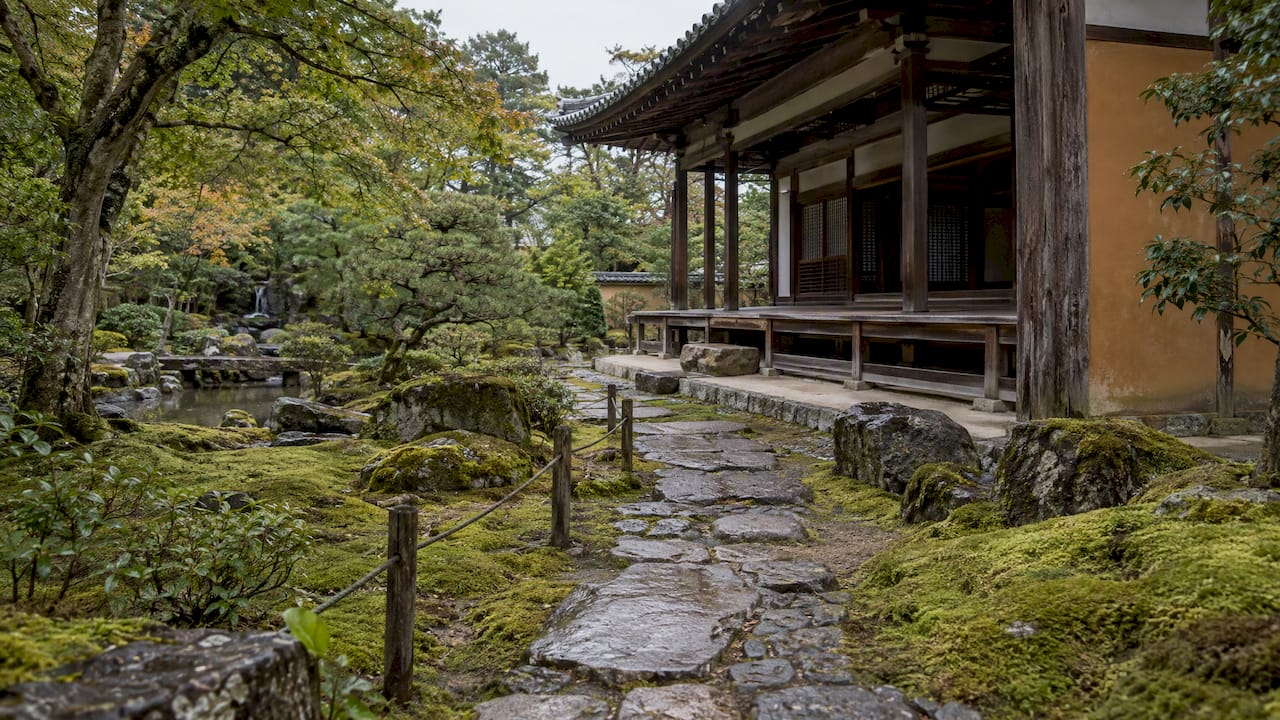
The best luxury Japan itinerary for a first visit runs 10 to 14 days and links Tokyo, Hakone, Kyoto and Osaka, with one night or two in a ryokan, a private guide on the days that matter and the longest rail legs handled for you. Below you’ll find the night counts we recommend, how to sequence them, when to go, how to move through the country, and what to arrange months ahead.
TL;DR
- Plan at least 10 days for a first trip. The New York Times advises this much time for the Golden Route through Tokyo, Kyoto, Osaka and the stops between.
- Our core shape: Tokyo, then Hakone for a ryokan, then Kyoto as the longest stay, then Osaka before departure. Add days for Naoshima or Kanazawa.
- Spring and autumn are the best seasons, but book earliest for cherry-blossom weeks. Avoid Golden Week, Obon and New Year unless you have no choice.
- Use the Shinkansen between cities, private cars for short or awkward legs, and forward your luggage ahead.
- Hire private guides for Kyoto, food days and any day with restricted access. Reserve ryokan and top tables long before you fly.
Table of Contents
- How many days a luxury trip to Japan needs
- The 10-day luxury Japan itinerary
- The 14-day version: slower, with one off-route stop
- When to go
- Where to stay: ryokan, hotel or both
- Experiences that make the trip
- Getting around: trains, cars and luggage
- Why a private guide in Japan is worth it
- Preparing as a traveler from the United States
- What we do differently
- Plan your Japan trip with Hidden Door Travel
- FAQ
- Sources
How many days a luxury trip to Japan needs
Ten days is the practical floor. Japan’s main cities are far apart in feel as well as distance, and a luxury trip should not be a relay of check-ins. The New York Times puts the minimum for the Golden Route at 10 days for first-time visitors, and our own planning agrees with it.
Here is how we think about the length:
| Trip length | Best for | Shape |
|---|---|---|
| 7 days | A short first look, or a stopover add-on | Tokyo, Hakone, Kyoto. Tight but workable |
| 10 days | First-timers who want the classics without rushing | Tokyo, Hakone, Kyoto, Osaka |
| 14 days | Couples and families who want a slower pace and one off-route stop | The core plus Naoshima, Kanazawa or a mountain stay |
| 16 to 21 days | Return visitors, honeymooners, multigenerational groups | Two regions in depth, such as Kyushu or Tohoku, plus the core |
If you are flying from the United States, remember the long-haul flight and the time change. Build the first two days lightly. A slow arrival in Tokyo, with a car at the gate and a good dinner, sets the tone for the whole trip.
The 10-day luxury Japan itinerary
This is the plan we would hand a first-time couple who want culture, food and comfort, with no gaps in the schedule where something goes wrong.
| Days | Where | What it holds |
|---|---|---|
| 1 to 4 | Tokyo (3 nights, plus the arrival night) | Private car from the airport, a guided day through old and new Tokyo, a long dinner, a craft or art morning |
| 4 to 5 | Hakone (1 to 2 nights) | A ryokan stay with onsen and a multi-course dinner, views of Mount Fuji if the weather cooperates |
| 5 to 8 | Kyoto (3 nights) | A private guide for temples and gardens at off-hours, tea ceremony, a machiya or traditional neighborhood walk, kaiseki |
| 8 to 9 | Osaka (1 night) | Street food with a local guide, a final-night dinner, a short transfer to Kansai airport |
| 10 | Departure | A late-morning flight is easier than a dawn one |
A first-night ratio of three nights in Tokyo, one or two in Hakone, three in Kyoto and one near Osaka is a sound base. It keeps the pace gentle enough to enjoy the hotels you are paying for.
Tokyo: start with scale, then go small
Tokyo works best when you split it by neighborhood instead of ticking off sights. Spend one day on the old city, with shrines, craftsmen and food markets. Spend another on design and contemporary architecture. Leave a third open for what you discover, whether that is a private sushi counter, a tea house or a studio visit.
A private guide is the single best upgrade here. Tokyo has no center, and the subway, though excellent, is a lot to manage with jet lag. A guide who knows which door to knock on turns an hour of confusion into a morning of access. If you want to understand the dining side, this guide to culinary experiences explains what separates a true culinary encounter from a reservation.
Hakone: the ryokan night
Hakone is the pause button. It is a short ride out of Tokyo, and it is where most first-time luxury itineraries put their first ryokan night. Japan’s national tourism organization describes the high end of Japanese hospitality as five-star hotels and ryokan offering seasonal kaiseki and onsen, and Hakone is where that comes together.
Two practical points. First, choose a room with a private bath if you have tattoos or prefer privacy, since public onsen rules vary by property. Second, arrive by mid-afternoon. A ryokan is built around the evening: bath, dinner, then futons laid out while you are at the table. Reaching it at 7 p.m. wastes what you paid for.
Kyoto: where extra nights pay off
Kyoto is the heart of most luxury Japan itineraries, and it rewards time. Three nights is the minimum. Five is better if you are adding day trips to Nara or a craft workshop. Crowds are the main challenge. A good planner works around them: early or late temple access, quiet gardens, and private tea or calligraphy sessions in places the tour buses never stop.
This is also where a private guide earns the fee. Kyoto’s history is layered, and the difference between a good day and a great one often comes down to who is beside you. We cover the idea in more depth in our luxury cultural immersion guide.
Osaka: end on food
Osaka is loud, funny and delicious, which makes it a good final stop. One night is enough for most guests, two if food is the priority. From there the transfer to Kansai airport is short, so you avoid a last-day dash back to Tokyo.
The 14-day version: slower, with one off-route stop

Fourteen days lets you stop rushing. We would shape it as four nights in Tokyo, two in Hakone, five in Kyoto and two in Osaka, with a flight home on day 14. Use the extra Kyoto time for a day trip and a free day.
Or swap one Kyoto night for a stop on the route to give the trip a different texture:
- Naoshima. An island of contemporary art museums and design-led hotels, reached by rail and ferry. It suits couples and design lovers.
- Kanazawa. Gardens, preserved geisha districts and a calmer pace than Kyoto.
- A mountain or heritage stay. Quiet temple lodging or a mountain ryokan for those who want a more spiritual end to the trip.
Honeymooners often prefer this longer shape, because it leaves room for a private-bath ryokan night and a long, unhurried dinner without the schedule crowding in.
When to go
Timing affects both price and experience. Japan’s tourism organization notes that spring brings blossoms and mild weather and autumn brings foliage and comfortable weather, and these are the seasons most luxury travelers target.
The same page flags the periods to plan around: Golden Week in late April and early May, Obon in mid-August, and New Year from late December into early January, when transport and accommodation are crowded and prices are often higher. It adds that June and weekdays in January and February tend to be less crowded.
Other factors:
- Rainy season. Japan’s national parks guidance places it from early June through mid-July, followed by summer heat and humidity, with typhoon season peaking around August and September.
- Cherry blossom. Condé Nast Traveler notes the season is beautiful but especially crowded and expensive, while autumn offers comfortable temperatures and foliage with fewer tourists than spring.
Our view: late October to November is often the sweet spot for a luxury itinerary, and so is the quieter edge of spring. Blossom timing shifts each year, so a trip built around a single week carries risk. If your dates are flexible, read our piece on why off-peak luxury travel delivers more.
Where to stay: ryokan, hotel or both
The strongest itineraries mix the two. Use a top-tier hotel in Tokyo and Kyoto, where location, service and a long day’s comfort matter. Use a ryokan in Hakone or another onsen town, where the whole point is the evening ritual.

JNTO describes omotenashi as wholehearted care for guests and anticipating their needs, and you feel it most in a ryokan: the staff who unfold the bedding, the dinner paced course by course, the room that changes with the season.
What to know before booking:
- Many of the best ryokan have only a handful of rooms, so the finest rooms go first.
- Dinner and breakfast are often included and set in advance. Share dietary needs at booking, not on arrival.
- Check-in windows are firm. Tell the property if your train is late.
- Most ryokan expect you to leave the large bags behind. Pack a small overnight bag for that stop (see luggage below).
Experiences that make the trip
JNTO’s luxury guide lists tea ceremonies, private cooking classes, geisha evenings and sleeper trains among the experiences visitors can add. We would choose a few and do them well rather than stack them.
Our short list for a first visit:
- A private tea ceremony in Kyoto with a host who explains the choreography.
- A hands-on cooking session, or a market walk that leads straight into a meal.
- A craft visit, such as ceramics, textiles or lacquer, with a maker.
- A seasonal kaiseki dinner in a ryokan or a well-regarded Kyoto restaurant.
- One evening of entertainment arranged through a trusted introduction rather than a walk-in.
Some of the best tables and studios have no public booking. They take introductions. That is where a planner with long-standing relationships changes the outcome.
Getting around: trains, cars and luggage
For travel between major cities, JNTO recommends the Shinkansen, noting that Gran Class is the ultimate luxury option and that private cars or taxis with English-speaking chauffeurs suit shorter journeys. That matches how we plan: bullet train for the long legs, private car for airport runs, mountain roads and any day with several stops.
Skip the rail pass
Most luxury itineraries do not need a pass. JNTO’s guidance says travelers should check eligibility and route cost, and that the Japan Rail Pass now needs very extensive mileage to pay off. On a four-city route, individual reserved tickets usually make more sense.
Luggage: plan this before you pack
This is the detail that catches first-timers. On the Tokaido, Sanyo and Kyushu Shinkansen lines, oversized baggage with total dimensions between 160 cm and 250 cm needs an advance seat reservation, and skipping it can bring a fee. Bags up to 160 cm in total fit in the overhead racks or footwell space without a reservation.
The simple fix is to send large bags ahead by luggage forwarding between hotels, usually Tokyo to Kyoto, and travel with a small bag on the train and for the ryokan night. We arrange this as a matter of course.
Luxury trains
If rail itself is part of the dream, Japan’s sleeper trains are worth a look. Our overview of the best luxury train journeys covers how to think about them, and berths sell out far in advance.
Why a private guide in Japan is worth it
A private guide does three things you can’t easily do yourself.
- Language and context. Signs, menus and customs are easier with someone beside you, and temples and gardens mean more when you know the story.
- Access and pacing. A guide who knows a neighborhood can time visits to avoid crowds, and can open doors that need a personal introduction.
- Logistics. Station transfers, ticket machines, restaurant etiquette and a wet-weather plan B become someone else’s problem.
Where a guide matters most: Kyoto, any food-led day, and Tokyo on the first full day. On travel days or a spa day, you probably don’t need one. A good planner matches guide time to the days that need it, instead of attaching a guide to every day and inflating the bill.
Preparing as a traveler from the United States
The basics are simple. According to the Japanese consulate’s quick-facts page, U.S. citizens need no visa for short-term stays of less than 90 days, though your passport must be valid for the whole stay and have a blank page for the entry stamp. The same page notes that visitors complete entry declarations, which can be done in advance online. Check the embassy page for current rules before you book, since requirements can change.
A few more points we raise with our clients:
- Book the long-haul flight into Tokyo Haneda or Narita and out of Osaka Kansai to avoid backtracking.
- Reserve ryokan, top restaurants and private experiences first, then fit flights around them.
- Consider travel protection for a trip with prepaid ryokan and guide fees.
- Allow a buffer day on either end if the trip includes a cruise or an add-on elsewhere in Asia.
If Japan is one stop on a bigger journey, our guide to designing a multi-destination luxury trip shows how to link it without wasting days.
What we do differently
Most first-time Japan itineraries fail in the same place: the plan looks perfect on paper and then collapses into transfers, queues and a wet afternoon with nothing booked. We build the trip backwards from the experiences that matter to you, then place hotels, trains and guides around them.
We have more than 20 years in the industry, and we lean on direct destination knowledge and relationships with partners who can open doors that a search engine will not. Japan rewards that. A ryokan that books out a year ahead, a studio that takes visitors by introduction, a dinner that has no online reservation page: those are the details that make the difference.
Our job is also to take the friction out. Luggage forwarded between cities, cars waiting at stations, guides matched to the days that need them, and a plan B for a typhoon or a closed garden. When a trip is complex, that is where we do our best work.
Michael
Plan your Japan trip with Hidden Door Travel
We design bespoke luxury trips, from custom itineraries to hotel, air, car and cruise bookings, with concierge support from the first call to your return. For Japan, that means the right ryokan, the right guide for each day and a rail and car plan that keeps your bags out of your hands.

If you would like a plan like the ones above, tailored to your dates and pace, start with our luxury travel agency page or get in touch through our home page. If you want to know how planning fees work first, see what luxury travel planning costs.
FAQ
How many days do I need for a luxury Japan itinerary?
At least 10 days for a first trip covering Tokyo, Kyoto, Osaka and the stops between. Fourteen days adds breathing room and one off-route stop such as Naoshima or Kanazawa. Shorter than a week is possible, but you will spend much of it in transit.
What is the best time of year for a luxury trip to Japan?
Spring and autumn are the usual favorites, for blossoms and foliage. Avoid Golden Week, Obon and New Year, when travel and hotels are crowded and often pricier. Late autumn and the quiet edges of spring often give the best mix of weather, availability and calm.
Do I need a private guide in Japan?
You can travel without one, but a guide adds the most in Kyoto, on food-focused days and on your first day in Tokyo. They handle language, timing and access. We suggest guides for the days that benefit, not every day.
Do US citizens need a visa for Japan?
For short-term stays under 90 days, U.S. citizens do not need a visa. Your passport must be valid for your entire stay, and you should check the official page for current entry procedures before you travel.
Sources
- The Ultimate 10-Day Japan Itinerary, The New York Times
- Luxury Travel in Japan, Japan National Tourism Organization
- Tips, Japan National Tourism Organization
- Seasons and Climate, National Parks of Japan
- The Best Time to Visit Japan, Condé Nast Traveler
- JR pass and alternatives, Japan National Tourism Organization
- Luggage information, Central Japan Railway Company
- Traveling to Japan Quick Facts, Consulate General of Japan in Seattle
- Defining Culinary Experiences: a Traveler’s Guide