Book a curated private or insider museum tour through an experienced planner or directly with the museum. Give yourself at least two weeks of lead time, ideally a month for anything involving curators or after-hours access, and budget separately for a guide minimum plus per-person admission. Travel agencies and institutions like the Museum of Modern Art (MoMA) often run this playbook daily.
TL;DR:
- Booking at least two weeks in advance is necessary, with a month recommended for curator-led or after-hours tours due to limited availability.
- Costs include a guide fee or minimum payment, with separate charges for admission unless bundled, and higher fees for specialized experiences like behind-the-scenes or buyouts.
- Curator-led and insider tours require longer lead times, higher flat fees, and often involve security clearances, waivers, and capacity restrictions.
- Confirm whether admission is included in the guide fee to avoid unexpected charges, and prepare for additional costs like transportation, security, and optional extensions.
- Working through an experienced planner can secure faster access and avoid administrative hurdles, especially for exclusive experiences, saving time and ensuring proper arrangements.
Table of Contents
- What Private and Luxury Museum Tours Actually Include
- Matching Access Type to Lead Time and Cost
- Planning and Booking Your Private Museum Tour
- How to Choose the Right Guide or Planner
- What to Expect on the Day of Your Tour
- Why an Experienced Planner Changes the Outcome
- Book Your Bespoke Private Museum Tour
- Quick Reference: Museum Tour Pages to Check
- Sources
- FAQ
What Private and Luxury Museum Tours Actually Include
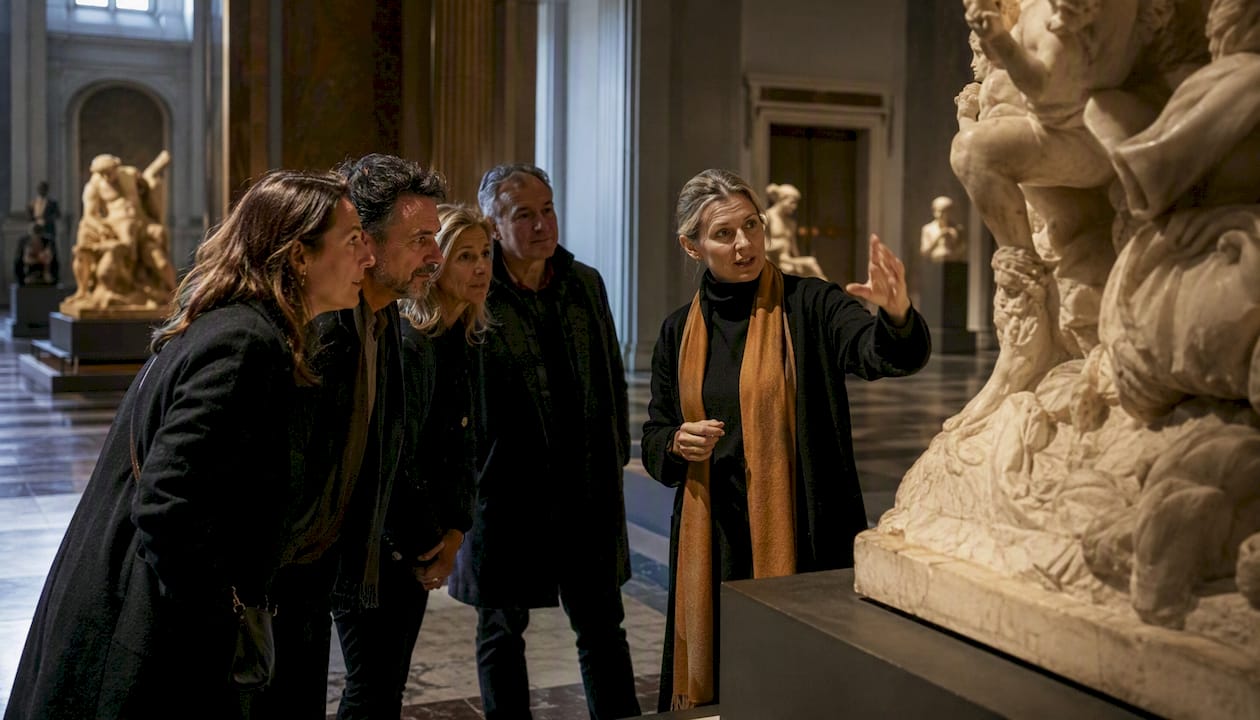
“Private tour” gets used loosely, and that vagueness costs people money and disappointment. A standard private guided tour means one small group, one guide, and a route built around what you actually want to see rather than the museum’s default highlights walk. The pacing is yours to set. Curator- or conservator-led sessions go further: you get someone who has spent years studying a specific collection, and sometimes access to objects not on public display.
Behind-the-scenes or insider programming is its own category entirely, often putting visitors inside conservation labs or active research spaces rather than just the galleries. Before- or after-hours buyouts sit at the top of the pyramid, closing part or all of a museum to the public for your group alone.
Here’s how the four tiers typically break down:
- Standard private tour: Small group, dedicated guide, flexible route and pace.
- Curator or conservator-led visit: Scholarly depth, occasional access to non-public objects.
- Behind-the-scenes or insider tour: Labs, archives, or active conservation areas, usually with capacity limits.
- Before/after-hours buyout: The museum, or a wing of it, closed exclusively to your party.
Matching Access Type to Lead Time and Cost
Each tier above comes with its own booking rules, and mixing them up is where most people get caught off guard.
- During-hours private tours usually carry a guide or group minimum payment, and admission is frequently billed as a separate line item unless the museum states otherwise. Confirm this before you assume it’s bundled.
- Curator-led and conservator visits run on limited availability, since these are working scholars with research schedules, not tour staff on standby. Expect higher flat fees and less flexibility on dates. The Museum of the City of New York publishes starting rates for exactly this kind of experience, and some packages include gallery admission while others state it separately.
- Behind-the-scenes or insider tours add security clearances, signed waivers, and considerably longer lead times, since staff need to coordinate around active lab or archive work rather than just a docent’s calendar.
- Before/after-hours buyouts command the steepest premiums. Closing a museum, even partially, means extra staffing, insurance, and sometimes climate or lighting adjustments to protect the collection while your group is inside.
The jump from tier one to tier four isn’t linear in price or complexity. It’s closer to the difference between renting a car and chartering a private jet.
Planning and Booking Your Private Museum Tour
Two weeks is the floor, not the target. MoMA’s own guidance recommends booking tours two weeks to a month ahead, and that window gets tighter fast if you want a curator or an after-hours slot, since those depend on staff schedules that fill early.
Your total cost usually stacks up from several pieces:
- A guide fee or flat minimum payment, which varies by museum and tour type.
- Per-person admission, often separate unless the tour package states it’s included.
- Member discounts, which can meaningfully reduce the guide minimum at some institutions.
- Rush fees for last-minute requests, plus hourly extension charges if your group wants more time.
Before you pay a deposit, confirm the logistics checklist: group size limits, language needs, accessibility accommodations, the exact meeting point, and any security or waiver requirements tied to restricted areas. If you’re planning a private car to and from the museum, or a small reception before or after the tour, sort that timing now rather than the week of.
Pro Tip: Ask whether admission is bundled into the guide fee or billed separately before you get a final quote. The Museum of the City of New York notes some curator-led packages include gallery admission while others don’t, and that single detail can shift your total by a meaningful amount. If you’re weaving the tour into a longer city itinerary, organizing a private guided cultural tour around a museum visit works best when transportation and timing get locked in early.
How to Choose the Right Guide or Planner
The gap between a polished private museum experience and a mediocre one usually comes down to what the guide or planner can actually document, not what they promise on a call. Ask directly: What are the guide’s credentials, and do they have standing relationships with curators at the museums you want to visit? Can they confirm access and total fees in writing before you pay anything? What’s the cancellation and rush-fee policy if your dates shift?
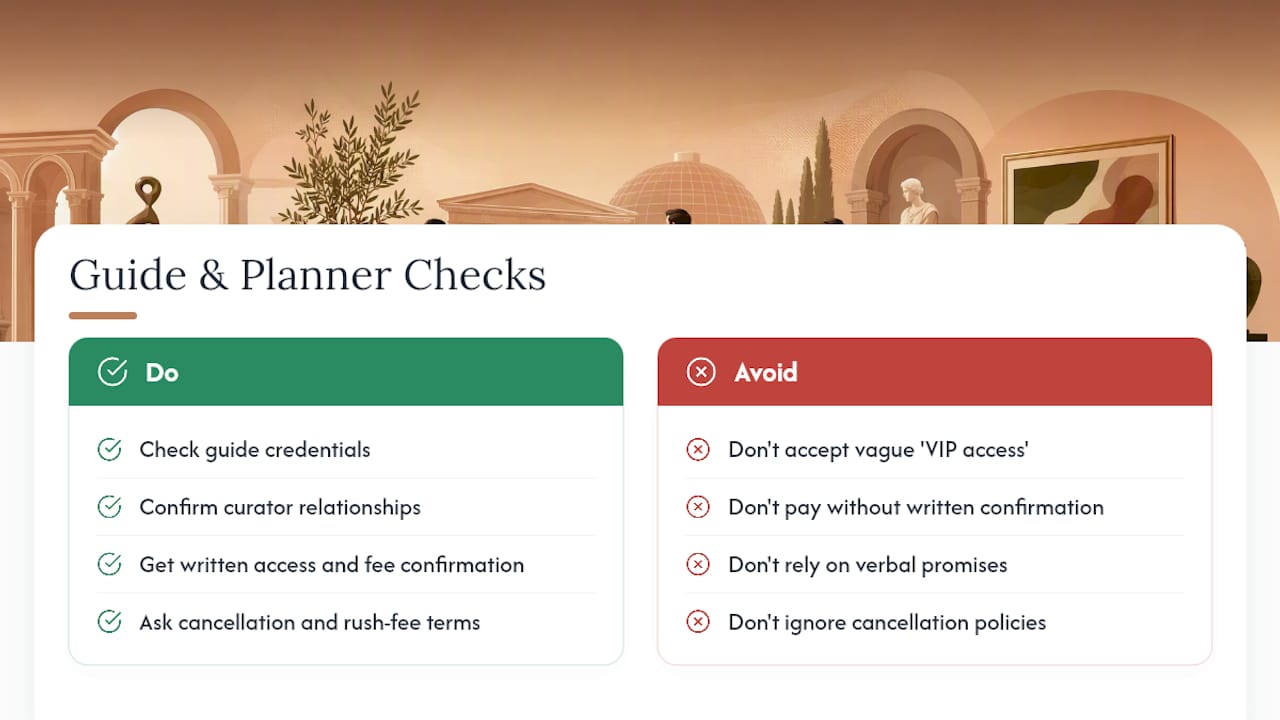
A strong provider will hand you sample itineraries and show they can adjust for accessibility needs or a specific scholarly interest, not just recite a fixed script. Treat vague “VIP access guaranteed” language as a red flag until it’s backed by a written confirmation from the museum itself. Reviewing private guided tour benefits before you commit helps you spot the difference between real customization and a marketing line.
What to Expect on the Day of Your Tour
Arrive with time to spare. Most private tours start with a security or admission check at a designated meeting point, separate from general visitor lines. Your guide sets the pace, often slowing down for close-looking moments and leaving room for real questions rather than a rehearsed monologue.
Photography and handling rules still apply, private tour or not, so confirm in advance if you want to shoot in restricted galleries. Comfortable shoes matter more than you’d think. If your day includes a reception or onward transportation, a good planner choreographs the handoff so nothing feels rushed between the museum and whatever comes next.
Why an Experienced Planner Changes the Outcome
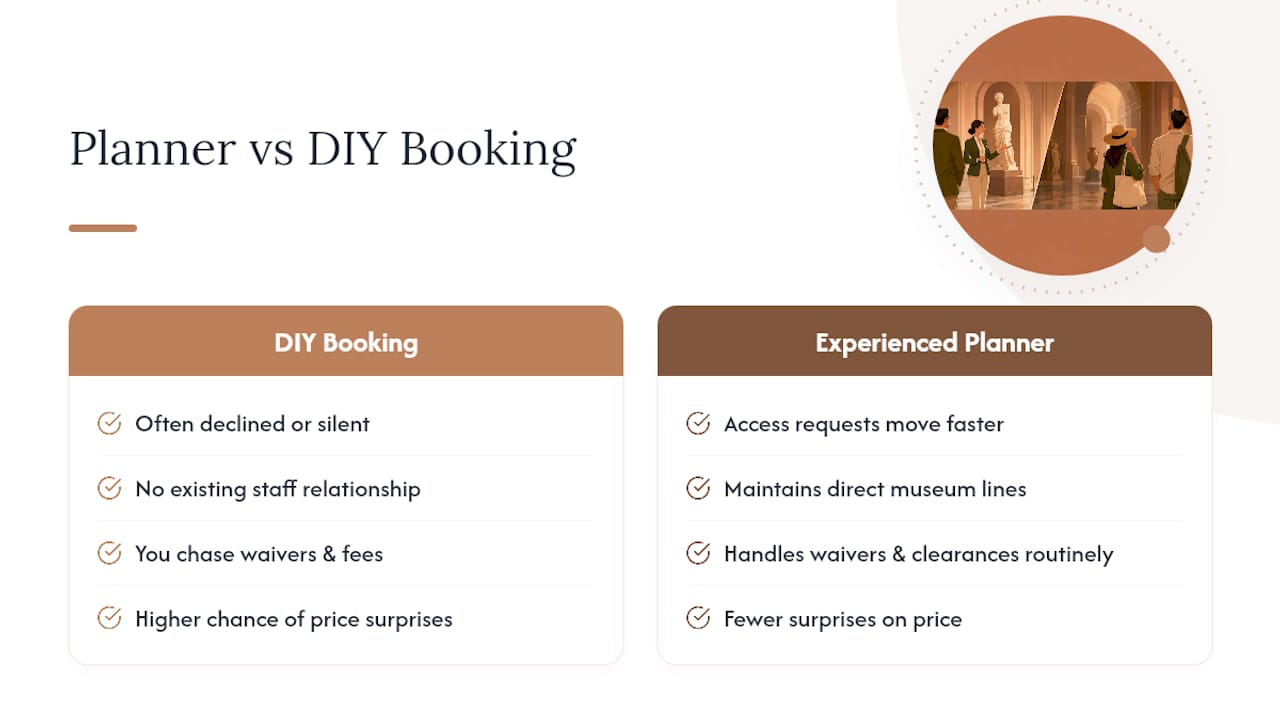
Booking a curator introduction on your own often runs into a wall. Museums protect staff time, and cold requests without an existing relationship tend to get a polite decline or silence. Hidden Door Travel works around that by maintaining direct lines to museum events teams, which means access requests move faster and with fewer surprises on price.
For affluent clients, the real value isn’t just getting in the door. It’s not spending your own time chasing down waivers, security clearances, and fee confirmations that a planner handles as routine.
— Michael
Book Your Bespoke Private Museum Tour
Using a specialized travel planner can be an alternative to piecing together museum contacts and fee schedules yourself, providing assistance with securing curator introductions, negotiating access, and handling waivers before you arrive.
Our customized all-inclusive experiences cover exactly this kind of arrangement, from private gallery walkthroughs to genuine behind-the-scenes access, folded into a broader luxury itinerary if you want one. To get started, have your preferred dates, group size, specific interests, and any accessibility requirements ready. For those combining a museum visit with a seasonal city trip, pairing it with something like holiday lights and bus tours in New York is a natural add-on. Reach out through our booking page and we’ll build the rest around your schedule.
Quick Reference: Museum Tour Pages to Check
- MoMA private tours for booking rules and minimums.
- The Met adult and personal groups for group requirements.
- La Brea Tar Pits insider tour for a premium backstage example.
Sources
- Book a tour | MoMA
- Private and Group Experiences | Museum of the City of New York
- La Brea Tar Pits insider tour
- Adult and Personal Groups | The Met
FAQ
How Much Should You Pay a Tour Guide?
Costs vary by museum and tour type, running from a set guide minimum for a standard private tour to higher flat fees for curator-led sessions. The Museum of the City of New York lists starting rates as one benchmark, but always confirm current pricing directly with the museum.
What Is a Tour Guide in a Museum Called?
Museum tour guides are often called docents, and specialized private sessions may be led by curators or conservators rather than general staff. Curator-led experiences typically cost more because they involve subject-matter experts with limited availability.
How Much Does a Private Tour of MoMA Cost?
MoMA doesn’t publish one flat rate; it structures pricing around a minimum payment for the guide, with separate minimums for standard hours versus before- or after-hours private tours. Check MoMA’s tour page directly for current figures, since admission is often billed separately.
How Much Money Do Museum Tour Guides Make?
Museum tour guide pay isn’t consistently published, and it varies by institution, region, and whether the guide is a staff docent or an independent contractor. For accurate booking costs as a visitor, rely on the museum’s own tour page rather than guide salary figures, which don’t reflect what you’ll pay.
How Far in Advance Should I Book a Private Museum Tour?
Book at least two weeks ahead for a standard private tour, and closer to a month for curator-led or after-hours experiences. MoMA’s guidance reflects this window, and planners like Hidden Door Travel often need similar lead time to confirm access and waivers.