

Travel medical evacuation is emergency transport, typically by air ambulance or helicopter, that moves you to the nearest adequate hospital when you’re too sick or injured to travel commercially. It’s a distinct benefit from routine medical expense coverage, and costs can be very high, potentially exceeding typical visa coverage amounts. Buy a policy with an explicit, separate evacuation limit, and save your insurer’s 24/7 assistance number before you fly.
TL;DR:
- Make sure your evacuation coverage limit is at least $100,000 for standard trips and $250,000 or more for remote or expedition travel, as costs can exceed these amounts quickly.
- Always verify that your policy includes separate benefits for evacuation and repatriation, with clear geographic coverage and direct-pay arrangements to avoid substantial out-of-pocket bills during emergencies.
- Before departure, confirm your insurer’s assistance line is operational, record your policy details, and ensure you understand the process for obtaining authorization to avoid claim denials.
- For remote destinations lacking medical infrastructure, ensure your policy’s evacuation limit accounts for increased distances and logistics, and consider satellite communication devices for reliable contact.
- In unstable or complex regions, plan for additional logistical challenges like border permits, language barriers, and weather delays, with pre-arranged staging points and satellite backup communication.
Table of Contents
- What Does Travel Medical Evacuation Actually Cover?
- How Does the Evacuation Process Actually Work?
- What Does Medical Evacuation Cost, and How Much Coverage Do You Need?
- Do You Need Extra Medevac Protection Beyond Standard Insurance?
- What Policy Language Should You Check Before You Buy?
- What Should You Do the Moment You Need Evacuation?
- How Hidden Door Travel Handles Evacuation Planning for Clients
- What Do Medical Escorts Actually Do During an Evacuation?
- What Legal Issues Can Complicate an International Evacuation?
- What If You’re Traveling Somewhere With No Real Medical Infrastructure?
- What Makes Evacuation Coordination Harder in Remote or Unstable Areas?
- The One Number Worth Memorizing Before You Fly
- Let Hidden Door Travel Verify Your Coverage Before You Book
- Where to Verify Your Own Policy
- Sources
What Does Travel Medical Evacuation Actually Cover?
Medical evacuation is a defined travel insurance benefit that pays for emergency transportation when local care can’t handle your condition. It’s not the same thing as your emergency medical expense benefit, which pays hospital bills. Evacuation pays to get you out.
Coverage generally includes several transport types, scaled to how sick you are and how far you need to go:
- Ground ambulance for short transfers between local facilities.
- Helicopter evacuation from remote areas without road access.
- Air ambulance with an onboard ICU for critical, long-distance transport.
- Commercial flight with a medical escort, using a stretcher or extra seats when a full air ambulance isn’t necessary.
The industry draws a sharp line between three related terms. Evacuation means getting you to the nearest adequate facility, not necessarily the best hospital in the world. Repatriation means transport back to your home country once you’re stable enough to travel. Repatriation of remains, a grimmer but standard benefit, covers returning a body home if a traveler dies abroad. Most policies also cover a medical escort and, in many cases, a companion’s return airfare. When the benefit works as designed, the insurer pays the medevac provider directly rather than reimbursing you after the fact.
How Does the Evacuation Process Actually Work?
Nobody just calls a jet. Evacuation is a clinical and logistical decision made by professionals, not something you or a hotel manager arranges on the spot.
Two people drive the decision: the local treating physician, who assesses your condition on the ground, and the insurer’s medical director, who reviews that assessment and determines whether evacuation is medically necessary and where you should go. The assistance company, often a separate operational arm of the insurer, then handles the logistics.
- Assessment. The treating physician documents your diagnosis and stability for transport.
- Authorization. The medical director reviews the case and approves (or questions) the evacuation.
- Sourcing. The assistance team locates an available aircraft or ground ambulance and clinical crew.
- Permits and transfers. Flight clearances, ground legs, and receiving-hospital coordination get arranged, often across borders.
Pro Tip: Call the assistance number on your insurance card before you arrange anything yourself. Skipping insurer authorization is one of the most common reasons evacuation claims get denied, because the insurer needs to confirm medical necessity and set up direct payment before transport happens.
Direct-pay arrangements matter enormously here. When the insurer pays the provider directly, you avoid a six-figure bill landing on your credit card while you’re unconscious in a foreign ICU.
What Does Medical Evacuation Cost, and How Much Coverage Do You Need?
Regional ground or short-hop air transfers typically run $25,000 to $75,000. Intercontinental evacuations with an ICU-equipped jet routinely exceed $100,000, and the most complex cases climb past $250,000.
The variables that push costs up: distance, whether you need a specialized ICU aircraft versus a standard air ambulance, and “deadhead” fees, the cost of flying an empty medevac plane to reach you before it can fly you out. A remote evacuation from a mountain village or mid-ocean cruise stop compounds all three.
This is why visa-minimum coverage amounts often fall short in a genuine emergency, as they are set to satisfy entry requirements rather than cover full evacuation costs.
A reasonable baseline:
- $100,000 minimum for general international travel to countries with functioning medical systems.
- $250,000 or more for remote, expedition, polar, or cruise-based travel where distance to definitive care is the whole problem.
- Watch for per-person caps on family policies. A shared limit can leave less for each traveler than the headline number suggests.
Do You Need Extra Medevac Protection Beyond Standard Insurance?
Standard travel insurance works fine for a week in a major European city with hospitals nearby. It gets shakier fast once you’re somewhere help is hours, not minutes, away.
Consider heavier coverage or a dedicated membership if your trip involves:
- Remote island chains or atolls with limited airstrip access.
- Expedition or polar cruises, including Antarctic itineraries far from any port with a hospital.
- Interior trekking regions in Africa, the Himalayas, or the Amazon basin.
- Multi-country overland trips through areas with inconsistent medical infrastructure.
Your travel profile matters as much as the destination. A short city break carries different risk than a six-month expat posting with a chronic condition that needs ongoing management. Frequent remote travelers, in particular, should look at medevac membership programs. Unlike standard insurance, some memberships transport members to a hospital of their choosing rather than only the nearest adequate facility, which matters if you have a preferred specialist or a complex medical history. If you’re planning a trip built around one of these higher-risk scenarios, it’s worth reviewing remote destination itineraries and matching your coverage limit to the actual isolation of the trip, not just its price tag.
What Policy Language Should You Check Before You Buy?
The fine print decides whether your evacuation benefit actually works when you need it. Most denials trace back to gaps buyers never noticed at purchase.
- Confirm evacuation and repatriation are separately named benefits, each with its own dollar limit. Some cheaper policies bundle them under a single low cap.
- Read the destination language carefully. “Nearest adequate medical facility” is a very different promise than “transport to your home country.” The former is standard; the latter is rarer and usually costs more.
- Check for geographic exclusions and waiting periods. Some policies exclude specific high-risk regions or impose a delay before evacuation coverage activates.
- Confirm direct-pay assistance and a live 24/7 emergency line. A policy that only reimburses after the fact leaves you fronting six figures during a crisis.
- Ask what documentation triggers a claim. Most insurers want physician notes, itemized invoices, and a diagnosis statement before releasing funds.
Pro Tip: Photograph your insurance card, policy number, and the assistance line before you leave home, and store copies somewhere accessible without your phone. A cracked screen shouldn’t be what stands between you and a rescue flight.
If you’re weighing add-ons, a cancel for any reason policy is a separate product from evacuation coverage, but the two are often sold together, and it’s worth understanding how they complement each other before you buy.
What Should You Do the Moment You Need Evacuation?
The first phone call determines almost everything that follows, so make it fast and make it to the right number.
- Call your insurer’s 24/7 assistance line immediately, before arranging any transport yourself. Provide your exact location, the treating physician’s name, and the working diagnosis.
- Collect documentation as you go, including medical notes, itemized invoices, and a written clinician’s statement. Insurers will ask for this to authorize and later reconcile the claim.
- Get written travel clearance from the treating physician if the airline or air ambulance crew requires it before transport.
- Notify family and ask about escort provisions under your policy. Many plans cover a companion’s return flight.
- Contact consular services for logistical help, such as passport issues or family notification, but understand U.S. government assistance abroad is limited and does not generally pay for evacuation itself.
How Hidden Door Travel Handles Evacuation Planning for Clients
Bespoke itineraries to remote regions get an insurance check before anything else gets booked. Hidden Door Travel verifies clients’ evacuation benefits against the actual isolation of the trip, not just the policy’s face value, and flags when a $50,000 limit won’t cover a real air ambulance flight from an interior safari camp or a polar route.
That process includes vetting the nearest capable hospitals along the itinerary, confirming direct-pay arrangements are in place, and issuing clients an emergency contact card with the assistance line, policy number, and local medical contacts before departure. For remote or expedition-style bookings, on-call escort arrangements get discussed in advance rather than scrambled together mid-crisis.
What Do Medical Escorts Actually Do During an Evacuation?
A medical escort is the clinician, often a flight nurse or physician, who travels with you during transport and manages your condition in transit. Their job starts before wheels-up: reviewing your chart, confirming you’re stable enough for the specific transport mode, and briefing the receiving hospital on what to expect.
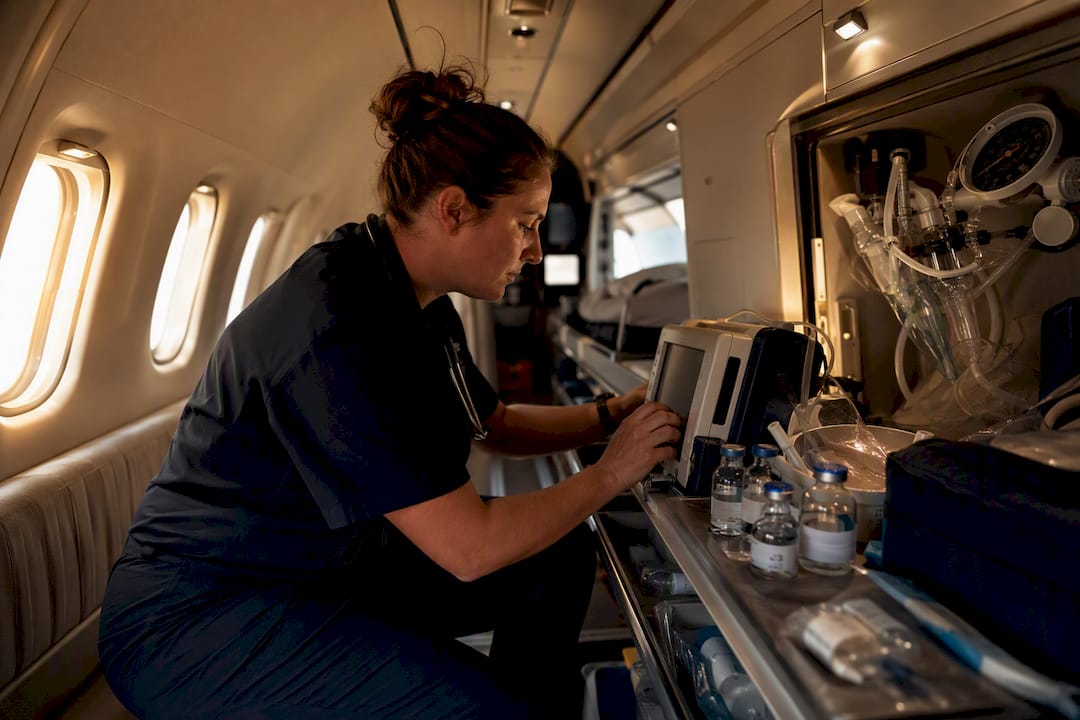
In the air or on the ground, the escort manages medication, monitors vital signs, and handles any complications that arise mid-transfer, which is precisely why ICU-equipped flights cost so much more than a standard commercial seat with a stretcher. For lower-acuity cases, the escort might be a trained paramedic accompanying a patient on a commercial flight rather than a full air ambulance crew.
Escorts also carry legal and administrative weight. They sign off on fitness-for-transport documentation, coordinate the handoff with the destination medical team, and, in cases involving a companion traveler, manage that person’s logistics too. If a case involves a language barrier or an unfamiliar health system, the escort often becomes the primary point of continuity between the sending physician and whatever hospital receives you next. Their sign-off is frequently the final gate before an aircraft is cleared to move you.
What Legal Issues Can Complicate an International Evacuation?
Crossing a border in a medical emergency isn’t as simple as crossing one on vacation. Every country involved, the one you’re leaving, any nation you fly over, and the one you’re entering, has its own aviation and medical regulations that apply to the flight.
Air ambulances need overflight and landing permits, which can take hours to secure depending on the countries involved and the time of day. Some nations restrict which aircraft can operate medevac flights within their airspace, or require the receiving hospital to formally accept the patient before departure clears. This is part of why logistics alone can add hours or days to an evacuation that seems, from the outside, like it should be immediate.
There’s also the question of who’s financially and legally responsible. Consular officers can help with communication and paperwork, but U.S. government policy is explicit that evacuations are normally arranged and paid for by the traveler, their family, or their insurer. Repatriation loans from the government exist but are rare, and they’re repayable, not a financial safety net. Regulatory questions around consent also matter if a patient is unconscious or incapacitated. Escort teams and insurers typically need next-of-kin authorization before major transport decisions, which is one more reason having emergency contacts documented in advance matters as much as the coverage limit itself.
What If You’re Traveling Somewhere With No Real Medical Infrastructure?
Some destinations, remote stretches of Central Asia, parts of interior Africa, isolated Pacific islands, simply don’t have hospitals capable of handling a serious injury or illness. In these places, the evacuation itself has to bridge a much bigger gap, and the planning has to start well before departure.
Before you go, confirm your policy’s evacuation limit accounts for the extra distance and complexity such a route requires. A $100,000 policy that’s adequate for evacuation from a regional capital may fall short from a location with no paved airstrip nearby. It’s also worth researching, or asking a specialist to research, where the nearest capable hospital actually sits relative to your route, since “nearest adequate facility” could mean a flight of several hours.
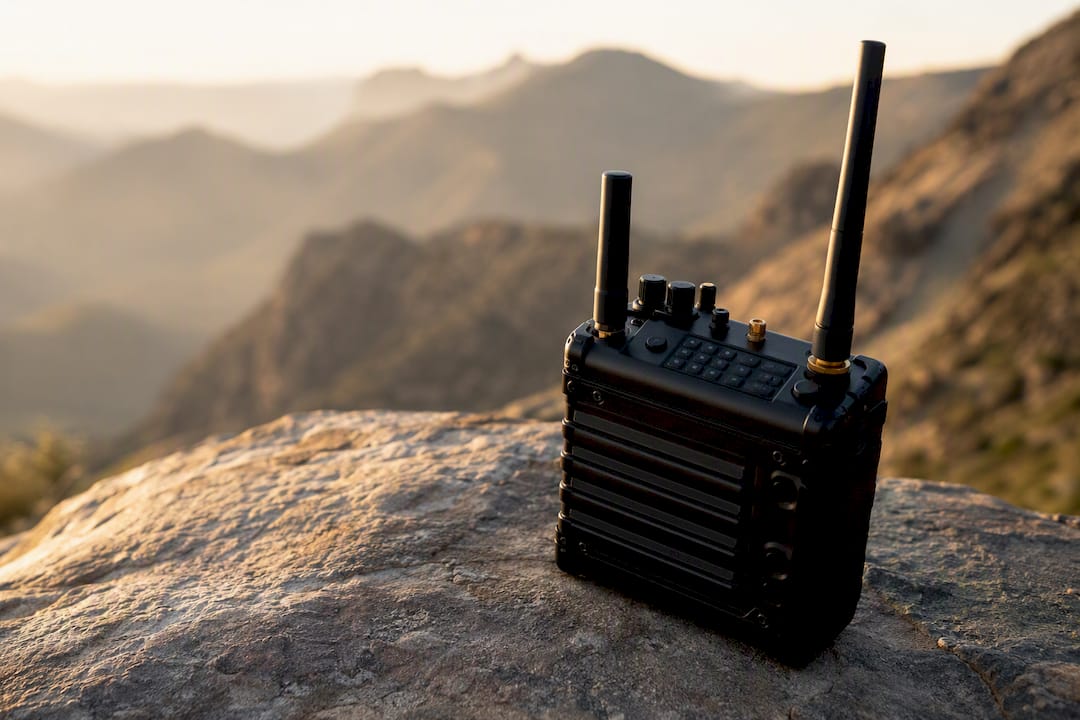
Satellite communication becomes essential in places with unreliable cellphone networks. A satellite phone or messenger device isn’t a luxury add-on here, it’s often the only way to reach your insurer’s assistance line at all. Registering your itinerary with your embassy before departure also gives consular staff a starting point if something goes wrong and you can’t immediately reach them yourself.
Operators running trips into genuinely remote territory, expedition charters and safari outfitters among them, often have their own protocols for exactly this problem, and it’s worth asking directly what medical support looks like before you book. The same question applies to any safari or overland itinerary through regions with limited hospital access.
What Makes Evacuation Coordination Harder in Remote or Unstable Areas?
Distance is only part of the problem. Political instability, conflict zones, and areas without reliable air traffic control all add friction that a straightforward evacuation from a European hospital never encounters.
In hostile or unstable regions, assistance companies sometimes can’t get aircraft clearance at all, forcing a ground evacuation to a safer staging point before air transport becomes possible. Language barriers between the local treating team and the receiving hospital can slow handoffs and increase the risk of miscommunication about diagnosis or treatment already given. Weather and terrain compound this in mountainous or oceanic regions, where a helicopter simply can’t fly until conditions clear, sometimes for days.
Communication infrastructure is often the hidden bottleneck. An assistance coordinator can’t authorize or arrange anything if they can’t reach the patient, the local physician, and the aircraft crew simultaneously, and in areas with spotty cell coverage that three-way link can break down at the worst possible moment. This is why concierge-level trip planning increasingly builds in satellite backup communication and pre-identified staging points for exactly these scenarios, rather than assuming a phone call will always go through.
The One Number Worth Memorizing Before You Fly
If you take one thing from this: buy at least $100,000 in evacuation coverage for standard international trips, and $250,000 or more for anything remote. Save your insurer’s 24/7 line in your phone under a name you’ll actually remember, and carry a printed copy of your policy ID. If you’re booking a remote luxury itinerary, ask Hidden Door Travel to run a concierge coverage check before you go.
— Michael
Let Hidden Door Travel Verify Your Coverage Before You Book
Hidden Door Travel is the alternative to piecing together insurance research on your own: a concierge check on your evacuation limits, hospital access, and emergency contacts built into the itinerary itself, not bolted on after you’ve already booked flights.

For clients heading somewhere remote, that means vetting local hospital access before you land, confirming your policy’s evacuation limit actually matches the trip’s isolation, and issuing an emergency contact card with the numbers that matter, before you ever pack a bag. It’s the difference between hoping your coverage holds up and knowing it does. If you’re planning a bespoke or remote itinerary, start with Hidden Door Travel’s luxury travel experts to have your trip and your coverage reviewed together, before departure, not after something goes wrong.
Where to Verify Your Own Policy
- State Department crisis response guidance
- CDC travel insurance recommendations
- Squaremouth’s evacuation benefit explainer
This article is general information, not a substitute for advice from a qualified doctor. Consult a qualified healthcare professional about your own circumstances before acting on anything here.
Sources
- Medical Evacuation & Repatriation — Squaremouth
- Crisis response — U.S. Department of State
- Travel insurance — CDC
- Emergency medical transportation costs — Allianz