
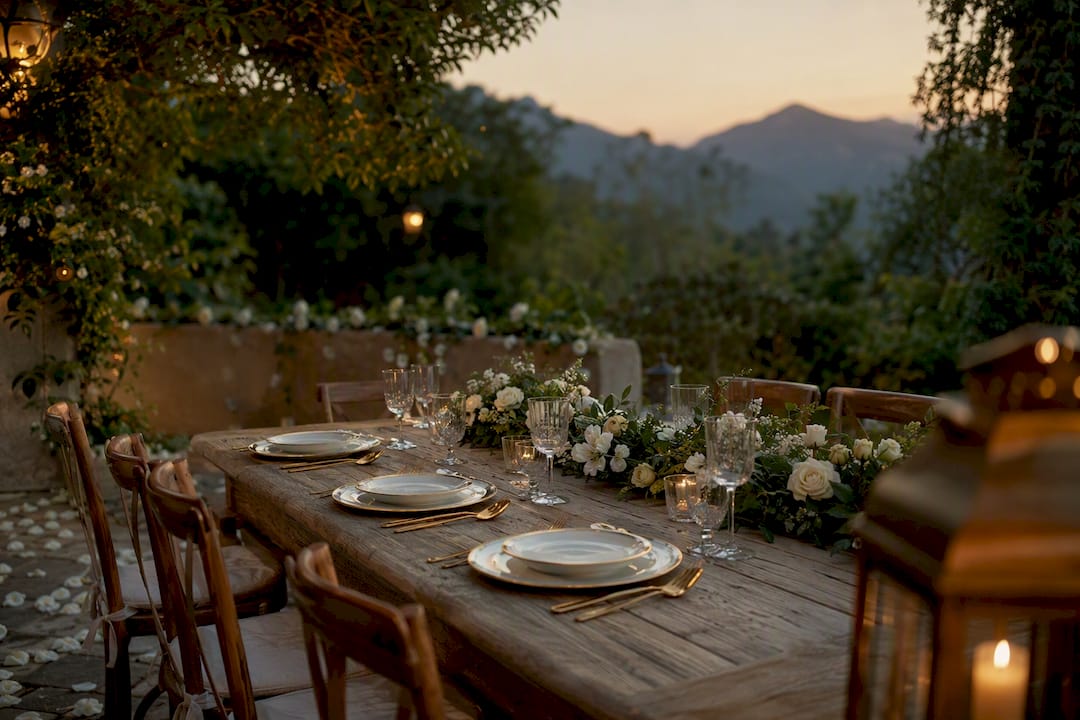
A small destination wedding typically involves a modest guest list, allowing for a more personal ceremony away from home. The tradeoff is real: you get more time with the people who matter, better venue options, and often lower stress, but at the cost of coordinating everyone’s travel. Cost swings widely depending on whether you book an all-inclusive package or a private villa buyout.
TL;DR:
- Choosing off-peak, mid-week dates can significantly lower venue costs and improve availability for small destination weddings.
- Private villas, boutique hotels, and all-inclusive resorts are ideal venue options for groups of 10 to 25, with larger estates accommodating up to 40.
- Cost for a 30-guest wedding typically ranges from $12,000 to $25,000, depending heavily on venue type, timing, and private buyouts.
- Early booking of venue, vendors, and group transportation, along with thorough paperwork and permit planning, is essential to avoid delays or legal issues.
- Hiring a local, experienced wedding planner streamlines coordination, mitigates risks, and ensures each detail aligns with the destination’s cultural and logistical realities.
Table of Contents
- What Is a Small Destination Wedding and Why Do Couples Choose One?
- What Are the Best Venue Types for a Small Wedding?
- How Do You Plan a Small Destination Wedding Step by Step?
- How Much Does a Small Destination Wedding Cost?
- How Do You Plan Weekend Activities for a Small Wedding Group?
- What Legal and Accessibility Steps Should You Not Skip?
- How Hidden Door Travel Plans Small, Bespoke Destination Weddings
- How Do You Coordinate Guest Travel for a Destination Wedding?
- How Do You Plan for Bad Weather or Last-Minute Problems?
- What Cultural Etiquette Should You Follow at a Destination Wedding?
- When Should You Hire a Bespoke Travel Planner for a Destination Wedding?
- Let Hidden Door Travel Handle Your Small Destination Wedding
- Sources
What Is a Small Destination Wedding and Why Do Couples Choose One?
Most couples planning a small destination wedding choose an intimate guest list that supports a more personal celebration. That guest count is not arbitrary. It’s the range where venues that would never work for a 150-person reception suddenly become options: a cliffside terrace with room for six tables, a boutique hotel with 12 rooms total, a chef’s table at a working vineyard.
Couples increasingly choose this format on purpose, not as a fallback because they couldn’t afford something bigger. The appeal is straightforward once you’ve sat through a 200-person wedding where you spoke to maybe a third of the room. A smaller guest count opens up venues that simply don’t have the capacity or infrastructure for a large reception, and that scarcity works in your favor. You’re not competing with every couple in the region for the same 20 ballrooms.
The benefits show up in three places:
- More real time with guests. A welcome dinner, a group excursion, a lazy brunch the morning after. You actually talk to people instead of doing a five-minute rotation past every table.
- Better venues, often for less. Private homes, small chapels, intimate restaurant buyouts. These rarely accommodate 150 people, but they’re perfect for 25.
- Flexibility on timing. Smaller headcounts make mid-week dates and shoulder-season bookings realistic, which most large weddings can’t pull off.
The tradeoff is logistics. Every guest is now flying, booking a hotel, and taking time off work, and in destinations with limited infrastructure (a small Italian hill town, a remote island), venue scarcity can cut the other way too. There just aren’t many properties built for weddings at all, let alone small ones.
What Are the Best Venue Types for a Small Wedding?
The right venue depends less on aesthetics and more on your guest count band and how much you want handled for you.
Private villas and boutique hotels. These work best for groups of 10 to 25 who want the whole property to themselves. Book six to twelve months out for peak season, and always confirm on-site lodging capacity before you fall in love with the photos. A villa that sleeps 14 comfortably will feel cramped at 20, and you’ll be scrambling to book overflow rooms nearby.
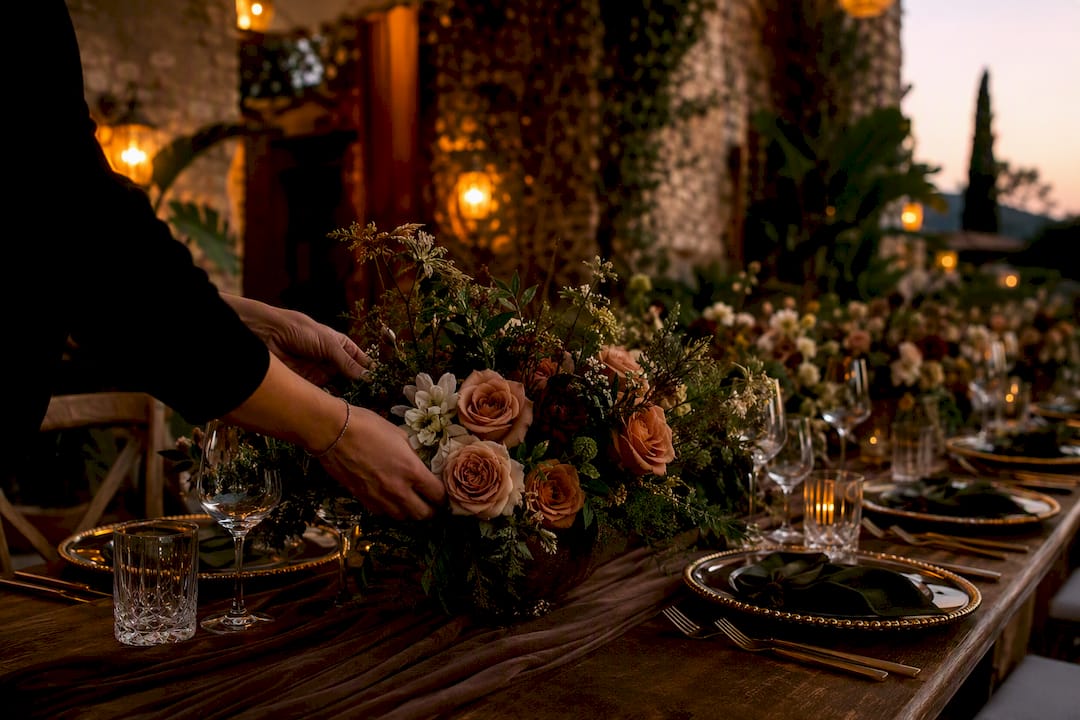
All-inclusive resort packages. This is the path of least resistance, and for good reason. Packages typically bundle the venue, officiant, and basic décor into one line item, which removes a huge amount of vendor coordination. Resorts also scale their offerings from elopement packages up to roughly 50 guests, so you’re not overpaying for infrastructure you don’t need.
Vineyards, gardens, and countryside estates. These shine for groups of 20 to 40 who want a seated dinner with a view and don’t mind a slightly more rustic setup. Many properties cap capacity at exactly this range, which works in your favor: you won’t be competing with a wedding factory booking three ceremonies a weekend.
Secluded beaches, cliffs, and national parks. Gorgeous, but they come with strings attached. Public land usually requires a permit, and accessibility can be a genuine problem for older guests or anyone with mobility limitations. Start the permit process early and have a backup location within a short drive.
Historic or cultural venues. A centuries-old chapel or a converted monastery brings built-in character no rental company can replicate, but expect stricter rules on décor, noise, and timing. Some sites forbid amplified music entirely or cap ceremony length.
As a rough guide: 10 to 25 guests opens up nearly every private villa and boutique property on the market. Push past 25 toward 40, and you’ll narrow toward resorts, vineyards, and larger estates built with dining capacity in mind.
How Do You Plan a Small Destination Wedding Step by Step?
Planning gets simpler with fewer guests, but the sequence still matters. Skip a step and you’ll find yourself booking flights before you’ve locked a venue, or sending invitations before you know if the chapel even holds 30 people.
- Lock the guest list first. This is the one decision that shapes everything downstream, from venue capacity to room block size. Tell people early, ideally 9 to 12 months out, so they can plan around travel costs and time off.
- Reserve the venue and room block simultaneously. Don’t wait. Mid-week ceremonies and off-season dates give you far more negotiating room, and locking a room block early guarantees your guests get rates before public availability disappears.
- Confirm legal paperwork timelines immediately. Marriage license requirements vary enormously by country and even by region within a country, and some jurisdictions require residency periods of several days before they’ll issue a license.
- Hire local vendors and a local planner early. This is the step most couples underestimate. A planner who knows the local vendor terrain often has access to private properties that never show up in a Google search, particularly in destinations where inventory is genuinely scarce.
- Organize group travel with a backup plan. Flights, transfers, and a contingency for guests with limited mobility. Don’t assume everyone can handle a 45-minute unpaved road transfer.
- Set up a wedding website with clear RSVP deadlines. Include flight suggestions, hotel links, and a rough weekend schedule so guests can book with confidence instead of guessing.
Top planning guides consistently point to the same fundamentals: hire a local planner, confirm the venue actually suits your headcount, and get travel information into guests’ hands early. None of that changes whether you’re planning for 12 people or 40.
Pro Tip: Book your room block before you finalize the guest list wording on invitations. Hotels release group rates on a first-come basis, and waiting even a few weeks during peak season can mean losing half your rooms to other travelers.
How Much Does a Small Destination Wedding Cost?
Cost scales with headcount and venue type, but not in a straight line. A 30-guest all-inclusive resort wedding commonly runs $12,000 to $25,000 total once you combine the wedding package and room block, with the wedding package itself typically priced between $3,000 and $8,000.
By the numbers: A 30-guest all-inclusive resort wedding package alone often costs $3,000 to $8,000, with total costs (package plus room block) landing between $12,000 and $25,000.
That range is wide because it depends heavily on which model you choose:
- All-inclusive packages bundle venue, officiant, and décor into one price, which reduces both cost and coordination headaches for smaller groups.
- Private venue buyouts (villas, historic estates) often cost more per guest because you’re paying for exclusivity, not shared resort infrastructure.
- Off-peak and mid-week dates lower rates significantly and expand venue availability, since bundling lodging with the venue simplifies logistics and can reduce per-person costs across the board.
Here’s the part that surprises people: fewer guests can sometimes mean higher spending per person, not lower. In destinations with very limited private venue inventory, like a small coastal village with only two or three properties suited to events, availability becomes the real cost driver, not catering headcount. Budget shifts toward permits, private transfers, and full lodging buyouts, and a 20-person wedding in that setting can cost more per guest than a 40-person resort wedding elsewhere.
Rather than pouring savings into extra chairs and place settings, most couples redirect that budget into photography, multi-day experiences, and a proper welcome dinner. That’s usually the smarter call. Nobody remembers the centerpieces; they remember the boat trip.
How Do You Plan Weekend Activities for a Small Wedding Group?
A small guest list gives you room to design an actual weekend instead of a single event. Use it.
- Welcome dinner the night before. Casual, low-pressure, and it doubles as your rehearsal dinner if you skip a formal rehearsal entirely.
- A group excursion. A boat trip, a wine tasting, a walking tour. Something that gets everyone together without feeling mandatory.
- A wellness morning. A group spa session or a slow beach morning gives guests recovery time before the main event, and it’s easy to plan into a resort itinerary if you’re staying somewhere with spa facilities on-site.
- Morning-after brunch. This is where the real memories happen. Everyone’s relaxed, nobody’s dressed up, and the stories from the night before start circulating.
- Welcome bags with local touches. A local snack, a handwritten note, a small map of the area. It costs almost nothing and tells guests you thought about their trip, not just your ceremony.
Build in downtime between activities. A packed itinerary exhausts people; a loosely structured weekend with two or three anchor events feels generous instead of rushed. For couples weighing an itinerary that spans more than one destination, designing a multi-stop trip around the wedding weekend is worth exploring before you finalize dates.
What Legal and Accessibility Steps Should You Not Skip?
Paperwork and permits are where destination weddings quietly go wrong, usually because couples assume the process works the same way it does at home.
- Marriage paperwork. Confirm the exact documents and residency requirements for your destination at least six months out. Some countries require you to be physically present for several days before they’ll issue a license, which changes your whole travel timeline.
- Permits for public sites. If you want a beach, park, or public garden ceremony, someone (usually your local planner) needs to secure that permit, often 60 to 90 days ahead. Don’t assume a beautiful public spot is automatically available.
- Passports and visas for guests. Remind every guest to check passport expiration dates at least six months out, and flag any visa requirements the moment you set the date. This is the single most common guest complaint after the fact.
- Accessibility planning. If you have older guests or anyone with mobility limitations, confirm transfer vehicles, walking distances at the venue, and hotel room accessibility before you book. A cobblestone hill town looks romantic in photos and can be genuinely difficult to navigate in person.
None of this is complicated, but all of it has deadlines that sneak up fast when you’re juggling venue contracts and guest travel at the same time.
How Hidden Door Travel Plans Small, Bespoke Destination Weddings
Planning a small destination wedding well comes down to sequence and relationships: lock the venue, secure the local vendors, then build the guest experience around what the destination actually offers. Hiddendoortravel approaches each wedding this way, leaning on standing relationships with local coordinators who often know about properties that never surface in a general search.
The couples who get the most out of a bespoke agency aren’t the ones who want the biggest wedding. They’re the ones who want every detail handled without having to become a part-time project manager for six months.
Bespoke touches that tend to matter most include curated welcome experiences on arrival, private transfers instead of shared shuttles, and a multi-day itinerary that treats the wedding as one event within a longer trip rather than the only thing on the calendar. That structure reduces on-the-ground risk and keeps guests comfortable, especially when travel logistics get complicated.
How Do You Coordinate Guest Travel for a Destination Wedding?
Guest coordination is where small destination weddings either run smoothly or fall apart, and the difference usually comes down to how early you communicate and how much you automate.
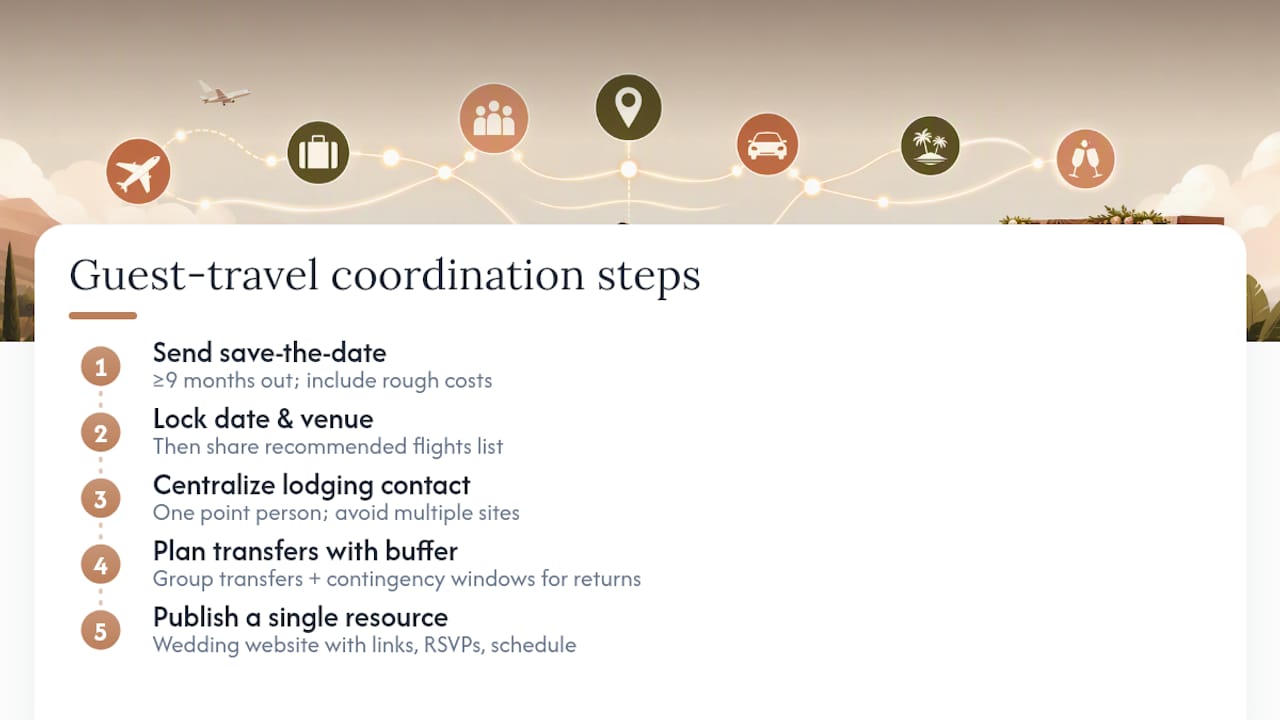
Send a save-the-date with rough cost expectations at least nine months out. Guests need to budget for flights, lodging, and time off, and vague timing kills attendance. Once the date and venue are locked, provide a short list of recommended flights and a single point of contact, ideally your planner, for lodging questions. Scattering guests across five different booking sites creates confusion and makes your room block harder to manage.
For remote or hard-to-reach destinations, arrange group transfers with real buffer time built in. Booking return transfers with contingency windows for delayed flights avoids the scenario where half your guests are stranded at an airport while a transfer van leaves without them. Local transfer operators can often block vehicles for a set window rather than a fixed pickup time, which absorbs flight delays without extra stress.
Create a single shared resource, a wedding website works fine, that lists flight suggestions, hotel booking links, RSVP deadlines, and a loose weekend schedule. Update it as details firm up rather than sending five separate email chains. And designate one person, whether that’s you, a planner, or a trusted family member, as the point of contact for logistics questions so guests aren’t guessing who to ask.
How Do You Plan for Bad Weather or Last-Minute Problems?
Weather and travel disruptions are the two things most couples underestimate until they’re staring at a forecast three days before the ceremony.
Always have a covered backup location for outdoor ceremonies, confirmed in writing with the venue, not just assumed. Beach and garden venues in particular need a rain plan that doesn’t require guests to relocate entirely; ideally it’s a tent or indoor space on the same property.
Build a 24 to 48 hour buffer into your travel schedule wherever possible. If your ceremony is on a Saturday, encourage guests to arrive Thursday rather than Friday. That buffer absorbs flight delays, missed connections, and the occasional lost luggage without threatening the ceremony itself.
Travel insurance matters more here than for a typical vacation, since a canceled flight can mean a missed wedding, not just a missed vacation day. It’s worth discussing coverage options with whoever is helping you plan, especially for international destinations where rebooking options are limited.
Finally, loop your local planner or coordinator into the weather contingency conversation from the start. They’ve usually seen a rained-out ceremony before and know exactly which backup spaces on-site actually work, not just which ones sound good on a floor plan.
What Cultural Etiquette Should You Follow at a Destination Wedding?
Every destination has local customs around weddings, and ignoring them can create friction with vendors, venues, and even local officials.
Research dress expectations for religious or historic venues before you book; many churches and cultural sites have modesty requirements that surprise couples used to more relaxed norms at home. Ask your planner or venue directly rather than guessing from photos.
Tipping customs vary widely by country, and what’s standard at a US wedding can be insulting or unnecessary elsewhere. Confirm expected gratuities for vendors, drivers, and venue staff ahead of time so you’re not calculating it on the fly.
Noise ordinances and curfews are common in historic town centers and residential areas, and a venue that looks idyllic in photos might have a hard cutoff for amplified music. Build your schedule around it rather than finding out mid-reception.
If you’re incorporating any local traditions into your ceremony out of respect or personal connection to the destination, run it by someone with genuine cultural context first. What reads as a thoughtful nod from one perspective can land as a misstep from another, and a local planner is usually the fastest way to check.
When Should You Hire a Bespoke Travel Planner for a Destination Wedding?
DIY planning works fine for a straightforward all-inclusive resort wedding with a cooperative venue coordinator. A local, on-the-ground planner earns their fee the moment your destination has limited inventory or unfamiliar permit processes.
Where a full bespoke agency changes the equation is complexity: a multi-day itinerary spanning more than one location, guests flying in from multiple countries, or high-touch concierge needs like private transfers and curated excursions layered around the ceremony. That’s not a wedding you want to run through trial and error, and it’s exactly the scenario where paying for personalized planning pays for itself in avoided stress.
— Michael
Let Hidden Door Travel Handle Your Small Destination Wedding
Planning an intimate wedding abroad usually means juggling a venue contact in one time zone, a photographer in another, and forty guests booking flights independently. Hiddendoortravel replaces that scattered coordination with one point of contact who handles itinerary design, vendor negotiation, and on-site coordination from the first venue call through the morning-after brunch.

The process starts with a consultation where we talk through your guest count, destination preferences, and budget range, then move into venue selection and vendor booking with local partners already vetted through standing relationships. You get a clear timeline, a defined set of deliverables, and someone on the ground handling the details that usually eat up months of back-and-forth. If you’re ready to see what a fully coordinated small destination wedding looks like, start with a consultation through Hiddendoortravel’s luxury travel experts and get a real plan on the calendar.
Sources
- All-inclusive wedding planning guide — Aisle
- Small destination wedding ideas — Eden Photo & Film
- Small destination wedding ideas for 20–50 guests — DreamWed
- The Cinque Terre wedding nobody’s talking about — Bespoke Bride