
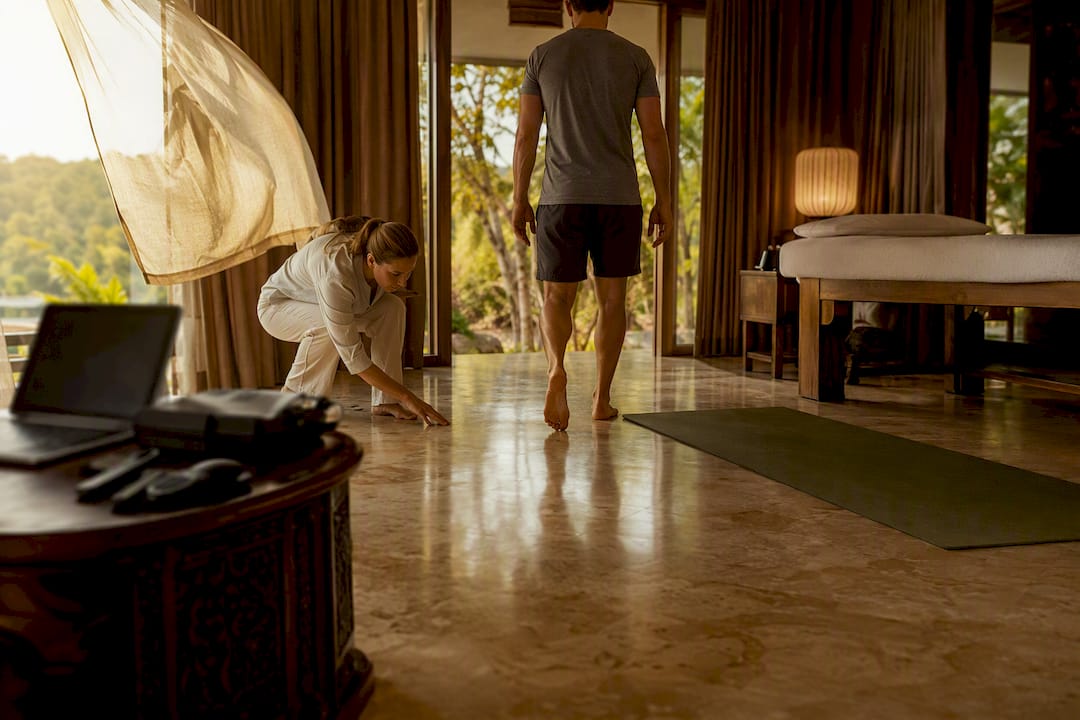
A well-designed bespoke wellness retreat delivers measurable gains in three areas: physical conditioning and recovery, stress and mood regulation, and durable behavior change you carry home. Personalization is what makes those gains stick. When a program builds around your bloodwork, your gait, your sleep data, and your actual goals instead of a fixed group schedule, you get an intervention matched to your body rather than the average body in the room.
An observational study of week-long retreats recorded measurable improvements across mental, physical, and social well-being in the days after the stay. Programs like the Sensei Optimal Well-Being Program at Four Seasons show what personalization looks like in practice: pre-arrival WHOOP tracking, VO2 and gait testing, one-on-one coaching, and a written plan you take home.
The core benefits show up in a predictable pattern:
- Lower resting stress markers and improved mood within days, not weeks
- Better sleep architecture from structured light exposure and evening routines
- Measurable fitness or mobility gains tied to a baseline assessment
- Targeted pain or injury progress from a dedicated practitioner team
- A concrete post-retreat plan instead of vague good intentions
Key Takeaways
Bespoke wellness retreats work because personalization, diagnostic baselines, one-on-one practitioner time, and a documented integration plan, turns short-term gains into lasting behavior change.
| Point | Details |
|---|---|
| Personalization drives outcomes | Diagnostics like VO2 and gait testing match programming to your actual body, not an average guest. |
| Short-term evidence is real | An observational study found multi-dimensional health gains after a single week-long retreat. |
| Long-term data is thinner | Complementary medicine research calls for longer follow-up to confirm lasting benefit. |
| Format should match your goal | Bespoke fits deep personal work and performance goals; group fits community and lower cost. |
| Aftercare determines durability | A written integration plan with remote coaching extends benefits well past checkout. |
| Hiddendoortravel matches goals to programs | The agency vets practitioner credentials and diagnostics before briefing a bespoke retreat. |
Table of Contents
- Bespoke Wellness Retreat Benefits for Physical Health
- How Bespoke Retreats Support Lasting Mental and Emotional Change
- What the Research on Wellness Retreats Actually Shows
- Bespoke vs. Group Retreats: Which Format Fits Your Goal
- Inside a Bespoke Retreat: Intake, Assessments, and Daily Flow
- Choosing a Reputable Bespoke Wellness Retreat
- Why Hiddendoortravel Sees This Space Differently
- Book a Bespoke Wellness Retreat Built Around Your Actual Goals
- Frequently Asked Questions
- Sources
Bespoke Wellness Retreat Benefits for Physical Health
Physical change at a bespoke retreat starts with a number, not a guess. A generic group fitness class assumes everyone in the room has similar cardiovascular capacity and joint health. A tailored program starts with diagnostics, VO2 max testing, gait analysis, sometimes a functional movement screen, and builds the week’s conditioning plan around what those numbers actually show.
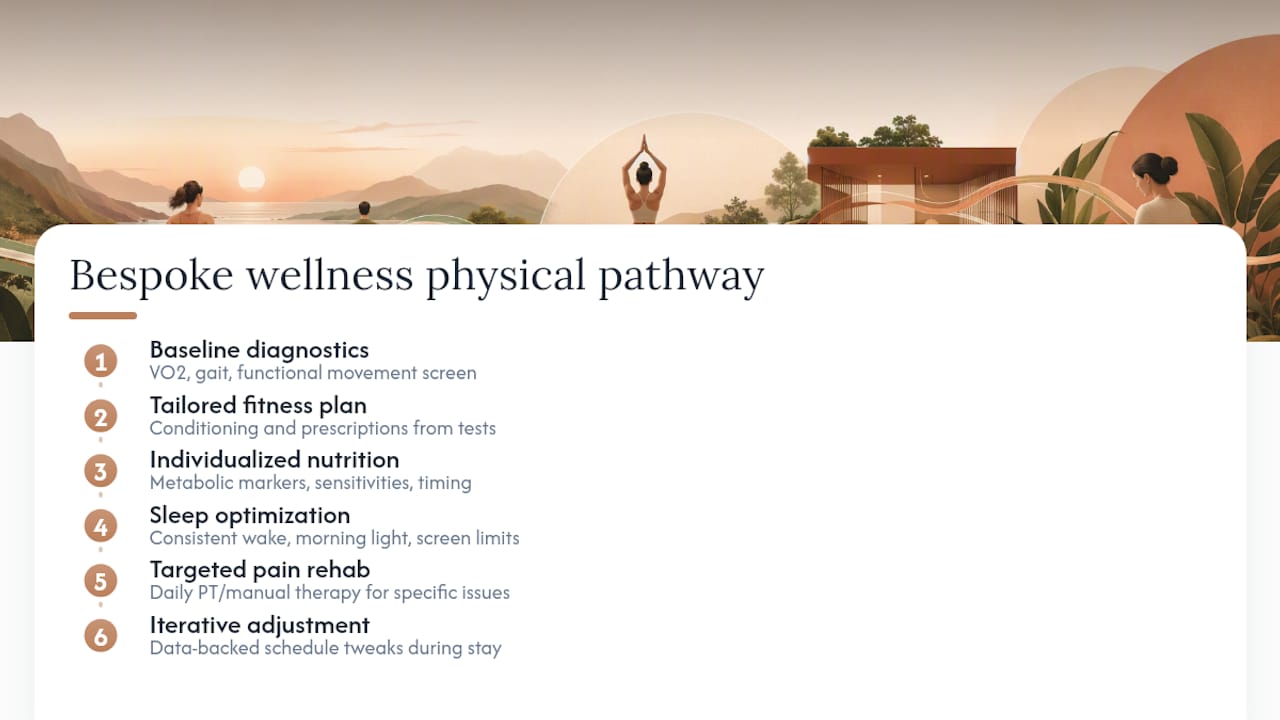
That distinction matters more than it sounds. Someone recovering from a knee injury and someone training for a marathon both walk into a “fitness retreat,” but they need opposite prescriptions. Group formats average those needs out. Bespoke design doesn’t.
Nutrition works the same way as demonstrated by how to combine lodging and gastronomy in bespoke wellness programming. Individualized meal planning based on metabolic markers, food sensitivities, and existing digestive issues does more than a generic “clean eating” menu. A guest with sluggish digestion might get a plan emphasizing fiber timing and hydration protocols; an athlete might get carbohydrate cycling around training blocks. The WHO’s chronic disease research has long identified nutrition and physical activity as two of the highest-leverage levers for reducing long-term disease risk, which is exactly why serious programs build around them instead of treating meals as an afterthought.
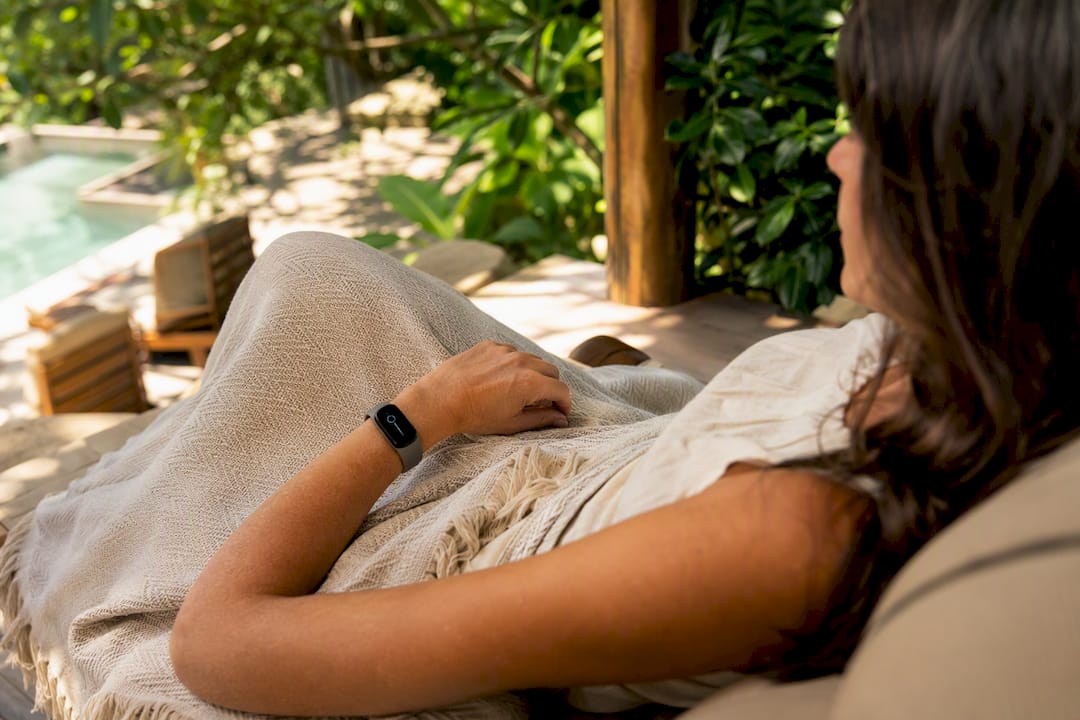
Sleep is often the fastest-moving metric. Retreats that structure the day around consistent wake times, morning light exposure, and reduced evening screen and alcohol exposure tend to see visible improvement in sleep tracking data within three to five nights. Wearables like WHOOP make this visible in real time rather than relying on how rested you say you feel.
Pain and injury management round out the physical side. A bespoke retreat with access to physical therapists, sports medicine practitioners, or manual therapists can target a specific issue, a stiff shoulder, chronic lower back tension, post-surgical mobility, with daily sessions instead of one generic spa treatment.
Pro Tip: Ask any program directly which baseline assessments they run before building your schedule. If the answer is “we’ll see how you feel,” that’s not a diagnostic-led bespoke retreat. It’s a nice hotel with a gym.
Realistic expectations matter here. A single week won’t reverse years of deconditioning, but it can reset sleep patterns, lower resting stress markers, and give you a data-backed starting point for training or recovery you continue at home. The observational retreat study found multi-dimensional health gains after just seven days, though the researchers were measuring short-term change, not permanent transformation.
How Bespoke Retreats Support Lasting Mental and Emotional Change
Stress reduction is the benefit every wellness retreat promises. What separates a bespoke program from a generic one is the mechanism behind it. Group meditation sessions help some people and do nothing for others. A tailored program identifies which nervous-system regulation technique actually moves your numbers, breathwork, cold exposure, guided somatic work, and builds the week around it instead of a one-size class.
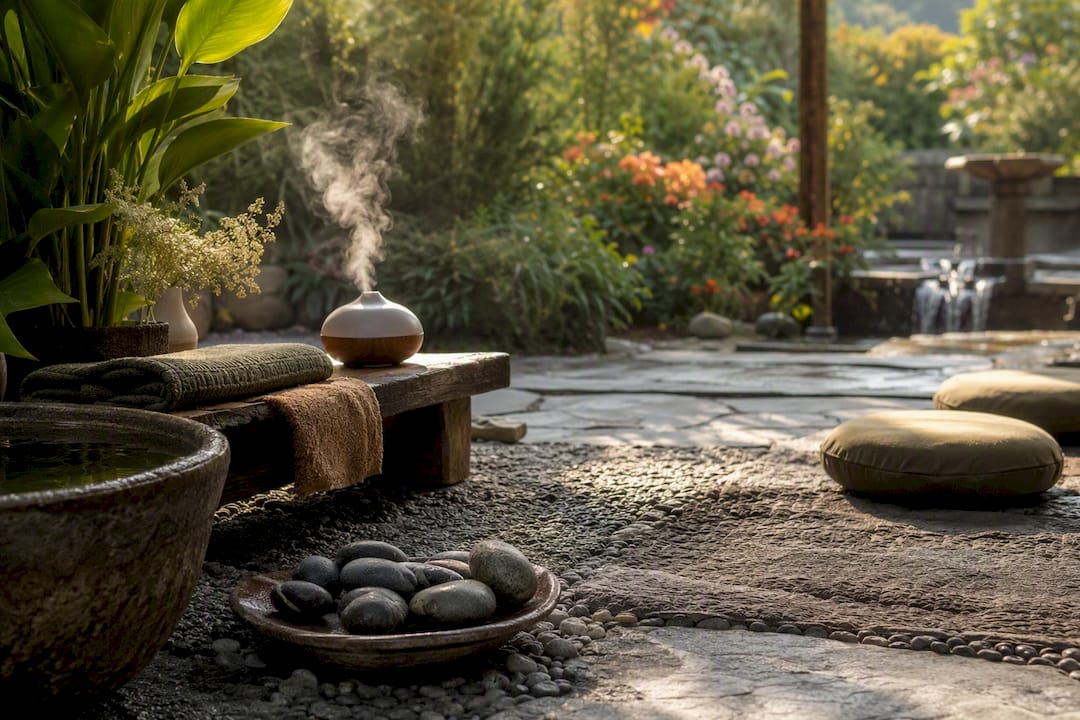
A review of nature-based and structured psychological interventions found consistent benefits for stress and mood, while noting real variation across study designs. That variation is exactly why personalization matters: the technique that lowers cortisol for one guest might barely register for another.
That’s the throughline in longform reporting on deeply bespoke solo retreats, which describes programs combining somatic work, talk-based processing, and experiential modalities tailored to one guest’s history rather than a room full of strangers.
When clinically indicated, licensed therapists or counselors join the practitioner team for guests processing grief, burnout, or major life transitions. This is where bespoke design earns its premium: a group retreat can offer a mindfulness workshop, but it can’t ethically or practically offer trauma-informed one-on-one therapy to twenty people at once.
Habit change is the part most retreats skip and bespoke programs tend to build in deliberately:
- Setting two or three specific, measurable goals before you leave, not vague resolutions
- Scheduling remote coaching check-ins at 30, 60, and 90 days
- Building a home version of the retreat’s most effective daily habit
- Identifying your specific stress triggers rather than generic “stress management”
Bespoke intensity isn’t for everyone. Guests who want lighter, social experiences or who are new to wellness travel may find one-on-one clinical work more than they bargained for. It tends to serve people with a specific goal (burnout recovery, a health scare, a major transition) better than people looking for a relaxing vacation.
What the Research on Wellness Retreats Actually Shows
The most cited evidence here is an observational study tracking guests through a week-long retreat, which found measurable improvement across mental, physical, and social dimensions of well-being immediately following the stay. That’s a real signal, but it’s an observational design: no control group, short follow-up, and a self-selected sample of people who chose to attend a wellness retreat in the first place.
A separate complementary medicine study found short-term gains from multicomponent retreat interventions but explicitly called for longer follow-up periods to confirm the benefits actually last. That’s the honest state of the science: strong short-term signal, thinner long-term data.
Program-level evidence fills part of that gap. The Four Seasons Sensei model pairs pre-arrival WHOOP data with VO2 and gait testing, then produces a documented post-stay growth plan, an operational answer to the “then what?” question academic studies rarely address.
| Evidence Type | What It Shows | Key Limitation |
|---|---|---|
| Observational retreat study | Multi-dimensional gains after one week | No control group, short follow-up |
| Complementary medicine research | Short-term benefit from multicomponent programs | Calls for longer-term confirmation |
| Nature/mindfulness reviews | Consistent stress and mood benefit | Heterogeneous study quality |
| Program-level diagnostics | Measurable, trackable individual change | Not peer-reviewed; vendor-reported |
When you’re evaluating a retreat, look for programs that echo the elements the research actually supports: baseline diagnostics, structured nature or mindfulness time, and an explicit integration plan rather than a “you’ll feel amazing” pitch with nothing behind it.
Bespoke vs. Group Retreats: Which Format Fits Your Goal
Privacy and pacing are where the two formats diverge hardest. A bespoke retreat builds the entire schedule around one person or couple, meaning therapeutic sessions can go deeper, timing can shift day to day, and there’s no group consensus slowing anything down. A group retreat runs on a fixed itinerary shared by everyone, which means more camaraderie but less flexibility and shallower one-on-one time with practitioners.
Cost follows the same logic. Bespoke programming costs more because it’s buying practitioner hours, diagnostic equipment, and often a private villa or suite instead of a shared schedule split across a dozen guests.
Bespoke tends to fit better when:
- You’re processing something specific (burnout, grief, a health diagnosis)
- You want measurable performance or recovery gains tied to real diagnostics
- You need medical oversight or a specialized practitioner team
- Privacy matters as much as the program itself
Group retreats tend to fit better when:
- You want community and shared experience as part of the benefit
- You’re new to wellness travel and want a lower-cost introduction
- Your goals are general (rest, movement, a reset) rather than specific
A quick way to decide:
- Name your single biggest goal in one sentence.
- Ask if that goal requires privacy or clinical depth. If yes, lean bespoke.
- Check your budget against practitioner-to-guest ratio, not just nightly rate.
- If you’re unsure, a shorter bespoke consultation often costs less than a full week and still yields a usable diagnostic baseline.
Inside a Bespoke Retreat: Intake, Assessments, and Daily Flow
Genuine bespoke programs start weeks before arrival with a health and lifestyle intake, sometimes including a call with a coordinating practitioner to review medical history and set goals. Program pages for high-end offerings routinely list this pre-arrival consultation alongside device tracking as a standard feature, not an upsell.
On-site, expect a baseline assessment block on day one, often VO2 testing, gait or movement analysis, and body composition or sleep tracking, before any programming begins. Those numbers shape everything after.
A typical day balances:
- One-on-one coaching or therapy sessions (60 to 90 minutes)
- Active movement matched to your assessed fitness level
- Recovery-focused therapies (massage, cryotherapy, targeted PT)
- Unstructured time, deliberately built in rather than treated as a gap
Pro Tip: Ask what you leave with. A serious bespoke program hands you a written plan, sometimes called a growth report or integration plan, with specific targets and a remote coaching cadence, not just a goodbye gift bag.
The strongest programs pair that document with personalized itinerary design that extends past the retreat itself into how the rest of the trip is structured.
Choosing a Reputable Bespoke Wellness Retreat
Ask directly: What are your practitioners’ credentials? Who provides medical oversight for complex cases? What assessments run before programming starts, and what do I receive afterward?
Red flags include vague staff bios, promises of guaranteed transformation, no mention of aftercare, and pressure to book add-ons before you’ve seen a program outline.
Higher prices usually reflect real cost drivers: diagnostic equipment, practitioner-to-guest ratio, and exclusive locations, not just marketing.
- Request a written bespoke brief outlining assessments, staff, and daily structure before booking.
- Confirm the integration plan and remote follow-up cadence in writing.
Pro Tip: If you’re briefing a travel advisor, hand them your specific health goal and any known constraints upfront. A vague brief produces a generic itinerary.
Why Hiddendoortravel Sees This Space Differently
Genuine bespoke wellness travel depends on the details most brochures skip: which diagnostics actually get run, which practitioners are on-site, and what happens after checkout. Curating those elements, matching a guest’s actual goals to the right diagnostics, the right practitioner team, and a real integration plan, is exactly the work of building a bespoke travel itinerary worth the premium. The strongest programs share a trait: they treat the post-retreat plan as seriously as the retreat itself.
Book a Bespoke Wellness Retreat Built Around Your Actual Goals
You now know what separates a real bespoke wellness retreat from a nicely branded spa week: diagnostics, practitioner depth, and a plan that follows you home. Finding a program that actually delivers those three things, and vetting its credentials, its aftercare, its pricing logic, takes hours most discerning travelers don’t have.
Hiddendoortravel builds that vetting into the planning process itself. Instead of piecing together practitioner credentials and program comparisons on your own, you work with luxury travel experts who already know which programs run real diagnostics versus which ones just sell the aesthetic. That means your bespoke brief, goals, medical considerations, pacing preferences, gets matched to a program built for you rather than adapted from someone else’s itinerary. If a specific wellness outcome matters to you, start by requesting a consultation through the luxury travel agency page and outline your goal directly.
Frequently Asked Questions
How long do the benefits of a bespoke wellness retreat last?
Sleep and stress improvements often persist for weeks when paired with a written integration plan and remote coaching check-ins; without follow-up, gains tend to fade faster.
What makes a wellness retreat “bespoke” rather than just customizable?
A truly bespoke program builds the entire schedule, diagnostics, practitioner team, meals, and daily flow, around one guest’s assessed needs rather than offering menu-style add-ons to a fixed group itinerary.
Are bespoke wellness retreats worth the higher cost compared to group programs?
They’re worth it for guests with a specific goal, performance, recovery, or emotional processing, that benefits from privacy and one-on-one practitioner time; general relaxation goals are often served just as well by a group format.
What assessments should I expect at a diagnostic-led retreat?
Common baseline tests include VO2 max, gait or movement analysis, sleep tracking, and sometimes body composition or bloodwork, all used to shape your specific daily plan.
Can a bespoke retreat replace ongoing medical or mental health care?
No. Reputable programs coordinate with, not replace, your existing medical or clinical providers, especially for complex physical or mental health conditions.
Sources
- Do wellness tourists get well? An observational study of multiple dimensions of health and well‑being after a week‑long retreat
- Sensei Optimal Well‑Being Program for One — Four Seasons
- Frontiers review on psychological benefits of nature and structured interventions
- The healing power of a solo wellness retreat — Condé Nast Traveler