
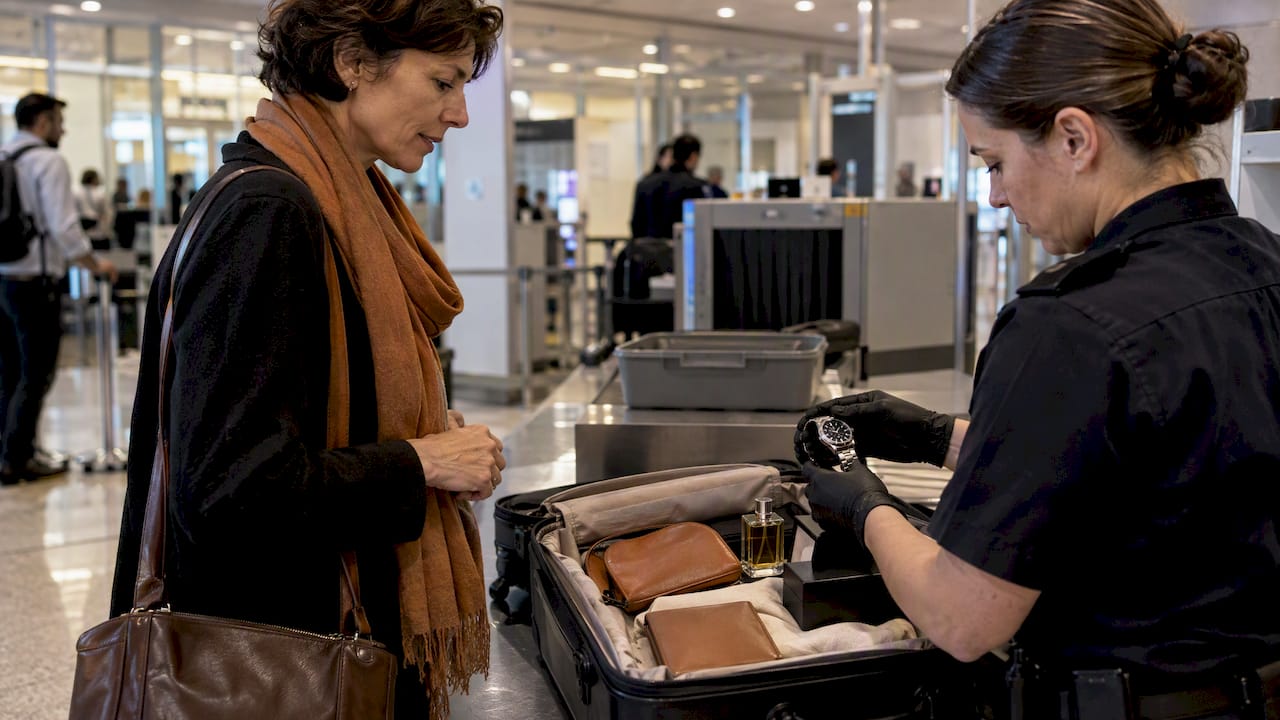
Most U.S. residents returning from abroad can bring home $800 of purchases without paying duty, as long as the items are for personal use or gifts, travel with you and are declared. Spend more and the excess is dutiable. Spend a lot more, or fail to declare, and the cost climbs quickly. This guide explains how the allowance works, what the flat rate is, where luxury shoppers get caught, and how to plan a trip so nothing surprises you at the border.
TL;DR
- The standard personal exemption is $800 per returning resident. It drops to $200 if you were away under 48 hours or used an exemption in the last 30 days, and rises to $1,600 for certain U.S. insular possessions.
- “Duty-free” shops are tax-free only in the country where you buy. Those purchases still count toward your U.S. allowance and must be declared.
- Up to $1,000 above your exemption is generally dutiable at a flat 3% rate. Beyond that, rates depend on the item.
- Underdeclaring risks seizure, civil penalties and loss of Global Entry. Declaring everything honestly is the cheapest strategy.
- Alcohol, antiques and items shipped home separately follow their own rules.
Table of Contents
- How the personal exemption works
- What you pay above the exemption
- The duty-free shop trap
- Alcohol, tobacco and other limits
- Antiques and the 100-year rule
- What happens if you do not declare
- How to declare, and how to pay
- Shipping purchases home instead
- Planning purchases like a seasoned traveler
- Our perspective
- Let us plan the trip, shopping included
- FAQ
- Sources
How the personal exemption works
U.S. Customs and Border Protection (CBP) calls it the duty-free exemption, or personal exemption: the total value of merchandise you may bring back without paying duty. According to CBP’s guidance on exemption types, the level depends on your itinerary:
| Situation | Exemption per person |
|---|---|
| Returning from most international trips, abroad at least 48 hours, no exemption used in the past 30 days | $800 |
| Shorter trip, or exemption used within the past 30 days | $200 |
| Returning directly or indirectly from the U.S. Virgin Islands, American Samoa or Guam | $1,600 |
Three conditions apply to all of them. The items must be for your personal or household use, or be gifts. They must accompany you in your baggage. And you must declare them. Items shipped separately generally do not qualify for the exemption, with limited exceptions for the insular possessions.
The value that counts is what you paid, in U.S. dollars, at the retail price. Keep receipts, and convert foreign currency at the rate you actually paid. A card statement showing the dollar amount is useful backup.

What you pay above the exemption
Duty is not one rate. It depends on what the item is, what it is worth and where it was made. For ordinary tourist purchases, though, CBP simplifies things. On its customs duty information page, CBP says that up to $1,000 of goods above your exemption is dutiable at a flat rate of 3%.
A worked example, using that flat rate:
- You return from a ten-day trip with $2,300 of purchases, all declared and all for personal use.
- The first $800 is exempt.
- The remaining $1,500 is more than the $1,000 flat-rate band. The first $1,000 of it is assessed at 3%, which is $30.
- The last $500 is assessed at the rate for the specific item. Handbags, watches, apparel and jewelry each carry different rates, and the officer determines the classification.
Note what the example shows: honest declaration of a mid-sized shopping haul usually costs far less than people fear. The expensive outcomes come from not declaring.
Also keep in mind that tariff policy has been changing. CBP’s January 2026 tariff overview describes new tariffs imposed under the International Emergency Economic Powers Act and Section 232, and notes that it is high-level and does not cover every exemption. Rates on specific goods can differ from what you remember from a prior trip, so check the current position before a large purchase, especially furniture, art-adjacent goods or anything bulky.
The duty-free shop trap
The most common misunderstanding is the name itself. A duty-free shop in an airport, on a cruise ship or in a port city sells goods free of local tax and duty. It says nothing about U.S. rules. CBP’s own wording on this is clear: those purchases are exempt only in the country of sale, and on return they count toward your allowance and must be declared.
That matters for luxury shoppers because the categories duty-free stores push hardest, such as fragrance, spirits, watches and leather goods, are exactly the ones that eat through $800 fast. One watch can use the entire exemption.
A second point: the person behind the counter cannot tell you what you will owe. Shop staff and shipping providers are not CBP. Only a CBP officer at the port of entry makes the determination of duty, whether that is an airport hall or a cruise terminal. Treat any “you’ll be fine” from a retailer as a courtesy, not a ruling.
Alcohol, tobacco and other limits
Some goods are capped even inside your exemption. For alcohol, CBP’s guidance points to one liter as the general personal limit. Amounts above that are dutiable and also subject to Internal Revenue Service tax, regardless of whether you have used up your dollar exemption. Individual states can set their own limits and may allow you to import more, but you then pay applicable duty and tax, and you must be of legal drinking age in the state where you arrive.
If you plan to buy cases from a vineyard in France, Italy or Napa’s international rivals, the practical answer is usually to have the producer or a licensed importer handle shipment rather than carrying them in your bags. Ask your travel planner or a licensed customs broker how to do that for your state.
Antiques and the 100-year rule
Collectors have one genuine opportunity. Historic items more than 100 years old can often be classified as duty-free antiques rather than standard dutiable merchandise. CBP tells the story of the London Bridge purchase, which turned on exactly this kind of declaration, in its history feature on the sale. The principle is the same at a smaller scale: you must declare the piece formally, and you should carry documentation, such as a dealer’s invoice describing age and origin, in case an officer asks for support.
Age claims are the officer’s to evaluate. A confident seller’s tag is not proof. Ask for written provenance before you pay, not after.
What happens if you do not declare
This is the section that belongs on a luxury traveler’s checklist, because the people who get into trouble are rarely tourists with a souvenir. They are experienced, frequent travelers who assume nobody will check.
CBP’s press releases show the pattern. In one 2014 case, a Global Entry member had her privileges revoked and a $6,000 duty penalty assessed after failing to declare the full $6,083 of merchandise she bought overseas. In 2024, officers at Philadelphia seized over $80,000 in merchandise from a Global Entry member who repeatedly refused to declare all his purchases. A 2022 Dulles case involving a Maryland couple shows how it unfolds: officers referred them to secondary examination, gave them several chances to be truthful, and the couple kept revising their figures.

CBP officers can issue civil penalties, seize undeclared goods and revoke Trusted Traveler privileges. Documented penalties are often a multiple of the duty that was originally owed. Compare that to the 3% flat rate and the arithmetic is simple: the declared route costs a few percent, the undeclared one can cost the goods, the penalty and the fast lane you rely on.
If you are unsure whether something is dutiable, declare it. That is CBP’s own advice.
How to declare, and how to pay
- Complete the declaration. Travelers fill out the CBP Declaration Form 6059B or use the equivalent electronic process, listing items acquired abroad and their retail value.
- List everything, including gifts and items you were given. The form asks for what you are bringing, not just what you bought.
- Present your receipts. An officer may ask. A tidy folder or a photo album on your phone saves time.
- Pay on the spot. Duty assessed at the port can be paid by credit card or in U.S. currency at the time of entry, per CBP’s regional guidance for travelers.
The officer, not you, decides what is owed. Staying calm, specific and consistent is the best approach.
Shipping purchases home instead
Buying large pieces such as furniture, rugs or art abroad often means shipping. The $800 exemption applies to accompanied baggage, so goods that travel separately generally cannot use it. Shipped goods are generally an import entry, with duty determined by classification and value, which is a different process from the one at the airport. CBP also publishes a declaration form for free entry of unaccompanied articles, used when you are claiming free entry for things such as personal effects that did not travel with you.
For ordinary luggage overflow, there is a middle path. Managed luggage shipping from your hotel can lighten your bags on the way out, and we explain when it is worth it for luxury trips. Just remember that anything you buy abroad and ship back is a customs matter in its own right, and it should be discussed with a licensed customs broker before you pay the seller.
Personal effects are a different category. The distinction between items you took abroad and used, and goods you bought as merchandise, matters. Keep purchase dates and receipts so you can show which is which.
Planning purchases like a seasoned traveler
You do not need to avoid shopping. You need a system.
- Set a number before you leave. Decide what you expect to buy, and compare it with $800 per person.
- Photograph every receipt. Save the dollar amount, date and merchant.
- Carry new items separately from worn ones, so you can present them quickly.
- Note currency conversions. If you are exchanging cash abroad, a primer such as this guide to currency exchange for travel can help you keep clean records of what you paid, which feeds directly into your declaration value.
- Know your entry port. Cruise terminals and airports both have CBP officers making the final call.
- Match allowance to trip length. A 36-hour dash to London for a shopping weekend cuts you to $200, not $800.
- Keep your documents together. Our travel document preparation guide covers the paperwork side of the trip, and the packing checklist helps with leaving luggage room, and with remembering which items you already owned.
- Budget the duty. If you plan a serious purchase, put estimated duty into your trip costs, as in our piece on managing luxury travel expenses.
Our perspective
We plan trips for people who shop well. A client buys a watch in Geneva, linens in Florence and a painting in Marrakech, and each stop is a good decision on its own. The problem arrives at the airport, when the totals meet the allowance.
With more than 20 years of industry experience, we have learned that the surprise is almost never the duty itself. It is the assumption that duty-free means free everywhere, or the worry that declaring will cost a fortune. Neither is true. The honest declaration is usually manageable, and the flat rate on the first $1,000 above your exemption makes the cost predictable.
What we do is plan around it. For a trip with major purchases in mind, we think through the order of stops, which items travel with you, which should be shipped by a professional, and what paperwork the seller should provide. We do not give legal rulings, and neither should anyone else outside CBP. For complex or high-value imports, we recommend a licensed customs broker. But a good plan before departure removes nearly all the stress on arrival.
— Michael
Let us plan the trip, shopping included
If you are building a journey where purchases are part of the point, we can shape the itinerary, access and logistics around it. Hidden Door Travel designs bespoke luxury trips, from vacation planning, destination weddings and cruise packages to custom itineraries with concierge support. Talk to our luxury travel agency team about your next trip.
FAQ
Do I have to declare duty-free purchases at U.S. Customs?
Yes. Items bought in a duty-free shop abroad are tax-free only in the country of sale. When you return to the U.S., they count toward your personal exemption and must be declared on your customs form. Anything above the exemption is subject to U.S. duty and, for alcohol and tobacco, possibly IRS tax.
What is the duty-free allowance for the USA?
For most returning residents it is $800 per person, if you were abroad at least 48 hours and have not used an exemption in the last 30 days. Otherwise it is $200. Returning from the U.S. Virgin Islands, American Samoa or Guam, it is $1,600. Items must be for personal use or gifts, and generally accompany you.
How much duty do I pay above the allowance?
CBP says the next $1,000 above your exemption is generally assessed at a flat 3% rate. Beyond that, duty depends on the item’s classification, value and origin, and the officer makes the final determination. Current tariff measures can change rates on specific goods.
What if I am not sure whether something is dutiable?
Declare it. CBP advises travelers to declare when in doubt, since undeclared goods can be seized and civil penalties can follow. Global Entry membership can also be revoked. For high-value or unusual items, ask a licensed customs broker before you buy.
Are antiques duty-free?
Often, if they are more than 100 years old. You still have to declare them, and you should carry documentation of age and origin in case the officer asks. The determination is made by CBP at entry.
Sources
- CBP: Types of Exemptions
- CBP: Customs Duty Information
- CBP: U.S. Tariff Overview, January 2026
- CBP: Philly CBP assesses $6K duty penalty, revokes Trusted Traveler’s privileges
- CBP: Philadelphia officers catch Global Entry member with $80k in undeclared purchases
- CBP: Dulles revokes Trusted Traveler memberships of Maryland couple
- CBP: What international travelers in Central Florida should know
- CBP: London Bridge and the customs declaration
- CBP Form 3299: Declaration for Free Entry of Unaccompanied Articles