
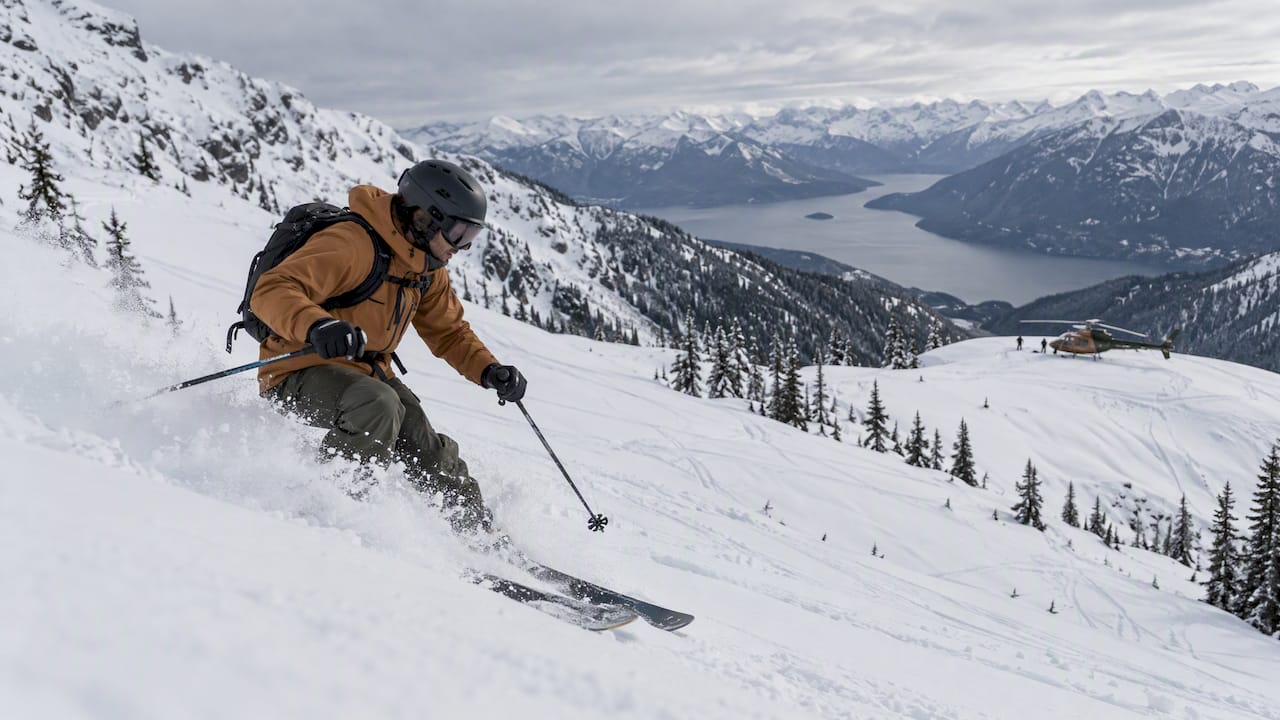
Luxury heli-skiing means a helicopter drops you on untracked terrain, then you return to a private lodge with a chef, a spa and a small group that skis your pace. The difference between a good week and a forgettable one comes down to three choices: the operator’s safety standing, the lodge format (buyout or shared), and how the package treats weather days. This guide covers each, with real price ranges, so you can decide before you call anyone.
TL;DR
- Luxury heli-skiing is now about the whole experience: privacy, a private chef, lodge design and seamless logistics, not only the terrain.
- Budget widely. Single-run days can cost about $99 in Colorado, while high-end lodge weeks start around $9,250 per person.
- Ask whether the operator is a certified member of the Heli-Ski U.S. Association, and ask for the no-fly-day refund policy in writing.
- You do not need to be an expert, but you do need to be a confident skier in variable powder.
- Book 90 days or more ahead for the best guides and terrain.
Table of Contents
- What “luxury” really means on a heli-ski trip
- Where to go: Alaska, British Columbia and beyond
- How much does luxury heli-skiing cost?
- Safety: the real luxury
- Is heli-skiing only for experts?
- Buyout or per-seat: choosing the format
- When to book and what the calendar looks like
- Our perspective: what we tell clients before they book
- How we plan luxury heli-skiing trips
- Combining heli-skiing with other luxury experiences
- FAQ
- Sources
What “luxury” really means on a heli-ski trip
The helicopter is the easy part. Nearly every operator has one. What separates a luxury program is what surrounds the flying.
In practice, the markers are:
- Small guest-to-guide ratios. Typical safety practice is 4:1 or lower, which also keeps groups matched by ability.
- A lodge designed for recovery. Hot tubs, massage, a sauna, a drying room that works, and a kitchen that treats dinner as seriously as the day’s runs.
- Private use. Buying out a whole lodge creates what Forbes called an “ultra-luxe” bubble, with a level of personalization that large mixed-group operations struggle to match.
- Logistics that disappear. Charter flights to the staging town, ground transfers, gear waiting in your size, and a plan B when the weather closes.
The luxury is shifting from exclusive terrain alone toward the holistic experience. The terrain still has to be excellent, which is why destination comes first.
Where to go: Alaska, British Columbia and beyond
North America is widely treated as the benchmark. Forbes notes that Alaska and British Columbia offer vast permitted terrain, often hundreds of thousands of acres per operator, so you ski unbroken powder far beyond the reach of any resort.
| Region | Character | Best for |
|---|---|---|
| Alaska (Chugach and beyond) | Big, steep, committing lines; long runs | Strong skiers who want scale |
| British Columbia | Tree skiing, glacier runs, many lodge-based weeks | Mixed-ability groups, lodge buyouts |
| Colorado, Utah, Nevada, Washington, Wyoming, Idaho | Shorter programs, often day-based | Quick trips, first-timers |
| Greenland, Iceland and other remote regions | Fjord and glacier runs, fewer crowds | Travelers who have done the classics |
The Heli-Ski U.S. Association says its dozen member operations span everything from Colorado and Utah powder to Alaska’s Chugach Range, with lodge-based programs in Nevada, Washington and Alaska and day programs in Wyoming and Idaho. That gives you a sense of how varied the U.S. side alone is.
If you want the deepest lodge experience, British Columbia and Alaska are usually where we start the conversation. If you want a long weekend, a U.S. day program may fit better.
How much does luxury heli-skiing cost?
The honest answer is a very wide range, and the headline number rarely tells the whole story.
Travel + Leisure reports that single-drop experiences can start at $99 in Colorado, and up to $1,900 or more in Sun Valley, while high-end lodge packages begin around $9,250 per person for seven days. At the very top, a remote Alaska chalet reachable only by helicopter has been reported at $32,000 a night for a private stay.

OnTheSnow’s roundup of North American options runs from one-run trips under $200 to luxurious week-long excursions, which shows how much the word “heli-skiing” covers.
Where the real cost hides
Pricing is notoriously opaque and rarely all-inclusive. According to Powderhounds, some packages include unlimited vertical, but many charge by flight hour (the “Hobbs”) or by vertical foot, with steep surcharges for extra runs. Before you compare two quotes, line up these items:
- Flight time or vertical guaranteed. Is it a fixed number of hours, a vertical-foot guarantee, or unlimited?
- Surcharges. What does each additional run or hour cost?
- No-fly days. Weather days are frequent. Ask what is refunded, credited or replaced with other activities.
- Gear. Are wide powder skis, avalanche transceivers, shovels and probes, and airbags included or rented?
- Transfers and extras. Charter flights, ground transport, guide gratuities, spa treatments and taxes.
- Insurance. Trip interruption and medical evacuation coverage deserve a separate conversation with your insurer or advisor, because policies differ on adventure sports exclusions.
A package that looks 15 percent cheaper but excludes gear, charges for extra runs and offers no weather credit is rarely cheaper at the end of the week.
Safety: the real luxury
For travelers at this level, peace of mind is part of what you are buying. Treat safety as a selection criterion, not a footnote.
What the law requires
Commercial heli-ski flights in the U.S. operate under FAA Part 135 rules, which cover pilot training, maintenance, fuel reserves and weather visibility, including maintaining visual surface reference during flight. That is the floor, not the ceiling.
What the best operators add
The Heli-Ski U.S. Association safety programs set standards for certified members that go beyond the minimum. The association’s Heli-Skiing Safety and Operating Guidelines focus on guide qualification, avalanche rescue planning and an audit process. A member operator also commits to a published operations review checklist based on those guidelines.
The practical question to put to any U.S. operator is simple: are you a certified member of the Heli-Ski U.S. Association? Then ask about:
- guide certification levels and years on that specific terrain;
- how the avalanche forecast is built each morning and who makes the go/no-go call;
- companion rescue training for guests on day one;
- the emergency plan and the nearest medical facility.
These are normal questions. A confident operator answers them quickly.
Is heli-skiing only for experts?
No. Condé Nast Traveler reports that newer ski technology, better snow assessment tools and strong demand have opened the sport to confident intermediates. Family groups are possible too, with a minimum age that is generally 12, though operators set their own limits.
Honest benchmarks for yourself:
- You can ski off-piste snow in varied conditions without panic.
- You can ski a full day at a steady pace, because the helicopter does the uphill but not the skiing.
- You are comfortable with a guide’s instructions and group discipline.
If you are a strong intermediate, tell your planner exactly that. A good program places you in a group where the pace suits you, which is where a small buyout group helps. If your party includes a range of abilities, a private lodge week lets the guides split terrain without anyone feeling like the slowest skier in a crowd.
Buyout or per-seat: choosing the format
Luxury heli-skiing is moving toward whole-lodge buyouts and away from single-seat bookings. A buyout gives you:
- your own group on the helicopter and in the lodge;
- a flexible daily schedule, with the freedom to start late or add a rest day;
- private dining and a menu shaped around your tastes;
- more say over guide selection and group makeup.
A per-seat week suits couples or solo travelers who enjoy meeting other skiers, and it costs less per person than organizing a private group. The trade-off is less control. In a mixed group, you ski with the group’s pace and the lodge’s schedule.
The same logic applies across luxury group travel. Our guide to private villa buyouts and their pricing models explains how exclusive-use bookings are structured, and much of it carries over to a ski lodge.
Pairing the trip with the right stay
Not everyone in a group wants to fly every day. Some of your party may prefer a slower day by the fire, and the same private-property thinking applies to non-ski winter escapes: privately owned mountain homes, such as the direct-from-owner cabins and lodges in the Smoky Mountains, suit relatives who would rather hike and soak in a hot tub than ride a helicopter. A heli-ski week followed by a quiet few days in a private cabin is a combination many of our travelers like.

When to book and what the calendar looks like
Experts recommend booking 90 or more days ahead. The reasons go beyond availability: early booking can unlock savings and preferential access to prime terrain and the most experienced lead guides.
For a buyout of a full lodge, we would start earlier still, because the dates your group wants are the dates others want. Build in a buffer of a day or two on each end, since helicopters do not fly in poor visibility and a delayed arrival can cost you a ski day.
A simple planning sequence:
- Eight to twelve months out: choose region, format and rough dates.
- Six to eight months out: confirm the operator’s certification, check availability, and review the contract terms on weather days.
- Three to four months out: lock flights to the staging town, book spare nights, arrange insurance.
- One month out: finalize gear sizes, fitness plan and dietary requests.
These are our planning rules of thumb, not operator rules. Individual lodges set their own deposit and cancellation schedules.
Our perspective: what we tell clients before they book
We have planned complex trips for more than 20 years, and heli-skiing rewards the same discipline as any bespoke journey: details first, glamour second.
Three things we say again and again:
Choose the operator before the lodge. A beautiful lodge cannot rescue a thin safety culture. We start with certification, guide experience and terrain, then match the lodge to your group.
Read the weather-day clause like you read the price. Weather decides how much skiing you do. A package that explains clearly what happens on a no-fly day is worth more than one with a lower headline number.
Design for the whole group. The best heli week works for the person who wants twelve runs and the person who wants six, plus a spa afternoon. That takes a real conversation about who is coming and what they want, which is the heart of what we do. If you want to see how we think about it, read why bespoke trips differ from standard travel.
We also encourage clients to ask what comes before and after the helicopter: private transfers, a night in a good hotel at the gateway city, and a day to recover on the way home. Those are the details that make the trip feel effortless.
— Michael
How we plan luxury heli-skiing trips
Hidden Door Travel is a bespoke luxury travel agency, and we build trips around the traveler rather than a catalog. For a heli-ski week that means shaping the itinerary, hotel and air bookings, ground transfers and the extras around the skiing. Our team brings direct destination knowledge, relationships with elite partners, and a track record with complex trips where others give up.
If you are weighing a heli-ski week, start with a conversation about your group, your ability level and your dates. Tell us about your trip and we will take it from there. If you are still deciding how to choose an agency, our selection checklist for 2026 lays out the questions to ask any planner, including us.
Combining heli-skiing with other luxury experiences
A week on the mountain pairs well with other remote travel. Some travelers extend into a private guided experience in the gateway region, and our notes on private guided tour benefits explain why a dedicated guide changes the day. Others look at the remote end of the map and pick a second destination from our luxury remote destination examples.
For the summer after a winter of powder, an expedition cruise in polar or wild-coast waters is a natural next trip for the same adventurous mindset.
FAQ
What is the best heli-skiing in the world?
Most experts point to Alaska and British Columbia because of their enormous permitted terrain and deep snowpack. The best choice for you depends on your ability, group size and appetite for remote travel. A strong intermediate group may enjoy British Columbia’s tree and glacier skiing more than Alaska’s steeper lines.
How expensive is heli-skiing?
It ranges from about $99 for a single run in Colorado to high-end lodge weeks starting around $9,250 per person, according to Travel + Leisure. Private lodge buyouts cost considerably more. Ask what is included, because flight time, gear and extra runs are often billed separately.
Do I need to be an expert skier?
No, but you should be a confident off-piste skier. Operators now accept strong intermediates and, in many cases, family members from around age 12. Be candid about your level so the operator can place you in a suitable group.
How do I know an operator is safe?
Ask whether it is a certified member of the Heli-Ski U.S. Association, which holds members to standards beyond the basic FAA rules. Then ask about guide certification, avalanche forecasting and emergency plans. Talk to your doctor and insurer about your own health and coverage before you go.
Sources
- Travel + Leisure: Eleven Revelstoke Lodge reopens in British Columbia
- Travel + Leisure: Off-the-grid Alaska chalet at $32,000 a night
- Condé Nast Traveler: Think heli-skiing is only for the experts?
- Forbes: Buy out a heli-ski lodge
- Forbes: The world’s 5 best heli-skiing trips
- eCFR: 14 CFR Part 135, Subpart D
- Heli-Ski U.S. Association
- Heli-Ski U.S. Association: Safety programs
- Heli-Ski U.S. Association: Operations review checklist
- Powderhounds: Choosing the best heli skiing
- OnTheSnow: The best heliskiing destinations in North America