
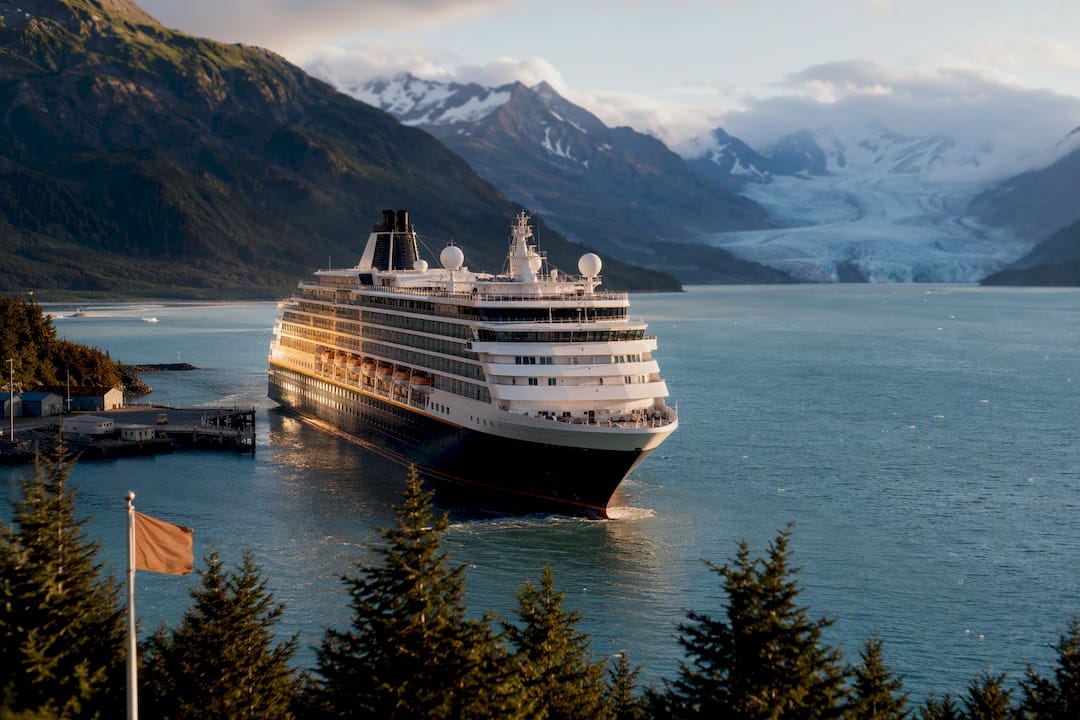
An open-jaw cruise is any sailing where you embark at one port and disembark at a completely different one, instead of returning to your starting point. That single difference unlocks itineraries a round-trip sailing physically cannot offer, but it also hands you the job of booking multi-city flights, extra hotel nights, and separate transfers on both ends. For complicated routings, that kind of logistics management is essential for clients.
TL;DR:
- Open-jaw cruises typically involve flying into one port and disembarking at another, requiring two one-way flights and potentially higher travel costs.
- Most open-jaw itineraries include foreign ports, which generally necessitate a full passport and may involve visa requirements, unlike closed-loop cruises.
- Repositioning sailings often offer low base fares around $722 for 13 nights but require additional budgeting for air, transfers, extra hotel nights, and travel insurance.
- Proper planning with a travel agent reduces logistical stress by securing protected multi-city flights, private transfers, and pre-arranged accommodations.
- Confirming itinerary type and document requirements before booking helps prevent disembarkation issues, especially when crossing into foreign territories like Canada.
Table of Contents
- What Is an Open-Jaw Cruise?
- Open-Jaw vs Closed-Loop: What Changes for You
- Benefits and Typical Use Cases for Open-Jaw Itineraries
- Costs and Logistics: How Airfare, Transfers, and Hotels Affect Total Price
- Passport, ID, and Entry Rules You Must Check Before You Book
- Planning Checklist and Questions to Ask Before You Commit
- Hidden Door Travel’s Perspective: When We Recommend Open-Jaw Itineraries
- Let Hidden Door Travel Plan Your Open-Jaw Cruise
- Sources
- FAQ
What Is an Open-Jaw Cruise?
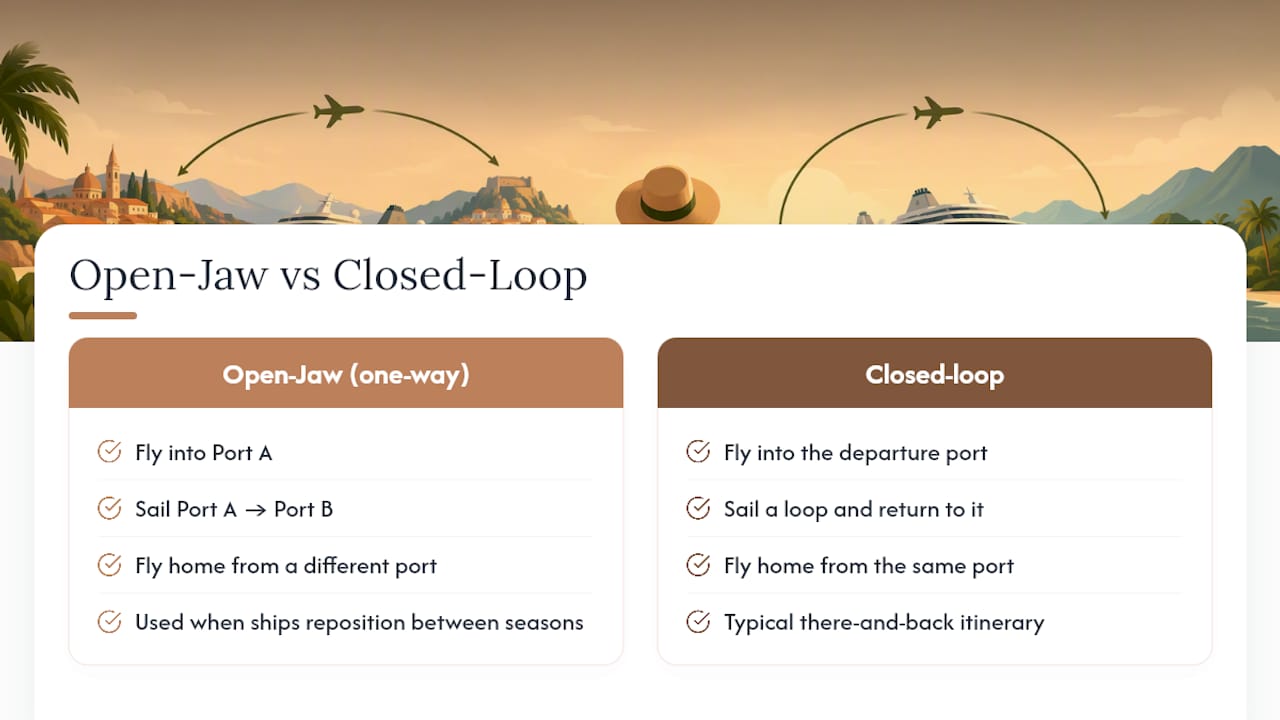
The industry also calls this a “one-way” cruise, and when a cruise line repositions its ship between seasonal regions, you’ll hear the term “repositioning cruise” too. All three describe the same basic shape: you fly into Port A, sail to Port B, and fly home from somewhere entirely different.
The clearest real-world example is Alaska. A northbound sailing might start in Vancouver and end in Seward or Whittier, while the southbound version runs the reverse. Neither is a loop. Transatlantic and trans-Mediterranean repositionings work the same way, typically in spring and fall when ships shift between European and Caribbean or Alaskan seasons.
Cruise lines run these routes because it’s the only way to move a ship from one region to another while still selling every cabin along the way. For passengers, it means access to a linear route (think Vancouver to Seward, or Barcelona to Miami) that a there-and-back itinerary simply can’t replicate.
Open-Jaw vs Closed-Loop: What Changes for You
A closed-loop cruise both starts and ends at the same U.S. port, according to U.S. Customs and Border Protection’s vessel inspection guide. Any cruise that begins abroad or picks up new passengers at a foreign port along the way, including most open-jaw itineraries, doesn’t qualify for closed-loop processing or its relaxed document allowances.
That distinction changes what you need to pack in your travel folder and how you plan the trip:
- Documents: Closed-loop sailings sometimes allow a passport card or enhanced driver’s license; open-jaw itineraries almost always call for a full passport.
- Air logistics: Closed-loop cruises need one round-trip flight. Open-jaw itineraries require two one-way legs, ideally booked together.
- Ground transportation: Closed-loop passengers can often drive to the port and park. Open-jaw travelers need transfers or parking solutions at two different cities.
- Route access: Some regions, Alaska’s Inside Passage being the leading case, are only fully explorable on a one-way sailing.
Closed-loop wins on simplicity if you live near a major cruise port and want a no-fuss trip. Open-jaw wins when the destination itself demands it.
Benefits and Typical Use Cases for Open-Jaw Itineraries
Open-jaw sailings exist because certain trips genuinely need them, not because cruise lines are trying to complicate your travel day. The itinerary advantages are real:
- More territory, same ship: A one-way Alaska sailing typically covers more glacier and fjord time than a round-trip out of a single port, since the ship isn’t retracing its own wake.
- Stronger per-day value on repositioning routes: Cruise lines discount these sailings to fill cabins during the shoulder-season move, often delivering more ship for less cruise fare.
- Built-in multi-city vacations: An open-jaw structure pairs naturally with a few days in Vancouver before and Anchorage after, rather than forcing a single home-base city.
- Land-and-sea combinations: Travelers heading to Denali, the Amalfi Coast, or a Mediterranean island-hop often want the ship to be one leg of a bigger trip, not the whole trip.
Open-jaw makes the most sense for travelers who value the destination over the convenience of a single flight. If your goal is a quick, no-hassle getaway from a nearby port, a closed-loop sailing will serve you better.
Costs and Logistics: How Airfare, Transfers, and Hotels Affect Total Price
The cruise fare on a repositioning sailing can look like a bargain. One widely cited example put a 13-night repositioning cruise at $722 per person, a rate that reflects how aggressively lines price these sailings to fill space during the seasonal move. What that fare doesn’t include is everything on either side of the gangway.
Budget for these line items separately from the cruise itself:
- Two airport transfers instead of one, since you’re arriving and departing from different cities.
- One to two extra hotel nights, especially if your ship docks at a small final port with limited afternoon flight options.
- No port parking option, which matters if you’d normally drive to embarkation.
- A multi-city airfare that often costs more than a single round-trip ticket would have.
Pro Tip: Book your multi-city flights as one ticket through a single airline or alliance rather than two separate one-way fares. If your first flight is delayed, a single itinerary gives the airline responsibility to rebook you; two unrelated tickets leave you stranded and paying for a new one.
Pad your schedule with a buffer day before embarkation and consider private transfers over shared shuttles, especially at ports like Seward or Whittier where the timing between ship and airport gets tight. A luxury cruise travel insurance plan that covers trip interruption is worth pricing in here too, since a missed connection on an open-jaw trip has more moving pieces to protect.
Passport, ID, and Entry Rules You Must Check Before You Book
Most open-jaw itineraries cross into foreign territory somewhere along the route, and that changes your documentation requirements. CBP has specifically reminded Alaska cruise passengers that stops in Victoria, Canada, count as foreign travel, meaning WHTI-compliant identification or a passport is generally required even for U.S. citizens.
Check these items before you pay a deposit:
- Confirm whether your specific itinerary counts as closed-loop or open-jaw with your cruise line directly.
- A passport book, rather than a passport card, is usually the safer bet since it covers both sea and air travel legs.
- Verify your passport has at least six months of validity remaining and enough blank pages for entry stamps.
- Check visa requirements for every foreign port of call, not just your final disembarkation city.
The State Department’s cruise safety guidance recommends confirming all of this well before departure, since document problems at embarkation can mean denied boarding with no refund.
Planning Checklist and Questions to Ask Before You Commit
Work through these steps in order, and you’ll catch most of the problems that turn a great open-jaw itinerary into a stressful one:
- Confirm with the cruise line whether your sailing is open-jaw or closed-loop, in writing.
- Price a single multi-city air ticket before assuming a round-trip fare will work.
- Book one to two buffer hotel nights around your embarkation and disembarkation dates.
- Secure private or vetted transfers at both ports, particularly at smaller airports.
- Add trip insurance that covers missed connections and interruption, not just cancellation.
Ask your agent directly about port clearance timing, which transfer vendors they’d actually recommend, and the earliest realistic flight out after disembarkation. A small final-port airport, like Seward’s limited flight schedule, or a same-day flight booked too close to disembarkation are the two biggest red flags that should push you toward an extra hotel night. If your trip involves connecting land travel or a wedding party, a bespoke planner earns their fee fast on itineraries this complex.
Hidden Door Travel’s Perspective: When We Recommend Open-Jaw Itineraries
Open-jaw sailings earn their reputation for complexity, but the complexity is almost always solvable with the right planning, not a reason to avoid the itinerary. We tend to recommend open-jaw routings when the destination genuinely calls for it: an Alaska glacier itinerary that only makes sense as a one-way run, or a Mediterranean trip where the client wants Barcelona before the ship and Rome after.
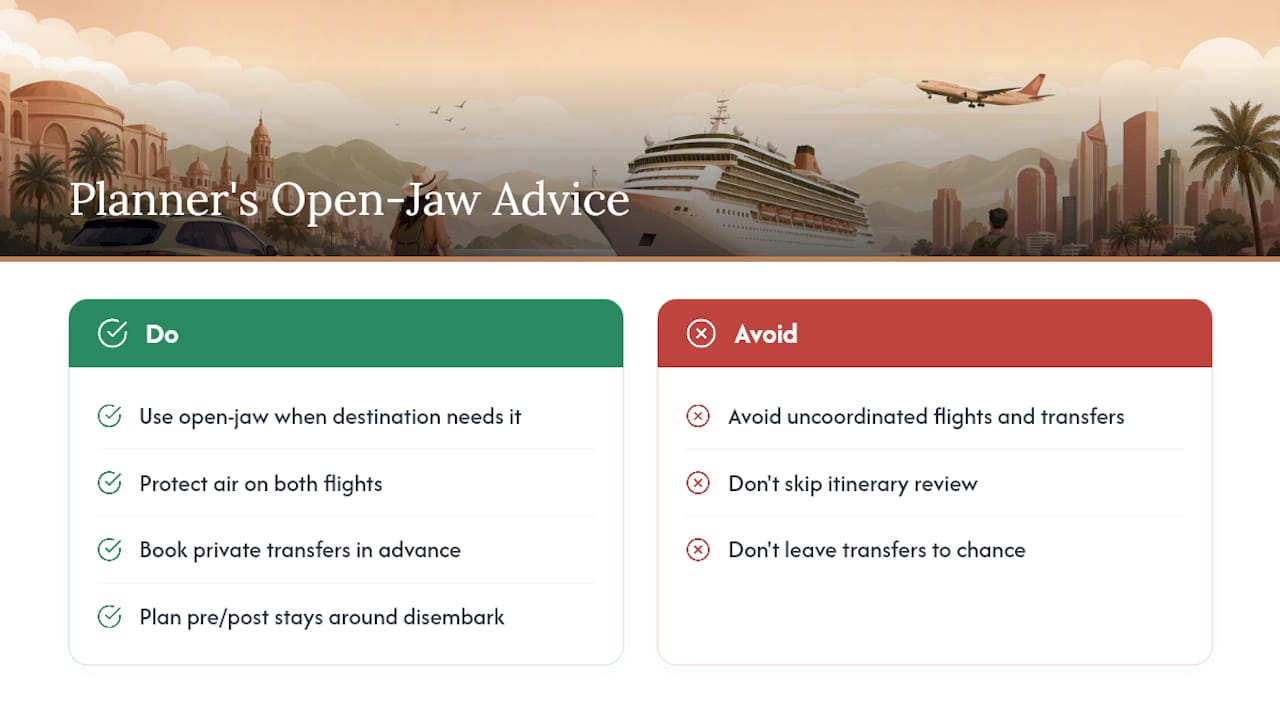
Where a bespoke planner earns real value is in collapsing the risk that comes with two flights, two cities, and two sets of transfers into a single coordinated plan, protected air, private transfers booked in advance, and pre and post-cruise stays chosen with the disembarkation morning in mind. That’s the difference between an open-jaw trip that feels effortless and one that turns into a scramble at a tiny airport.
If you’re weighing an open-jaw itinerary against something simpler, it’s worth talking through the itinerary options before you commit to either.
— Michael
Let Hidden Door Travel Plan Your Open-Jaw Cruise
Specialized travel agencies exist for exactly this kind of trip: the one where the ship is only part of the plan, and the flights, transfers, and hotel nights on either end need prior coordination. They design custom itineraries, book multi-city air as one protected ticket, arrange private transfers at both ports, and assist with evaluating travel insurance that covers missed connections between two cities.

If you’re eyeing an Alaska repositioning sailing or a transatlantic crossing paired with time in two different cities, the planning gets easier with someone who’s done it before. Request a consultation and we’ll map out the full trip, ship, air, and everything in between, before you put down a deposit.
Sources
- Vessel Inspection Guide (U.S. Customs and Border Protection)
- What are repositioning cruises? (NYPost, May 26, 2026)
- Cruise ship safety tips (U.S. Department of State)
FAQ
What Does Open-Jaw Cruise Mean?
An open-jaw cruise is a sailing where you embark at one port and disembark at a different one, rather than returning to your starting point. It’s the same concept as an open-jaw flight itinerary, just applied to a ship, and it’s common on Alaska and repositioning routes.
How Much Does a Repositioning Cruise Cost?
Base cruise fares on repositioning sailings can be notably low. One reported example put a 13-night repositioning cruise at $722 per person, though total trip cost typically climbs once you add multi-city airfare, transfers, and extra hotel nights.
Do I Need a Passport for an Open-Jaw Cruise?
Most open-jaw itineraries involve foreign ports of call, which generally means a passport is required, according to CBP’s ID guidance for cruise travelers. Always confirm the exact document requirements with your specific cruise line before booking flights.
What Is the Difference Between Open-Jaw and Closed-Loop Cruises?
A closed-loop cruise starts and ends at the same U.S. port, while an open-jaw cruise starts at one port and ends at another. The practical differences show up in your documents, your flights, and how you get to and from the ship.
Is It Worth Hiring an Agency for an Open-Jaw Cruise?
For itineraries involving multi-city air, foreign ports, and connecting land travel, a bespoke planner like Hidden Door Travel can coordinate flights, transfers, and hotel stays into one protected plan. Current planning services are outlined on the Hidden Door Travel site.