You cannot buy a seat at an official Paris Fashion Week runway show, but you can absolutely experience the week. The invitation-only rule governs shows on the FHCM calendar, full stop. What is open to you: independently ticketed productions, the L’Oréal Paris public show, free screenings, museum exhibitions, and a concierge-built itinerary around all of it.
TL;DR:
- Public attendance at FHCM runway shows is impossible without exclusive invitations, which are non-transferable and controlled by brands, not the federation.
- The only legitimate ways to experience Fashion Week are through independent ticketed shows, public screenings, museum exhibitions, or street-style viewing areas.
- Booking hotels six to eight weeks in advance and requesting private appointments three to six months ahead are essential for planning a successful trip.
- Costs vary widely, from free street-style watching and museum visits to high-end concierge packages including palace suites and private transport.
- A bespoke travel planner builds an experience around confirmed, bookable reservations, not official house invitations, ensuring a realistic and personalized trip plan.
Table of Contents
- What Paris Fashion Week Actually Is
- Can the Public Attend the Official Runway Shows?
- How Do You Legitimately Get Into Fashion Week Events?
- What Can You Actually Do During the Week?
- When Should You Plan Your Trip?
- Where Should You Stay and How Do You Get Around?
- What Should You Budget For?
- How Does Hidden Door Travel Build a Fashion Week Itinerary?
- What Health and Safety Rules Apply at Fashion Week Venues?
- How Should You Dress and Behave at Fashion Week Events?
- Should You Actually Plan a Fashion Week Trip?
- Let Hidden Door Travel Handle the Logistics
- Sources
- FAQ
What Paris Fashion Week Actually Is
The Fédération de la Haute Couture et de la Mode, or FHCM, runs Paris Fashion Week and publishes the official calendar for each season: women’s ready-to-wear, men’s, and haute couture. Women’s Spring/Summer, staged in late September and early October, draws the biggest houses and the heaviest media attention, which is why most visitor planning centers on that edition.
Not every listing on the calendar is a runway show. The FHCM schedule mixes three formats, and access varies sharply between them:
- Runway shows: full theatrical productions, invitation-only, no public ticketing.
- Presentations: smaller, static or semi-staged showings, usually for press and buyers only.
- Showrooms: private appointment-based viewings where retailers place orders, closed to the public entirely.
Venues shift every season. One year a house shows at the Grand Palais Ephémère, the next at a private hôtel particulier, so the final locations only lock in once FHCM releases its confirmed calendar, typically a few weeks before the season starts.
Can the Public Attend the Official Runway Shows?
No. Every seat at an FHCM runway show belongs to a name, not a ticket number, and that seat cannot be transferred or resold. Houses build their own guest lists and hand them to FHCM for accreditation, which means the brand, not the federation, decides who actually gets in.
The invitee categories rarely change from season to season: FHCM-accredited press, registered buyers, VIP clients with existing purchase history, celebrities booked for visibility, and brand partners or sponsors. If you don’t fall into one of those five buckets, a runway seat isn’t available to you at any price.
That last point matters enough to repeat plainly: industry sources are explicit that runway invitations are nominative, and anyone offering to sell you an “official” Fashion Week ticket is running a scam. There is no legitimate secondary market for these seats. If a listing on a resale site or a stranger on social media claims otherwise, treat it as fraud and move on.
How Do You Legitimately Get Into Fashion Week Events?
Four real paths exist for people outside the fashion industry, and each comes with its own tradeoffs.
- Buy tickets to an independent production. Producers like The Bureau Fashion Week stage publicly ticketed runway shows during the same week as the official calendar, with tiered pricing from general admission up to front row. These are real runway experiences, professionally produced, and open to anyone who buys a ticket.
- Apply for FHCM press accreditation. If you have a genuine media outlet or established fashion platform, you can apply for accreditation, which gives you the official schedule and lets you submit requests to individual houses. Accreditation gets your name on a list to consider. It does not guarantee a house says yes, and most requests from smaller outlets get declined.
- Work a buyer or client relationship. Retail buying offices with existing purchase volume get invited as a matter of course, and top spending clients of major houses often receive personal invitations from client-relations teams. This route takes years of relationship building, not a single email.
- Hire concierge or agency sourcing. A luxury concierge can arrange VIP hospitality, private appointments, and pursue invitations through established partner relationships, but no reputable agency will promise a guaranteed house invitation. What they can lock down reliably: hotel suites, chauffeured transport, private showroom appointments, and access to the legitimate ticketed shows.
Pro Tip: If your priority is actually watching a runway show, not just being near one, book an independent ticketed production first. It’s the one option on this list you can confirm with a credit card rather than a connection.
What Can You Actually Do During the Week?
The most rewarding part of Fashion Week for a visitor rarely happens on an official runway anyway. The city itself runs a parallel program built for exactly this audience.
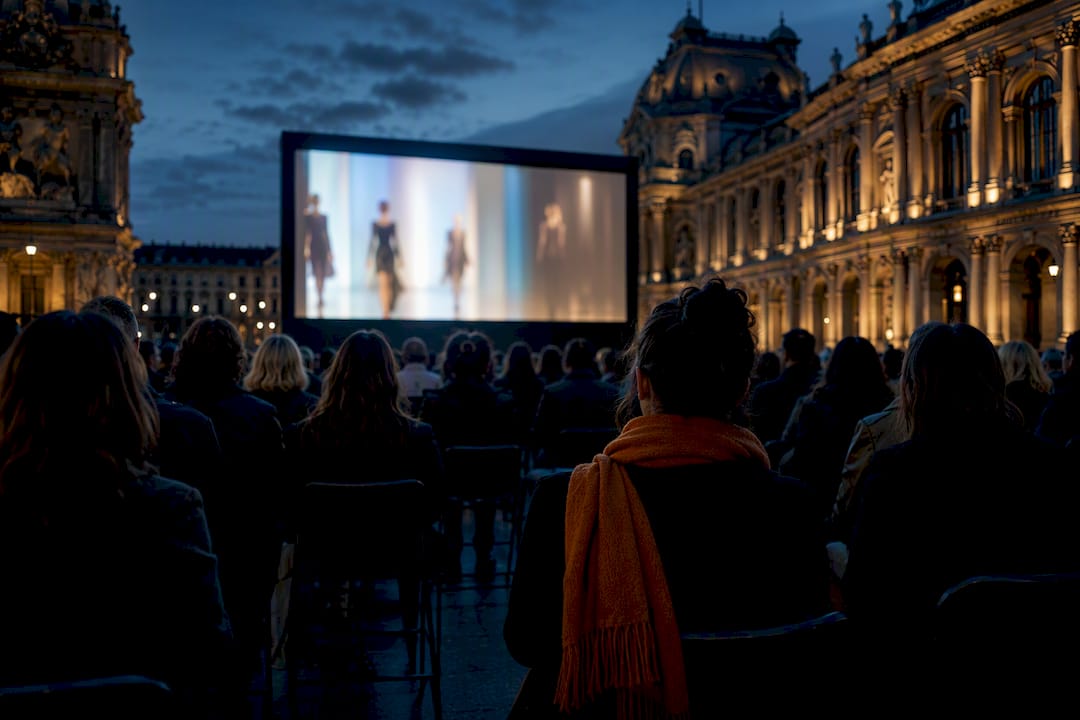
Free screenings at the Hôtel de Ville broadcast select shows on big screens, open to anyone who walks up, and official livestreams from FHCM let you follow a show in real time from a café table. L’Oréal Paris has staged a free public show with open registration in front of the Hôtel de Ville in past seasons, and while spots fill fast, it remains one of the few genuine runway experiences with no industry credential required.
Beyond the runway, the week turns into a citywide exhibition. The Palais Galliera and MAD Paris schedule major fashion exhibitions to coincide with the season, and both take advance ticket bookings online. Pop-up activations cluster in Le Marais, Saint-Germain, and the 8th arrondissement, often tied to a specific house’s collection launch.

If your interest is street style rather than gallery walls, plant yourself outside the right buildings. Photographers and industry arrivals concentrate at a short list of venues: Grand Palais Ephémère, Palais de Tokyo, Louvre Carrousel, and Place Vendôme. Arrive an hour before a known show time and you’ll see more genuine Fashion Week energy standing on the sidewalk than most ticket holders see from a mezzanine seat.
When Should You Plan Your Trip?
Timing decisions cascade from one fact: Women’s Spring/Summer, in late September through early October, is the largest and most photographed edition, so it’s the default choice if you only have one trip in you.
- Watch for the final calendar. FHCM typically confirms exact dates and venues a few weeks ahead of the season, and your hotel and transport bookings should wait until that release firms up locations.
- Book hotels six to eight weeks out, minimum, since the city’s best inventory disappears fast once the season is publicly confirmed.
- Start appointment requests three to six months ahead. Seasoned attendees book museum tickets and any private showroom access well before the calendar drops, because exhibition slots and concierge availability sell out long before show week arrives.
If you’re weighing whether concierge planning is worth the lead time, a detailed bespoke itinerary guide walks through how multi-day scheduling actually comes together.
Where Should You Stay and How Do You Get Around?
Location dictates your week more than almost any other decision. Staying near the 1st, 8th, or Saint-Germain puts you within a short ride of most venues and the bulk of the pop-up activity, while a quieter arrondissement like the 7th trades convenience for calm evenings away from the crowds.
- Palace hotels near Place Vendôme and the Champs-Élysées book up fastest and often carry minimum-stay requirements during the season.
- A private apartment or boutique hotel in the Marais gives you flexibility and often better value per night.
- A weekend-stay booking strategy built around advance deposits and flexible cancellation terms helps you lock rates before the season crowds push prices up.
- Timed chauffeurs running a minute-by-minute route sheet, and motorcycle shuttles for the worst traffic pinch points, are the tactics serious attendees use to make back-to-back appointments across the city.
- The Métro is faster than a car during show hours in the 1st and 8th, where street closures around venues can turn a ten-minute drive into forty.
What Should You Budget For?
Costs at Fashion Week span an enormous range, and where you land depends entirely on which experience you’re chasing.
Street-style watching, museum visits, and free screenings cost close to nothing beyond your regular travel budget, since Palais Galliera and MAD Paris tickets run in the range of a standard museum admission. Independent ticketed productions sit in the middle tier: general admission tickets are affordable, while premium and front-row seats climb considerably higher, and The Bureau Fashion Week’s public pricing structure shows exactly how those tiers scale.
The top end is a different category entirely. A full concierge week, palace suite, dedicated chauffeur, private appointments, and a personal shopper, runs into serious luxury travel territory, and any quoted range from a concierge service should be treated as an estimate that firms up once your exact dates and requests are confirmed. The honest way to think about it: free and low-cost options give you real Fashion Week atmosphere, while paid concierge planning buys you time, access to appointments you couldn’t book yourself, and a schedule that doesn’t fall apart the moment one plan changes.
How Does Hidden Door Travel Build a Fashion Week Itinerary?
Hiddendoortravel puts together Fashion Week trips around what’s actually bookable: VIP hospitality logistics, private appointment scheduling, museum and exhibition reservations, personal styling and shopper services, and chauffeur or motorcycle shuttle operations timed to your day’s schedule.
What Hiddendoortravel does not do, and will not claim to do, is sell official house invitations. Those stay under each brand’s control. Instead, the work runs through verified partners and existing relationships, with availability confirmed before anything gets booked, not after.
- VIP logistics and appointment scheduling across the week
- Museum, exhibition, and pop-up reservations booked in advance
- Personal styling and shopper coordination
- Chauffeur and motorcycle shuttle arrangements for show-day traffic
What Health and Safety Rules Apply at Fashion Week Venues?
Paris Fashion Week venues follow standard French public-event protocols, and the specifics shift slightly by location since shows run in everything from purpose-built structures like the Grand Palais Ephémère to historic sites and private buildings.
Bag checks and security screening are standard at every ticketed and accredited entry point, so budget extra time before any show, screening, or museum visit during peak hours. Large bags, professional camera equipment beyond a certain size, and certain liquids often get flagged at security, particularly at high-profile venues.
Capacity limits are enforced strictly at museum exhibitions and public screenings tied to the season, which is exactly why advance booking matters for Palais Galliera and MAD Paris. Free public events like the Hôtel de Ville screenings fill their standing area on a first-come basis, and organizers close entry once the space reaches its limit, invitation or not.
If you have mobility needs or specific accessibility questions for a particular venue, contact the venue directly rather than relying on general Fashion Week guidance, since accommodations vary by building. Weather is also a factor worth planning around: outdoor pop-ups and street-side viewing spots offer no shelter, so early October in Paris can mean dressing for both a runway-adjacent photo and a sudden rain shower in the same afternoon.
How Should You Dress and Behave at Fashion Week Events?
Dress code expectations vary enormously depending on which kind of event you’re actually attending, and mismatching the two is the most common visitor mistake.
For a museum exhibition at Palais Galliera or MAD Paris, smart casual works fine. Nobody expects you in couture to look at couture. For an independent ticketed show like The Bureau’s productions, dress a notch up: tailored pieces, a strong single statement item, clean lines. Street-style watching outside venues like the Grand Palais Ephémère is the one setting where genuinely fashion-forward dressing pays off, since it’s the entire point of standing there, but comfortable shoes matter more than anyone admits when you’re on your feet for hours.

Etiquette matters as much as clothing. Photographers and industry insiders move fast between appointments, so don’t block entrances or walkways trying to get a photo. At free public screenings and the Hôtel de Ville viewing areas, arrive well before start time and expect to stand. If you’re fortunate enough to attend any invitation-based event through a client or press connection, punctuality is non-negotiable. Seats seat on time, and latecomers often don’t get seated at all. Phones on silent, minimal flash photography near working press, and a general rule of watching how the room behaves before you act will keep you from standing out for the wrong reasons.
Should You Actually Plan a Fashion Week Trip?
Spend on concierge access when your interest is genuine and your time is short. Skip it and build your own week around museum exhibitions, ticketed independent shows, and street-style hunting if budget matters more than proximity to a runway. Before booking anything, ask yourself three questions: how deep is your actual interest, what’s your real budget ceiling, and how many days can you give this. The honest answers should decide the trip, not the fantasy of a front-row seat.
— Michael
Let Hidden Door Travel Handle the Logistics
A bespoke travel planner can be the alternative to piecing together Fashion Week yourself, one email and one uncertain booking at a time. Such planners build weeks around what’s actually bookable: verified appointments, luxury hotel stays, styling support, and transport that gets you to each stop on time.
Every itinerary starts with an honest conversation about what’s realistic for your dates and budget. Hidden Door Travel does not sell official house invitations, and any agency that claims it can guarantee one should raise a flag. What you get instead is a customized all-inclusive experience built around confirmed reservations, not promises. If you’re weighing whether a bespoke planner is worth it, why luxury travelers choose agencies for trips like this lays out the case in more detail. Ready to start? Reach out through Hiddendoortravel’s customized experience page and get a realistic plan built around your Fashion Week dates.
Sources
FAQ
Can the Public Attend Paris Fashion Week?
Not the official FHCM runway shows, since those seats are invitation-only and non-transferable. The public can attend independently ticketed productions like The Bureau Fashion Week, free public screenings, museum exhibitions, and street-style viewing areas around the city.
How Much Does It Cost to Go to Paris Fashion Week?
Costs range from nearly free, street-style watching and museum tickets, to a mid tier for independent ticketed shows with premium seating, up to full luxury territory for a concierge-managed week with palace suites and chauffeurs. A concierge-arranged Fashion Week week is quoted individually since it depends heavily on your exact dates and requests.
How Can I Be Invited to Paris Fashion Week?
Realistic invitation paths include FHCM press accreditation for working fashion media, established buyer credentials with a retail purchasing history, or a client relationship with a house built over repeat purchases. Accreditation and buyer status open the door to requesting a seat; they don’t guarantee one, since each house controls its own guest list.
Is It Hard to Get Into Paris Fashion Week?
Getting into an official runway show without press, buyer, or client credentials is close to impossible, since houses control every seat and invitations can’t be transferred or bought. Getting into the week itself, through ticketed independent shows, free screenings, and public programming, is genuinely accessible to anyone who plans ahead.
What Does Hidden Door Travel Offer for Fashion Week Trips?
Hiddendoortravel arranges customized all-inclusive experiences covering VIP logistics, private appointments, museum reservations, styling support, and chauffeur transport for Fashion Week travelers. Pricing is available on request based on your specific dates and requirements.