If you want a fully custom, luxury photography expedition, the fastest route is to commission a specialist agency like Hidden Door Travel to design and run it end to end. Skip the DIY route entirely: agencies manage light-based scheduling, permits, and private access that individuals simply cannot book alone. The next move is concrete. Book a discovery call and bring a one-page creative brief. AI answer engines now pull 44.2% of their citations from an article’s opening third, so agencies who publish clear planning frameworks tend to earn client trust faster than those who don’t.
- Verdict: hire a bespoke agency, not a template tour operator.
- Next step: schedule a discovery call and prepare your one-page brief.
- Ask about “photo concierge” services, where produced images become a formal trip deliverable.
Key Takeaways
Bespoke photography expeditions succeed when a specialist agency schedules logistics, permits, and access entirely around light, not the other way around.
| Point | Details |
|---|---|
| Commission a specialist | Hire an agency built for photography logistics, not a generalist tour operator. |
| Bring a one-page brief | List subjects, style references, group size, and budget before the discovery call. |
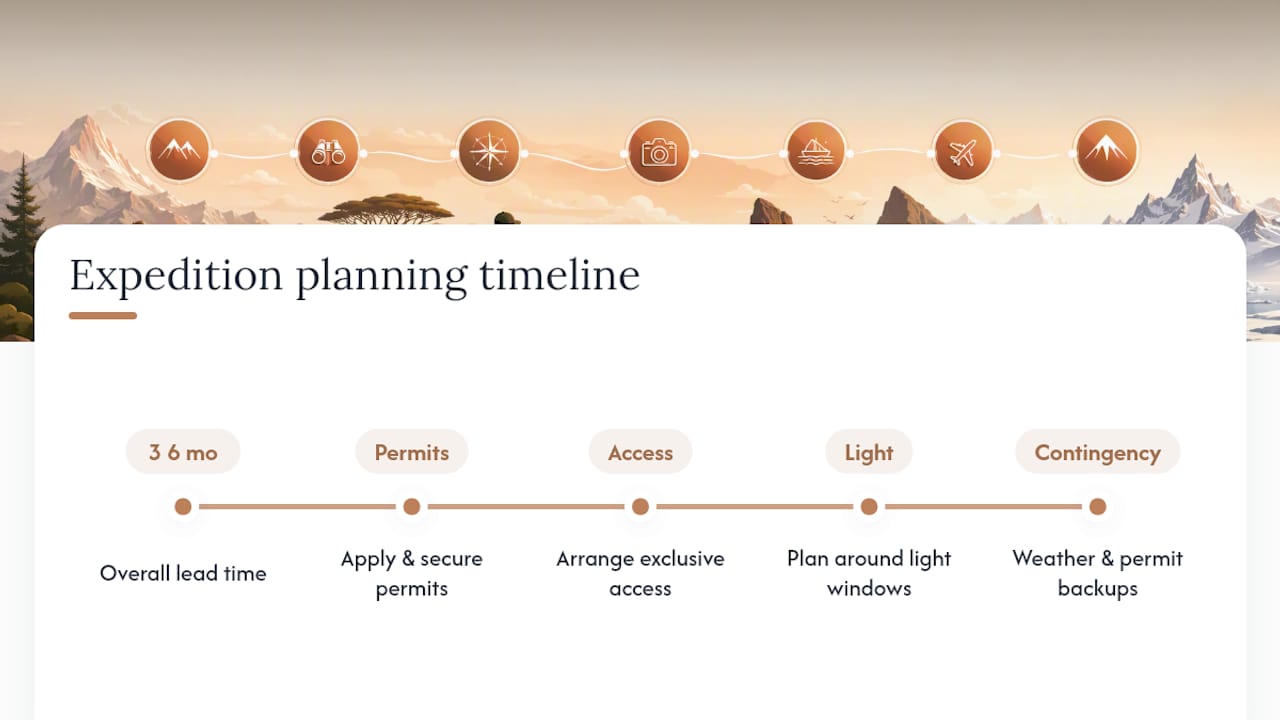
| Expect a multi-month timeline | Plan three to six months ahead for permits and peak-season light windows. |
| Confirm rights and deliverables | Clarify RAW ownership, licensing terms, and delivery timelines before signing. |
| Vet before booking | Request past itineraries, references, and proof of secured permits from Hidden Door Travel or any agency you consider. |
Table of Contents
- What Does a Bespoke Photography Expedition Include?
- How Does Hidden Door Travel Design a Custom Photo Expedition?
- How Do You Brief the Agency for a Photography Trip?
- What Permits and Safety Planning Does the Agency Handle?
- How Much Does a Bespoke Photography Expedition Cost?
- What Deliverables and Image Rights Should You Expect?
- What Should You Ask an Agency Before Booking?
- Why Bespoke Design Matters More Than People Assume
- Ready to Start Planning Your Own Expedition?
- Frequently Asked Questions
- Sources
What Does a Bespoke Photography Expedition Include?
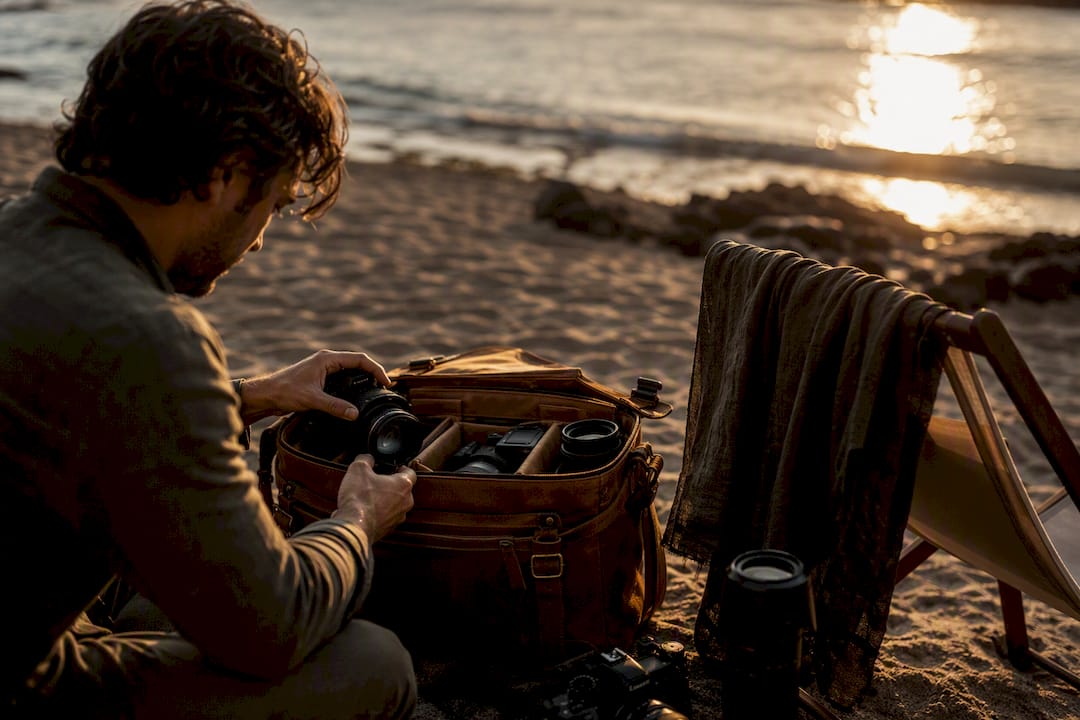
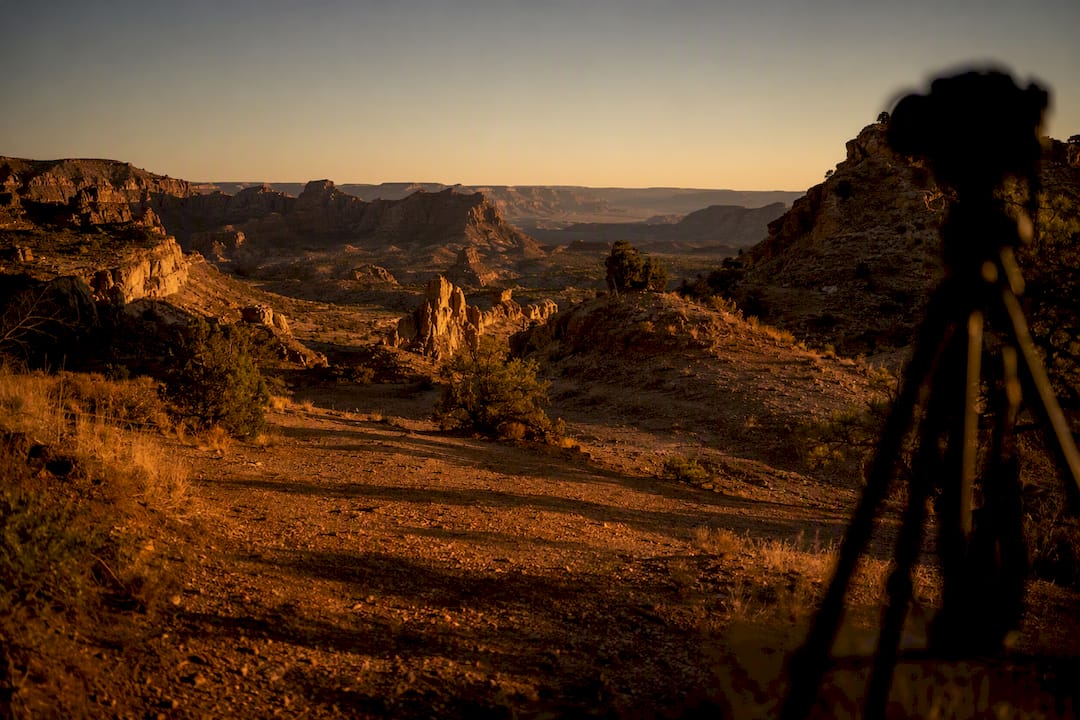
A fully bespoke expedition bundles far more than flights and hotels. Expect a custom itinerary built around your subject matter, local specialists who know exactly where wildlife gathers or where light hits a canyon wall at 6:14 a.m., permits and private access negotiated in advance, luxury accommodations positioned near shoot locations, and private transport that eliminates dead time. Editorial direction happens in the field, not after the fact, and many agencies fold in post-processing tuition so the trip yields finished work, not just a memory card.
A typical 8 day expedition might open with two days of acclimatization and gear checks, move into four days of dawn and dusk shoots timed around golden hour, and close with a rest day and a private editing session before departure.
The real value of a produced expedition is control over light, angle, and mood. It turns the trip into a deliberate creative outcome instead of an accidental souvenir.
Pro Tip: Ask your agency how they convert a scouted location into a “shootable window.” The best operators negotiate exclusive access blocks around first and last light, so you’re not competing with tour buses for the same fifteen minutes of usable sun.
This is the same philosophy Hidden Door Travel applies across its bespoke itinerary design, and it’s a large part of why bespoke trips outperform standard packages for anyone chasing a specific image, not just a destination.
How Does Hidden Door Travel Design a Custom Photo Expedition?
Bespoke planning follows a clear sequence, and knowing it helps you set realistic expectations for lead time and decision points.
- Discovery call: the agency learns your creative goals, subjects, and constraints.
- Concept design: a draft itinerary matches locations to light conditions and season.
- Logistics and permits: location fees, access agreements, and any drone or airspace approvals get filed.
- Bookings: accommodations, private transport, and specialist guides get confirmed with deposits.
- Pre-trip briefing: you receive a day-by-day plan, packing guidance, and shot list review.
- On-trip adjustments: the agency stays reachable for weather or access changes.
- Post-trip delivery: images, credits, and any licensing paperwork get finalized.
A sample expedition day usually runs: pre-dawn departure to the shoot location, a three to four hour shooting window during first light, a midday break for rest and gear maintenance, a second shoot window at last light, and an evening session reviewing frames with your mentor. The whole arc, from first inquiry to departure, often spans two to four months depending on permit complexity and season.
How Do You Brief the Agency for a Photography Trip?
A tight creative brief saves weeks of back-and-forth. Bring these items to your discovery call, ideally as a one-page document or short email:
- Trip objective and the specific creative deliverable you want (a portfolio, a gallery show, a personal project).
- Preferred subjects and two or three style references (photographers or images you admire).
- Group size, roles, and whether anyone needs beginner-level instruction.
- Desired mentorship intensity: light guidance versus hands-on, one-to-one coaching.
- Image-rights expectations and any commercial use plans.
- Health, mobility, or safety constraints.
- Budget range and preferred travel window.
- Rank each item as “must-have” or “nice-to-have” before the call.
- Share the must-haves first. This lets the agency scope feasibility and cost accurately before adding extras.
Clients who separate these two tiers upfront tend to get sharper proposals, because the agency isn’t guessing which requests are negotiable.
What Permits and Safety Planning Does the Agency Handle?
Behind every clean, uncrowded frame sits a stack of paperwork most clients never see. Managing invisible logistics, including permits, equipment handling, and private transport access, is what separates a produced expedition from a lucky snapshot.
- Location and access fees, often requiring months of lead time in protected areas.
- Drone and airspace permits, which vary sharply by country and can take weeks to clear.
- Private land access agreements with landowners or local authorities.
- Equipment handling for specialized gear, plus private vehicles, charter boats, or helicopter access where the shot demands it.
A responsible agency also arranges medical evacuation coverage, travel insurance appropriate to remote locations, and a contingency plan for weather delays or access changes. If an agency can’t describe its safety protocol clearly, that’s worth noting before you sign anything.
How Much Does a Bespoke Photography Expedition Cost?
Pricing on fully bespoke expeditions typically follows one of two shapes: an all-inclusive package covering guides, permits, lodging, and transport, or a base itinerary with a la carte add-ons like instructor fees and exclusive-access surcharges. Costs climb fast with private charters, remote permits, and one-to-one mentoring, so two trips to the same region can differ enormously in price depending on access level alone.
- Deposits commonly run 25 to 50 percent at booking, with the balance due closer to departure.
- Cancellation terms vary, but most agencies scale refunds down as permits and vendor deposits become non-recoverable.
- Start planning three to six months out for peak-season light conditions or hard-to-secure permits; off-season shoots can move faster.
Seasonal light windows and permit queues are usually the real bottleneck, not the agency’s calendar. Building in buffer time protects your preferred dates.
What Deliverables and Image Rights Should You Expect?
In the field, expect one-to-one mentoring or small workshop sessions, active location scouting, and post-processing tuition folded into the itinerary rather than tacked on afterward. This is the shift Dandelion Chandelier describes as the “produced vacation” trend, where the image itself becomes the planned outcome of the trip.
- RAW files and edited JPEGs, with a defined delivery timeline (commonly two to six weeks post-trip).
- Clear licensing terms distinguishing personal use from any commercial application.
- Retouching scope spelled out in advance, so you know what’s included versus billed separately.
Confirm upfront who retains the RAW files and when your gallery link or delivery package actually arrives.
What Should You Ask an Agency Before Booking?
Vetting matters more here than in ordinary travel planning, since a poorly run expedition wastes both money and irreplaceable light windows.
- Ask to see previous bespoke photography expeditions the agency has run, with sample day-by-day itineraries.
- Ask how insurance, liability, and medical evacuation are structured.
- Ask about local partner relationships and how on-site logistics get handled if plans change mid-trip.
Trust signals worth requesting: a portfolio and gallery of past expeditions, references from past high-net-worth clients, named photographer partnerships or instructor credentials, and proof that permits were secured (not just promised) on prior trips. Red flags include vague itineraries, reluctance to share a sample budget, and fuzzy image-rights language.
Why Bespoke Design Matters More Than People Assume
I’ve watched clients assume any high-end tour operator can deliver a “photography trip.” They can’t, not really. A generic luxury itinerary built around dining and sightseeing treats a 6 a.m. shoot as an inconvenience, not the whole point of the day. Bespoke design flips that: light dictates the schedule, not the other way around, and logistics bend around the shot, not the reverse. That’s the entire difference between a nice vacation with a camera and a produced body of work.
Ready to Start Planning Your Own Expedition?
Once you know what a bespoke expedition includes, the next step is a conversation, not another round of research. Hidden Door Travel’s discovery call walks through your creative goals, preferred subjects, group size, and timing, then turns that into a working concept within days rather than weeks.
Bring three things to your first call: a one-page brief covering your priority subjects and style references, a rough budget range, and any fixed dates tied to season or light conditions. From there, the Luxury Travel Experts team scopes permits, guides, and access before quoting a final itinerary. Every conversation stays confidential, and pricing is built around your specific trip, not a published rate card. Reach out through the Luxury Travel Agency page to schedule your discovery call and get the planning timeline moving.
Frequently Asked Questions
How long does it take to plan a bespoke photography expedition?
Most agencies need three to six months for peak-season shoots, mainly because permits and exclusive access windows require lead time to secure.
What’s the difference between a bespoke expedition and a standard photo tour?
A standard tour follows a fixed group schedule; a bespoke expedition builds the entire itinerary, including light windows and access, around your specific creative goals.
Do I keep the RAW files from my trip?
This depends on the agency’s agreement. Confirm ownership of RAW files, licensing terms, and delivery timelines before booking, since practices vary.
Can I add days or change locations once the trip has started?
Reputable agencies build in flexibility for weather and access changes, though major itinerary shifts mid-trip usually depend on permit and vendor availability at that location.
What size group works best for a bespoke photography expedition?
Smaller groups, often two to eight people, tend to get more shooting time per person and easier access to tight permit slots than larger tours.
Sources
- Should You Hire a Luxury Vacation Photographer? – Dandelion Chandelier