
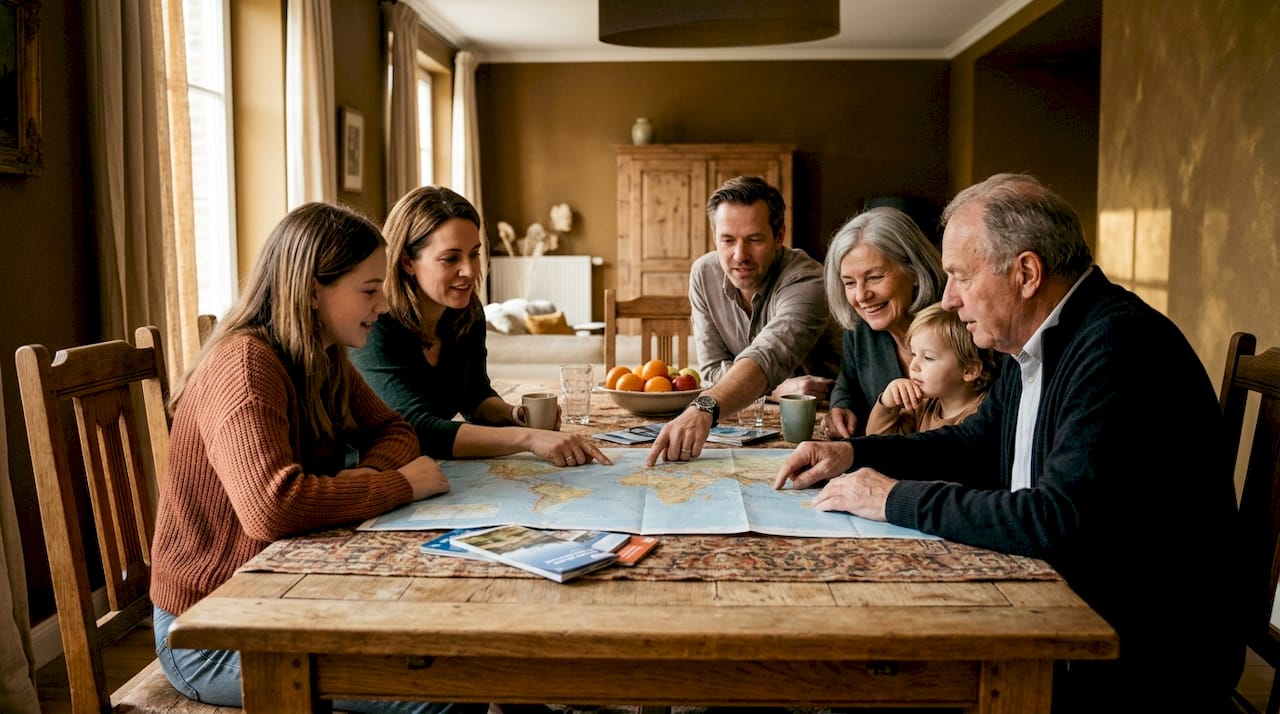
A travel legacy trip is defined as an intentional, multigenerational journey designed to create shared memories, transmit cultural values, and produce experiences that families pass down through generations. Unlike a standard vacation, the goal is not rest or novelty alone. The purpose is to build something lasting. Expedia research shows that 74% of travelers say the best memories come from travel experiences rather than material possessions. That finding reframes what inheritance can mean. The Hilton 2026 Trends Report confirms that family traditions now shape travel preferences across generations, a trend the industry calls inheritourism. Hiddendoortravel has built its entire approach around this shift, helping families design bespoke legacy journeys that outlast any souvenir.
What is a travel legacy trip, and what forms does it take?
Legacy travel experiences come in several distinct forms, each built around a different kind of family story.
- Heritage and ancestral trips center on visiting the places a family came from. These journeys often include UNESCO-designated sites and require curated, respectful cultural interpretation to avoid reducing complex histories to tourism checkboxes.
- Milestone celebration trips mark a specific life event, such as a grandparent’s 80th birthday, a family reunion, or a graduation. The destination and activities are chosen to reflect the honoree’s life story.
- Grief and healing journeys bring families together after a loss to reconnect, often by revisiting places that held meaning for a loved one.
- Skip-gen trips pair grandparents with grandchildren, deliberately skipping the middle generation to create a direct bond between the oldest and youngest family members.
All of these formats share three features that separate them from ordinary vacations. First, they are built around intentionality: every destination, activity, and meal is chosen to serve the larger story the family wants to tell. Second, they use multigenerational pacing, meaning the itinerary accounts for the physical needs and attention spans of every age group present. Third, they prioritize cultural immersion over surface-level sightseeing, often through private guides, local family visits, or artisan workshops.
Pro Tip: When planning for a mixed-age group, build at least one full rest day into every three days of activity. Fatigue is the single biggest threat to connection on a multigenerational trip.
How do legacy trips create meaningful connections and lasting family stories?
Shared experience is the mechanism. When a grandmother and her teenage grandchild stand together at the village where the family’s story began, they create a reference point that neither can access alone. That moment becomes part of the family’s identity, something retold at dinners and passed to the next generation.
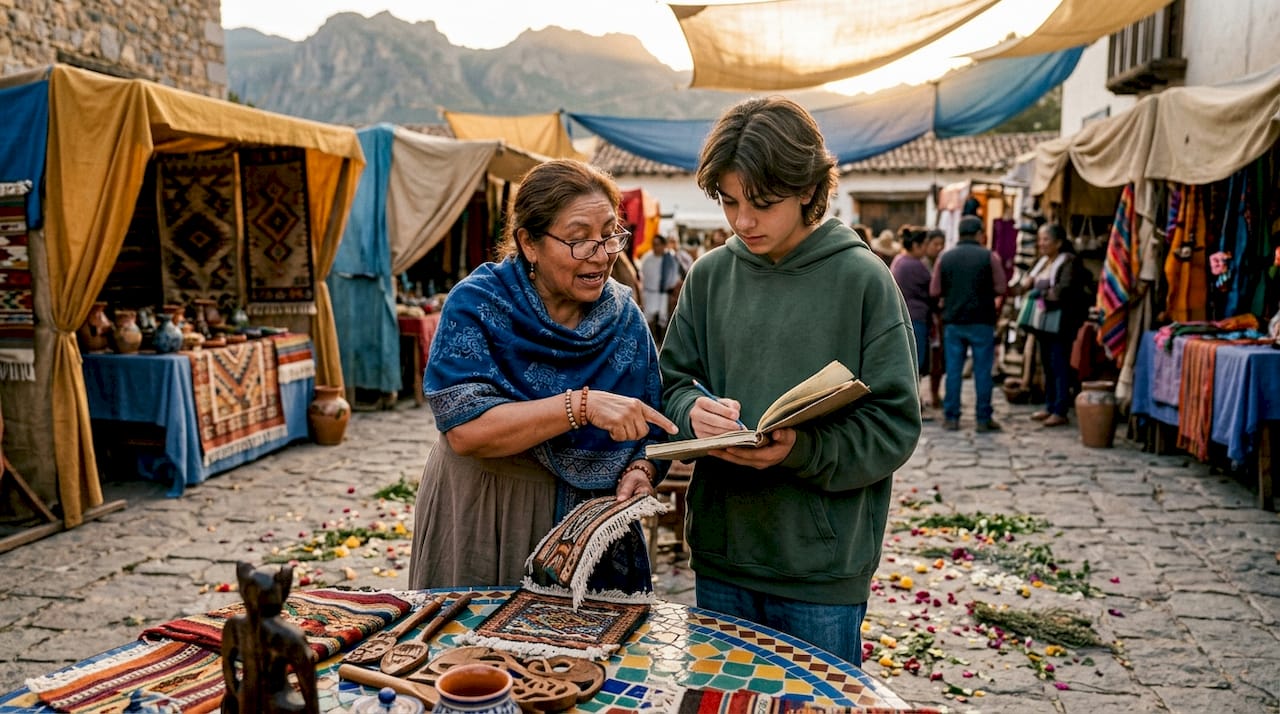
The most effective legacy trips build that identity through deliberate documentation. Intentional documentation methods like professional photo albums, handwritten journals, and planned “shot spot” locations transform experiences into heirlooms. A shot spot is a specific location chosen in advance for a formal family photograph, repeated on future trips to show the passage of time. Planning these moments before departure, not during the trip, produces the quality needed for a photo book that will survive decades.
Here is a practical framework for building connection into the trip structure:
- Assign a family historian. One person, often a teenager or young adult, takes responsibility for recording daily reflections, either in a shared journal or a private group chat that becomes an archive.
- Schedule a heritage site visit with a specialist guide. Generic tours rarely produce emotional resonance. A guide who understands your family’s specific background can connect the site to your story directly.
- Build a shared meal ritual. Choose one meal format, such as a family dinner at a local home or a cooking class, and repeat it at every destination. Repetition creates tradition.
- Incorporate a service element. Sustained relationships with local NGOs can extend a legacy trip’s impact across years. A family that sponsors a school garden after visiting a rural community in Peru carries that trip forward long after they return home.
- Hold a closing conversation. On the final evening, gather every family member and ask each person to name one moment they will never forget. Record the answers. That recording becomes the trip’s most valuable artifact.
Pro Tip: Commission a local gastronomy experience at your destination. Shared meals built around regional food traditions create sensory memories that photographs alone cannot replicate.
What does a legacy trip cost, and how should you plan one?
Legacy trip pricing varies widely based on group size, duration, and the level of customization involved. Curated legacy travel packages range from $195 for short, focused experiences to $2,495 as a flat fee for 14-day multigenerational custom journeys with slow pacing built in. That range reflects the spectrum of what the category covers, from a single-day heritage workshop to a two-week cross-country family expedition.
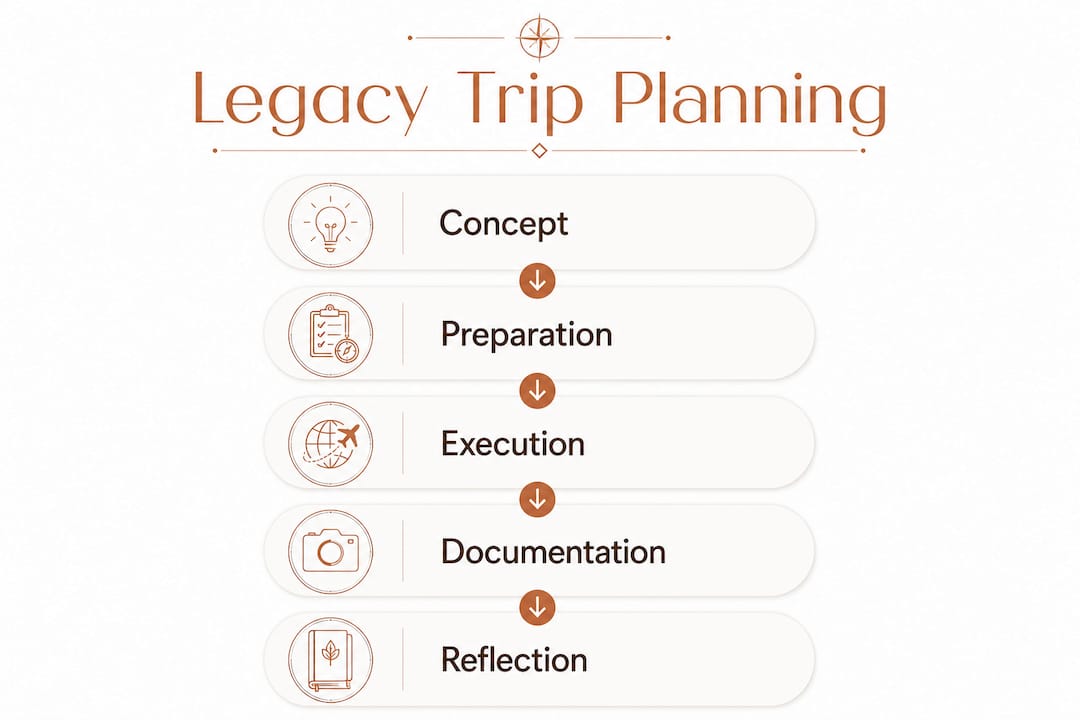
Advance planning is the single most important factor in a successful multigenerational trip. Coordinating travel schedules, dietary needs, mobility requirements, and budget expectations across three generations requires at least six months of lead time for a trip of 10 or more people. Hiddendoortravel recommends starting the destination conversation before booking anything, because the right location is the one that connects to the family’s actual story, not the one that looks best in a brochure.
| Trip type | Typical duration | Price range | Key features |
|---|---|---|---|
| Heritage day experience | 1 day | From $195 | Ancestral site visit, specialist guide |
| Milestone celebration | 3–7 days | $500–$1,200 | Custom itinerary, group pacing |
| Multigenerational journey | 7–14 days | $1,200–$2,495 | Slow travel, documentation support |
| Skip-gen retreat | 5–10 days | $800–$2,000 | Two-generation focus, bonding activities |
Pacing deserves its own attention. A 14-day trip that moves to a new city every two days exhausts older travelers and overwhelms young children. The most effective legacy itineraries spend at least three nights in each location, allowing the group to settle, explore at different speeds, and return to favorite spots. That depth of stay also makes authentic local connections more likely, which is where the most memorable moments tend to happen.
How is legacy travel evolving in 2026?
The concept of inheritourism is reshaping how families think about travel traditions. Family traditions now shape travel preferences for 73% of travelers, blending past habits with modern values like sustainability and cultural respect. That is not a minor shift. It means families are actively choosing destinations and experiences based on what they want to pass forward, not just what is trending.
Several specific trends are defining legacy travel in 2026:
- Skip-gen travel is growing fast. Multigenerational travel bookings have surged, with skip-gen offerings and family reunion coordinators becoming standard features at specialist agencies.
- Unbranded luxury accommodations are preferred. Families seeking authentic connection increasingly choose private villas, heritage guesthouses, and locally owned lodges over large hotel chains. The setting shapes the story.
- Extended trip durations are rising. Two-week and three-week legacy journeys are replacing the one-week family vacation as the format of choice for serious multigenerational planning.
- Personalized legacy artifacts are now standard. Custom photo books, engraved keepsakes, and professionally edited trip films are built into many curated packages as deliverables, not afterthoughts.
- Sustainability is a core criterion. Affluent millennials recreating childhood vacations with upgrades now expect those upgrades to include lower environmental impact, not just higher comfort.
The implication for travelers is clear. A legacy trip planned in 2026 should reflect not just where your family has been, but what your family stands for. That alignment between values and itinerary is what separates a memorable vacation from a genuine family legacy.
Key Takeaways
A travel legacy trip succeeds when intentionality, documentation, and multigenerational pacing work together to produce experiences that families carry forward for decades.
| Point | Details |
|---|---|
| Definition matters | A legacy trip is intentional and multigenerational, not just a family vacation with more people. |
| Documentation creates heirlooms | Plan shot spots, journals, and photo books before departure, not after. |
| Pacing protects connection | Build rest days into every three days of activity to keep all ages engaged. |
| Cost is flexible | Curated packages range from $195 to $2,495 depending on duration and customization. |
| 2026 trends favor depth | Longer stays, unbranded accommodations, and sustainability are now defining features of legacy travel. |
Why intentionality matters more than the destination
I have worked with families who spent six figures on a trip to Patagonia and came home with beautiful photographs and almost no shared story. I have also seen a three-day trip to a grandparent’s hometown in rural Sicily produce memories that a family still talks about a decade later. The difference was never the destination. It was whether the family arrived with a purpose.
The families who get the most from legacy travel are the ones who do the work before they pack a bag. They know which story they are trying to tell. They have assigned roles, planned the shot spots, and thought about what they want the youngest family member to remember when they are 40. That level of preparation sounds like a lot, but it takes one good planning conversation and a specialist who knows how to ask the right questions.
What I find most underrated in legacy travel planning is the post-trip phase. The trip ends, everyone goes home, and the photos sit in a cloud folder for two years. The families who actually build a lasting legacy are the ones who commission the photo book within 30 days, hold the closing dinner, and make the first donation to the NGO they visited. The trip is the spark. What you do with it afterward is the legacy.
— Michael
How Hiddendoortravel designs your legacy trip
Hiddendoortravel specializes in exactly this kind of purposeful, multigenerational travel. Every itinerary is built from scratch around your family’s specific story, whether that means tracing ancestral roots in West Africa, celebrating a milestone in the Scottish Highlands, or designing a skip-gen adventure across Japan.

The team at Hiddendoortravel handles the details that make legacy travel work: accessibility accommodations for mixed-age groups, specialist heritage guides, documentation planning, and post-trip artifact coordination. If you are ready to move from a vacation to a bespoke legacy experience, Hiddendoortravel’s advisors can help you build an itinerary that your family will still be talking about in 20 years. You can also browse curated trip inspiration to start shaping your vision.
FAQ
What is a legacy trip in simple terms?
A legacy trip is a purposeful family journey designed to create shared memories and cultural connections that are passed down through generations, rather than simply visiting a destination for leisure.
How much does a legacy travel experience typically cost?
Curated legacy travel packages range from $195 for short experiences to $2,495 for 14-day multigenerational custom journeys, depending on group size, duration, and level of customization.
What is inheritourism and how does it relate to legacy travel?
Inheritourism describes the trend of families recreating and adapting travel traditions across generations. It is the cultural foundation that drives many legacy trips, with 73% of travelers reporting that family traditions shape their travel choices.
How do legacy trips differ from regular family vacations?
Legacy trips are built around intentionality, storytelling, and multigenerational pacing. Every element, from the destination to the documentation plan, serves a larger purpose beyond relaxation or sightseeing.
What is skip-gen travel?
Skip-gen travel pairs grandparents directly with grandchildren, bypassing the middle generation, to build a close bond between the oldest and youngest family members through shared experience.