

A travel memory book is a personalized, tangible archive combining photos, handwritten notes, and physical mementos into a narrative record of your trips. Think of it as a time capsule you build yourself, one that holds a boarding pass from Tokyo, a pressed flower from Tuscany, and a scrawled note about the best meal you ever ate. Unlike a camera roll buried in your phone, a memory book gives your experiences physical weight and story. Travel enthusiasts who create them consistently report that flipping through a finished book triggers memories that photos alone never could.
What is a travel memory book, and what formats does it come in?
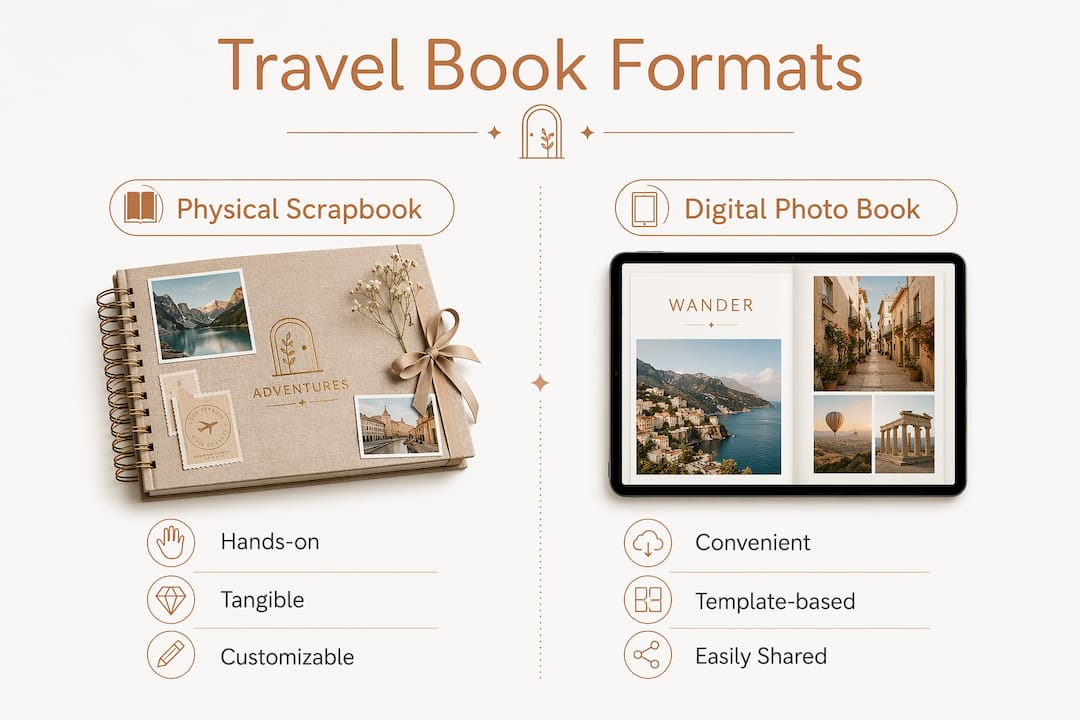
Travel memory books fall into two main categories: physical scrapbooks and digital photo books. Each format serves a different kind of traveler, and understanding the difference saves you time and frustration before you start.
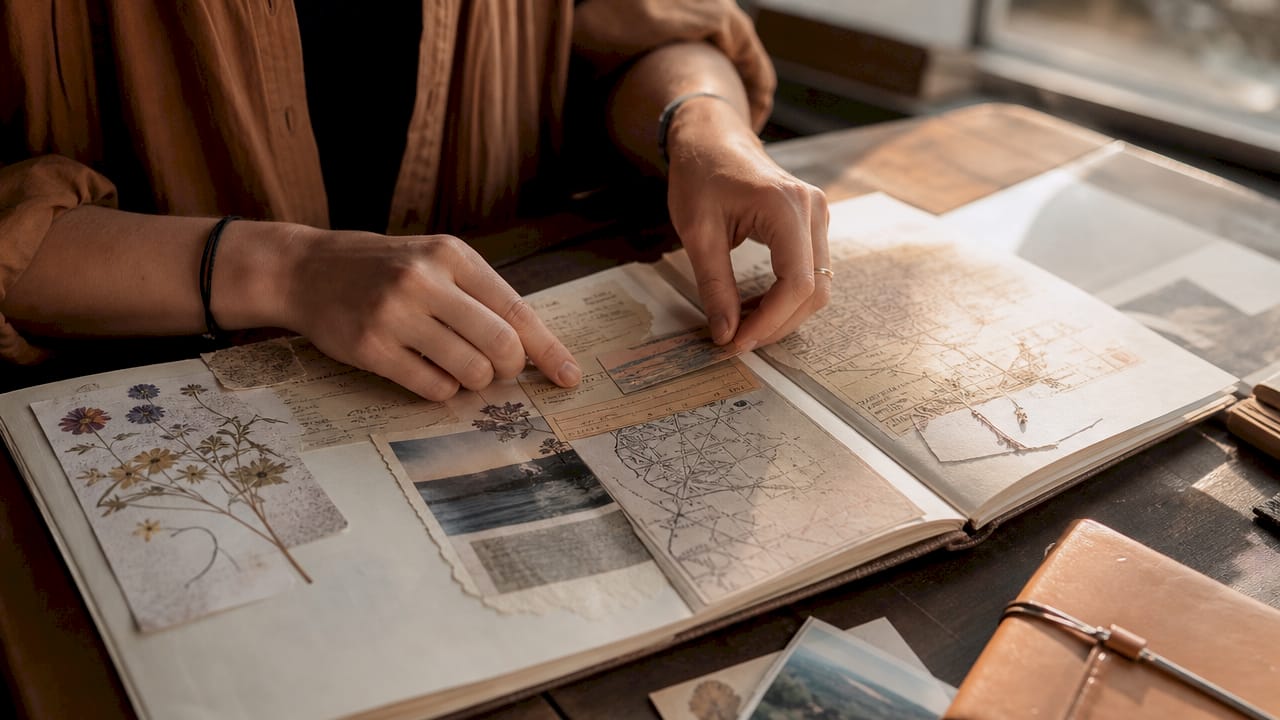
Physical scrapbooks are the original format. A typical physical setup includes a 10×12 inch hardbound album, archival-safe adhesives, and 20–50 pages. You fill those pages with photo prints, ticket stubs, restaurant receipts, and handwritten captions. The tactile experience of turning a real page and touching a real souvenir is something no screen replicates. Physical books take more time to assemble, but the result is a one-of-a-kind object.
Digital photo books work differently. You upload images to an online platform, choose a template, and order a printed copy. Pre-set themes cut design time by at least 50% compared to building a layout from scratch. Industry standard turnaround from design submission to delivery runs about 7 days. That speed makes digital books a strong choice for travelers who want a polished finished product without the craft supplies.
| Format | Best for | Key advantage | Main limitation |
|---|---|---|---|
| Physical scrapbook | Hands-on creators | Fully custom, tactile | Time-intensive |
| Digital photo book | Efficiency-focused travelers | Fast, polished output | Less personal texture |
| Hybrid approach | Detail-oriented travelers | Combines both strengths | Requires planning |
A hybrid approach works well for frequent travelers. You keep a physical journal during the trip for raw notes and ephemera, then compile a digital book afterward for sharing with family or displaying on a shelf.
Pro Tip: Order a small test book from a digital platform before committing to a large format. You will catch layout issues early and avoid reprinting a 60-page book.
How to design and personalize your memory book creatively
The most memorable travel books embrace imperfection. Messy handwriting and candid thoughts trigger long-term sensory memories in ways that clean, typed captions do not. A smudge of ink from a rainy afternoon in Edinburgh tells a story. A perfectly formatted caption does not.
Interactive scrapbook elements like waterfall folds, envelopes, and pockets elevate a memory book beyond a photo album into a sensory experience. A waterfall fold is a series of folded panels that open like an accordion, letting you hide extra photos or notes inside a single page. An envelope pocket glued to a page can hold a folded map or a handwritten letter to your future self. These elements make the book interactive, not just decorative.
Here are creative ideas that work across both physical and digital formats:
- Write captions in the moment, not weeks later. Immediate impressions are more vivid and specific.
- Use trip inspiration as a layout theme. A coastal trip calls for blue tones and wave patterns; a mountain trek calls for earthy textures.
- Include a “worst moment” page alongside the highlights. Honest storytelling makes the book more human and more memorable.
- Add a hand-drawn map of each destination, even a rough sketch. Spatial memory is powerful.
- Dedicate one page per trip to a single sensory detail: the smell of a market, the sound of a train, the texture of a cobblestone street.
- Photograph menus, signs, and storefronts. These mundane details become fascinating in five years.
Pro Tip: Reserve the inside front cover for a “trip at a glance” summary: dates, destinations, and one sentence about why you went. It orients any reader instantly and gives you a quick reference years later.
Guided prompts push your writing past surface-level descriptions. Questions like “What did the air smell like?” or “What surprised you most today?” force you to record sensory details that photographs miss entirely. The itinerary design process itself can inspire prompts. If your trip included a cooking class in Lyon or a private tour of a Kyoto temple, those structured experiences generate natural writing material.
What challenges do creators face, and how do you overcome them?
Blank page syndrome is the most common obstacle. You sit down with your album and a pile of photos and feel nothing. Guided prompts overcome this by giving you a specific question to answer rather than a blank space to fill. Start with “What was the first thing I noticed when I arrived?” and the rest usually follows.
Burnout is the second major challenge, especially for travelers who try to document everything at once after returning home. The solution is treating your memory book as an ongoing habit rather than a one-time project. Write three sentences each evening during the trip. Paste in one item of ephemera per day. Small, consistent actions build a complete book without the pressure of a marathon session.
The minimum viable entry method makes this sustainable. Each day, capture three things:
- One sensory detail (a smell, a sound, a texture)
- One emotion (what you felt and why)
- One specific fact (a name, a price, a distance)
That is enough to reconstruct a full memory years later. Three sentences take less than five minutes. The habit sticks because the barrier is low.
Fragile ephemera presents a third challenge. Thermal paper receipts fade within months. Archiving fragile items requires scanning or photographing them immediately and using archival-safe adhesives for mounting. Never use regular tape or glue sticks on items you want to last. Acid-free materials are the standard for anything meant to survive decades.
Binding choice matters more than most creators realize. Hardbound books with sewn, lay-flat, or spiral bindings handle bulk and added memorabilia without cracking. Glued spines fail under expansion. If you plan to add envelopes, folded maps, or thick ticket stubs, choose a binding that can flex.
Pro Tip: Scan every receipt and paper item on day one of your trip using your phone camera. Store the scans in a dedicated folder. You will have a digital backup even if the originals fade or get lost.
How to make memory books part of your travel lifestyle
A memory book works best when it becomes part of the trip itself, not an afterthought. Pack your supplies before you leave. Set aside 10 minutes each evening to write and collect. Treat documentation as part of the experience, not a chore that competes with it.
Frequent travelers benefit most from this habit. Each book becomes a chapter in a longer story. A shelf of completed memory books from five years of travel is a personal archive that no cloud storage service can replicate. The benefits of personalized travel compound when you document them well. A bespoke trip to the Scottish Highlands generates richer material than a generic package tour, and that richness shows up on every page.
Memory books also make exceptional gifts. A shared book documenting a family trip or a couples’ anniversary travel gives the recipient something they cannot buy. You can create a duplicate digital version for sharing while keeping the physical original. For multi-destination trips, use a tabbed divider system so each location gets its own section. This structure makes the book easier to revisit and prevents the common problem of one destination overwhelming the rest.
Revisiting your books over time adds another layer of value. Reading a memory book from three years ago is a different experience than reading it fresh. Details you forgot become vivid again. Emotions you had moved past resurface. The book grows in meaning the longer you keep it.
Key takeaways
A travel memory book preserves experiences more completely than photos alone by combining sensory details, physical mementos, and personal writing into a lasting, tangible record.
| Point | Details |
|---|---|
| Define your format first | Choose physical, digital, or hybrid based on your time and creative style before starting. |
| Embrace imperfection | Messy handwriting and candid notes trigger stronger memories than polished captions. |
| Use the minimum viable entry | Capture one sensory detail, one emotion, and one fact daily to sustain the habit. |
| Protect fragile ephemera | Scan receipts and paper items immediately and use archival-safe adhesives for mounting. |
| Choose durable bindings | Sewn, lay-flat, or spiral bindings handle bulk without cracking over time. |
Why imperfect books outlast perfect ones
The travel memory books I return to most are not the tidy ones. They are the books with coffee rings on the cover, a torn corner where a map was folded too many times, and handwriting that gets messier as the evening went on. Those imperfections are the memory. They tell you something about the state of mind you were in when you made them.
The biggest mistake I see travelers make is waiting until they get home to start. By then, the sensory details are gone. You remember the Colosseum, but you have forgotten the specific quality of the afternoon light, the sound of the tour guide’s voice, the smell of the stone. Those details live in the moment. Capture them there.
I have also found that the format matters far less than the consistency. A spiral-bound notebook filled with honest writing beats a beautifully designed album with generic captions every time. Start with whatever you have. A cheap notebook and a pen are enough. The habit is the product.
For travelers who work with luxury travel experts, the richness of a well-planned trip gives you extraordinary material to document. A private dinner in a centuries-old cellar in Burgundy, a sunrise hike arranged just for your group in the Dolomites. These are the moments that fill pages and stay with you. The book is how you keep them.
— Michael
Plan your next trip with Hiddendoortravel
A great memory book starts with a great trip. Hiddendoortravel specializes in bespoke luxury travel that gives you the kind of experiences worth documenting: private access, curated itineraries, and moments you will not find in a travel catalog.
When every detail of your trip is thoughtfully planned, your memory book practically writes itself. Hiddendoortravel’s team designs trips around your interests, pace, and travel style, so every destination generates rich, personal content. Whether you are planning a first luxury trip or adding another chapter to a well-traveled life, the team at Hiddendoortravel is ready to help you build something worth remembering.
FAQ
What is a travel memory book?
A travel memory book is a personalized archive combining photos, handwritten notes, and physical mementos into a narrative record of a trip. It functions as a time capsule that preserves sensory details and emotions beyond what a photo alone can capture.
What should I include in a travel memory book?
Include photos, handwritten notes, ticket stubs, restaurant receipts, maps, and small souvenirs. Sensory details like smells, sounds, and textures recorded in writing add depth that images cannot provide.
How long does it take to create a travel memory book?
Physical scrapbooks take hours to days depending on complexity. Digital photo books using pre-set templates take significantly less time, with industry standard delivery running about 7 days after design submission.
What is the best binding for a travel memory book?
Sewn, lay-flat, or spiral bindings handle bulk and added memorabilia without cracking. Glued spines tend to fail when pages expand from added ephemera.
How do I preserve fragile items like receipts in my memory book?
Scan or photograph thermal paper receipts immediately, since they fade quickly. Use archival-safe adhesives for mounting any paper items you want to last for decades.
Recommended
- Luxury Travel Packing Checklist: The Elite Traveler’s Guide – Hidden Door Travel
- Elite Travel Planning Explained: Your 2026 Guide – Hidden Door Travel
- Personalized Travel Service Benefits That Transform Trips – Hidden Door Travel
- What Is a Curated Travel Experience and Why It Matters – Hidden Door Travel