

A travel wish list service is a digital platform that lets you save, organize, and track destinations, hotels, and experiences you want to visit, often with automated alerts and planning tools that move you from dreaming to booking. The industry term for this category is “travel inspiration management,” though “travel wish list service” has become the common shorthand. Research shows that 97% of people report greater happiness from future travel planning, even when no trip is booked yet. That single fact reframes what a wish list does. It is not just a to-do list for vacations. It is a tool for mental well-being, motivation, and smarter travel decisions.
What is a travel wish list service and what does it actually do?
A travel wish list service is a digital platform that allows travelers to save and organize potential travel choices, with features ranging from simple destination saving to automated alerts for pricing, availability, and matching criteria. The gap between a basic notes app and a full-featured wish list platform is significant. Basic apps store names. Full platforms store context, trigger alerts, and connect to booking tools.
The core features of a well-built travel wish list service include:
- Destination and property saving: Collect hotels, cities, regions, and specific experiences in one organized space.
- Tagging and categorizing: Group entries by trip type, travel companion, season, or budget tier.
- Filtering and sorting: Surface the right options at the right time without scrolling through everything.
- Automated alerts: Get notified when a saved hotel drops in price, opens availability, or matches a deal threshold.
- Calendar and booking integration: Sync wish list items with travel dates or connect directly to booking confirmation platforms.
The difference between a list and a system is context. A destination saved without a target season, a budget range, or a specific experience goal is just a name. A destination saved with all three becomes a decision ready to be made.
Pro Tip: When you save a destination, add three pieces of context immediately: the best travel season for that place, one specific experience you want there, and a rough budget range. Without those three anchors, the entry will sit untouched.

How do travel wish list services support mental well-being?
Travel wish list services do more than organize trips. They function as happiness anchors that sustain mental health by creating a guaranteed sense of future experience. That psychological function is not incidental. It is the core reason wish lists work even when no booking follows.
“Travel wish lists transform passive dreaming into active hope. The act of planning, even without booking, gives the brain a concrete future to look forward to, which reduces stress and increases a sense of personal control.”
The mechanism behind this is well documented. Planning a future trip activates anticipatory pleasure, the same neurological reward that comes from looking forward to any positive event. Wish lists extend that reward over time by keeping future travel visible and specific.
Phantom planning is one of the most effective techniques in this space. Phantom planning means creating a detailed itinerary for a trip you have not booked, sometimes called a “ghost trip.” The process builds logistical readiness and reduces stress. When the time comes to book, the research is already done. The decision is easier. The trip is more likely to happen.
Travel wish lists also combat decision fatigue. A traveler with 40 unorganized destination ideas faces a harder choice than one with 10 categorized, contextualized options sorted by realistic travel window. The structure itself reduces the cognitive load of choosing where to go next.
What are best practices for creating an effective travel wish list?
A travel wish list should function as a decision-making system, not a static collection of favorites. The distinction matters because most wish lists fail at the transition from inspiration to booking. The entries pile up, context is missing, and the list becomes overwhelming rather than useful.
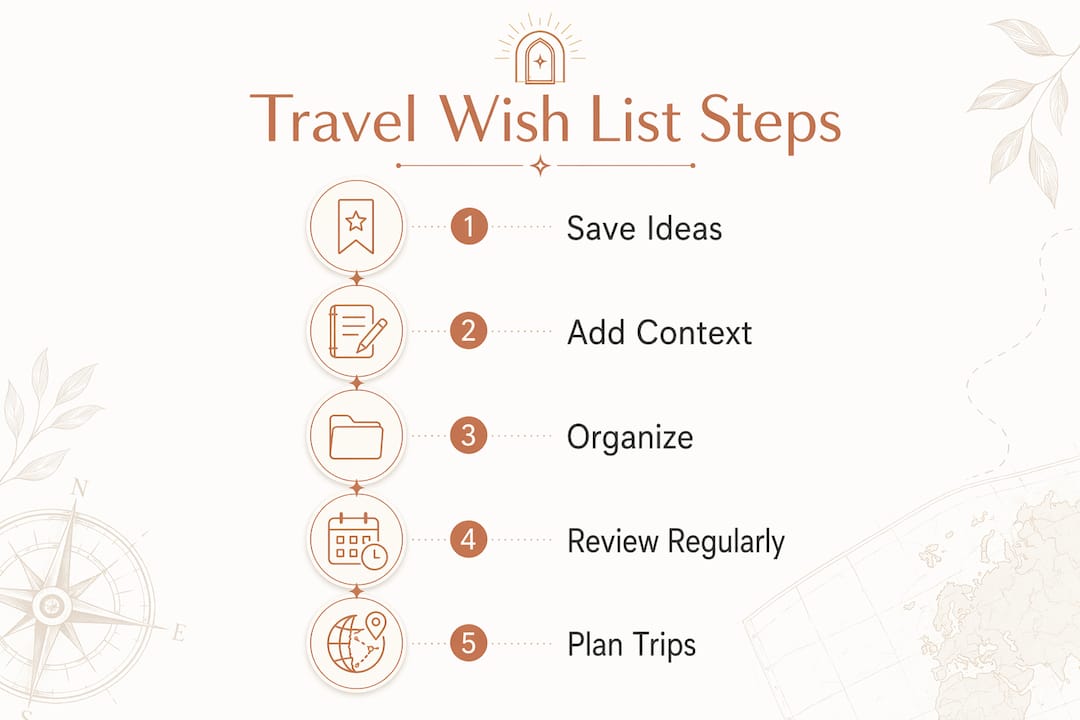
Follow these steps to build a wish list that actually drives bookings:
- Assign a target travel season to every entry. Not a year. A season. “Southeast Asia in the dry season” is actionable. “Southeast Asia someday” is not.
- Set a specific experience goal for each destination. A place is not enough. “Kyoto” is vague. “Kyoto for the cherry blossom season with a private tea ceremony” is a trip.
- Sort by soonest realistic travel window. Sorting by achievable timing keeps momentum. Sorting by excitement keeps you stuck on aspirational entries that never get booked.
- Link each entry to a budget range. Even a rough figure separates realistic options from long-term goals.
- Connect wish list entries to your travel rewards strategy. Luxury travel rewards programs can dramatically change which destinations become achievable first.
Pro Tip: Review your wish list every three months. Remove entries that no longer excite you. Update seasons and budgets as your situation changes. A wish list that reflects your current life converts at a much higher rate than one built two years ago.
Many travelers prioritize destination popularity over personal passion, which is one of the most common reasons wish lists stagnate. A destination on every travel magazine cover is not automatically the right next trip for you. The best wish list entries are the ones that connect to something specific you want to feel, learn, or experience.
How do travel wish list services integrate with other planning tools?
Travel wish list services work best as part of a broader travel planning ecosystem. Standalone wish lists capture ideas. Integrated platforms turn those ideas into trips.
The table below shows how different integration types add value at each stage of planning:
| Integration type | What it does | Planning stage it supports |
|---|---|---|
| Itinerary builders | Convert saved destinations into day-by-day plans | Mid-planning |
| Budgeting tools | Attach cost estimates to each wish list entry | Early planning |
| Booking confirmation apps | Store confirmations alongside the original wish list item | Late planning |
| Rewards program sync | Flag which destinations are reachable with existing points | Early to mid-planning |
| Price alert systems | Notify when saved hotels or flights hit target prices | Ongoing monitoring |
Travel wish list services that connect to rewards platforms give travelers a significant advantage. A destination that looks expensive in cash terms may be fully achievable through points. Seeing that connection inside the wish list changes the decision entirely.
Digital reservation tools also play a role. Understanding how digital reservations work helps travelers move from a saved property to a confirmed booking without losing momentum. The best platforms make that transition frictionless.
What common challenges do users face with travel wish lists?
The most common failure point in travel wish list management is not a lack of ideas. It is a lack of context. 60% of Americans feel they have not explored enough of their own country, yet most rely on basic notes apps that provide no structure for acting on those desires. The result is abandoned lists and deferred trips.
The specific challenges that derail wish lists include:
- Static lists with no attached context: Destinations without dates, budgets, or experience goals become undifferentiated and hard to prioritize.
- Choice paralysis from unfiltered volume: A list of 50 destinations with no sorting system creates more anxiety than inspiration.
- Prioritizing popularity over personal fit: Choosing destinations because they are trending rather than because they match your actual travel goals leads to regret and low follow-through.
- No connection to financial planning: Wish lists that ignore budget realities stay wishes indefinitely.
- Neglecting phantom planning: Skipping the research phase means that when a booking window opens, the traveler is not ready to act.
The fix for most of these problems is the same. Treat the wish list as a living planning document, not an archive. Add context, sort by achievability, and review it regularly.
Key takeaways
A travel wish list service is most valuable when treated as a structured decision-making system, not a passive collection of destinations, because context, sorting, and integration with rewards and budgeting tools are what convert dreams into booked trips.
| Point | Details |
|---|---|
| Define the service correctly | A travel wish list service saves, organizes, and tracks destinations with alerts and planning tools. |
| Context is everything | Every entry needs a target season, a specific experience goal, and a budget range to be actionable. |
| Mental health benefit is real | Planning future travel increases happiness and reduces stress, even without an immediate booking. |
| Sort by achievability | Prioritize entries by soonest realistic travel window, not by excitement level. |
| Integration multiplies value | Connecting wish lists to rewards programs and itinerary tools accelerates the path from idea to booking. |
Why wish lists changed how I think about travel planning
The conventional wisdom says a wish list is just a bucket list with a digital interface. I disagree. After years of working with travelers at Hiddendoortravel, the pattern is clear: the travelers who arrive with a well-structured wish list get better trips. Not because they have more ideas, but because they have already done the thinking. They know what they want to feel, not just where they want to go.
The travelers who struggle are the ones who treat wish lists as passive archives. They add destinations when they see a beautiful photo and never revisit the list until they are ready to book. By then, the list is a wall of undifferentiated options with no context attached. That is not a planning tool. That is a source of paralysis.
What I recommend to every traveler I work with is to treat the wish list as a living document. Review it quarterly. Cut entries that no longer fit. Add context to the ones that do. Use phantom planning to stay sharp on your top three destinations. When a booking window opens, you will be ready to move fast.
The deeper point is this: a wish list is an act of self-knowledge. The destinations you keep returning to, the experiences you refuse to cut, those tell you something real about what you want from travel. That clarity is worth more than any alert system or integration feature.
— Michael
How Hiddendoortravel turns your wish list into a bespoke trip
A well-built wish list is the starting point. Turning it into a trip that actually delivers what you imagined is where expert planning makes the difference.

Hiddendoortravel’s luxury travel experts work directly with your wish list to build custom itineraries that match your specific experience goals, travel season, and budget. The team draws on deep destination knowledge and established relationships with properties worldwide to access options that do not appear on standard booking platforms. If you are ready to move from a list to a confirmed trip, Hiddendoortravel’s personalized travel planning service is built for exactly that transition.
FAQ
What is a travel wish list service?
A travel wish list service is a digital platform that lets travelers save, organize, and track destinations, hotels, and experiences, often with automated alerts for pricing and availability changes.
How do I create a travel wish list that actually works?
Assign each entry a target travel season, a specific experience goal, and a budget range. Sort entries by soonest realistic travel window rather than by excitement level.
What are the benefits of a travel wish list?
Travel wish lists increase happiness and reduce stress by giving the brain a concrete future to anticipate. Research shows that 97% of people report greater happiness from future travel planning, even without an immediate booking.
What is phantom planning and how does it help?
Phantom planning means building a detailed itinerary for a trip you have not yet booked. It reduces stress, builds logistical readiness, and makes the eventual booking decision faster and easier.
How do travel wish list services connect to rewards programs?
Many full-featured wish list platforms sync with luxury travel rewards programs, flagging which saved destinations are reachable with existing points and helping travelers prioritize accordingly.