A private guided cultural tour is defined as a personalized travel experience designed around your specific interests, led by a dedicated local expert who shapes every visit around your cultural priorities. Unlike group tours that move at a fixed pace through a fixed list of sites, a private tour gives you direct access to a guide’s knowledge, storytelling, and local connections. Organizing a private guided cultural tour means making deliberate choices about themes, timing, group size, and guide qualifications before you ever set foot in a destination. Hiddendoortravel has built its entire service model around this approach, treating cultural immersion as something that must be designed, not stumbled into.
What key factors should you consider when planning a private guided cultural tour?
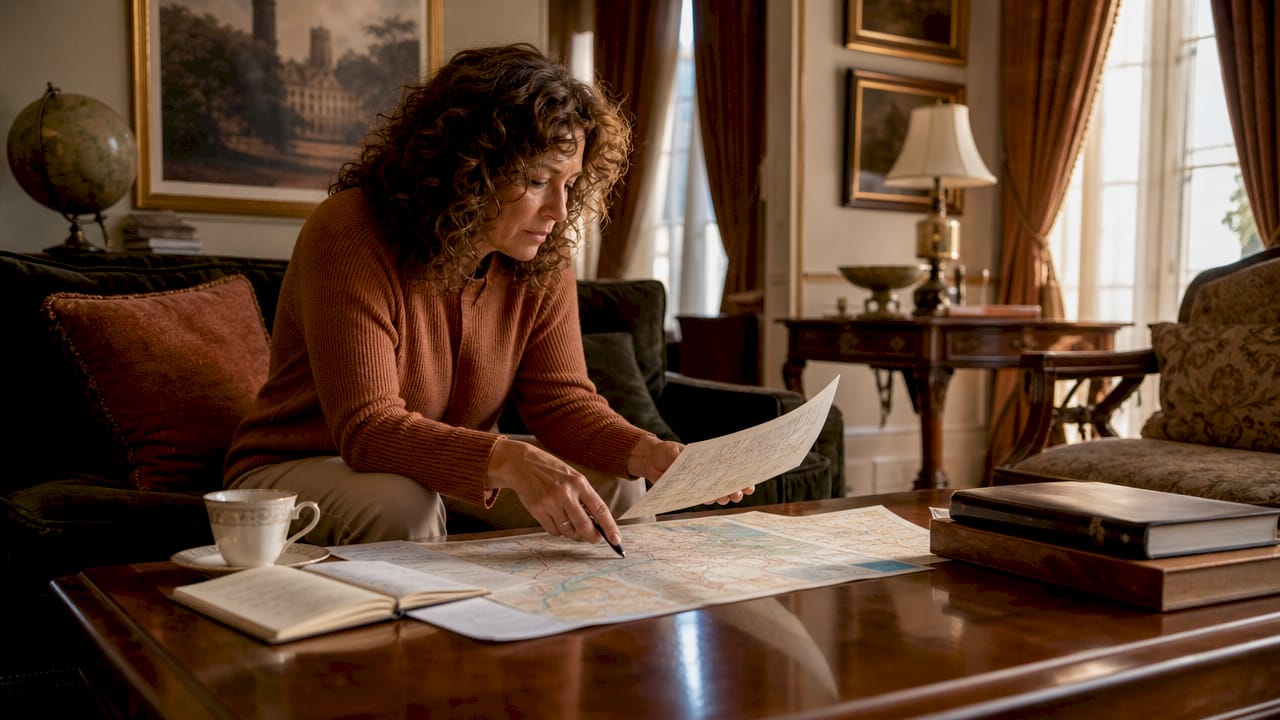
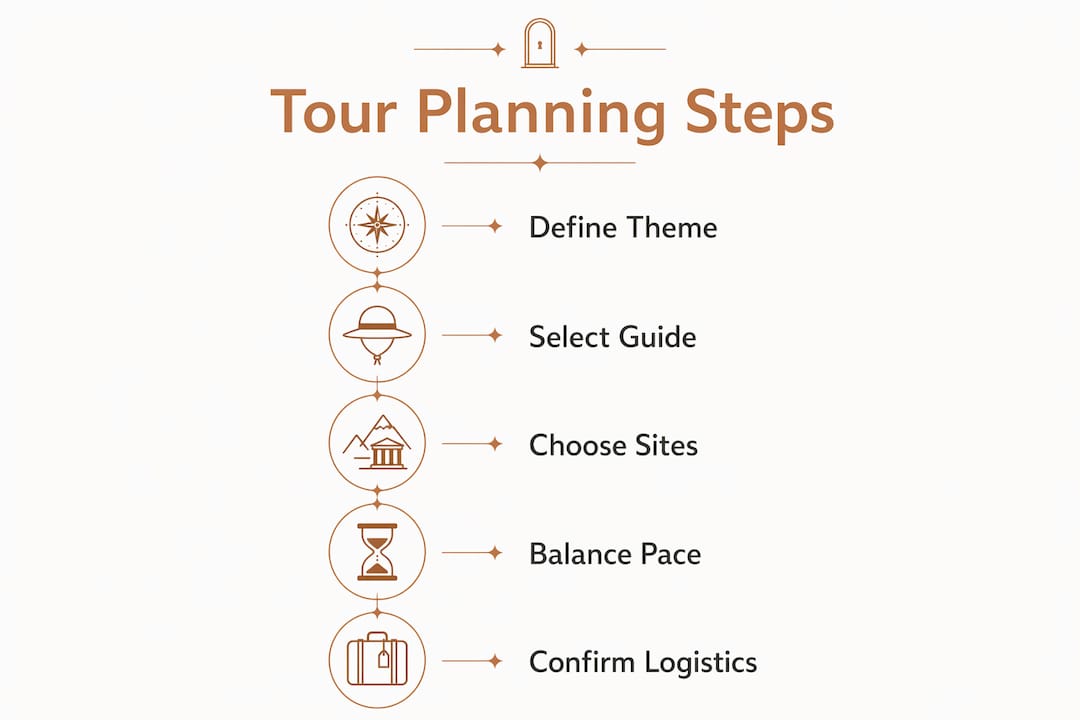
Successful cultural tour planning starts with knowing what you actually want to experience. Art history, vernacular architecture, textile traditions, street food culture, and religious heritage all require different guides, different neighborhoods, and different pacing. Defining your theme before you book a guide is the single most important planning decision you will make.
Group size shapes the quality of every interaction on a private tour. Semi-private tours cap at 12 participants, while high-end providers limit groups to 8 to preserve genuine personalization. Smaller groups mean your guide can stop, explain, and respond to your questions without managing crowd logistics.
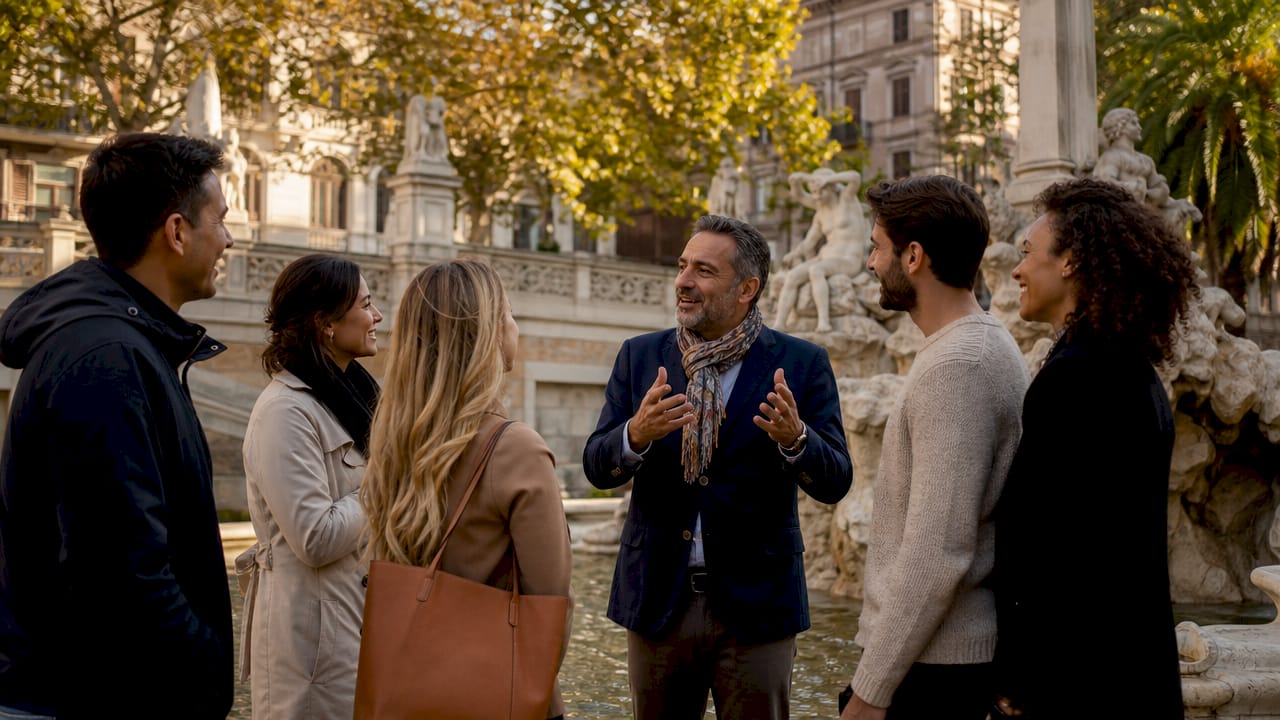
Timing matters as much as group size. Introductory private cultural city tours typically last 2–3 hours, designed to orient travelers and build a foundation for deeper exploration later. That duration is a starting point, not a ceiling. Half-day and full-day formats work better for thematic deep dives into art districts, craft workshops, or historic quarters.
Guide selection is where most travelers underinvest their research time. A certified local guide holds credentials from a recognized national or regional tourism authority, which means they have passed standardized knowledge assessments. Beyond certification, look for guides who specialize in your chosen theme. A guide who has spent a decade leading architecture tours in Barcelona will deliver a fundamentally different experience than a generalist city guide.
- Define your cultural theme before searching for guides (art, history, cuisine, crafts, architecture)
- Verify guide certification through national or regional tourism licensing bodies
- Choose group sizes of 8 or fewer for genuine personalization
- Plan for 2–3 hours minimum for introductory tours; half-day or full-day for thematic depth
- Request sample itineraries from guides to assess their approach before booking
Pro Tip: Ask prospective guides for one specific story they tell at a site you plan to visit. The answer reveals whether they offer real context or just recite facts.
How do you design a customized itinerary that balances iconic sites with hidden gems?
The best private itineraries are built around a single coherent theme, not a checklist of famous sites. Professional guides in Florence and Madrid consistently emphasize that cultural value comes from a theme-based itinerary rather than rushing through the maximum number of landmarks. That principle applies whether you are planning guided city tours in Rome, Kyoto, or Mexico City.
Working collaboratively with your guide before the tour is non-negotiable. Share your background knowledge, your interests, and the experiences you want to avoid. A traveler who has already visited the Uffizi Gallery twice needs a different Florence itinerary than someone arriving for the first time. Your guide can only customize effectively when they understand your starting point.
Private tours enable travelers to customize visits from highlights to hidden gems based on individual preferences. That flexibility is the structural advantage of private travel. A good guide knows which neighborhood bakery has been run by the same family for four generations, which courtyard is never on tourist maps, and which local artisan still practices a craft that has nearly disappeared. Those details are inaccessible to travelers moving through a city on a fixed group itinerary.
Pacing is the element most travelers underestimate when designing an itinerary. Rushed visits produce surface impressions. Spending 90 minutes in one neighborhood, eating at a local spot, and talking to a craftsperson produces lasting cultural memory. Build deliberate pauses into your itinerary rather than treating every hour as a slot to fill.
| Itinerary style | Focus | Best for | Typical duration |
|---|---|---|---|
| Landmark-anchored | Major museums, monuments, historic centers | First-time visitors | 2–3 hours |
| Theme-based | Art movements, architecture, food traditions | Repeat visitors or specialists | Half-day to full day |
| Neighborhood immersion | Local markets, artisan workshops, street culture | Travelers seeking daily life context | Half-day |
| Multi-day cultural arc | Layered exploration across connected themes | Deep cultural study or extended stays | 2–5 days |
Pro Tip: Schedule your most intellectually demanding site visit in the morning when your energy and focus are highest. Save sensory experiences like markets and food stops for the afternoon.
What logistical considerations ensure a smooth tour experience?
Logistics are where well-planned cultural tours succeed or fail. Booking confirmation should always include a written itinerary, a clear meeting point, and a direct contact number for your guide. Flexible cancellation policies matter because weather, health, and travel delays are real. Any reputable private tour organizer will offer at least 24-hour cancellation without penalty.
The phrase “all-inclusive” means different things across the industry. Admission fees, private transport, and gratuities are often excluded in low-cost tour models but are standard in high-end itineraries. That gap creates hidden costs for travelers who do not read the fine print. Before you confirm any booking, get a written breakdown of exactly what the quoted price covers.
Communication with your guide before the tour produces better outcomes than any amount of post-tour feedback. Send a brief message outlining your interests, any mobility considerations, and any sites you specifically want to skip. Guides who respond with thoughtful follow-up questions are demonstrating exactly the kind of engagement you want on the day.
- Confirm the meeting point, guide contact, and written itinerary at least 48 hours before the tour
- Request a full cost breakdown covering admission fees, transport, and gratuities
- Check the cancellation policy and get it in writing before paying
- Communicate your interests, pace preferences, and any accessibility needs directly to your guide
- Carry a local SIM card or confirm your guide’s WhatsApp or messaging contact for day-of coordination
“A private guide is not just a translator. They are a facilitator of context.” This distinction, recognized by experienced guides in Florence and Madrid, is the clearest way to understand what you are actually paying for on a well-organized private cultural tour.
How can you maximize cultural engagement during your private tour?
Active participation produces deeper cultural understanding than passive observation. Ask your guide questions that go beyond dates and names. Ask why a particular architectural style took hold in one neighborhood and not another. Ask who actually lived in this building, and what happened to them. Those questions shift the experience from sightseeing to genuine inquiry.
Experiences structured around discussion, shared interests, and thoughtful pacing produce richer cultural connections than tours built around photo opportunities. That finding reflects what experienced travelers already know intuitively. The moments that stay with you are conversations, not photographs.
Local customs and social rituals are often invisible to travelers moving too quickly. A private guide can explain why a particular market operates on a specific day, what the hand gestures at a fish stall mean, or why the locals eat dinner at 10 p.m. That kind of contextual knowledge is what separates a luxury cultural immersion trip from a standard sightseeing tour.
- Ask your guide for the story behind one object, building, or tradition at each major stop
- Eat where your guide eats, not where the tourist maps point
- Visit at least one artisan workshop or local producer to see culture in practice, not just on display
- Take brief notes or voice memos during the tour to preserve specific details and stories
- Allow unscheduled time in your itinerary for spontaneous discoveries your guide suggests on the day
Documentation matters more than most travelers expect. The specific name of a ceramics workshop in Oaxaca, the exact street where a particular fresco is hidden, or the name of a family-run trattoria your guide recommended will fade within days without a record. A short voice memo immediately after each stop preserves the details that make the experience repeatable and shareable.
Key Takeaways
A private guided cultural tour delivers its full value only when theme, guide expertise, group size, and logistics are all aligned before departure.
| Point | Details |
|---|---|
| Define your theme first | Choose a cultural focus (art, history, crafts, cuisine) before selecting a guide or building an itinerary. |
| Limit group size | Groups of 8 or fewer preserve the personalization that separates private tours from semi-private formats. |
| Verify all-inclusive costs | Confirm in writing which admission fees, transport, and gratuities are included before booking. |
| Prioritize theme-based itineraries | Coherent, theme-driven routes produce deeper cultural understanding than landmark checklists. |
| Communicate before the tour | Sharing your interests and pace preferences with your guide before departure improves the experience on the day. |
What I’ve learned from years of designing private cultural tours
The most common mistake I see travelers make is treating a private tour as a faster version of a group tour. They want to cover more ground, see more sites, and check more boxes. That instinct works against everything that makes private travel valuable.
The guides who consistently deliver exceptional experiences are the ones who slow everything down. They stop in front of a single doorway and spend 20 minutes explaining the social history embedded in its design. They know a travel curator’s role is to create context, not just movement. That kind of depth is only possible when the itinerary has room to breathe.
Travelers also underestimate how much their own preparation matters. A traveler who has read one book about the destination, or watched one documentary about the art period they are focusing on, gets dramatically more from the same guide than someone arriving cold. Your guide can build on existing knowledge. They cannot create it from scratch in three hours.
The logistics question I get asked most often is about pricing. Private guide rates vary widely depending on destination, duration, and specialization. The travelers who get the best value are the ones who invest in a single well-designed full-day experience rather than spreading the same budget across three rushed half-day tours. Depth beats breadth every time.
My honest advice: resist the urge to fill every hour. The most memorable private cultural tours I have seen have one or two genuinely extraordinary moments, not twelve adequate ones. Build your itinerary around what you most want to understand, and let your guide fill in the rest.
— Michael
How Hiddendoortravel designs private cultural tours for discerning travelers
Hiddendoortravel works with a curated network of certified local guides across Europe, Latin America, Asia, and the Middle East. Every private cultural tour the agency designs starts with a direct conversation about your interests, your travel history, and the kind of experience you want to walk away with.
The agency handles guide selection, itinerary design, admission pre-booking, transport coordination, and all the logistics that typically create friction for independent travelers. That means you arrive at your destination with a fully structured plan and a guide who already knows your priorities. Hiddendoortravel’s luxury travel experts specialize in exactly this kind of end-to-end cultural tour planning, from a single afternoon in a Florence neighborhood to a multi-week artistic heritage journey across three countries. If you want a private cultural experience built around what genuinely interests you, that is where to start.
FAQ
What is a private guided cultural tour?
A private guided cultural tour is a personalized travel experience led by a dedicated local expert, designed around your specific cultural interests such as art, history, architecture, or local traditions. Unlike group tours, the itinerary, pacing, and focus are tailored entirely to you.
How long should a private cultural tour last?
Introductory private cultural city tours typically last 2–3 hours, while thematic or neighborhood-focused tours work better as half-day or full-day experiences. Multi-day formats suit travelers seeking layered cultural depth across a destination.
What should be included in a private tour price?
A transparent private tour price should cover the guide fee, admission fees, private transport, and gratuities. Low-cost tours frequently exclude these costs, so always request a written breakdown before confirming your booking.
How do I choose the right guide for a cultural tour?
Choose a guide who holds certification from a recognized national or regional tourism authority and who specializes in your chosen cultural theme. Asking for a sample itinerary and a specific story they tell at a key site reveals the quality of their expertise before you commit.
How many people should be on a private cultural tour?
Groups of 8 or fewer preserve genuine personalization on a private cultural tour. Semi-private formats cap at 12 participants, but smaller groups allow for deeper discussion, flexible pacing, and more direct engagement with your guide.