
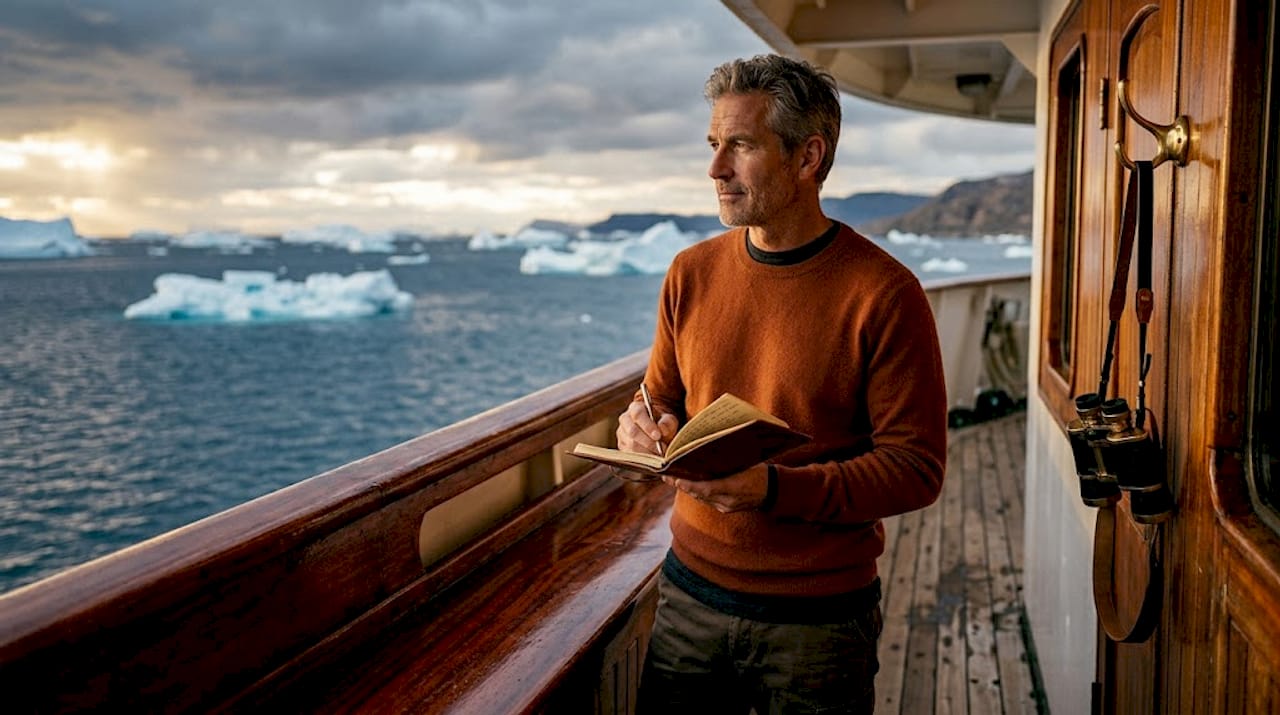
If you’ve ever wondered what is expedition luxury travel and assumed it meant roughing it in style, you’re not alone. Most people picture either a five-star resort or a muddy wilderness adventure. Expedition luxury travel is neither. It’s a third category entirely. Small ships, world-class naturalist guides, Zodiac landings on Antarctic shores, gourmet meals after a day tracking wildlife in the Galápagos. It combines the access and intensity of genuine exploration with the comfort and curation that seasoned travelers refuse to give up. This guide breaks down exactly what it is, where it takes you, and whether it’s right for you.
Table of Contents
- Key takeaways
- What is expedition luxury travel, exactly?
- The world’s best expedition luxury destinations
- What to expect day to day on an expedition luxury trip
- Costs, booking logistics, and what you’re actually paying for
- My perspective: why expedition luxury travel is in a category of its own
- Plan your expedition luxury experience with Hiddendoortravel
- FAQ
Key takeaways
| Point | Details |
|---|---|
| Small ships unlock more | Ships under 200 passengers access remote landing sites that large luxury vessels legally cannot reach. |
| Comfort meets real exploration | Expedition luxury trips pair upscale accommodations and dining with expert-led wildlife and cultural excursions. |
| Destinations are genuinely remote | Antarctica, the Galápagos, Papua New Guinea, and the Amazon Basin are signature expedition luxury destinations. |
| Budget accordingly | Polar expedition voyages typically run $8,000 to $25,000+ per person for 10 to 14 days. |
| Book well in advance | Many exclusive expeditions require reservations 12 to 18 months ahead due to limited availability. |
What is expedition luxury travel, exactly?
Expedition luxury travel is a style of premium travel built around reaching places that standard tourism cannot access, without sacrificing quality of life along the way. The word “expedition” is doing serious work here. It’s not a marketing phrase for a nicer-than-average resort stay. It signals a genuine commitment to destination access as the primary purpose of the trip.
The defining physical feature is ship size. Ships typically carry fewer than 200 passengers and run daily landing excursions using Zodiacs, the inflatable boats that ferry guests from ship to shore in places that have no docks. This matters more than most people realize. Ships under 200 passengers can legally access more landing sites in sensitive regions like Antarctica than any large luxury vessel can, regardless of how high the thread count is in the cabins.
Here’s what typically defines an expedition luxury experience:
- Small vessel size: Usually 50 to 200 passengers, occasionally up to 300 on premium mid-size ships
- Remote destination focus: Wildlife refuges, polar ice, rainforest river systems, and culturally isolated communities
- Expert-led shore programs: Certified naturalists, marine biologists, cultural historians, and local experts guide every excursion
- Zodiac and tender access: Guests land directly in environments with no tourist infrastructure
- Upscale onboard experience: Quality cuisine, well-appointed cabins, and attentive service without the casino-and-Broadway-show format of large ships
Pro Tip: Don’t confuse expedition luxury with “adventure travel.” Adventure travel is about physical challenge. Expedition luxury is about access and depth of experience. You can be 70 years old and have the most profound expedition of your life without a single moment of physical risk.
The contrast with traditional luxury cruising is sharp. Onboard facilities emphasize lecture theaters, libraries, and gear rooms rather than entertainment complexes and multi-venue dining. That’s not a compromise. That’s a deliberate reorientation of what a ship is for.
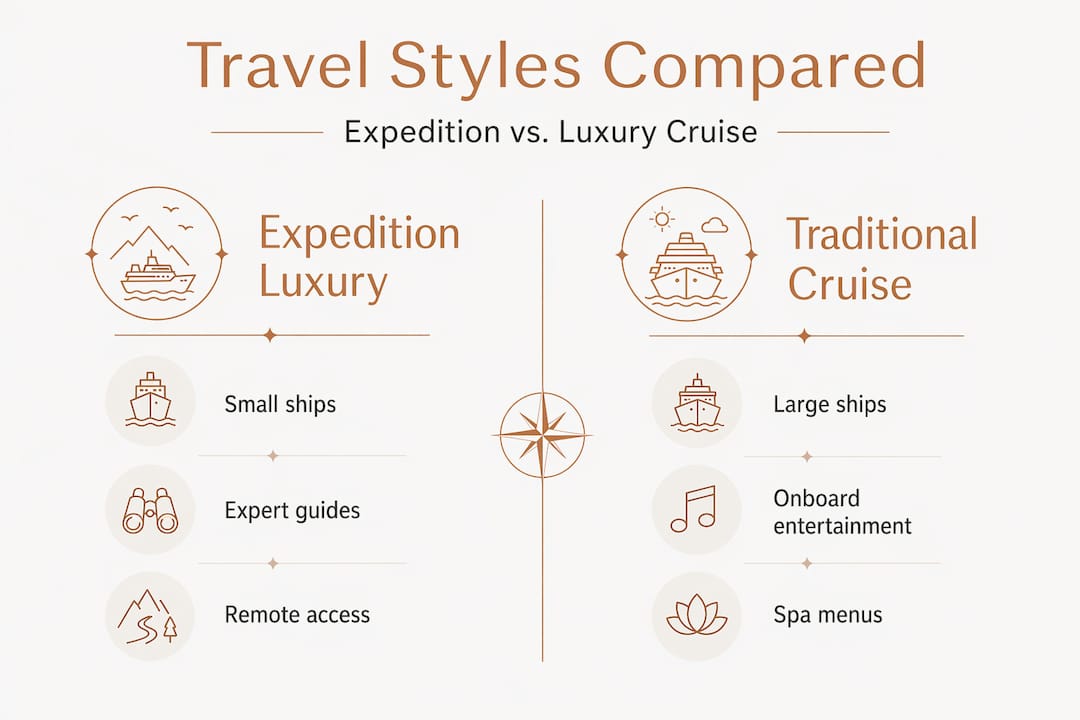
| Feature | Expedition luxury | Traditional luxury cruise |
|---|---|---|
| Passenger count | Under 200 | 1,000 to 5,000+ |
| Primary focus | Destination access | Onboard amenities |
| Shore program | Expert-led, immersive | Optional, activity-based |
| Onboard entertainment | Lectures, libraries | Shows, casinos, spas |
| Destinations | Remote, wildlife-rich | Popular ports of call |
The world’s best expedition luxury destinations
The destinations that define expedition luxury travel are precisely the ones that reward small, carefully managed groups rather than mass tourism. They share common traits: extraordinary wildlife or cultural richness, fragile environments, and limited access that makes arriving feel earned.
Polar regions sit at the top of most lists for good reason. Antarctica is the gold standard. It has no indigenous population, no tourist infrastructure, and access tightly governed by international treaty. The Galápagos, Amazon, and Papua New Guinea represent the tropical tier of expedition luxury, each offering biodiversity and cultural depth that simply cannot be experienced through conventional tourism.
Here is a closer look at the regions that matter most:
- Antarctica and the Antarctic Peninsula: Penguin colonies, calving glaciers, research stations, and the most dramatic silence on earth. Best visited November through March during the austral summer.
- The Arctic and Svalbard: Polar bears, walruses, and 24-hour summer daylight above 80 degrees north. Svalbard is often a gateway voyage for first-time polar travelers.
- Galápagos Islands: Living laboratory of evolution where wildlife has no fear of humans, allowing face-to-face encounters with marine iguanas, blue-footed boobies, and giant tortoises.
- Amazon Basin: River expeditions into floodplain ecosystems accessed only by small boats, with pink river dolphins and indigenous community visits.
- Papua New Guinea and the Sepik River: One of the most ethnographically rich destinations on the planet. Traditional village encounters, ritual art, and a complete departure from Western tourism norms.
- Remote lodge-based expeditions: Land-based alternatives like tented camps in the Okavango Delta or private reserves in Patagonia bring the same philosophy to environments without navigable waterways.
What unites all of these is that luxury here means access and expertise, not spa menus and infinity pools. Land-based expeditions may emphasize exclusivity and logistical complexity over traditional amenities, with chartered flights into remote airstrips and exclusive lodge arrangements as the real markers of premium status.
Pro Tip: For first-time expedition luxury travelers, the Galápagos is the most forgiving entry point. Distances are short, the climate is manageable year-round, and wildlife encounters are extraordinary. Save Antarctica for your second trip once you understand the format.
If you want to see what the most remote luxury destinations actually look like for elite travelers, the range available today is broader than most people assume.
What to expect day to day on an expedition luxury trip
The daily rhythm of expedition luxury travel is unlike anything in standard tourism. You wake up somewhere most people will never see. Breakfast is served while the ship repositions to a landing site. By 8 a.m., you’re in a Zodiac heading toward shore.
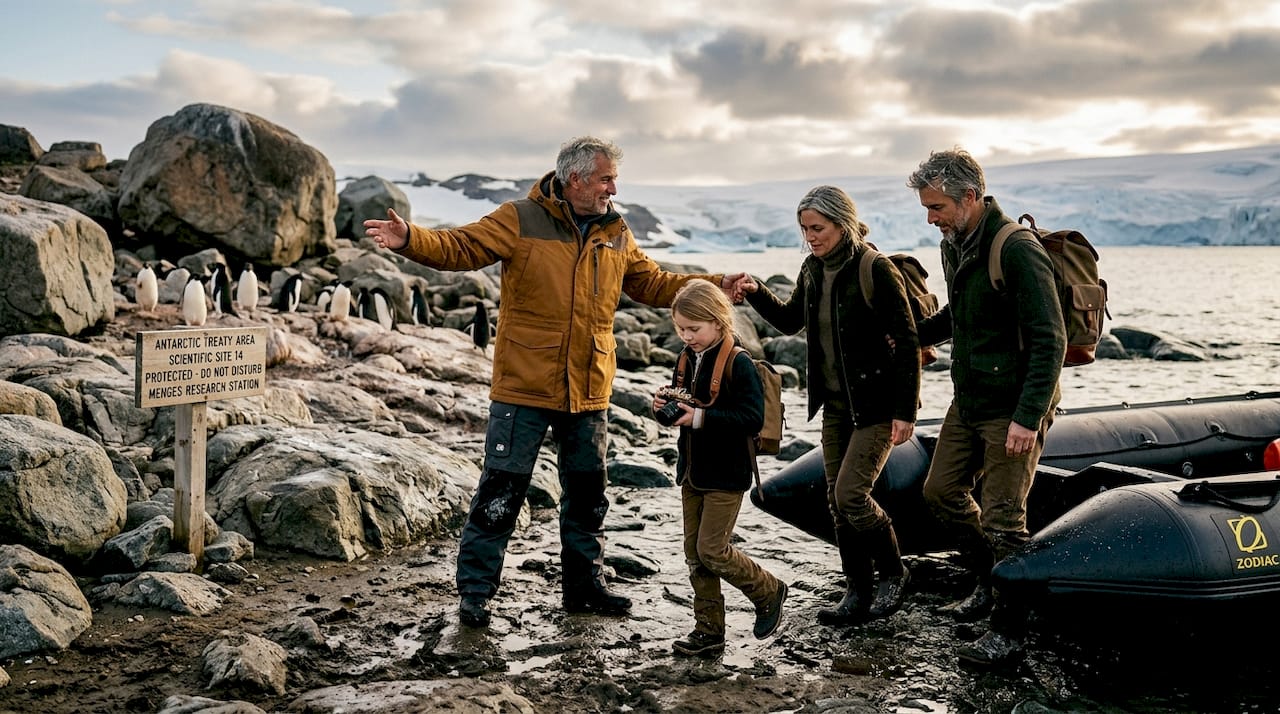
Typical expedition cruise activities include Zodiac landings, kayaking, guided hikes, wildlife observation, and lectures by onboard naturalists. The physical demands vary by trip and operator, but most programs offer tiered options so that guests at different fitness levels can participate fully. The most experienced operators match shore programs to individual guests rather than forcing everyone into a single group.
The guide team is where expedition luxury truly separates itself from any other travel format. You’re not following a tour leader with a numbered flag. You’re spending days with a glaciologist who has worked in Antarctica for 20 years, or an ornithologist who knows every bird call in the Amazon Basin by ear. Onboard facilities focus on education and immersion rather than entertainment, which means evening lectures, onboard science centers, and genuine conversations that change how you understand the world.
Here is a typical day on a well-run expedition luxury voyage:
- Early morning: Wake call for wildlife activity. Coffee and a briefing on the day’s landing conditions.
- Morning excursion: Zodiac landing with a naturalist guide, small group of 8 to 12 guests.
- Midday: Return to ship, a well-prepared lunch, and an optional kayaking or snorkeling program.
- Afternoon: Second landing or wildlife observation from the ship’s observation deck.
- Evening: Pre-dinner lecture by a specialist, followed by a multi-course dinner with regional wine.
- Night: Optional star-gazing or bridge visits with the captain, followed by the ship repositioning overnight.
“The best expedition guides don’t just tell you what you’re seeing. They change what you notice for the rest of your life.”
Pro Tip: Pack expedition-specific gear before you leave home. Most operators provide rubber boots and waterproofs for Zodiac landings, but your own layers, binoculars, and a quality camera with a telephoto lens will transform what you actually experience ashore.
Costs, booking logistics, and what you’re actually paying for
Expedition luxury travel costs more upfront than most travel categories, and understanding why matters if you want to assess genuine value rather than just sticker shock.
Typical polar expedition voyages of 10 to 14 days cost $8,000 to $25,000+ per person including excursions. That range reflects cabin category, operator quality, and destination. Antarctica is more expensive than the Arctic, which costs more than the Galápagos. What drives the price is not profit margin. It’s fuel for ice-strengthened vessels, salaries for world-class specialist guides, permitting fees in protected regions, and the operational complexity of keeping 100 to 150 people safe and comfortable in some of the most logistically demanding environments on earth.
Here’s what’s typically included and what often costs extra:
- Usually included: All shore excursions, specialist guides, rubber boots and waterproofs for landings, most meals and beverages, port fees
- Often additional: Airfare to embarkation ports, pre and post trip hotel nights, premium kayaking or diving programs, gratuities, travel insurance
- Always research: Single supplement policies, which can add 50% to 75% to base pricing on many expedition operators
| Destination | Typical duration | Price range per person |
|---|---|---|
| Antarctica | 10 to 14 days | $10,000 to $25,000+ |
| Arctic / Svalbard | 10 to 12 days | $8,000 to $18,000 |
| Galápagos Islands | 7 to 14 days | $5,000 to $15,000 |
| Amazon River expedition | 7 to 10 days | $4,000 to $12,000 |
Booking 12 to 18 months in advance is the standard recommendation for any serious expedition luxury voyage, and not just for the best cabins. Many itineraries have strict passenger limits tied to environmental regulations. The most coveted departures sell out a year or more before the ship leaves port.
Pro Tip: When comparing operators, ask specifically about the ratio of guides to guests on shore. A ratio better than 1:10 is the mark of a serious expedition operator. Some of the best run 1:8 or better.
Knowing how to plan luxury travel at this level is a real skill. The logistics alone, from charter flights into remote staging points to visa requirements in places like Papua New Guinea, justify working with a specialist rather than trying to piece it together independently.
My perspective: why expedition luxury travel is in a category of its own
I’ve worked with travelers across every category of premium travel, and expedition luxury is the one that generates the most consistent feedback of genuine life change. Not “wonderful trip.” Life change.
What I’ve come to understand is that the transformative impact comes directly from the access. When you stand on the Antarctic Peninsula and realize you are genuinely one of a few thousand people in human history to have seen that exact view, something shifts in how you experience the world. A luxury travel expert will tell you that every luxury trip is special. I’ll tell you this category is different in kind, not degree.
The misconception I hear most from experienced travelers is that smaller means less comfortable. It’s exactly backwards. Smaller means every crew member knows your name by day two. It means the chef accommodates your dietary needs without a form to fill out. It means you’re in a Zodiac with eight people watching a humpback whale surface ten meters away, not on a balcony with a thousand other passengers looking at a distant spout.
What I’ve found actually works, rather than what sounds good in theory, is this: choose your guide team before you choose your ship. The vessel matters. The itinerary matters. But the naturalists and cultural specialists you spend your days with will determine whether you leave changed or just well-rested. Ask for the guide roster before you book. The operators who are proud of theirs will send it immediately.
— Michael
Plan your expedition luxury experience with Hiddendoortravel
Knowing what expedition luxury travel is and actually securing the right voyage for your interests are two very different things. The operator landscape is complex, pricing varies enormously for reasons that aren’t always transparent, and the best departures disappear long before most travelers start planning.
Hiddendoortravel specializes in exactly this. As a luxury travel agency with deep relationships across the expedition luxury sector, the team designs bespoke itineraries based on your specific interests, physical preferences, and the destinations that genuinely excite you. Whether you’re drawn to polar wildlife, Amazonian biodiversity, or the cultural complexity of the Pacific, Hiddendoortravel connects you to the right voyages, the right operators, and the right cabins. You can also explore trip inspiration to see what’s possible before committing to a direction. Reach out to start a conversation about your ideal expedition.
FAQ
What makes expedition luxury travel different from regular luxury cruising?
Expedition luxury travel prioritizes remote destination access over onboard entertainment, using small ships under 200 passengers with expert naturalist guides, Zodiac landings, and immersive shore programs rather than casinos and large-scale dining venues.
How much does a luxury expedition trip typically cost?
Polar expedition voyages generally range from $8,000 to $25,000+ per person for 10 to 14 days, with pricing driven by destination remoteness, vessel quality, and guide expertise rather than cabin square footage.
When should I book an expedition luxury voyage?
Book 12 to 18 months in advance for the most in-demand itineraries, particularly Antarctica and Arctic departures, where strict passenger limits and high demand mean top voyages sell out well before departure.
What level of fitness do I need for expedition luxury travel?
Most expedition luxury operators offer tiered shore programs to accommodate varying fitness levels, from gentle Zodiac rides to strenuous hikes. Being able to walk on uneven terrain and board a small boat independently covers most programs.
Is expedition luxury travel worth the higher cost compared to other luxury trips?
For travelers who prioritize rare access, expert-led education, and genuinely remote environments over resort amenities, expedition luxury delivers experiences that are simply unavailable through any other travel format at any price.