

Personalized travel is the intentional design of trips built around each traveler’s unique interests, pace, values, and emotional goals. Up to 74% of travelers now want experiences that reflect who they are, not just where they are going. That number signals a fundamental shift away from standardized packages toward trips that feel genuinely meaningful. Hiddendoortravel sees this shift every day: travelers no longer ask “Where should I go?” They ask “What kind of experience do I want?” Understanding why personalized travel matters is the first step toward planning trips that actually deliver.
Why personalized travel matters for mental wellbeing
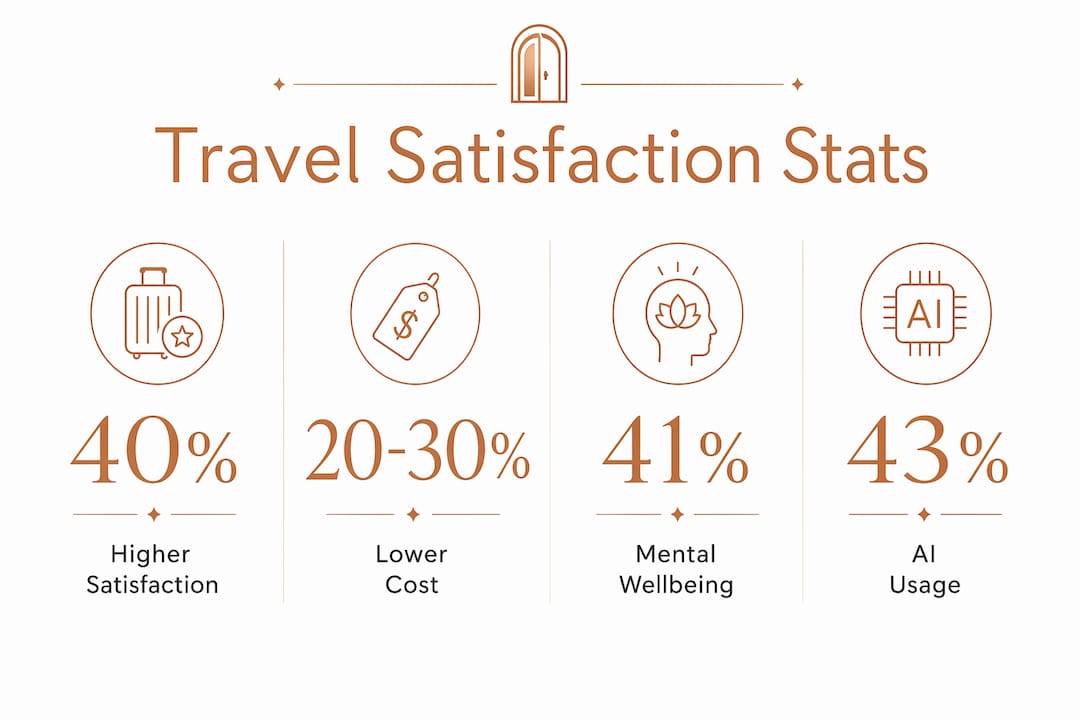
Tailored travel directly improves mental health. 41% of travelers cite mental wellbeing as their primary motivation for choosing a custom trip. That figure makes personalization a health decision, not just a preference.
Generic itineraries create friction. When a trip does not match your pace, interests, or energy level, stress replaces enjoyment. A traveler who needs quiet mornings and slow cultural immersion will feel drained by a packed group tour that starts at 7 a.m. and rushes through six sites before lunch. A personalized itinerary removes that friction by design.

The emotional benefits go deeper than comfort. Personalization transforms travel from a transactional purchase into an emotionally satisfying experience by connecting the trip to the traveler’s identity and values. A wellness-focused trip to Bali built around morning yoga, private cooking classes, and guided meditation retreats delivers something a standard resort package cannot: a sense that the trip was made for you.
Specific examples of wellness-focused custom trips include:
- Private guided hikes timed to avoid crowds, preserving solitude and reducing anxiety
- Sleep-focused hotel room configurations with blackout curtains, white noise machines, and curated pillow menus
- Culinary tours matched to dietary needs and flavor preferences, removing the stress of finding suitable food
- Slow travel itineraries with built-in rest days that prevent burnout
Pro Tip: Tell your travel planner your energy level and daily rhythm before discussing destinations. The best itinerary fits your lifestyle, not just your wish list.
How does personalized travel differ from package tours?
Package tours trade flexibility for convenience. They lock travelers into fixed schedules, shared transport, and generic hotel rooms chosen for volume pricing rather than fit. The result is a trip that works for the average traveler and excels for no one.
Custom trip planners deliver 40% higher satisfaction and often cost 20–30% less than traditional package tours. Higher satisfaction at lower cost is a direct argument for personalization over convenience.
The differences between the two approaches are structural:
| Feature | Package tours | Personalized planning |
|---|---|---|
| Schedule | Fixed, group-paced | Flexible, traveler-paced |
| Accommodation | Pre-selected, volume-based | Matched to preferences and style |
| Activities | Standard highlights | Curated to interests and goals |
| Local experience | Surface-level, tourist-facing | Authentic, community-connected |
| Budget control | All-inclusive, limited adjustment | Transparent, adjustable at each stage |
| Stress level | High (group logistics) | Low (individual focus) |
Sustainability concerns also push travelers toward custom planning. Personalized routes avoid overcrowded destinations and direct spending toward local communities rather than large tour operators. That means a better experience for the traveler and a better outcome for the destination.
The bespoke travel model takes this further by designing every element of a trip around a specific traveler’s profile, from the type of vehicle used for transfers to the language spoken by the local guide.
What role does AI play in personalized travel planning?
AI has made personalization faster and more precise. 43% of travelers now use AI tools to initiate their trip planning. That adoption rate shows AI is no longer a novelty. It is a standard part of how modern travelers research and build their trips.
AI tools capture preferences, past behaviors, and stated motivations to generate tailored recommendations. A traveler who consistently books boutique hotels, avoids beach resorts, and searches for food-focused experiences will receive suggestions that reflect that pattern, not a generic list of top-rated destinations.
AI-driven personalization improves traveler satisfaction through two key factors: trust and perceived value. Travelers who feel the system understands them are more likely to follow its recommendations and report higher satisfaction with the resulting trip. Individual readiness to engage with technology moderates this effect, meaning the best outcomes come when AI tools are paired with human expertise.
Technologies that currently support personalized travel planning include:
- Preference mapping tools that build traveler profiles from past bookings and stated interests
- Dynamic itinerary builders that adjust recommendations in real time based on weather, availability, and traveler feedback
- Natural language planning assistants that translate vague goals (“I want something adventurous but not exhausting”) into concrete itinerary options
- Destination specialists who use AI outputs as a starting point and refine them with on-the-ground knowledge
Pro Tip: Use AI tools to generate a shortlist of ideas, then bring that shortlist to a specialist. AI finds patterns. Specialists find the details that make a trip memorable.
Why is personalization now central to luxury travel?
Luxury travel has moved past exclusivity as its defining feature. Modern luxury travelers reject mass-market standardization and demand flexible, authentic, passion-driven journeys. Status symbols like five-star ratings and brand names still matter, but they are no longer sufficient on their own.
The new luxury metric is emotional ownership. A traveler who designs a private wine tour through Burgundy timed to the harvest, stays in a family-run château, and dines with the winemaker owns that experience in a way that a standard luxury package cannot replicate. The trip reflects their values, their pace, and their passions.
Luxury travel now centers on hyper-personalization around traveler passions, pace, and emotional goals. Hotels have recognized this shift. Hotels can increase revenue by over $1 million annually by offering personalized room features such as early check-in, sleep-focused services, and curated local experiences. That revenue figure reflects genuine traveler willingness to pay for personalization, not just tolerance of it.
Key features that define personalized luxury travel today:
- Private, immersive itineraries with no shared group components
- Accommodation selected for character and fit, not star rating alone
- Access to experiences not available through standard booking channels
- Flexible scheduling that adapts to the traveler’s mood and energy
- Guides chosen for expertise in the traveler’s specific interests, whether that is architecture, gastronomy, or wildlife
Understanding ultra luxury hotel tiers is one practical way to identify properties that genuinely deliver on personalization rather than simply marketing it.
How to choose and use personalized travel services effectively
Choosing a personalized travel service starts with knowing what you actually want from a trip. Travelers who articulate emotional and wellness goals get better results than those who only list destinations. “I want to feel rested and culturally enriched” is more useful to a planner than “I want to go to Japan.”
Assess any service or advisor against these criteria:
- Interests alignment. Does the planner ask about your hobbies, pace, dietary needs, and travel history before suggesting destinations?
- Flexibility. Can the itinerary change after booking without significant penalties or friction?
- Local authenticity. Does the service use local guides and community-based experiences, or does it rely on standard tourist infrastructure?
- Technology use. Does the planner use data and preference tools to build your profile, or do they rely on generic templates?
- Transparency. Are costs itemized so you can adjust individual elements to fit your budget?
Communicating wellness and emotional goals upfront is the single most effective thing a traveler can do to improve their experience. Planners who understand that you need quiet evenings, hate crowds, or want to prioritize food over sightseeing will build a fundamentally different trip than one designed from a generic brief.
Elite travel agency advantages include access to properties and experiences that are not publicly bookable, which is a concrete benefit that generic booking platforms cannot match.
Pro Tip: Ask any travel advisor to describe a trip they built for a traveler with similar interests to yours. Their answer reveals whether they personalize by instinct or by template.
A yacht cruise is one example of a personalized travel format that delivers both flexibility and immersion. Routes, pace, and stops are entirely adjustable, making it a natural fit for travelers who want authentic local access without fixed schedules.
Key Takeaways
Personalized travel delivers measurably better outcomes than standardized packages because it aligns every element of a trip with the traveler’s identity, goals, and emotional needs.
| Point | Details |
|---|---|
| Wellbeing drives demand | 41% of travelers choose custom trips specifically to improve mental health and emotional satisfaction. |
| Cost and satisfaction advantage | Custom planning delivers 40% higher satisfaction and often costs 20–30% less than package tours. |
| AI accelerates personalization | 43% of travelers use AI tools to start trip planning, with best results when paired with human expertise. |
| Luxury now means emotional fit | Modern luxury travelers prioritize passion-driven, flexible itineraries over brand names and star ratings. |
| Communication is the key input | Sharing emotional and wellness goals with a planner produces better trips than listing destinations alone. |
What I’ve learned after years of watching travelers get this wrong
Most travelers underestimate how much a poorly matched itinerary costs them. Not in money, but in the experience itself. I have seen travelers return from objectively impressive trips feeling flat because the pace was wrong, the activities did not connect to anything they cared about, or the accommodation felt anonymous. The destination was right. The design was not.
The travelers who come back genuinely satisfied share one habit: they told their planner the truth about what they wanted to feel, not just what they wanted to see. That distinction sounds small. It changes everything.
Technology has made personalization faster, but it has not made human judgment obsolete. AI can identify that you consistently book boutique hotels and avoid beach resorts. It cannot tell you that the reason you love boutique hotels is the sense of being somewhere with a story. A good specialist picks up on that and finds properties that deliver the feeling, not just the category.
The future of travel is not more options. It is better fit. Travelers who embrace personalization fully, who communicate honestly, choose advisors carefully, and treat their trip as a reflection of their values rather than a checklist of sights, will consistently have better experiences than those who default to convenience. That gap will only widen as personalization tools improve and the best experiences become harder to access without the right relationships.
— Michael
Hiddendoortravel’s approach to bespoke luxury planning
Hiddendoortravel specializes in building trips that reflect exactly who you are as a traveler. Every itinerary starts with a detailed conversation about your interests, pace, emotional goals, and travel history, not a list of popular destinations.
The agency’s luxury travel experts combine deep destination knowledge with access to properties and experiences that are not available through standard booking channels. That combination of human expertise and exclusive access is what separates a trip you remember from one you simply complete. If you are ready to plan a trip built entirely around you, Hiddendoortravel’s team is the place to start.
FAQ
What does personalized travel actually mean?
Personalized travel is the design of a trip around a specific traveler’s interests, pace, values, and emotional goals rather than a fixed group itinerary. Every element, from accommodation to activities to daily schedule, is chosen to fit one traveler’s profile.
Why do travelers prefer personalized trips over packages?
Custom trips deliver 40% higher satisfaction and often cost less than traditional package tours. Travelers get experiences that match their interests rather than generic highlights designed for the average group.
How does AI improve personalized travel planning?
AI tools capture traveler preferences and behaviors to generate tailored recommendations faster than manual research. AI-driven personalization works best when combined with a specialist who can refine suggestions using on-the-ground knowledge.
Is personalized travel only for luxury budgets?
Personalized planning is available across a wide range of budgets. The core benefit is fit, not price. A well-designed mid-range trip built around your interests will outperform an expensive generic package every time.
How does personalized travel support mental wellbeing?
41% of travelers choose custom trips specifically to improve their mental health. Itineraries matched to a traveler’s pace and emotional goals reduce stress and increase the sense of meaning and enjoyment throughout the trip.