
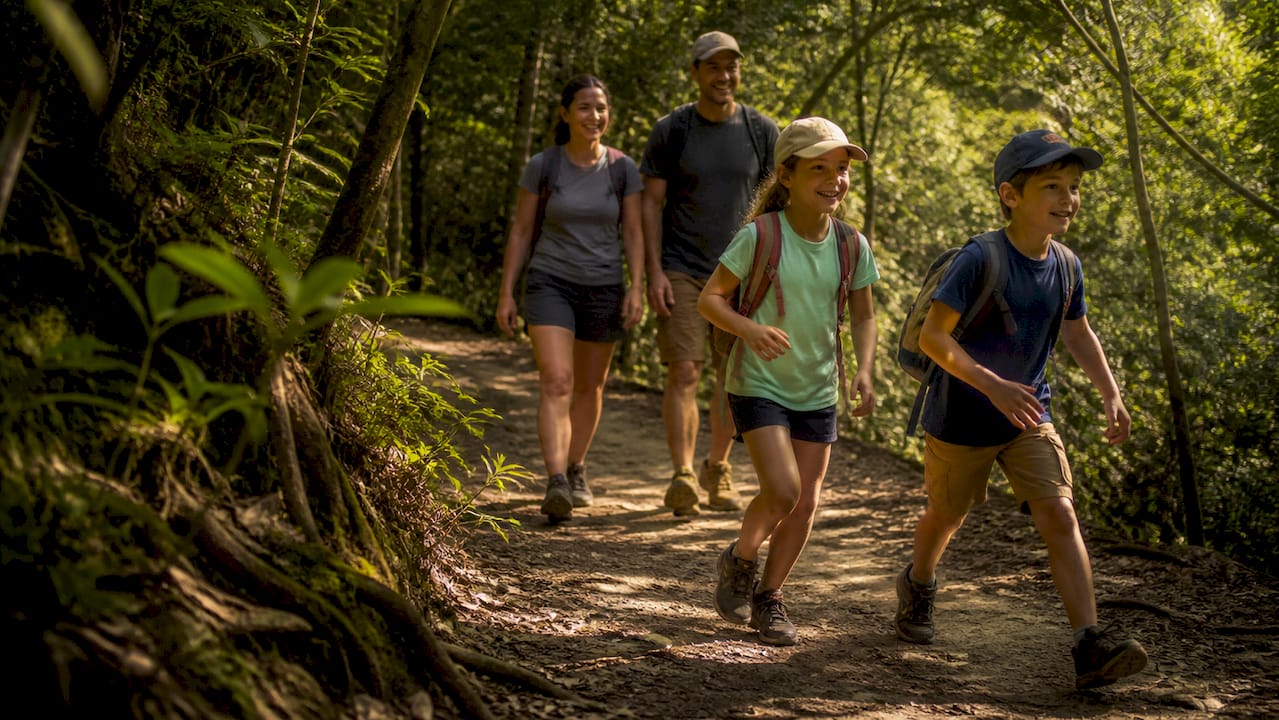
The best family adventure travel starts with one decision: match the trip to your youngest child’s age and stamina, not your own. National park day hikes, paddling routes, and multi-activity lodge stays are the highest-value categories for most families. The shortlist below covers the destinations that consistently deliver, from toddler-friendly to teen-ready:
- Yosemite National Park, CA — Suitable for young children; iconic valley walks and easy waterfall trails; spring and fall are ideal.
- Grand Canyon, AZ — Rim trails work for ages 4+; inner-canyon hiking suits ages 10+ with proper prep.
- Grand Teton National Park, WY — Suitable for children who can kayak or hike moderate loops; summer only.
- Olympic National Park, WA — Ages 4+ for tide pools and rainforest walks; mild summers, accessible year-round.
- Mount St. Helens, WA — Suitable for children able to do moderate crater-rim hikes; late June through September.
- Everglades National Park, FL — Suitable for families including young children for canoe trails and wildlife walks; November through March.
- Boundary Waters Canoe Area, MN — Suitable for families with children able to canoe guided routes; June through August.
- Costa Rica multi-activity week — Suitable for families seeking zip-lining, gentle rafting, and wildlife experiences during dry season December through April.
Under-4 families do best with short drives to accessible park visitor centers, flat nature walks, and lodge or cabin stays. Ages 5–10 open up paddling, guided hikes, and ranger programs. Tweens and teens can handle multi-day routes, Class II–III rafting, and overnight backpacking. Start by picking an activity type your kids already enjoy, then check the season and confirm permit availability before anything else.
Key Takeaways
The single most important decision in family adventure travel is matching the trip’s physical demands to your youngest child’s realistic capacity, not your own ambition.
| Point | Details |
|---|---|
| Match trip to youngest child | Set your activity ceiling based on the least-fit family member’s stamina and age. |
| Book permits early | Yosemite, BWCA, and Mount St. Helens summit permits sell out months ahead; start in January for summer. |
| Build in rest days | One low-activity day per 3–4 days of adventure prevents burnout and keeps the trip enjoyable. |
| Pack a child-specific safety kit | USCG-approved PFDs, child helmets, and a first-aid kit with kids’ medications are non-negotiable on any active trip. |
| Hiddendoortravel for complex trips | For multi-destination, international, or multi-generational adventures, Hiddendoortravel handles permits, guides, and logistics end-to-end. |
Table of Contents
- What are the best family adventure trips right now?
- How do you choose the right family adventure trip?
- How do you plan and pack for kids of different ages?
- Three sample day-by-day family adventure itineraries
- What safety checks and permits does every family need?
- When does hiring a bespoke family adventure planner actually make sense?
- What running family adventure trips actually teaches you
- Hiddendoortravel plans the family adventure you actually want
- Sources
What are the best family adventure trips right now?
The ten trips below are curated for active families. Each entry gives you the facts you need to screen it quickly: age range, season, difficulty, duration, accommodation, and budget shape. Trip-tested notes from national-park hikes and paddling routes consistently show that the best family adventures share one trait: they build in flexibility so the day can pivot when a toddler melts down or a thunderstorm rolls in.
1. Yosemite National Park, CA
Ages: 5+ (toddlers manageable on valley floor) | Season: April–June, September–October | Difficulty: Easy–Moderate | Duration: 3–5 days | Accommodation: Cabin, lodge, or campground | Budget: Medium
Valley Loop Trail and Mirror Lake are flat enough for a five-year-old and still jaw-dropping for adults. The Yosemite Valley Visitor Center has ranger-led junior ranger programs that keep younger kids locked in for hours.
Pro Tip: Book Yosemite Valley lodging 6–12 months out. The valley fills fast, and last-minute options push families to gateway towns 45 minutes away.
2. Grand Canyon, AZ
Ages: 4+ (rim); 10+ (inner canyon) | Season: March–May, September–November | Difficulty: Easy (rim) to Strenuous (inner canyon) | Duration: 2–4 days | Accommodation: Lodge or campground | Budget: Medium
The South Rim Trail is paved, stroller-accessible, and runs for miles with zero elevation change. Inner-canyon day hikes like Bright Angel Trail demand real fitness and heat management; save those for older kids with trail experience.
Pro Tip: Carry twice the water you think you need. The NPS recommends one liter per person per hour on inner-canyon trails in summer.
3. Grand Teton National Park, WY
Ages: 6+ | Season: June–September | Difficulty: Easy–Moderate | Duration: 3–5 days | Accommodation: Lodge, cabin, or campground | Budget: Medium–High
Jenny Lake’s boat shuttle cuts a steep climb to Hidden Falls, making it accessible for kids who aren’t yet strong hikers. Kayaking on Jackson Lake is a half-day activity that works for ages 6 and up with a guide.
Pro Tip: Pair Grand Teton with a single night in Jackson for a restaurant meal and a hot shower. Kids who’ve been camping for three days will thank you.
4. Olympic National Park, WA
Ages: 4+ | Season: June–September (best); accessible year-round | Difficulty: Easy–Moderate | Duration: 3–5 days | Accommodation: Lodge, cabin, or campground | Budget: Low–Medium
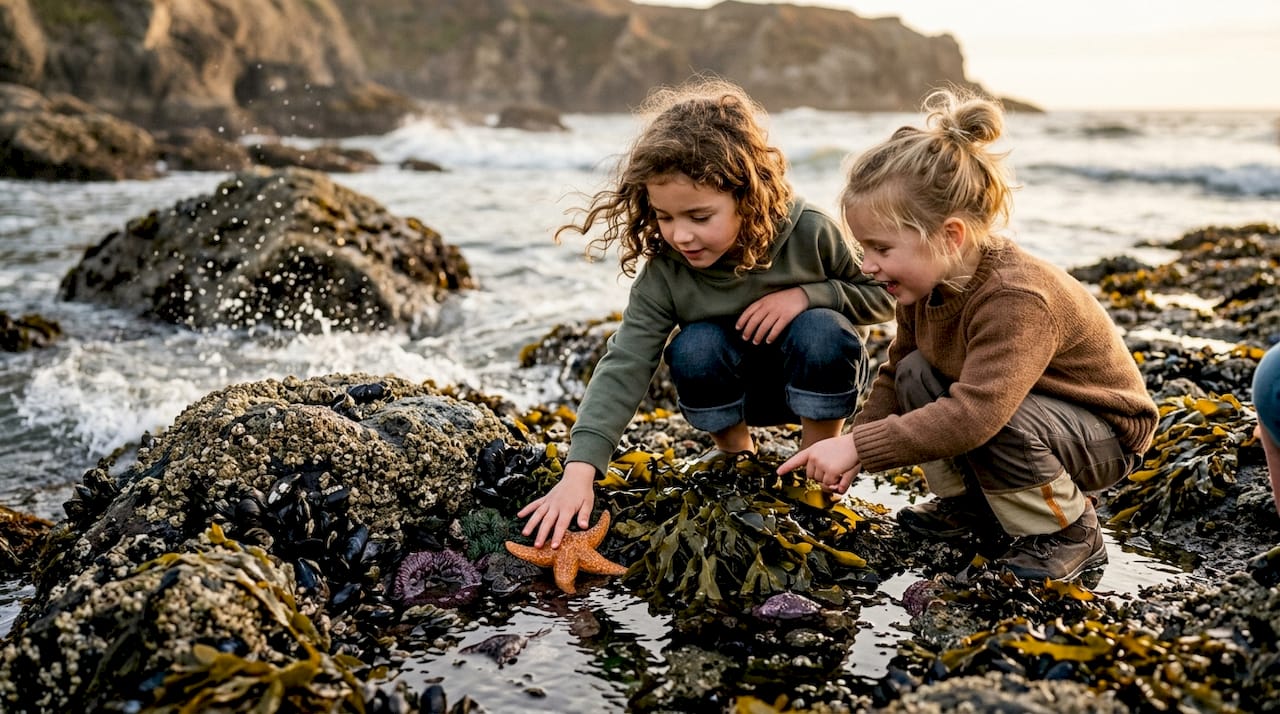
Three ecosystems in one park: temperate rainforest, alpine meadows, and wild Pacific coastline. The Hoh Rain Forest trail is flat, mossy, and genuinely magical for kids. Tide-pooling at Rialto Beach requires zero hiking skill and delivers enormous payoff.
Pro Tip: Layer up even in July. Olympic’s coast runs cold and foggy most mornings, and wet kids lose enthusiasm fast.
5. Mount St. Helens, WA
Ages: 8+ | Season: Late June–September | Difficulty: Moderate–Strenuous | Duration: 1–3 days | Accommodation: Nearby lodge or campground | Budget: Low–Medium
The Johnston Ridge Observatory sits at 4,500 feet with a direct view into the crater, and the 2.4-mile Eruption Trail is manageable for most kids 8 and up. For families with older teens, the summit climb to 8,365 feet requires a permit and solid fitness but delivers a once-in-a-decade story.
Pro Tip: Download the USFS permit system app before you go. Summit permits for Mount St. Helens sell out weeks in advance during peak season.
6. Everglades National Park, FL
Ages: 5+ | Season: November–March | Difficulty: Easy–Moderate | Duration: 2–4 days | Accommodation: Campground, nearby lodge | Budget: Low–Medium
Canoe trails through mangrove tunnels are unlike anything else in the U.S. The Nine Mile Pond canoe loop is a half-day paddle that families with kids as young as 5 complete regularly. Wildlife density in the dry season is extraordinary: alligators, roseate spoonbills, and manatees on a single morning.
Pro Tip: Book canoe rentals at the Flamingo Visitor Center at least two weeks ahead in peak season. They go fast, and there’s no substitute nearby.
7. Boundary Waters Canoe Area, MN
Ages: 8+ | Season: June–August | Difficulty: Moderate | Duration: 4–7 days | Accommodation: Wilderness camping | Budget: Low–Medium (gear rental adds up)
The BWCA is one of the few places in the lower 48 where you can paddle for days without seeing a road. Entry permits are required and quota-controlled; book through Recreation.gov starting in January for summer trips. A guided trip with an outfitter is the right call for first-timers with kids.
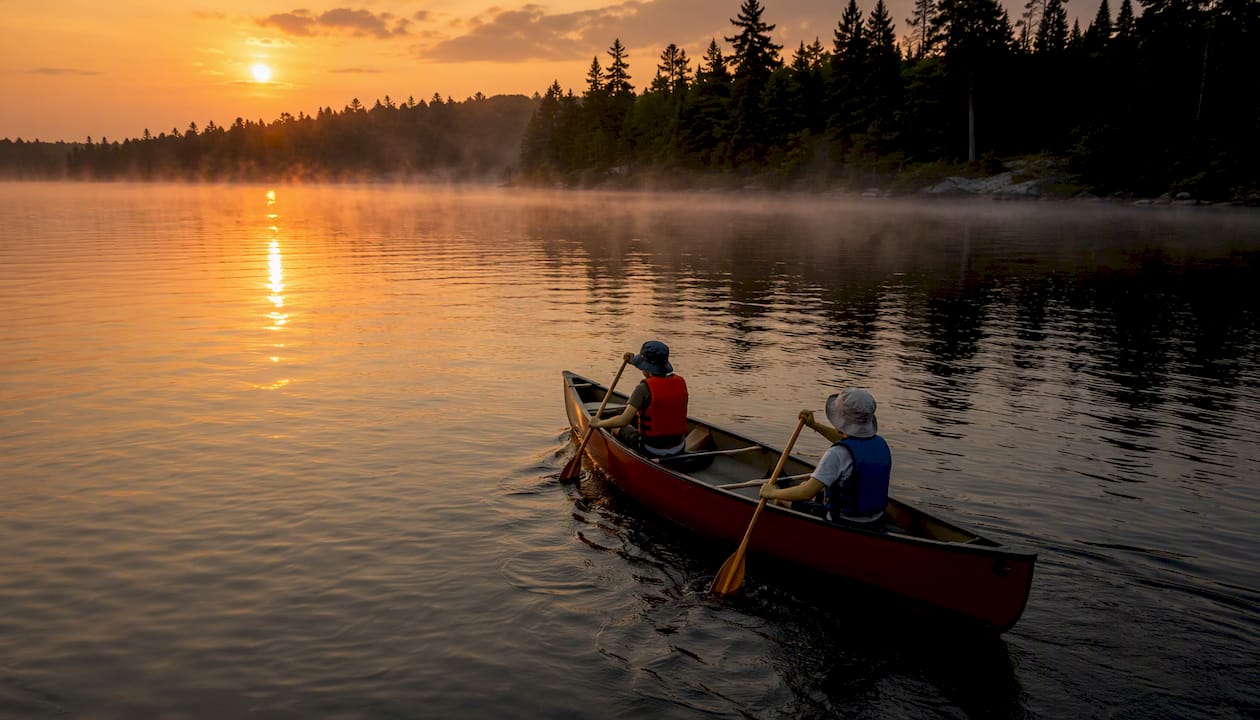
Pro Tip: Rent a canoe with a keel from a local outfitter in Ely, MN. Keeled canoes track straighter, which matters enormously when a 9-year-old is your stern paddler.
8. Costa Rica multi-activity week
Ages: 6+ | Season: December–April (dry season) | Difficulty: Easy–Moderate | Duration: 7–10 days | Accommodation: Eco-lodge or family lodge | Budget: Medium–High
Zip-lining in Monteverde, gentle Class II rafting on the Sarapiquí River, and wildlife walks in Manuel Antonio pack an enormous variety into one week. Age-fit guidance for international destinations consistently flags Costa Rica as one of the most accessible international options for families with kids under 12. Operators typically set minimum ages of 6–7 for zip-lining and 7–8 for rafting; confirm before booking.
Pro Tip: Stay in an eco-lodge with a naturalist guide on staff. Kids who spot a poison dart frog with a guide who can name it remember that moment for years. Check luxury eco-lodge options for family-friendly sustainable stays that pair comfort with genuine wildlife access.
9. Dolomites family hiking week, Italy
Ages: 7+ | Season: July–September | Difficulty: Moderate | Duration: 7 days | Accommodation: Mountain rifugio or family hotel | Budget: Medium–High
The Alta Via routes have rifugio huts every 4–6 hours, which means you never carry more than a day pack. Kids who can hike 5–6 miles a day will find the scenery genuinely dramatic. The rifugio system also means hot food and a bed every night, which parents appreciate as much as the views.
Pro Tip: Book rifugio beds in July and August at least three months ahead. They fill with European families on school holiday.
10. Patagonia family trekking, Chile/Argentina
Ages: 10+ | Season: November–March (Southern Hemisphere summer) | Difficulty: Moderate–Strenuous | Duration: 10–14 days | Accommodation: Lodge, glamping, or campground | Budget: High
Torres del Paine’s W Trek is achievable for fit 10-year-olds with a guide and lodge-to-lodge itinerary. Weather changes in minutes, so flexibility is non-negotiable. The Forbes Bucket List Family feature places Patagonia among the highest-impact family destinations for older kids, and the reasoning holds: the scale of the landscape is something no screen can replicate.
Pro Tip: Hire a local guide who knows the trail conditions that week. Trail closures and weather windows shift fast, and a guide with current intel saves the trip.
How do you choose the right family adventure trip?
Start with your youngest child, not your most adventurous one. The trip that works is the one your least-fit family member can complete without misery. A framework that actually holds up in practice:
Step 1: Age and fitness first. What can your youngest child realistically hike, paddle, or ride for 3–4 hours? That number sets your activity ceiling. Road Scholar’s family travel guidance frames it well: match activities to kids’ interests and physical abilities, and the trip becomes a memory rather than a chore.
Step 2: Activity type. Hiking, paddling, cycling, or multi-activity? Pick one primary activity your whole family enjoys. Multi-activity trips (Costa Rica, Dolomites) work well for mixed-age groups because there’s always an easier option on high-intensity days.
Step 3: Travel time and season. A 10-hour travel day before a strenuous hike is a recipe for a rough first morning. Keep total travel time under 6 hours for families with kids under 8. Season matters enormously: Yosemite in July is crowded and hot; Yosemite in October is cool, quieter, and the light is better.
Step 4: Accommodation and emergency access. Wilderness camping is wonderful, but confirm the nearest medical facility before you commit. For remote trips like the Boundary Waters, the nearest hospital may be 90+ minutes away. Experiential travel package formats range from fully guided lodge-based trips to self-guided camping, and the right choice depends on your family’s comfort with logistics.
Red flags to watch before you book
- Activity intensity designed for the oldest or fittest family member, with no easier alternative on the same day
- Travel days longer than 8 hours with kids under 6
- No backup lodging option if weather forces a change
- Permit or reservation systems you haven’t confirmed (Yosemite, BWCA, and Mount St. Helens summit all require advance booking)
- Nearest medical facility more than 2 hours from your route with no evacuation plan
Budget and booking lead times
National park trips in the U.S. generally vary in cost depending on lodging and activities, with international multi-activity trips such as those in Costa Rica or the Dolomites typically costing more due to lodging and activity complexity. Guided multi-day trips with outfitters like OARS add a per-person guide fee but remove most logistics headaches.
Book popular national park lodging 6–12 months out. BWCA entry permits open on Recreation.gov in January for the same summer. International lodge-based trips in peak season need 4–6 months of lead time.
Pro Tip: Before you commit to any trip, ask the operator or park: what is the minimum age for this specific activity, and what happens if a child can’t complete it? OARS sets minimum ages as low as 4 for some family raft trips and 7 for Class III rivers. Knowing the floor before you book prevents the worst surprises.
How do you plan and pack for kids of different ages?
Age shapes everything: how long a child can walk before needing a break, what safety gear is non-negotiable, and how much extra weight you’re carrying for them. The table below maps the core adaptations by age group.
| Age Group | Max activity length | Key safety gear | Sleep needs | Transport tolerance |
|---|---|---|---|---|
| Under 4 | 1–2 hours | Carrier/backpack carrier, infant PFD, sun hat | 2 naps or 12-hr night | 3–4 hours max per day |
| 5–10 | 3–5 hours | Child PFD, helmet (bike/kayak), hydration pack | 10–11 hours | 5–6 hours with breaks |
| 11–14 | 5–7 hours | PFD if paddling, trekking poles, headlamp | 9–10 hours | 7–8 hours |
| 15+ | Full day | Same as adult; blister kit, knee support | 8–9 hours | Full day with activity |
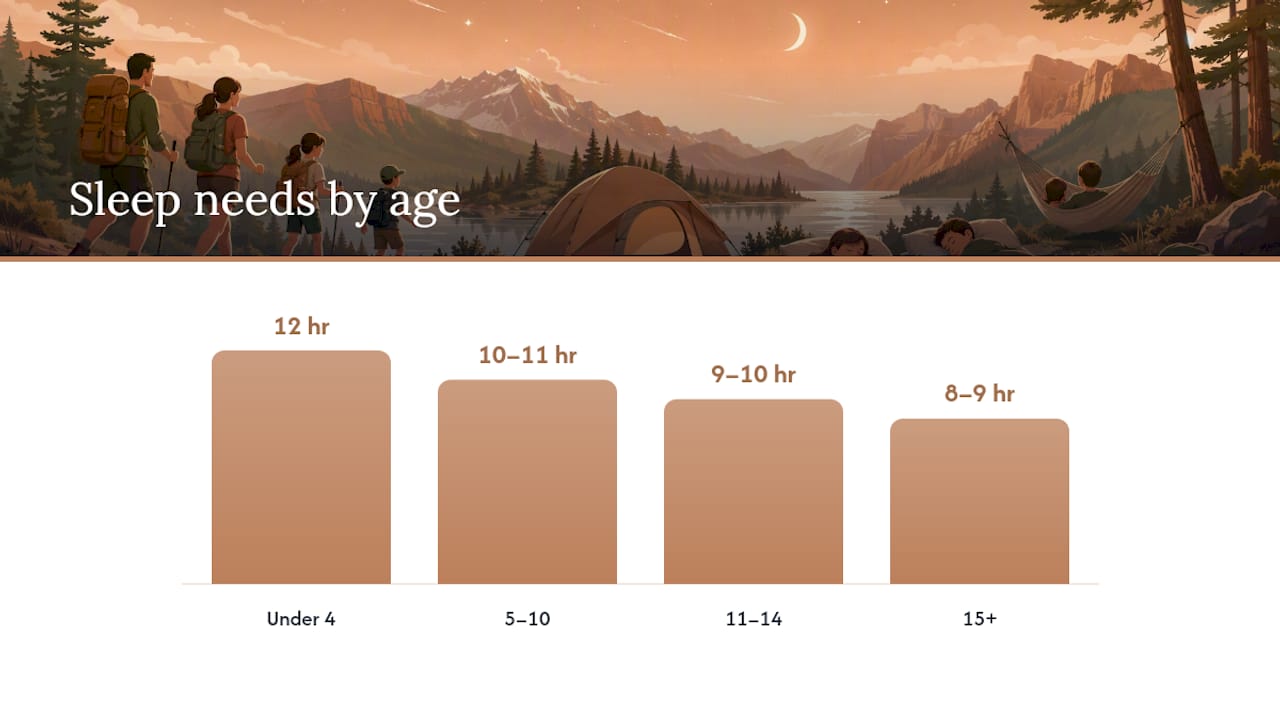
Practical guidance for traveling with children under four emphasizes that the biggest adjustment for under-4 trips isn’t gear, it’s mindset: shorter days, more flexibility, and zero attachment to a fixed itinerary.
Family packing checklist
Shared family items:
- First-aid kit: blister pads, antihistamine, children’s ibuprofen, SAM splint, irrigation syringe
- Water filtration (Sawyer Squeeze or Katadyn BeFree for backcountry)
- Sunscreen SPF 50+ (mineral-based for kids; reef-safe for coastal/marine destinations)
- Snack system: calorie-dense, no-melt options (trail mix, nut butter packets, jerky)
- Emergency whistle and signal mirror per adult
- Offline maps downloaded on a phone (Gaia GPS or AllTrails Pro)
- Travel insurance documents and emergency contact card
Age-specific additions:
- Under 4: Ergobaby or Osprey Poco child carrier, infant/toddler PFD (USCG-approved), portable white noise device, familiar comfort item
- 5–10: Child-sized trekking poles, CamelBak Mini Mule hydration pack, headlamp (Black Diamond Spot Jr.), junior ranger book for park programs
- 11–14: Full-size trekking poles, blister kit, personal first-aid pouch, waterproof journal
- 15+: Same as adult kit; add personal locator beacon (Garmin inReach Mini) for backcountry routes
Pro Tip: Build a “buffer bag” for each child: one change of clothes, a snack, a small toy or book, and a headlamp. Keep it accessible in the car or day pack. When energy crashes at 3 PM on a trail, the buffer bag buys you 45 minutes.
For multi-day trips and flights, strollers are generally impractical on trails; a quality child carrier is more versatile. Check airline policies on carriers as carry-on items before you fly. For food logistics on adventure trips, a family travel planning guide covers meal planning and low-impact food choices that work well for active families in the field.
Three sample day-by-day family adventure itineraries
These three itineraries are designed to be adapted, not followed rigidly. Weather, energy levels, and a child’s mood on day three will always matter more than the plan.
Itinerary 1: Yosemite with young kids (ages 2–6), 4 days
Day 1: Drive or fly into Fresno; check into Yosemite Valley Lodge or a gateway cabin. Short walk to Lower Yosemite Fall (0.5 miles, flat). Dinner at the lodge. Early bedtime.
Day 2: Valley Loop Trail, 3 miles at an easy pace. Stop at Sentinel Beach for water play. Junior Ranger program at the Valley Visitor Center (1 hour, free). Back by 3 PM.
Day 3: Mariposa Grove shuttle to see the giant sequoias. Flat boardwalk, 2 miles. Afternoon nap back at the lodge, then a short sunset walk to Valley View.
Day 4: Mirror Lake loop (5 miles, flat). Picnic lunch. Drive out by 2 PM to avoid traffic.
Weather alternative: Valley Visitor Center and the Yosemite Museum are full-day indoor options. Kid engagement: Junior Ranger badge program keeps ages 3–13 motivated on every trail.
Itinerary 2: Boundary Waters paddling trip (ages 8–12), 5 days
Day 1: Fly into Duluth or drive; overnight in Ely, MN. Gear check with outfitter; canoe orientation (1 hour). Dinner in town.
Day 2: Put in at entry point; paddle 4–6 miles to first campsite. Set up camp, swim, fish. Day-by-day itinerary structures from Backroads confirm that setting realistic daily mileage is the single most important pacing decision for families.
Day 3: Rest day or short 2-mile paddle to a nearby lake. Fishing, campfire cooking, star-gazing. No agenda.
Day 4: Paddle 5–7 miles to exit lake. Portage practice (keep portages under 40 rods for kids under 10).
Day 5: Paddle out; return gear to outfitter. Drive to Duluth for a real meal and a hotel shower.
Weather alternative: Build a rest day into every multi-day paddle. If weather pins you in camp, it’s a bonus day, not a lost one. Kid engagement: Fishing licenses for kids under 16 are free in Minnesota; bring ultralight rods.
Itinerary 3: Costa Rica multi-activity week (ages 10–15), 7 days
Day 1: Fly into San José; transfer to Arenal. Check into eco-lodge. Evening walk with naturalist guide.
Day 2: Arenal Volcano hike (moderate, 4 miles). Afternoon at La Fortuna hot springs.
Day 3: White-water rafting on the Sarapiquí River (Class II–III; minimum age 8–10 depending on operator). Half-day option available for younger or less confident kids.
Day 4: Transfer to Monteverde. Zip-line canopy tour (minimum age typically 7; confirm with operator). Afternoon cloud forest walk.
Day 5: Monteverde Biological Reserve hike. Look for quetzals and howler monkeys. Afternoon free.
Day 6: Transfer to Manuel Antonio. Beach day plus national park wildlife walk (2 miles, flat). Sloths, capuchins, and coatis are nearly guaranteed.
Day 7: Morning snorkel or kayak tour. Transfer to San José for evening flight.
Weather alternative: Afternoon rain in Monteverde is normal; schedule zip-lining in the morning. Kid engagement: Give each child a waterproof field notebook and a species checklist. Competitive wildlife spotting keeps teens engaged for hours.
For curated cultural experiences woven into adventure itineraries, a bespoke planner can add cooking classes, local school visits, or artisan workshops that turn a good trip into a genuinely educational one.
What safety checks and permits does every family need?
Most family adventure trips go wrong not because of dramatic emergencies but because of skipped logistics: a permit not booked, a child’s lifejacket that doesn’t fit, or no plan for the nearest clinic. Run through this checklist before every trip.
Safety and permit checklist
- Trip registration: Share your full route, entry/exit points, and return date with a trusted contact at home. For backcountry trips, register with the park or forest service.
- Emergency contacts: Save the nearest ranger station, local hospital, and your travel insurance emergency line in every adult’s phone. Write them on a card in your first-aid kit.
- Child PFDs: Every child on any paddling trip needs a USCG-approved personal flotation device that fits correctly. A PFD that slips over a child’s head when lifted by the shoulders is too large; exchange it before you launch.
- Helmets: Required for whitewater kayaking and cycling; strongly recommended for any technical trail biking.
- First-aid kit: Minimum contents: blister pads, moleskin, children’s ibuprofen and antihistamine, irrigation syringe, SAM splint, ace bandage, tweezers, and a mylar emergency blanket.
- Permits: Yosemite Valley day-use reservations (required in peak season), BWCA entry permits (Recreation.gov, January lottery for summer), Mount St. Helens summit permits (Recreation.gov, sells out weeks ahead), Grand Canyon inner-canyon overnight permits (National Park Service lottery, 4 months ahead).
- River safety: For guided raft trips, confirm the operator’s guide-to-guest ratio and minimum age policy. OARS family rafting trips accept children as young as 4 on some family-specific rivers and require age 7 for Class III.
Health considerations
Routine childhood vaccinations cover most U.S. destinations. For international trips (Costa Rica, Patagonia), check the CDC Travelers’ Health website for destination-specific recommendations; hepatitis A and typhoid vaccines are commonly advised for Central and South America. Carry a written list of each child’s medications, allergies, and blood type in your first-aid kit.
Sun and hydration are the two most common health issues on family adventure trips. Kids dehydrate faster than adults and often don’t notice until they’re already symptomatic. Set a hydration schedule: water every 30 minutes on active days, regardless of thirst.
Pro Tip: Before any remote trip, Google the nearest urgent care and emergency room to your trailhead or put-in point. Screenshot the address and hours. Cell service is often unavailable when you actually need it, so having that information offline matters.
Travel insurance with medical evacuation coverage is worth the cost for any international trip or remote domestic route. Policies from providers like Allianz Travel or World Nomads cover emergency evacuation, trip cancellation, and medical costs abroad; compare coverage limits before you buy, and confirm the policy covers adventure activities specifically.
When does hiring a bespoke family adventure planner actually make sense?
DIY works fine for a straightforward national park trip with a single activity type, a clear permit system, and lodging you can book yourself. The calculation shifts when any of these apply:
- Complex multi-destination logistics: A Costa Rica trip combining three regions, four lodges, domestic transfers, and activity bookings across different operators is genuinely time-consuming to coordinate. A planner handles the sequencing so you don’t spend 20 hours on logistics.
- Remote or unfamiliar destinations: Patagonia, the Dolomites, or any destination where you don’t speak the language and can’t easily vet guides yourself. A planner with on-the-ground relationships vets guides for child-safety protocols and activity minimums before you arrive.
- Multi-generational groups: When grandparents are joining and the age range spans 4 to 70, the activity planning requires genuine customization. A bespoke planner designs parallel options so everyone has a good day.
- Tight timing or high stakes: A once-in-a-decade family trip where a booking error or a wrong guide ruins the experience. Private guided tour benefits include vetted local expertise, flexible pacing, and the ability to pivot when conditions change.
- Curated educational experiences: Families who want naturalist guides, cultural immersion, or specific wildlife encounters that require insider access.
What a bespoke planner provides
A good family adventure planner does more than book hotels. They design a day-by-day itinerary calibrated to your kids’ ages and interests, handle permit applications and booking lead times, vet every guide and operator for child-safety policies, arrange backup options for weather or fatigue, and stay reachable during the trip if something goes wrong. Personalized travel service benefits include logistics coordination that would take most families 30–50 hours to replicate independently.
Questions to ask any family adventure planner
- What is your child-safety policy for each activity, and what are the minimum ages you enforce?
- What is your guide-to-family ratio on active days?
- What happens if a child can’t complete an activity? Is there a same-day alternative?
- What is your cancellation policy if a child gets sick before departure?
- Do you carry medical evacuation insurance, and does it cover all family members?
- Can you share references from families with kids in the same age range as ours?
Honest scope note
For a 3-day Yosemite trip with a family of four who has camped before, a planner is probably unnecessary. For a 10-day Patagonia lodge-to-lodge trek with kids ages 8 and 12, a first-time international adventure, or a multi-generational group with mixed fitness levels, a planner’s fee pays for itself in avoided mistakes and recovered time.
What running family adventure trips actually teaches you
The conventional wisdom on family adventure travel focuses on the destination: pick the right park, book the right lodge, and the trip takes care of itself. That framing misses the variable that actually determines whether a family comes home wanting to do it again.
Pace matters more than spectacle. A family that spends three days at Yosemite with two short hikes, a long lunch by the river, and an afternoon of nothing will remember it more warmly than a family that attempts four trails in two days and arrives home exhausted. The temptation to maximize every hour is real, especially when you’ve spent real money to get somewhere. Resist it. The best family adventure trips have slack built in, not because the kids need it (though they do), but because the adults need permission to stop.
Built-in choice prevents meltdowns. When every activity is mandatory, one child’s bad day becomes the whole family’s bad day. The trips that work best offer a fork in the road: the harder trail or the easier one, the full canoe day or the rest day at camp. That choice gives kids agency and gives parents an exit ramp that doesn’t feel like failure.
Small comforts keep parents sane, and sane parents keep trips alive. A hot shower after three days of camping, a real meal in town, a hotel night between wilderness segments: these aren’t concessions to luxury. They’re the maintenance that makes the next hard day possible. Families who plan one comfort reset every 3–4 days consistently report higher satisfaction with the overall trip, and they’re more likely to book the next one.
The travel ideas and trip inspiration at Hiddendoortravel reflect this philosophy: the best family adventure trips are designed around the family, not the itinerary.
Hiddendoortravel plans the family adventure you actually want
Most families spend more time planning a family adventure trip than they spend on the trip itself. Hiddendoortravel cuts that equation down to a single conversation.

As a bespoke luxury travel agency, Hiddendoortravel designs family adventure trips from scratch: custom day-by-day itineraries calibrated to your kids’ ages and fitness, vetted kid-friendly guides with documented child-safety protocols, permit and reservation handling across every destination, and concierge logistics so you arrive with nothing left to figure out. The typical client is a family with 2–3 weeks of vacation time, kids between 6 and 16, and a clear preference for doing this right rather than doing it cheap.
Pricing reflects the complexity of the trip and the level of service; a straightforward 5-day national park itinerary costs less to design than a 12-day multi-country adventure. What you’re paying for is the 30–50 hours of research, vetting, and coordination that you won’t have to do yourself, plus the relationships that get your family access to experiences that aren’t on any booking site.
Talk to a luxury travel expert at Hiddendoortravel to describe your family, your kids’ ages, and the kind of trip you have in mind. The first conversation is a planning session, not a sales call.
Sources
- The Top 10 Family Outdoor Adventure Trips
- The 10 Best Places in the World to Get Your Kids Outside
- Adventure Travel with Children Under Four
- The Bucket List Family’s 15 Best Travel Adventures