
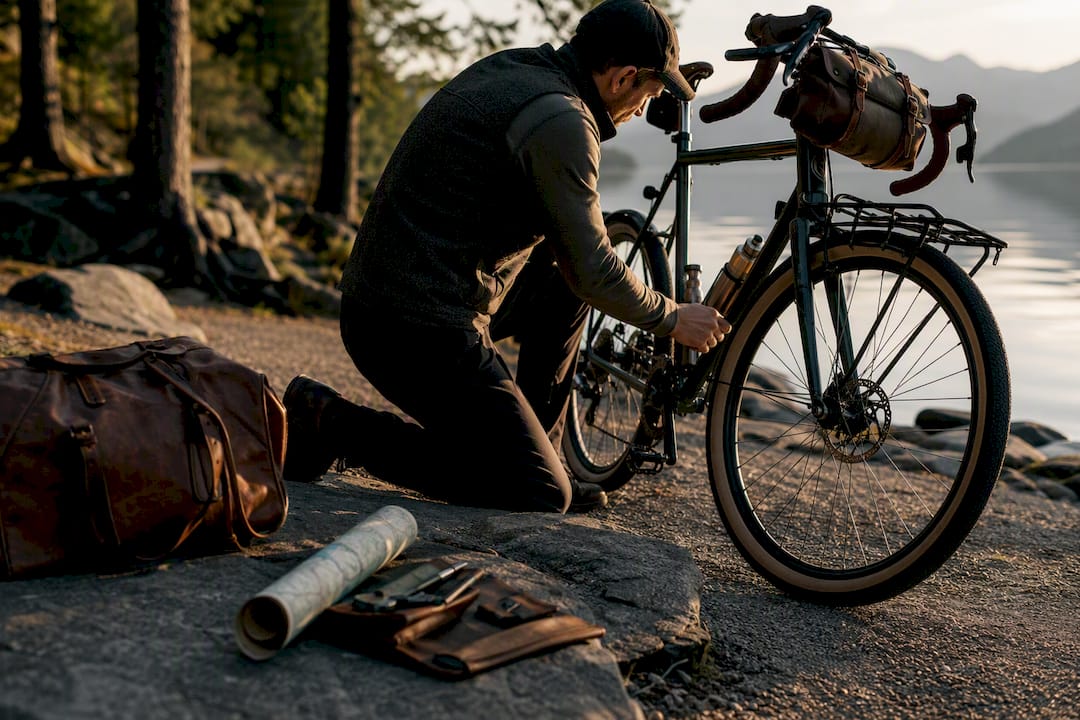
Bike adventures are multi-day cycling trips, guided, self-guided, or unsupported, built around a route, a destination, and a level of challenge you pick on purpose. Most first-timers do best starting with a guided tour before graduating to self-guided touring or bikepacking events. Three moves to make this week:
- Pick a style: guided, self-guided, or bikepacking/gravel event
- Check your fitness and available time against the trip’s daily mileage
- Consult a route resource like the Adventure Cycling Association or a bespoke planner like Hidden Door Travel
Adventure Cycling alone maintains a vast network of thousands of miles of mapped touring and bikepacking routes across North America, and the TransAmerica Trail remains one of its most requested. That’s a lot of pavement and gravel to choose from before you’ve even packed a pannier.
Key Takeaways
Choosing between guided, self-guided, and bikepacking styles, then matching your fitness and timeline to a specific route, determines whether a bike adventure feels triumphant or miserable.
| Point | Details |
|---|---|
| Match style to goals | Guided suits first-timers, self-guided suits independent riders, bikepacking suits endurance seekers. |
| Verify route data first | Check for sample itineraries, recent reviews, and downloadable GPX files before booking. |
| Budget for support level | Fully guided international tours cost far more than unsupported bikepacking events. |
| Book peak season early | Reserve popular routes six to nine months ahead; shoulder season needs only three to four. |
| Consider bespoke planning | Hidden Door Travel builds custom itineraries with private logistics for complex or milestone routes. |
Table of Contents
- Guided, Self-Guided, or Bikepacking: Which Bike Adventure Fits You?
- Where the World’s Best Bike Adventures Actually Happen
- What a Typical Day on a Bike Adventure Looks Like
- How Do You Choose the Right Bike Adventure?
- When to Book and What to Pack for a Bike Adventure
- Where to Research Routes and Trustworthy Operators
- When a Bespoke Bike Adventure Planner Is Worth It
- Plan a Custom Bike Adventure with Hidden Door Travel
- Sources
Guided, Self-Guided, or Bikepacking: Which Bike Adventure Fits You?
Guided tours put you in a support van’s shadow. A leader sets the pace, luggage moves ahead of you, and mechanics fix your derailleur while you eat lunch. You give up some independence for a lot of peace of mind.
Self-guided touring hands you the map and the hotel bookings but skips the daily babysitting. You ride your own pace, stop where you want, and still sleep in a real bed most nights.
Bikepacking and gravel events, think Tuscany Trail or NorthCape4000, strip it further. No support vehicle, minimal infrastructure, often a start line and a finish line and nothing in between but your own resourcefulness.
- Guided: best for scenery lovers and first-timers who want structure
- Self-guided: best for independent riders who want flexibility without total self-reliance
- Bikepacking/gravel: best for endurance riders chasing community and a real physical test
Where the World’s Best Bike Adventures Actually Happen
Route selection shapes everything else about the trip, so a few names are worth knowing before you commit to a style.
- TransAmerica Trail (USA): the original coast-to-coast touring route, still Adventure Cycling’s flagship after decades of mapping and support
- Great Divide Mountain Bike Route (USA/Canada): a legendary gravel spine down the Continental Divide, a bikepacking rite of passage
- Patagonia’s “End of the World” route: a remote 1,400 km ride best tackled mid-November through early April, with resupply tracked through community apps
- Tuscany Trail: an Italian gravel event through vineyards and hill towns, a favorite entry point into bikepacking culture
- NorthCape4000: a grueling ultra-distance ride from Italy to Norway’s North Cape
- Écrins massif, French Alps: supported eight-day mountain routes with daily stages of roughly 47 to 68 km and significant elevation gain
- Cappadocia, Turkey: staged singletrack tours pairing volcanic landscapes with cultural stops
Route pages, mapping organizations, and event calendars are your best bet for current GPX files and season dates.
What a Typical Day on a Bike Adventure Looks Like
Daily mileage swings wildly based on terrain, support level, and who you’re riding with. Guided road tours often run 40 to 60 miles a day on pavement, with a hotel and a hot meal waiting. Mountain routes like the Écrins loop compress that into shorter, brutal stages of 47 to 68 km carrying 1,450 to 2,500 meters of elevation gain per day.
Inclusions vary just as much:
- Fully guided tours: lodging, meals, luggage transfer, mechanic support, local guides
- Self-guided: pre-booked lodging and route notes, but you carry your own gear and fix your own flats
- Bikepacking/gravel events: usually just the route and a start time, camping gear and cooking kit optional but recommended
A sample guided day: breakfast at 7, ride 45 miles through farmland and forest, van meets you for lunch, arrive at a boutique inn by 4pm, dinner with the group.
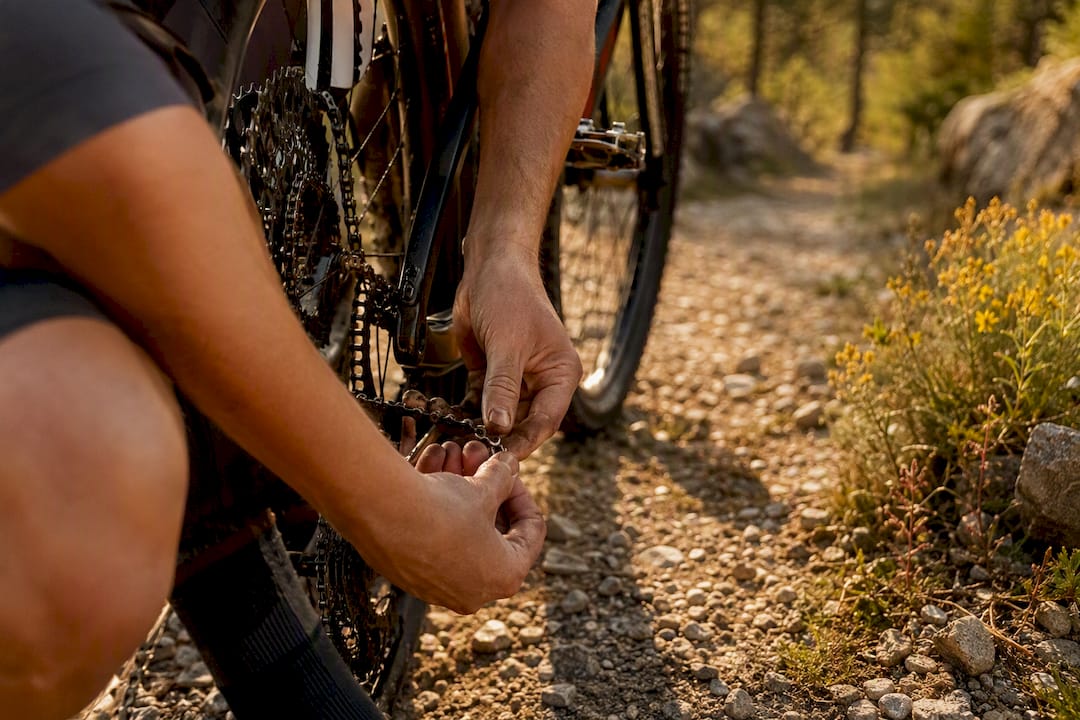
Pro Tip: Even on fully supported trips, carry a personal GPS and basic repair kit. Support vehicles can’t always reach you on remote singletrack or high-altitude switchbacks.
How Do You Choose the Right Bike Adventure?
Match the trip to your actual fitness and tolerance for logistics, not the trip you wish you were ready for.
- Rate your fitness honestly against the daily mileage and elevation the route demands
- Decide how much support you want: full van backup, partial, or none
- Set your trip length, a long weekend, a two-week tour, or a multi-week thru-ride
- Pick your terrain preference: paved roads, gravel, or technical singletrack
- Set a budget range before you start browsing operators
- Check the season against the route, since Patagonia and alpine routes have narrow weather windows
- Confirm your comfort with camping versus hotels each night
- Ask whether bikes are supplied or you’re bringing your own
- Review cancellation and weather-contingency policies
- Look for a sample itinerary and recent participant reviews before booking
Watch for red flags: vague route maps, no sample itinerary, zero reviews, or fuzzy insurance language. A legitimate operator publishes calendar dates, per-person pricing, and a downloadable route file without you asking twice.
When to Book and What to Pack for a Bike Adventure
Peak-season slots for popular routes fill six to nine months out; shoulder-season trips give you more flexibility with three to four months’ notice.
Budget ranges vary enormously by support level. A self-guided week might run a few hundred dollars in lodging plus gear, while a fully guided international tour with a support van, guides, and boutique lodging can run into the thousands per person. Terrain, group size, and inclusions drive most of that spread.
- Bike kit: helmet, padded shorts, layers for temperature swings
- Spares: tubes, patch kit, multi-tool, chain links
- Navigation: downloaded GPX files, personal GPS device, offline maps
- Camping vs. hotel gear: sleeping system only if the trip is unsupported
- Fitness prep: build weekly mileage for 8 to 12 weeks before a demanding tour
Where to Research Routes and Trustworthy Operators
The Adventure Cycling Association remains the deepest well of North American route data, distinguishing mapped touring routes from self-reliant bikepacking events. Established operators publish sample itineraries, dates, and pricing upfront, a baseline trust signal worth checking before you hand over a deposit.
- Adventure Cycling Association: route maps, membership, advocacy
- Event series pages (Tuscany Trail, NorthCape4000): registration, GPX downloads, past-year reports
- Community apps like iOverlander: real-time resupply and camping intel for remote rides
Download the GPX before you go, check recent rider reports, and join the event’s community forum if one exists.
When a Bespoke Bike Adventure Planner Is Worth It
Not every trip needs a planner, but complex, remote, or milestone trips usually benefit. A private logistics team handles bike shipping, pre-trip reconnaissance, and emergency medical planning while you focus on riding, not spreadsheets.
- Private van support and route reconnaissance in unfamiliar regions
- Exclusive access to lodges, local guides, or closed sections of trail
- Medical and evacuation planning for remote or high-altitude routes
- Coordination for multi-generational or large group trips
Riders combining cycling with cultural detours, wine regions, food tours, often add curated stops through partners like The Chef Tours to round out a week on the bike. Bespoke planning works on a service-fee model: you pay for the planning and access, and the deliverable is a fully built itinerary plus on-call support during the trip.
Why Guided and Bespoke Support Still Matter to Serious Cyclists
Years spent booking complex, multi-leg trips taught me that the riders who enjoy their adventure most are rarely the ones who did everything alone. Even strong self-sufficient cyclists often prefer guided or bespoke support once the stakes, or the scenery, get serious enough to protect.
Plan a Custom Bike Adventure with Hidden Door Travel
Booking a bike adventure through Hidden Door Travel means you skip the months of route research, permit questions, and lodging back-and-forth that self-guided planning usually demands. Instead of piecing together maps, van support, and boutique stays yourself, one team builds it all around your fitness level, timeline, and taste for remote versus refined.
Here’s what’s typically included:
- Custom itinerary design matched to your fitness, terrain preference, and season
- Hotel, van support, and guide bookings handled end to end
- On-trip concierge support for changes, weather, or emergencies
- Upgrades and exclusive access, private guides, closed routes, boutique lodging others can’t book direct
Service fees apply, standard for this level of planning, and cover the custom design work plus ongoing support. If a remote route or a milestone trip is on your list, start with a consultation for a custom bike adventure and let a planner handle the parts that eat your evenings.
Sources
- Adventure Cycling Association: Discover What Awaits
- A 1,400km bike ride through Patagonia along the ‘End of the World’ trail
- Écrins Mountain Bike Tour: 8-Day Loop in French Alps | 57hours