
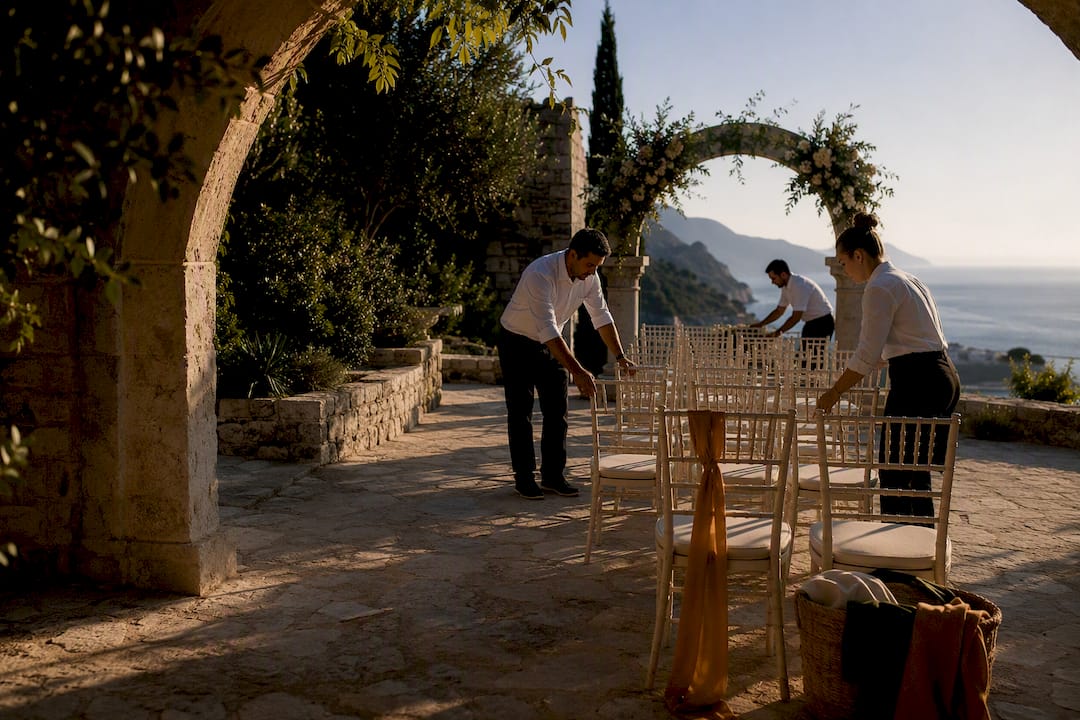
Twelve to eighteen months is the comfortable runway for a destination wedding; ten months still works if you’re willing to trade flexibility for speed. Either way, the sequence matters more than the calendar: lock your budget and guest list first, pick the destination second, and book the venue and planner together before anything else moves forward.
TL;DR:
- Securing venues and vendors at least 12 months out offers better options and terms, especially in popular locations like Tuscany or Riviera Maya.
- Hiring key vendors such as photographers and florists early ensures availability and avoids limited options six to nine months before the wedding.
- Confirming legal paperwork, final guest counts, and vendor payments three to six months prior prevents last-minute surprises and higher costs.
- Communicating clearly and confirming details two weeks before departure reduces errors, while packing early ensures wedding items are ready and accessible.
- Arriving at least three days before the wedding allows proper vendor walk-throughs, rehearsals, and adjustments for outdoor or weather-dependent ceremonies.
Table of Contents
- What is the ideal destination wedding timeline?
- 12 to 18 months out: foundation and major bookings
- 12 to 9 months out: hire tier-one vendors and refine logistics
- 9 to 6 months out: design, invitations, and guest experience planning
- 6 to 3 months out: confirmations, legal paperwork, and final logistics
- 3 to 1 months out: last-minute checks, packing, and communication
- 4 weeks to travel: the immediate pre-trip checklist
- Wedding week: arrival, rehearsal, and day-of contingencies
- Post-wedding: checkout, gratuities, and honeymoon handoff
- When a bespoke planner pays off
- Plan the wedding weekend without doing it alone
- Sources
What is the ideal destination wedding timeline?
Most planners point to the same range: 12 to 18 months from engagement to ceremony gives you first pick of venues, vendors, and travel dates. That window isn’t arbitrary. Popular venues in places like Tuscany, the Amalfi Coast, or Riviera Maya book out a year or more ahead, especially for shoulder-season weekends when airfare and hotel rates are lower.
Compressing to 10 months is doable, but it narrows your choices fast. You’ll likely need to prioritize venue and planner availability over a specific date, and lean harder on an all-inclusive resort that can absorb logistics in-house rather than piecing together independent vendors on a tight clock.
The timeline breaks into seven windows: 12 to 18 months, 12 to 9 months, 9 to 6 months, 6 to 3 months, 3 to 1 month, the final 4 weeks, and wedding week itself. Each window has a job. Skip one and the next window gets harder.
12 to 18 months out: foundation and major bookings
This is the window where decisions cost the least and flexibility is highest. Get the big structural choices locked before anything else moves.
Start with the budget conversation, including a contingency line of at least 10 percent for currency swings, vendor overages, and the inevitable last-minute add. Draft a rough guest list at the same time. Numbers drive venue capacity, room block size, and catering minimums, so guessing here creates rework later.
- Shortlist two or three destinations and, if possible, do a site visit or a virtual walkthrough with the venue’s team before committing.
- Book the venue and the wedding planner in the same week. A planner who already knows the venue’s quirks (noise curfews, vendor restrictions, load-in times) saves you months of back-and-forth.
- Open a hotel room block early and negotiate group rates using tips on how to book a weekend stay and get the best deal. Ask about attrition clauses, the deadline for releasing unsold rooms, and whether the rate holds for early or late arrivals.
- Send save-the-dates. Guidance generally lands between 8 and 12 months ahead, stretching to 14 for peak season. Include the destination, approximate dates, and a note that a formal invitation with details will follow.
Pro Tip: Put the room-block release date on your own calendar the day you sign the contract. Hotels rarely chase you for it, and losing the block means guests booking at rack rate.
Booking venue and hotel together at this stage isn’t just convenient. Group contracts negotiated 12 to 18 months out routinely carry better terms than anything you’d get scrambling six months before the wedding.
12 to 9 months out: hire tier-one vendors and refine logistics
Photographers, florists, and musicians for destination weddings tend to book a full year or more ahead, particularly for well-known wedding markets. Waiting until nine months usually means settling for whoever’s left.
- Hire your photographer and videographer first. Destination specialists often take only a handful of international bookings per season.
- Book florals and music or entertainment next, especially if you want a specific band or DJ collective that tours between wedding markets.
- Schedule a planning trip if you haven’t already. A well-run visit bundles venue sign-off, a menu tasting, and vendor meetings into a single two to five-day trip, which is far more efficient than three separate trips spread across the year.
This is also when your wedding website needs to go live. Populate it with airport transfer instructions, a rough itinerary, local climate notes, and an FAQ covering dress code and travel documents. Clear guest communication through the website measurably improves attendance and reduces the flood of individual questions you’d otherwise field one at a time.
If you’re marrying legally on-site, start the paperwork now. Requirements vary enormously by country, some demand residency periods, notarized translations, or blood tests, so begin the legal document checklist 4 to 6 months before travel at minimum, and earlier if the destination has a residency requirement. Many couples sidestep this entirely by marrying legally at home in a quick courthouse ceremony, then holding a symbolic ceremony abroad with none of the foreign paperwork.
9 to 6 months out: design, invitations, and guest experience planning
By now the bones are set. This window is about locking design details and getting formal information into guests’ hands.
Finalize the ceremony site within the venue, the reception format (seated dinner versus stations, indoor versus terrace), and the menu with your caterer or the resort’s culinary team. Any changes after this point usually carry fees.
Formal invitations go out several months before the wedding, allowing guests adequate time to arrange travel. Set a clear RSVP window on the invitation itself rather than leaving it open-ended.
- Plan the welcome party, any excursions, and ground transfers for the group; destination weekends run on a shared itinerary, not just one ceremony.
- Decide what goes into welcome bags, sunscreen, a local map, snacks, and a printed schedule are the basics most guests actually use.
- Ask directly about accessibility needs and dietary restrictions in the RSVP itself, rather than hoping guests volunteer the information.
- Confirm rehearsal dinner logistics, even if it’s informal, so the venue can block the space.
Guests traveling internationally appreciate specifics more than politeness. A packing list beats “dress is resort casual” every time.
6 to 3 months out: confirmations, legal paperwork, and final logistics
This window is where paperwork and numbers get final. Nothing here should still be “pending” by the three-month mark.
- Complete legal marriage requirements if marrying on-site, or confirm your symbolic-ceremony plan if you married legally at home. Foreign marriage paperwork varies by country and should be locked no later than four to six months out.
- Confirm every vendor contract and payment schedule in writing. Most destination vendors expect a deposit at booking, a second payment around this window, and the balance closer to the event.
- Close RSVPs. Room-block deadlines and RSVP cutoffs should line up, since most hotels release unsold group rooms 60 to 90 days out, and losing that inventory means scrambling for last-minute individual bookings at higher rates.
- Finalize seating charts and meal selections based on confirmed numbers.
- Lock airport transfer and shuttle schedules, and finalize the rooming list for the block.
Pro Tip: Set your RSVP deadline at least two weeks before the room-block release date, not on the same day. That buffer gives you time to chase stragglers before you lose the group rate.
3 to 1 months out: last-minute checks, packing, and communication
The final ninety days are about confirmation, not new decisions. If something isn’t booked by now, it’s probably too late to do it properly.
- Send final payments to every vendor and get written confirmation of arrival times and day-of timelines.
- Confirm flights and transfers for the wedding party and immediate family, since their schedules affect rehearsal timing.
- Start packing wedding-specific items early: the dress, suit, rings, and any decor you’re bringing rather than sourcing locally.
- Build a wedding-week emergency kit: stain remover, sewing kit, backup vows, chargers, and copies of every vendor contract.
- Carry the dress or suit on the plane. Checked luggage gets lost, and there’s no fixing that two days before a ceremony.
- Send a final email to all guests with arrival instructions, a day-by-day schedule, and a phone number they can actually call if something goes wrong.
Guests forget details from six months ago. This last message is the one they’ll actually reference.
4 weeks to travel: the immediate pre-trip checklist
The final month is short and specific.
- Reconfirm every vendor’s arrival time, remaining balance, and day-of contact in writing, not a phone call you’ll forget the details of.
- Assemble welcome bags or confirm delivery windows if the resort is handling them on-site.
- Check every passport for expiration and any destination-specific validity rules. The State Department’s passport guidance is the authoritative source, and some countries require six months of validity beyond your travel dates.
- Get certified translations or notarizations done now if your destination requires them; this is not a same-week task.
- Save digital backups of every document (passport, marriage license, contracts) to cloud storage and a phone.
- Book your own travel to arrive three to four days before the ceremony, which gives you a buffer for delayed flights and time for a proper vendor walk-through.
Wedding week: arrival, rehearsal, and day-of contingencies
A typical schedule runs: arrive three days out, do vendor walk-throughs and rehearsal the next day, rest and host a welcome event the day before, then ceremony and reception on the day itself.
Someone needs to own day-of logistics, ideally your planner or the venue’s on-site coordinator, not you or a family member juggling a phone all day. Give that person a printed, minute-by-minute timeline every vendor has already seen.
- Build a weather backup plan for outdoor ceremonies, even in places with reliably good forecasts.
- Have a contingency for delayed guest flights that doesn’t derail the ceremony start time.
- Confirm final vendor briefs two days out, not the morning of.
Pro Tip: Give your point person a physical printed timeline, not just a shared digital doc. Poor Wi-Fi at a beach venue has derailed more than one wedding morning.
Post-wedding: checkout, gratuities, and honeymoon handoff
Close out vendor accounts and collect final receipts before you leave, especially for reimbursements or travel insurance claims. Confirm every guest’s departure transfer is booked, not assumed. If you’re shipping gifts or decor home, check customs rules for your destination country first, some items face duties or restrictions. Keep every contract and receipt for at least a year in case a dispute arises.
When a bespoke planner pays off
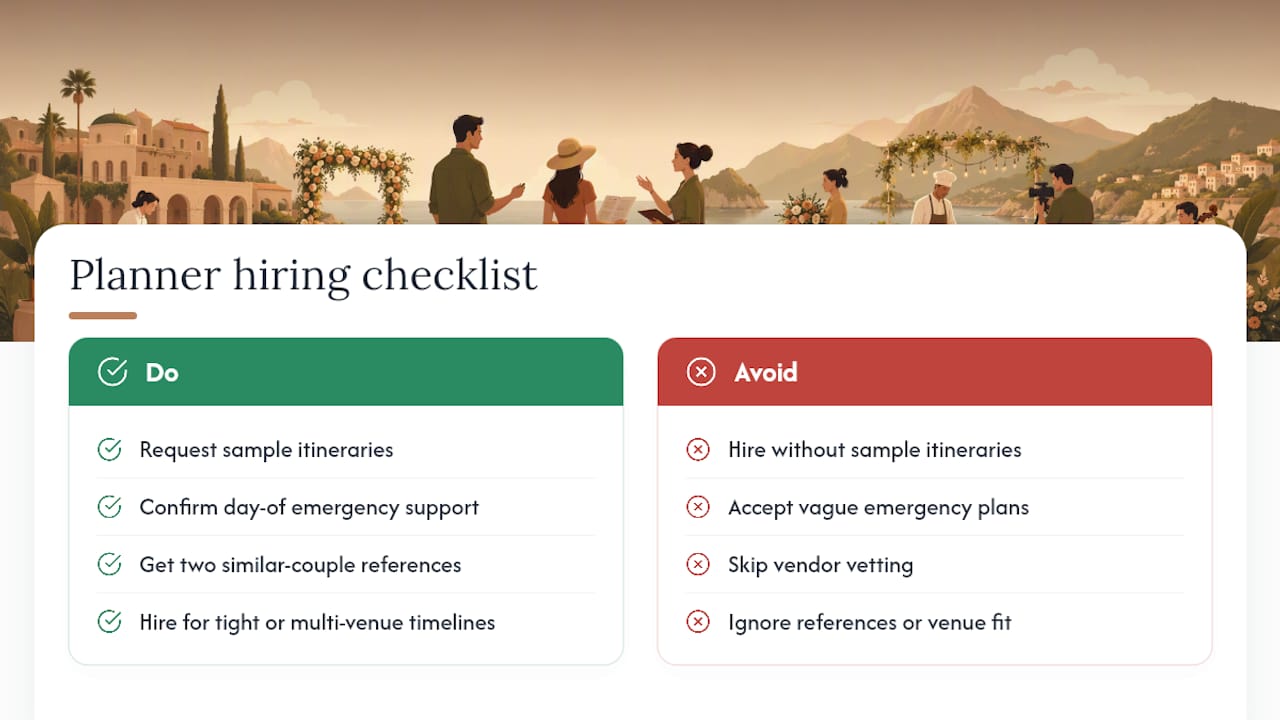
A planner earns their fee fastest on tight timelines, multi-venue weekends, or when VIP guests need white-glove handling that a single-venue coordinator can’t manage. Bespoke planning support shortens the riskiest parts of this timeline, vendor vetting, contract negotiation, contingency planning, into weeks instead of months.
Before hiring one, ask for sample itineraries from weddings of similar size, confirm what emergency support looks like on the actual wedding day, and get at least two references from couples who married at a comparable venue. A planner who can’t produce those isn’t ready for your timeline.
— Michael
Plan the wedding weekend without doing it alone
Hiddendoortravel is the alternative to piecing this timeline together yourself: instead of chasing venue contracts, room-block deadlines, and vendor confirmations across a dozen separate emails, one team handles the sequencing for you, from destination shortlist through wedding-week logistics. That matters most for couples juggling multi-day events, VIP guests with their own travel needs, or a shorter runway that leaves no room for scheduling mistakes.

The agency’s bespoke travel planning covers custom itineraries, hotel and room-block negotiation, on-the-ground vendor coordination, and travel protection, the same milestones this guide walks through, handled by people who’ve negotiated these contracts before. Couples with complex logistics or a tightly scheduled weekend benefit most from having a single point of contact rather than juggling vendors directly.
If your date is already inside the 12-month window, or you’re weighing a shoulder-season destination for better availability and rates, request a proposal through Hiddendoortravel’s luxury travel agency page and get a timeline built around your actual date.
Sources
- When to Send Save the Dates | Zola
- What to include for your destination wedding save the date | The Knot
- Destination wedding timeline (Aisle)