
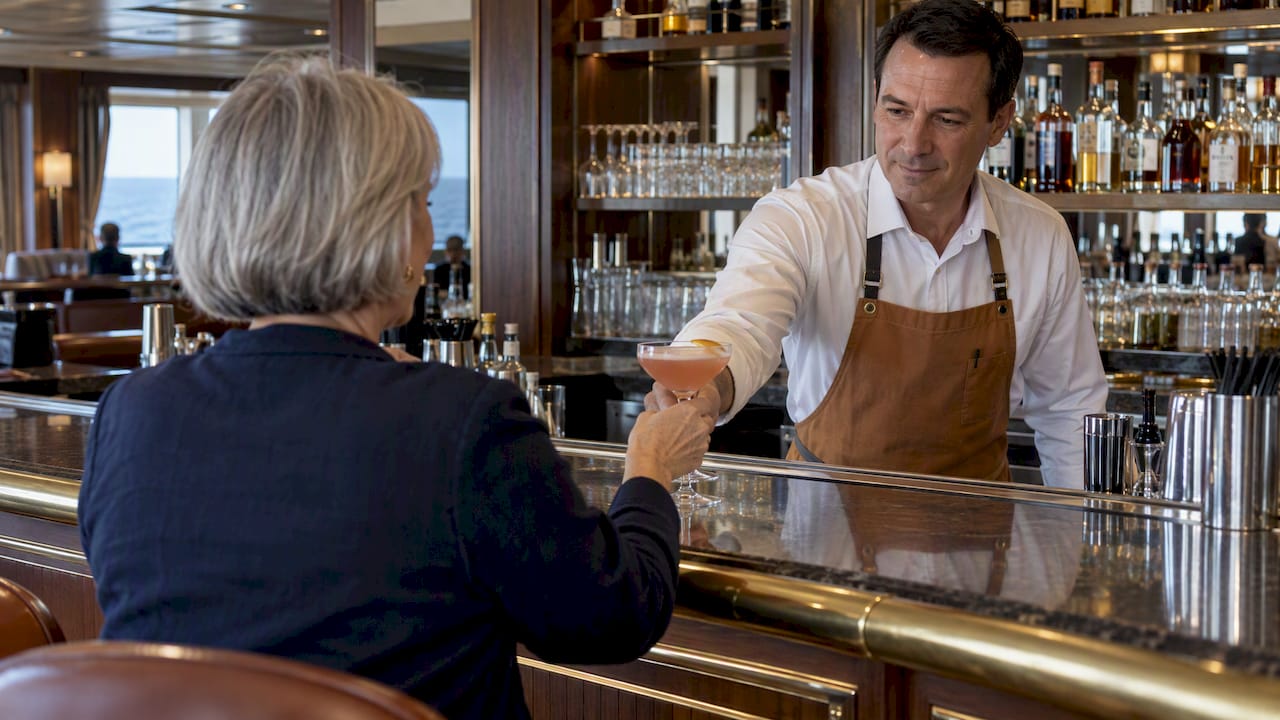
On luxury cruises, you’ll find two dominant approaches to beverages: an inclusive fare that folds alcoholic and nonalcoholic drinks into the base price, or a paid per-person package you add on top. Which one applies to your sailing depends on fine print around coverage, per-drink caps, and exclusions, not just the headline price. The right choice usually comes down to one question: how much do you actually plan to drink?
TL;DR:
- Inclusive fares can vary by sailing date, cabin category, and service hours; check specialty dining and minibar terms separately before booking.
- Many packages cap covered drinks at $14 to $20 each, so premium wines and spirits can still incur extra charges.
- On a seven night cruise, a $90 daily package costs $630; three $14 drinks daily total $294, while five $16 drinks total $560.
- Expedition sailings may limit coverage to onboard drinks, while port rules or passenger eligibility can change what each traveler receives.
- Buy packages before sailing when possible, compare beverage, dining, and internet bundles against separate prices, and confirm when advance rates expire.
Table of Contents
- What “drink packages” and “inclusive fares” mean on luxury cruises
- What luxury cruise drink packages typically include (and what they usually don’t)
- How much drink packages cost and how to calculate value
- How drink coverage varies by cruise type and itinerary
- How to choose the right approach for your trip (decision checklist)
- Practical money-saving tips and booking timing
- Agency perspective: how we advise luxury clients about drink coverage
- Hidden Door Travel: booking support for luxury cruise beverage choices
- FAQ
- Sources
What “drink packages” and “inclusive fares” mean on luxury cruises
The two models work on completely different billing logic. An inclusive fare means the cruise price you pay upfront already covers a defined list of beverages, no separate purchase required. A paid beverage package is an optional add-on, priced per person per day, that you buy before or during the sailing on top of your cabin fare.
Luxury and river lines lean toward inclusive fares more often than mainstream mass-market ships, which typically sell packages as a revenue add-on. Cruise Critic’s roundup of 17 cruise lines that fold alcohol into the fare shows this pattern clearly: many of the lines on that list are upscale river or ocean operators where the base fare already runs higher, and the drinks are baked into that cost rather than itemized separately.
Even with an inclusive fare, the coverage usually comes with boundaries. Reading the terms carefully before you book matters because policies tend to narrow in ways that are easy to miss:
- Inclusions often apply only at dinner or during set bar hours, not around the clock.
- Some itineraries or specific sailing dates are excluded from the inclusive policy even on lines that advertise it broadly.
- Higher cabin categories (suites, owner’s accommodations) sometimes unlock broader beverage access than standard staterooms on the same ship.
- Minibar contents are frequently billed separately from the bar menu, even when bar drinks are included.
- Premium or reserve selections are commonly excluded no matter which model you’re under.
Paid packages have their own fine print. Nearly every package carries a maximum price per drink, a cap, above which you pay the difference out of pocket. That detail rarely appears in marketing copy and usually surfaces only in the terms and conditions page or the fare contract. If you’re comparing a luxury line’s inclusive policy against a mainstream line’s package, pull the actual terms from the operator’s own site, not just a summary, since corporate materials from companies like Carnival Corporation typically host the official language that defines what counts as included.
What luxury cruise drink packages typically include (and what they usually don’t)
Both inclusive fares and paid packages tend to cover a similar core list of beverages, with the differences showing up at the premium end.
Commonly included:
- Standard cocktails made with well-tier spirits
- House wines by the glass, red and white
- Domestic and craft beers
- Sparkling wine or Champagne at designated times, such as embarkation toasts or formal nights
- Specialty coffee drinks, including espresso and cappuccino
- A broad range of nonalcoholic beverages, from sodas to mocktails and bottled water
Commonly excluded or capped:
- Reserve and library wines beyond the standard pour list
- Top-shelf and ultra-premium spirits
- Rare or vintage selections
- Certain named Champagne brands held out of the standard list
- High-end minibar bottles, which are often billed à la carte regardless of your package
The mechanism that separates “included” from “extra” is almost always a per-drink price cap. Many beverage packages set that cap in the $14 to $20 range per drink, meaning anything priced above that ceiling gets a supplemental charge even if you’re holding an all-inclusive package. A rare single malt or a bottle from a reserve list can sit above that cap, so the “free” drink isn’t entirely free. Knowing this cap before you sail helps you anticipate where your tab might grow, especially if you gravitate toward aged spirits or boutique wines rather than standard pours.
How much drink packages cost and how to calculate value
Paid beverage packages on mainstream and premium lines generally run in a wide per-person, per-day range, and luxury-line packages (where they exist at all, since many luxury lines build drinks into the fare instead) tend to sit at the higher end of that range given the quality of pours included.
The math that tells you whether a package pays off is simple:
- Multiply the package’s daily price by the number of nights in your cruise to get the total package cost.
- Estimate your realistic daily drink count and the average price per drink if you paid à la carte.
- Multiply that daily drink count by the average price, then by the number of nights, to get your expected à la carte total.
- Compare the two totals: if the package cost is lower than your projected à la carte spend, the package wins.
Say a seven-night sailing prices a package at $90 per day, for a total of $630. If you expect to drink three cocktails a day at $14 each, that’s $42 a day, or $294 for the week, well under the package price. But if you’re having five drinks a day between cocktails, wine, and specialty coffee at a blended average of $16, that’s $80 a day, or $560 for the week, which starts to close the gap and can tip in the package’s favor once you add a nightcap or a second glass of wine most evenings.
The per-drink cap complicates this math on the upside. Because caps commonly land between $14 and $20, any pour priced above that still generates a bill even with a package in hand, so your real savings depend on sticking mostly to standard selections.
Pro Tip: Run the math before you sail, not after: track a realistic daily drink count for your own habits rather than assuming you’ll match the package’s break-even point.
Packages tend to pay off most clearly for frequent cocktail drinkers, celebratory trips where champagne toasts and wine with every dinner are the norm, and larger groups consolidating a shared bar tab into predictable daily charges.

How drink coverage varies by cruise type and itinerary
The ship category you choose shapes your beverage coverage as much as the cruise line’s brand does. Luxury ocean lines and river cruise operators are the most likely to build a broad beverage list into the fare, often covering wine, beer, cocktails, and Champagne without a separate purchase, a pattern Cruise Critic’s list of 17 lines documents across several river and upscale ocean operators.
Expedition ships and smaller vessels handle it differently:
- Expedition itineraries sometimes limit inclusive beverage coverage to onboard consumption only, excluding shore excursions or off-ship dining.
- Small-ship operators may offer a narrower drink list than larger luxury ships simply due to storage and bar capacity.
- Inclusions can apply only to specific sailings or cabin categories on the same ship, so a suite guest might get broader access than someone in a standard cabin on an identical itinerary.
- Regional and port regulations occasionally restrict alcohol service in certain waters or during specific port calls, which can override a line’s standard inclusive policy for that leg of the trip.
These exceptions matter because marketing pages tend to describe the inclusive policy in general terms, while the itinerary-specific terms document often carries the caveats. A line’s website might say “beverages included,” but the actual sailing contract for a particular departure could carve out exceptions tied to the ports on that specific route. Checking the itinerary terms, not just the brand-level policy page, is the only reliable way to confirm what you’re actually getting.
How to choose the right approach for your trip (decision checklist)
Before booking an inclusive sailing or adding a paid package, run through this sequence:
- Estimate your realistic daily drink count based on how you actually drink on vacation, not an aspirational number.
- Check your cabin and dining plan since suite categories sometimes unlock broader inclusions than standard staterooms.
- Confirm the per-drink price cap in writing, since this determines whether premium pours will generate extra charges.
- Verify minibar rules separately, since minibar contents are frequently excluded from both inclusive fares and paid packages.
- Ask about specialty dining exclusions, since beverage inclusions at the main dining room don’t always extend to specialty restaurants.
- Confirm whether inclusions apply to every passenger in the cabin or only to the fare-paying adults, which matters for families and multi-generational bookings.
When you’re on the phone with an operator or a travel advisor, the sharpest questions to ask are specific: Does the inclusive policy apply to this exact sailing date, or only to select departures? What’s the per-drink cap, and which brands sit above it? Are minibar items billed separately, and at what markup? Does the policy extend to every guest in a multi-occupancy cabin, or just the primary two?
For group trips and celebrations, the calculation shifts again. A group celebrating a milestone anniversary or a joint family reunion often does better consolidating spend into a single group tab or confirming that everyone’s package or inclusive coverage matches, rather than letting some guests buy packages and others pay à la carte, which creates uneven bar bills and friction at settlement time.
Practical money-saving tips and booking timing
A few tactical moves make a real difference in what you pay for onboard beverages.
- Buy packages in advance whenever that option exists. Pre-cruise package pricing is almost always cheaper than buying once you’re onboard, sometimes by a meaningful margin, so locking in a rate before departure is one of the simplest ways to save.
- Look at bundles that pair drinks with dining or Wi-Fi. Some operators price a combined package below what the same three elements would cost purchased separately, so it’s worth comparing the bundle total against buying each piece à la carte.
- Lean on included nonalcoholic and specialty coffee options. These tend to be covered broadly even under basic packages, so using them liberally increases the value you extract from a package you’ve already paid for.
- Reserve premium supplements for genuinely special moments. Paying the cap difference for a reserve wine on an anniversary night makes more sense than doing it every evening.
If you’re planning to bring a special bottle along for a toast or a milestone dinner, our partners at Blame It On Bacchus walk through how to pack wine safely for checked flights, which is useful groundwork before a cruise departure. And if minibar policy is a sticking point for your trip, understanding what counts as a cabin amenity in rental and hospitality contexts can help frame the same in-room beverage questions you’ll want answered before sailing.
Pro Tip: Confirm your package purchase window closes before final payment, since many lines price pre-cruise packages lowest during an early booking period that ends well ahead of departure.
Agency perspective: how we advise luxury clients about drink coverage
When clients ask us whether to book an inclusive-fare sailing or add a beverage package, the answer depends on party size and drinking habits more than brand reputation. A couple celebrating an anniversary with a light drinking profile often does better choosing a line where premium wine and Champagne are already folded into the fare, rather than paying for a package built around a volume they won’t use. A group toasting a milestone may benefit from a package structure because it can standardize the bar tab across the table.
Our role is largely about clarifying what a line’s marketing glosses over: which sailings actually carry the inclusive policy, where the per-drink cap sits, and whether minibar or specialty dining charges will surprise anyone at checkout. For celebrations specifically, we help clients clarify their billing arrangements before the trip.
— Michael
Hidden Door Travel: booking support for luxury cruise beverage choices
Reading a cruise line’s beverage terms closely, across itinerary dates, cabin categories, and per-drink caps, takes time most travelers would rather spend planning the parts of the trip they’re excited about. We handle that review as part of our Customized All Inclusive Experiences, confirming exactly what’s covered on your specific sailing before you commit to a cabin category or a package.
Share your itinerary dates, cabin preference, and a sense of your group’s drinking habits, and we confirm coverage details directly with the operator rather than relying on the marketing page. For groups and celebrations, we help clients plan ahead to avoid billing surprises.
- We verify whether your specific sailing date carries the inclusive beverage policy a line advertises broadly.
- We confirm per-drink caps and minibar terms before you book, not after you’re onboard.
- We coordinate group billing for celebrations so everyone’s coverage matches.
Ready to lock in the right approach for your sailing? Reach out through our Vacation Planning and Tour & Cruise Packages page and we’ll confirm your beverage coverage before you pay a deposit.
FAQ
Which cruise line has the best drinking package?
There’s no single best package across the market since coverage, caps, and exclusions vary significantly by line and even by sailing date. The more useful question is which line’s terms, inclusive fare or paid package, match your own drinking habits and the specific itinerary you’re booking.
What’s the average cost of a drink package on a cruise ship?
Package pricing varies widely by line, ship, and included tier, and luxury-line packages tend to sit toward the higher end given the quality of pours covered. Rather than a single average, compare the daily package price against your expected drink spend using a simple per-day calculation before you commit.
Is the drink package really worth it on a cruise?
It depends entirely on your consumption. If you typically order several drinks a day, especially cocktails or wine by the glass, a package may break even or save money, but per-drink caps around $14 to $20 mean premium selections above that threshold still generate extra charges.
Which cruise lines offer all-inclusive alcohol packages?
Several river and luxury ocean operators build beverages directly into the fare rather than selling a separate package, and Cruise Critic’s list of 17 cruise lines that include alcohol in the price documents which operators take this approach. Coverage details still vary by specific sailing, so confirming the itinerary-level terms before booking matters more than relying on the brand’s general policy.
Sources
For background on how inclusive fares work more broadly, our guide to what an all-inclusive cruise covers breaks down the model beyond beverages, and our explainer on why luxury cruises differ from mainstream sailings covers the pricing logic behind inclusive fares. If you’re also weighing total trip cost, our piece on why cruise gratuities vary and our luxury cruise travel insurance guide round out the budget picture.