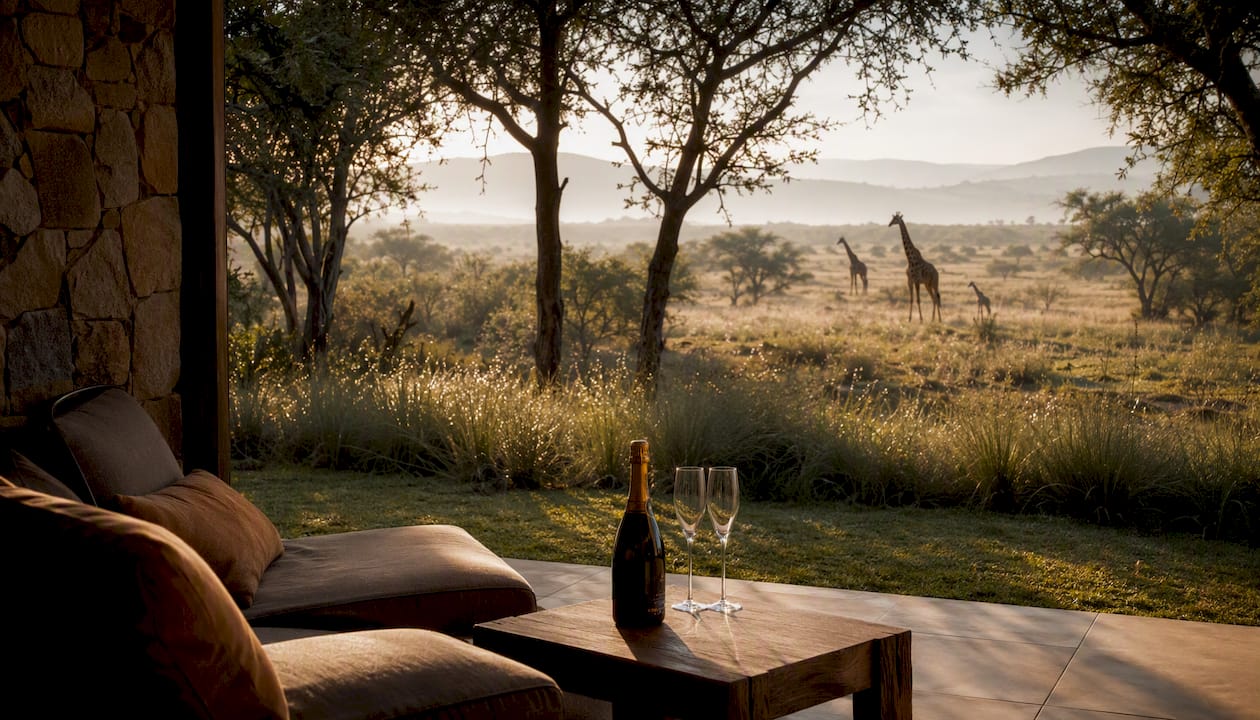
Africa is the right call for a honeymoon when you want something that feels genuinely extraordinary rather than just expensive. The strongest itineraries pair South Africa (Cape Town, Winelands, private safari) with an Indian Ocean beach extension in the Seychelles, Mauritius, or Mozambique’s Bazaruto Archipelago. For classic big-game drama, Tanzania’s Serengeti and Kenya’s Masai Mara are unmatched. Botswana’s Okavango Delta, Namibia, Victoria Falls, and Rwanda’s Volcanoes National Park each serve a specific kind of traveler. Plan for 10–14 days minimum for a combined safari and beach trip (for South Africa alone, 10 days is generally considered the minimum for Cape Town, Winelands, and a private reserve; single-region escapes often work well in 7–10 days.
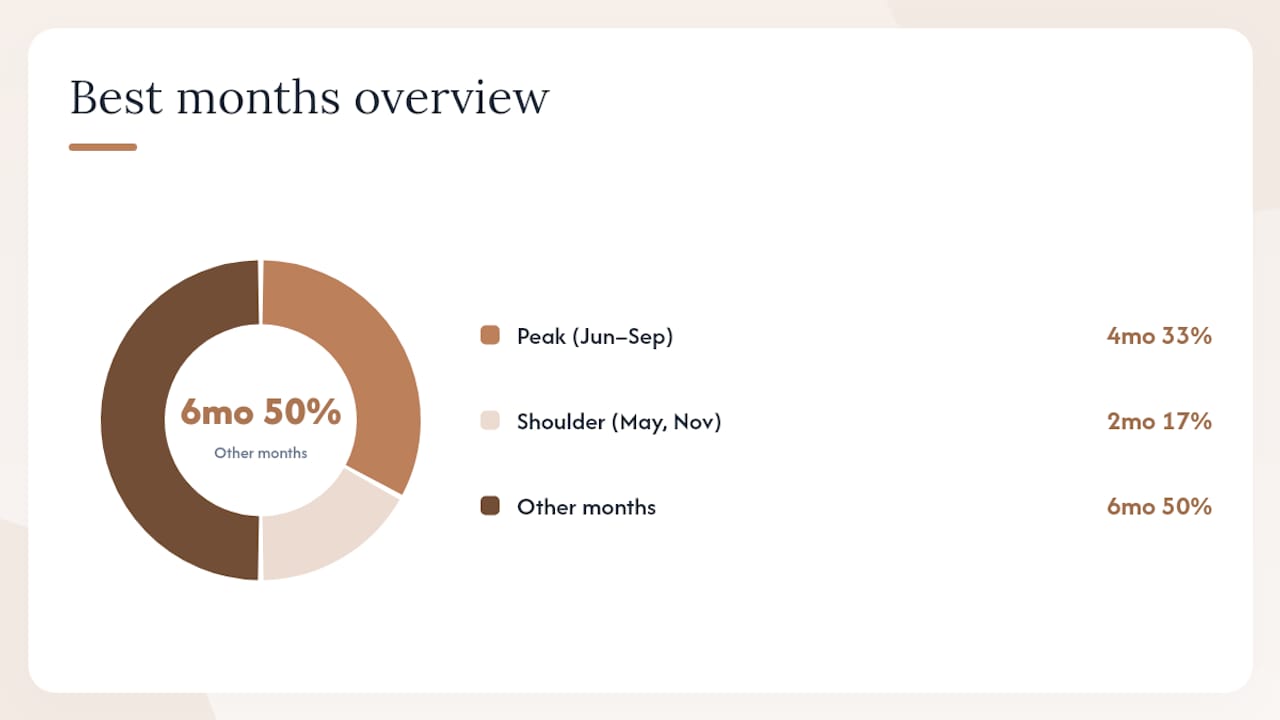
Timing shapes everything. East Africa’s peak wildlife season runs June through October. Southern Africa’s private reserves are best May through September. Indian Ocean islands are ideal April through November. Shoulder months (April–May and November) offer lower rates with minimal trade-offs.
Which region fits your honeymoon style:
- Romance and variety: South Africa (Cape Town, Winelands, private reserve)
- Classic big-game safari: Tanzania (Serengeti, Ngorongoro) or Kenya (Masai Mara)
- Secluded beach luxury: Seychelles, Mauritius, or Mozambique’s Bazaruto Archipelago
- Ultra-luxury wildlife immersion: Botswana’s Okavango Delta
- Dramatic scenery and solitude: Namibia (Sossusvlei, Etosha)
- Adventure and iconic water: Victoria Falls (Zambia/Zimbabwe)
- Rare wildlife encounter: Rwanda (Volcanoes National Park, gorilla trekking)
Key Takeaways
Africa’s best honeymoon destinations reward couples who plan early, choose the right region for their priorities, and build in enough time to move between experiences without exhaustion.
| Point | Details |
|---|---|
| Top region combinations | South Africa plus Seychelles or Mozambique covers safari and beach with the cleanest logistics via Johannesburg. |
| Ideal trip length | Plan 10–14 days for a combined safari and beach itinerary; South Africa alone (Cape Town, Winelands, private reserve) is possible in 10 days minimum; 7–10 days works for single-region beach or safari escapes. |
| Booking window | Reserve peak-season lodges and gorilla permits 12–18 months ahead; internal flights 9 months out. |
| Budget range | Luxury honeymoons typically run $15,000–$25,000 per person for 10–14 days, excluding international flights. |
| Hiddendoortravel | Hiddendoortravel designs complete bespoke African honeymoons, handling lodges, transfers, permits, and honeymoon perks in a single agency relationship. |
Table of Contents
- What are the best honeymoon destinations in Africa?
- When is the best time for a honeymoon in Africa?
- Four luxury honeymoon itineraries you can commission or copy
- How much does a luxury honeymoon in Africa cost?
- What US couples need to know about flights, visas, and health prep
- When should you book, and what should you ask for?
- What to pack for a safari and beach honeymoon
- Safety and responsible travel for honeymooners
- Why bespoke planning changes the quality of an African honeymoon
- Hiddendoortravel builds your African honeymoon from scratch
- Sources
What are the best honeymoon destinations in Africa?
Every destination below earns its place for a different reason. The skill is matching the region’s character to what you actually want from your first trip as a married couple.
South Africa
South Africa is the most versatile honeymoon destination on the continent. You can move from Cape Town’s Atlantic coastline through the Franschhoek and Stellenbosch Winelands into a private Big Five reserve, all without a single international flight. The romantic South Africa couples itinerary typically requires at least 10 days for Cape Town, Winelands, and a private reserve to avoid feeling rushed, and most luxury honeymooners stretch it to 12–14.
Best for: Couples who want variety: city culture, fine dining, wine country, and wildlife in one trip.
Seasonality: Year-round destination. May through September is ideal for safari (dry season, animals concentrate near water). October through April suits Cape Town’s beaches and the Garden Route.
For the safari component, private reserves adjacent to Kruger offer different trade-offs. Sabi Sands delivers ultra-luxury Big Five viewing with exclusive traversing rights. The Eastern Cape is malaria-free, which matters for couples who prefer to skip prophylaxis, and it pairs naturally with the Garden Route. Madikwe is another malaria-free option worth considering for shorter trips.
Accommodation: Private lodge suites with plunge pools, butler service, and outdoor showers are standard at the top tier. Reserves commonly limit the number of vehicles to offer an exclusive experience.
Tanzania: Serengeti and Ngorongoro
Tanzania is where the classic African safari honeymoon lives. The Serengeti’s Great Migration, when large numbers of wildebeest move across the plains, is a spectacular wildlife event. Ngorongoro Crater adds a self-contained ecosystem where lions, elephants, and black rhino share a single volcanic bowl. Pair the northern circuit with a beach extension in Zanzibar and you have a near-perfect 10–14 day itinerary.
Best for: Couples who want the definitive big-game safari experience.
Seasonality: June through October for peak wildlife and the river crossings. January and February for calving season in the southern Serengeti (fewer crowds, excellent predator activity).
Accommodation: Permanent tented camps with four-poster beds and private decks overlooking the plains. Some camps move seasonally to follow the migration.
Kenya: Masai Mara
The Masai Mara neighbors the Serengeti, with the wildebeest migration occurring seasonally between mid-year and late-year months. The Mara’s open savanna makes for exceptional game viewing year-round, and the Maasai cultural experience adds a layer that pure wildlife destinations can’t replicate.
Best for: Couples who want the migration spectacle with strong cultural context.
Seasonality: July through October for the migration. January through March for dry-season wildlife concentration.
Accommodation: Private conservancies bordering the Mara (Mara North, Ol Kinyei, Naboisho) offer exclusivity that the main reserve can’t match. Fewer vehicles, private game drives, and walking safaris are standard.
Seychelles
The Seychelles delivers the kind of beach honeymoon that photographs look staged. Granite boulders, turquoise water, and near-empty beaches on the inner islands (Mahé, Praslin, La Digue) or the outer atolls (Alphonse, Desroches) are the draw. The outer islands are genuinely remote and offer world-class fly-fishing and diving alongside barefoot luxury.
Best for: Couples who want a pure beach and ocean experience with serious luxury credentials.
Seasonality: April through May and October through November are the calmest months. The northwest trade winds (May through September) suit Mahé and Praslin; the southeast trades (October through April) favor the outer islands.
Accommodation: Private villa resorts with direct beach access and over-water or hillside suites. Several properties offer private island buyouts for honeymoons.
Mauritius
Mauritius is more developed than the Seychelles but offers a wider range of experiences: lagoon beaches, volcanic mountains, rum distilleries, and some of the Indian Ocean’s best resort infrastructure. It’s also easier to reach from Johannesburg, which makes it a natural add-on to a South Africa circuit.
Best for: Couples who want beach luxury with more dining and activity variety.
Seasonality: May through November (austral winter) is the dry season and the most comfortable period. December through April brings heat and the risk of tropical cyclones.
Accommodation: Large luxury resort properties with private beach access, spa facilities, and overwater bungalows on the west and north coasts.
Mozambique: Bazaruto Archipelago
The Bazaruto Archipelago off the southern Mozambique coast offers a secluded luxury beach destination. The marine park protects dugongs, manta rays, and whale sharks. Sand dunes meet turquoise channels, and the handful of lodges on Benguerra and Bazaruto islands keep guest numbers deliberately low.
Best for: Couples who want seclusion and a sense of genuine discovery over a polished resort experience.
Seasonality: April through November. Avoid December through March (cyclone season and heavy rains).
Accommodation: Small, exclusive island lodges with 10–20 rooms maximum. Combining Bazaruto with a South Africa safari is logistically clean via Johannesburg.
The safari-plus-beach combination is the most requested luxury honeymoon pattern for a reason. Combining private safari time with an Indian Ocean beach extension, whether in Mozambique or the Seychelles, gives couples two completely different emotional registers in one trip. The adrenaline of a lion sighting at dawn and the stillness of a private beach at sunset are experiences that reinforce each other rather than compete. Boutique agencies that specialize in this pairing can often secure meaningful honeymoon perks and better-value experiences through their supplier relationships.
Botswana: Okavango Delta
Botswana is the benchmark for ultra-luxury safari. The Okavango Delta floods annually, creating a seasonal inland sea that attracts extraordinary concentrations of wildlife. Camps here are small (6–8 tents maximum), and the exclusivity is built into the model. Mokoro canoe excursions through papyrus channels and walking safaris alongside game trackers are experiences that larger-volume destinations can’t replicate.
Best for: Couples for whom wildlife immersion and absolute privacy are the top priorities.
Seasonality: June through October for peak wildlife. The delta floods from around April through June, which creates the mokoro experience.
Accommodation: Private concession camps with canvas suites, open-air bathrooms, and star beds for sleeping under the sky. Expect to pay a premium for the exclusivity.
Namibia: Sossusvlei and Etosha
Namibia is Africa’s most visually dramatic destination. The red dunes of Sossusvlei at sunrise, the salt pans of Deadvlei, and the wildlife-rich waterholes of Etosha National Park create a landscape that feels like no other place on earth. It’s not a conventional honeymoon choice, which is exactly why adventurous couples love it.
Best for: Couples who prioritize scenery, photography, and a sense of solitude over pure wildlife density.
Seasonality: May through October (dry season) for Etosha wildlife. Sossusvlei is year-round, though June through August offers the coolest temperatures.
Accommodation: Desert lodges with infinity pools overlooking dune seas. Some properties offer private dune access and sunrise hot-air balloon rides.
Victoria Falls: Zambia and Zimbabwe
Victoria Falls is one of the world’s great natural spectacles, and the spray is visible from miles away. The Zambia side (Livingstone) and the Zimbabwe side (Victoria Falls town) each offer different vantage points and activity menus: white-water rafting, helicopter flights, sunset river cruises, and the famous Devil’s Pool at the lip of the falls.
Best for: Adventure-oriented couples who want a dramatic natural landmark as a centerpiece.
Seasonality: February through May for maximum water volume. July through September for lower water levels but better visibility and the best white-water rafting.
Accommodation: Luxury lodges on the Zambezi River with private plunge pools and direct river access. The best properties are a short transfer from the falls.
Rwanda: Volcanoes National Park
Gorilla trekking in Rwanda’s Volcanoes National Park is a bucket-list experience that very few couples have done. Permits are limited, the trek through montane forest is physically demanding, and the hour you spend with a mountain gorilla family is genuinely unlike anything else. Kigali is a clean, safe, and surprisingly sophisticated city for a pre-trek night.
Best for: Couples who want a rare, once-in-a-lifetime wildlife encounter as the emotional centerpiece of their trip.
Seasonality: June through September and December through February (dry seasons) for the most comfortable trekking conditions. Permits are available year-round but book out months in advance.
Accommodation: Luxury lodges on the volcano slopes with fireplaces, forest views, and spa facilities. Several properties have conservation partnerships with the Dian Fossey Gorilla Fund.
Pro Tip: Combine South Africa with Mozambique’s Bazaruto Archipelago or with the Seychelles for the cleanest logistics. Both connections route through Johannesburg, minimizing transfer complexity while giving you two completely different environments.
When is the best time for a honeymoon in Africa?
Timing your trip correctly is the single most impactful planning decision you’ll make. The continent spans multiple climate zones, so “best time” depends entirely on which experiences you’re prioritizing.
| Month | Southern Africa Safari | East Africa Safari | Indian Ocean Beaches | Victoria Falls | Gorilla Trekking |
|---|---|---|---|---|---|
| January | Good (green season) | Excellent (calving) | Good (outer islands) | High water | Good (dry) |
| February | Good | Excellent (calving) | Good | Peak water | Good |
| March | Good | Good | Fair (SE trades start) | Peak water | Fair (wet) |
| April | Fair (rains) | Fair | Excellent | High water | Fair |
| May | Excellent | Good | Excellent | Good | Good |
| June | Excellent | Excellent | Excellent | Good | Excellent |
| July | Excellent | Excellent | Excellent | Lower water | Excellent |
| August | Excellent | Excellent | Excellent | Lower water | Excellent |
| September | Excellent | Excellent | Excellent | Low water | Excellent |
| October | Good | Good | Good | Low water | Good |
| November | Good (shoulder) | Good (shoulder) | Good | Rising water | Good |
| December | Fair (rains) | Good | Fair (cyclone risk) | Rising water | Good (dry) |
Key takeaways from the table:
June through September is the sweet spot for combining East Africa safari, Southern Africa safari, and Indian Ocean beaches in a single trip. It’s also peak season, so lodge availability tightens and rates are at their highest.
Shoulder-season value: May and November offer nearly equivalent wildlife and beach conditions at meaningfully lower rates. May is particularly strong for the Okavango Delta (the flood has arrived, the dry season is beginning) and for Indian Ocean beaches.
Whale watching in Hermanus: Southern right whales visit South Africa’s Walker Bay from June through November, with September as the peak month. Hermanus, a two-hour drive from Cape Town, is the world’s best land-based whale-watching destination.
Gorilla permits: Rwanda’s permits are available year-round, but the June through September dry season makes the forest trek considerably less muddy and more comfortable. Book permits at least 6–9 months ahead for peak months.
Green season note: January and February in the Serengeti bring the wildebeest calving season to the southern plains, with exceptional predator activity and far fewer visitors than the July–October migration peak. Rates drop noticeably, and the landscape is lush.
Four luxury honeymoon itineraries you can commission or copy
These four itineraries represent the most requested honeymoon patterns for Africa. Each is designed to minimize unnecessary travel days while maximizing the contrast between experiences. For multi-destination luxury trip sequencing, the order of stops matters as much as the stops themselves.
Itinerary 1: A South Africa complete circuit often takes around 12–14 days
Best for: Couples who want maximum variety in a single country, with an optional beach extension.
- Days 1–2: Arrive Johannesburg or Cape Town. Build in a full recovery day before any activities. Travel from major US hubs often involves two full travel days, so a buffer night is not optional — it’s the difference between arriving exhausted and arriving ready.
- Days 3–5: Cape Town. Table Mountain, Cape Peninsula drive, V&A Waterfront dinner, and a private sunset sail on Table Bay.
- Days 6–7: Franschhoek or Stellenbosch Winelands. Private cellar tastings, a farm-to-table lunch, and a hot-air balloon over the vineyards at dawn.
- Days 8–11: Private safari reserve (Sabi Sands for ultra-luxury Big Five; Eastern Cape for malaria-free). Two game drives daily, private bush dinner, and a guided walking safari.
- Days 12–14: Optional extension to a beach destination such as Mozambique’s Bazaruto Archipelago or the Seychelles for a 3–4 night beach close.
Internal flights: Travel from Cape Town to the safari region generally takes about 1 hour by air, then onward connections to Mozambique or the Seychelles typically route via Johannesburg.
Romantic add-ons to request: Private candlelit dinner in the bush, sundowner cocktails at a private viewpoint, couples’ spa treatment at the lodge.
Pro Tip: Ask your lodge at booking whether they offer a “honeymoon setup” — most private reserves will arrange rose petals, a bottle of sparkling wine, and a private stargazing session at no extra charge if you mention the occasion at reservation.
Itinerary 2: Tanzania north circuit and Zanzibar (10–12 days)
Best for: Couples who want the definitive East Africa safari with a beach close.
- Days 1–2: Fly into Kilimanjaro International Airport (KIA) or Julius Nyerere International (DAR). Overnight in Arusha.
- Days 3–5: Serengeti National Park. Two to three nights at a permanent tented camp or mobile camp (if following the migration). Private game drives at dawn and dusk.
- Days 6–7: Ngorongoro Crater. Descend into the crater for a full-day game drive. Stay on the crater rim for sunset views.
- Days 8–10: Zanzibar. Stone Town for one night (UNESCO World Heritage spice-trade architecture), then two nights at a private beach villa on the north or northeast coast.
- Days 11–12: Fly home via Dar es Salaam or Nairobi.
Internal flights: Arusha to Serengeti (bush airstrip, 45 minutes), Serengeti to Zanzibar via Dar es Salaam.
Romantic add-ons to request: Sunset dhow cruise in Zanzibar, private spice farm tour, in-room dinner on your villa terrace.
Pro Tip: Book a camp that offers private vehicle hire rather than shared game drives. The cost difference is real, but so is the experience: you set the pace, linger at a leopard sighting, and don’t share the moment with strangers.
Itinerary 3: Botswana, Trips including Victoria Falls and Seychelles typically require about 12–15 days.
Best for: Couples who want ultra-luxury wildlife immersion, a dramatic natural landmark, and a pristine beach close.
- Days 1–3: Fly into Maun, Botswana. Transfer by light aircraft to an Okavango Delta concession camp. Mokoro excursions, walking safaris, and night drives.
- Days 4–6: Second Delta camp or Chobe National Park for elephant concentrations (largest in Africa).
- Days 7–9: Victoria Falls (Livingstone, Zambia side). Helicopter flight over the falls, sunset cruise on the Zambezi, and Devil’s Pool if water levels permit (August through January).
- Days 10–13: Fly to Mahé, Seychelles. Two nights on Mahé or Praslin, then transfer to a private outer island (Alphonse or Desroches) for total seclusion.
- Days 14–15: Return via Mahé.
Internal flights: Multiple light-aircraft transfers within Botswana; Livingstone to Johannesburg to Mahé.
Romantic add-ons to request: Private picnic on a sandbar in the Okavango, couples’ massage at the Victoria Falls lodge, private snorkeling guide in the Seychelles.
Pro Tip: The Botswana-to-Victoria Falls routing works best westbound: Maun to Chobe to Livingstone. Reversing it means backtracking through Johannesburg and adds a full travel day.
Itinerary 4: Seychelles or Mauritius beach focus (7–10 days)
Best for: Couples who want pure relaxation, ocean activities, and luxury resort amenities without a safari component.
- Days 1–2: Fly into Mahé (Seychelles) or Sir Seewoosagur Ramgoolam International (Mauritius). Settle into your villa or resort suite.
- Days 3–5: Beach days with guided snorkeling, private boat charter to a neighboring island, and sunset cocktails on the water.
- Days 6–7: Day trip options: helicopter to a private outer island (Seychelles), catamaran to Île aux Cerfs (Mauritius), or a guided dive on a reef system.
- Days 8–10: Final beach days, spa treatments, and a private farewell dinner on the beach.
Internal flights: Inter-island transfers in the Seychelles are by light aircraft or helicopter (15–30 minutes). Mauritius is a single island, so no internal flights are needed.
Romantic add-ons to request: Private beach dinner with a personal chef, couples’ spa day, private boat charter with a packed picnic.
Pro Tip: If you’re considering the Seychelles, ask about a Borneo-style barefoot-luxury comparison before committing. Remote island honeymoons in other parts of the world can offer a similar vibe at different price points, which helps you confirm the Seychelles is the right fit for your priorities.
How much does a luxury honeymoon in Africa cost?
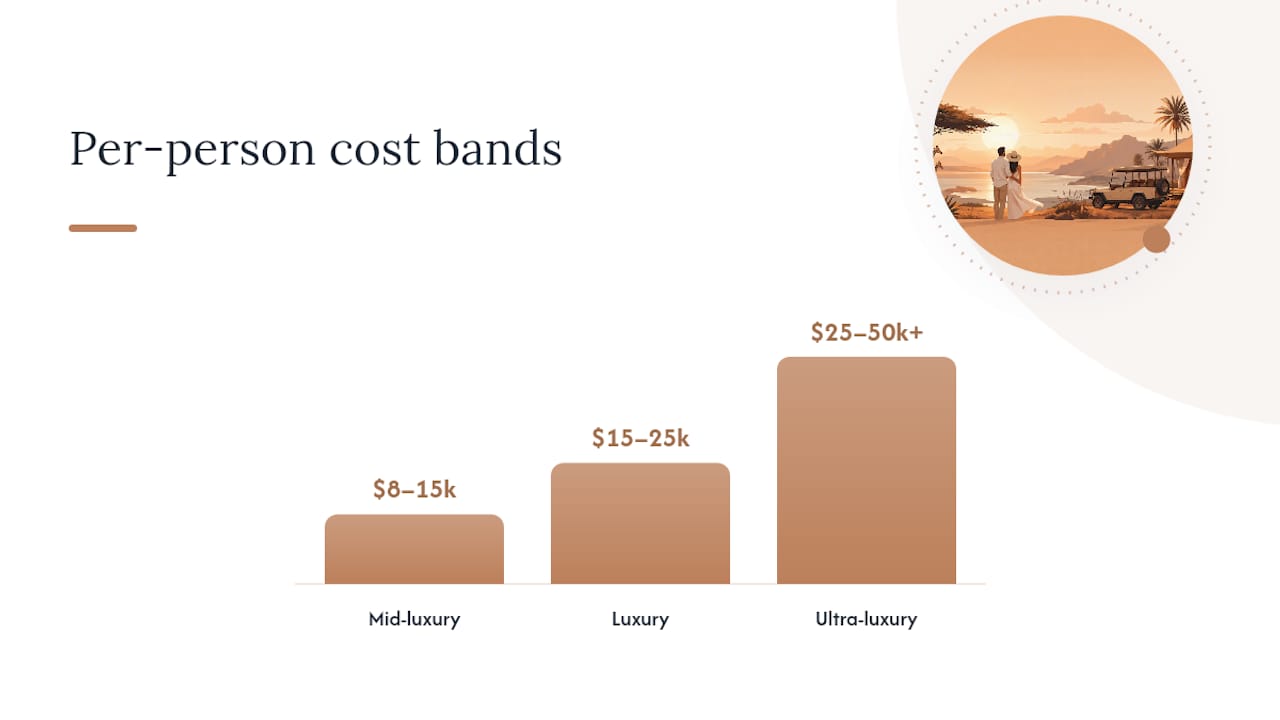
Africa honeymoon costs vary more than almost any other destination category, because the gap between a good lodge and a great one is enormous, and private experiences add up quickly. These are realistic per-person ballpark ranges for US couples, excluding international flights.
Three-tier price framework (per person, 10–14 days):
- Mid-luxury ($8,000–$15,000 per person): Comfortable 4-star safari lodges, shared game drives, standard beach resort rooms, and a mix of group and private transfers. Solid experience, but limited exclusivity.
- Luxury ($15,000–$25,000 per person): Private safari reserves with 5-star lodges, private vehicle hire, boutique beach villas, and a curated set of private experiences. This is the sweet spot for most honeymooners who want genuine quality without the ultra-premium price.
- Ultra-luxury ($25,000–$50,000+ per person): Botswana concession camps, private island buyouts, helicopter transfers, fully private itineraries, and bespoke experiences throughout. Top-tier Botswana camps represent a premium price category among safari accommodations.
Primary cost drivers:
- Accommodation tier: The single biggest variable. A private concession camp in Botswana costs three to four times more per night than a comparable-quality lodge in South Africa’s Eastern Cape.
- Private vs. shared game drives: Private vehicle hire typically adds $150–$400 per day per vehicle but transforms the experience.
- Number of internal flights: Light-aircraft transfers in Botswana and Tanzania run $300–$800 per person per leg. Minimizing unnecessary hops saves real money.
- Season: Peak season (June–October) commands a 20–40% premium over shoulder season at most lodges.
- Private experiences: Bush dinners, helicopter flights, private boat charters, and gorilla permits (currently $1,500 per person in Rwanda) all add to the total.
Statistic callout: According to The Los Angeles Times, luxury safari honeymoons require careful advance planning for lodge availability, private experiences, and medical and logistical preparation, with reputable outlets advising couples to reserve peak-season lodges well ahead of travel dates.
Practical savings for luxury couples: Book shoulder season (May or November) and you’ll find equivalent lodge quality at meaningfully lower rates with thinner crowds. Consolidating internal transfers (fewer camps, longer stays) reduces both cost and travel fatigue. Honeymoon packages negotiated through an agency often include room upgrades, private dinners, and spa credits that would cost significantly more if booked separately.
What US couples need to know about flights, visas, and health prep
Getting to Africa from the US takes commitment. Plan your logistics accordingly and you’ll arrive ready to enjoy the trip rather than recover from it.
Flights from the US
- To Johannesburg (O.R. Tambo): 15–17 hours nonstop from New York (JFK) on South African Airways or Delta; connections via London, Amsterdam, or Doha from other US cities. Total door-to-door travel time from most US cities is generally around 20–26 hours.
- To Nairobi (JKIA): No current nonstop from the US; connections via Amsterdam (KLM), London (British Airways), or Doha (Qatar Airways). Expect 18–22 hours total.
- To Mahé, Seychelles: Connections via Dubai (Emirates), Doha (Qatar Airways), or Nairobi. Typically 24–28 hours from the US East Coast.
- To Zanzibar or Kilimanjaro: Connect via Nairobi, Addis Ababa (Ethiopian Airlines), or Doha.
Two full travel days are realistic for most US-to-Africa routes. Build a buffer arrival night into every itinerary before your first safari game drive or island activity.
Visa and passport checklist
- South Africa: US citizens receive a free 90-day visa on arrival. Passport must be valid for at least 30 days beyond your departure date and have at least two blank pages.
- Tanzania: US citizens require a visa. The East Africa Tourist Visa ($100) covers Tanzania, Kenya, and Uganda and is available online or on arrival.
- Kenya: Covered by the East Africa Tourist Visa above, or a single-entry e-Visa.
- Seychelles: Visa-free for US citizens. A visitor’s permit is issued on arrival.
- Mauritius: Visa-free for US citizens for stays up to 90 days.
- Mozambique: US citizens require a visa. Available on arrival at major entry points or in advance.
- Botswana: Visa-free for US citizens for stays up to 90 days.
- Rwanda: US citizens can obtain a visa on arrival or via the Rwanda e-Visa portal.
- Zambia/Zimbabwe (Victoria Falls): The KAZA Univisa ($50) covers both countries and is available on arrival at major entry points.
Always confirm current entry requirements with the US State Department before travel, as requirements change.
Health checklist
- Routine vaccines: Confirm you’re current on hepatitis A, typhoid, and routine vaccines (MMR, Tdap, flu). Yellow fever vaccination is required for entry into some countries if you’re arriving from a yellow fever endemic country.
- Malaria: Most safari regions carry malaria risk. The Eastern Cape and Madikwe in South Africa are malaria-free, which is worth noting for couples who prefer to avoid prophylaxis. For malaria-risk regions, consult a travel medicine physician at least 6–8 weeks before departure. Common prophylaxis options include atovaquone-proguanil (Malarone), doxycycline, and mefloquine.
- Travel health consultation: Book with a CDC-designated travel medicine clinic or your physician at least 8 weeks before departure.
Pro Tip: For the Eastern Cape malaria-free safari option, you can combine excellent Big Five game viewing with the Garden Route coastal drive without any malaria prophylaxis. For couples who are sensitive to medication side effects or traveling during pregnancy, this is worth building the itinerary around.
Travel insurance
Medical evacuation from a remote Botswana concession camp or a Tanzanian bush airstrip is a serious logistical and financial undertaking. Standard travel insurance is not enough. You need a policy with medical evacuation coverage of at least $500,000 and ideally a relationship with a provider like MEDEX or Global Rescue that operates in sub-Saharan Africa. Confirm that your policy covers safari activities, helicopter transfers, and remote-location evacuation before you purchase.
When should you book, and what should you ask for?
Luxury safari lodges in peak destinations fill up 12–18 months ahead for June through October travel. Rwanda gorilla permits sell out even faster. The booking timeline below reflects what a travel designer would actually recommend.
Recommended booking timeline:
- 18 months out: Lock your international flights and reserve gorilla permits (Rwanda) and peak-season Botswana concession camps.
- 12 months out: Book private safari lodges in South Africa (Sabi Sands, Eastern Cape), Tanzania tented camps, and Seychelles private island properties for June–October travel.
- 9 months out: Reserve internal flights and light-aircraft transfers within Botswana and Tanzania. These are limited and fill independently of lodge availability.
- 6 months out: Book private experiences (bush dinners, helicopter flights, sunset cruises, private boat charters) and confirm honeymoon requests with each property.
- 3 months out: Finalize visa applications, travel insurance, and health appointments.
Questions to ask your agent or lodge at booking:
- Does the lodge offer private vehicle hire, or are game drives shared?
- What is the maximum number of vehicles allowed in the reserve?
- Are private bush dinners available, and what is the setup?
- What is the room location relative to other guests (privacy matters)?
- What honeymoon perks does the lodge offer, and do they need to be requested in advance?
- What is the transfer logistics between our stops, and are there buffer nights built in?
The sequence of stops is as important as the stops themselves. Arriving at a remote Botswana camp on your first night after 24 hours of travel is a recipe for exhaustion, not romance. A well-designed itinerary puts a city or beach night first, builds in a recovery day, and saves the most remote and logistically complex stops for when you’re settled and rested. Designing the sequence correctly is one of the clearest ways a travel designer earns their fee.
Honeymoon perks to request: Most luxury lodges offer complimentary honeymoon setups (rose petals, sparkling wine, a private turndown) if you mention the occasion at booking. More meaningful perks, like a private game drive, a bush dinner, or a room upgrade, are negotiable through an agency with supplier relationships. Ask at booking, not on arrival.
What to pack for a safari and beach honeymoon
Packing for a combined safari and beach trip requires discipline. Internal flights in Africa often have strict weight limits (15–20 kg checked, 5–7 kg carry-on), and soft-sided bags are mandatory on many light-aircraft routes.
Safari essentials:
- Neutral-colored clothing (khaki, olive, tan, beige) in lightweight, breathable fabrics
- Long-sleeved shirts and lightweight trousers for evening game drives (temperature drops sharply after sunset)
- Sturdy closed-toe walking shoes or ankle boots for bush walks
- A warm fleece or light down jacket (mornings in the Okavango and Serengeti can be cold in June–August)
- Wide-brimmed hat and UV-protective sunglasses
- High-SPF sunscreen and DEET-based insect repellent
- Binoculars (8×42 or 10×42 magnification is the standard for game viewing)
- A headlamp for moving around camp at night
Beach essentials:
- Lightweight resort wear (linen shirts, sundresses, cover-ups)
- Reef-safe sunscreen (required at many marine-protected areas in the Seychelles and Mozambique)
- Water shoes or sandals for reef walking
- Smart-casual evening outfits for fine dining (most island resorts are smart-casual, not formal)
- A dry bag for boat excursions and water activities
Luggage logistics:
- Use soft-sided duffel bags (not hard-shell cases) for all internal safari flights. Most lodges will store your main hard-shell luggage while you’re in the bush.
- Pack a separate carry-on with two days of essentials in case a bag is delayed on a connection.
- Many lodges offer same-day laundry service, so you can pack lighter than you think for a 14-day trip.
For a complete luxury beach packing guide, including what to bring for fine dining nights and private boat charters, the Hiddendoortravel resource covers the island component in detail.
Safety and responsible travel for honeymooners
Africa is a safe destination for luxury travelers who take sensible precautions. The risks are manageable and largely predictable.
Personal safety:
- In cities (Cape Town, Nairobi, Johannesburg), stay in well-reviewed neighborhoods and use lodge-arranged or app-based transport rather than unmarked taxis.
- Avoid displaying expensive jewelry, cameras, or phones in public areas of major cities.
- Road transfers between cities and airports should be pre-arranged through your lodge or agency. Do not use unmarked vehicles.
- At remote lodges, follow staff instructions about moving around camp at night. Wildlife is not fenced in most private concessions.
Wildlife etiquette on game drives:
- Stay in the vehicle unless your guide explicitly invites you out for a bush walk.
- Keep noise low around wildlife, particularly predators with cubs or prey.
- Never feed or approach wildlife, regardless of how habituated they appear.
- On gorilla treks, maintain the minimum 7-meter distance from the gorilla family and follow your tracker’s instructions precisely.
Responsible tourism choices:
- Choose lodges with verifiable conservation partnerships. Ask specifically: what percentage of staff are from local communities, and what conservation programs does the lodge fund directly?
- Avoid any “wildlife experience” that involves handling, riding, or performing animals. These are almost universally exploitative.
- Support community-run tourism initiatives where possible: Maasai-guided cultural visits, community conservancies in Kenya, and village craft cooperatives in Zambia are legitimate options.
- Consider luxury eco-lodge options that are built on conservation-first models, where your stay directly funds anti-poaching and habitat protection.
Pro Tip: When vetting conservation credentials, ask lodges for their specific partnership details rather than accepting general “eco-friendly” claims. Organizations like Elephant Havens, which runs orphan-care and sanctuary programs for elephants, represent the kind of accredited, transparent conservation work worth supporting. Ask your lodge which programs they fund and whether you can visit or contribute directly.
For couples who want to deepen their understanding of African wildlife before they travel, Lawrence Anthony’s The Elephant Whisperer is the most widely recommended pre-trip read in this category. It provides genuine context for the elephant behavior you’ll witness on safari.
Why bespoke planning changes the quality of an African honeymoon
The conventional wisdom about planning an African honeymoon is that you can piece it together yourself with enough research. That’s technically true. But the gap between a well-researched DIY itinerary and a designer-built one isn’t about the destinations — it’s about the 40 decisions that happen between the destinations.
Which camp in the Serengeti is actually positioned near the river crossing in August versus which one is marketing the migration from 30 kilometers away? Which Sabi Sands lodge has genuinely private traversing rights versus shared access with six other camps? Which Seychelles property has the private beach it claims, and which one’s “private” beach is a 10-minute walk from a public access point? These are questions that take weeks of independent research to answer correctly, and they’re the questions a travel designer answers in a 20-minute conversation.
There’s also the logistics layer. A South Africa plus Mozambique plus Seychelles itinerary involves three countries, four internal flights, six properties, and a dozen transfer arrangements. Getting the sequence wrong means arriving at your most remote camp on night one, exhausted from 26 hours of travel. Getting it right means easing in through Cape Town, building energy through the Winelands, peaking at the private reserve, and closing on a beach.
Why couples work with a boutique travel designer for Africa:
- Access to lodge inventory that isn’t publicly available, particularly for peak-season dates
- Honeymoon perks negotiated at booking through established supplier relationships
- Logistical smoothing: correct stop sequencing, buffer nights, and transfer coordination
- Health and visa guidance specific to your itinerary’s countries
- A single point of contact if anything changes on the ground
Hiddendoortravel builds your African honeymoon from scratch
Most couples spend 40–60 hours researching an African honeymoon before they feel confident enough to book. Hiddendoortravel cuts that to a single conversation.
As a bespoke luxury travel agency, Hiddendoortravel designs multi-component African honeymoons from the ground up: private safari lodges, Indian Ocean beach extensions, internal flight sequencing, gorilla permits, and every romantic add-on in between. The agency’s supplier relationships mean honeymoon perks, room upgrades, and private experiences that aren’t available at rack rate. You get a complete, ready-to-travel itinerary built around your specific priorities, dates, and budget, not a template with your names on it.
What Hiddendoortravel handles:
- Full itinerary design and day-by-day logistics
- Lodge and villa bookings, internal flights, and private transfers
- Honeymoon perks and exclusive-access arrangements
- Visa, health prep, and insurance guidance
Start with a complimentary discovery call. Bring your preferred travel window, your must-have experiences, and a rough budget range. Hiddendoortravel handles everything from there. Request your consultation to get started.
Sources
The sources below back the seasonality guidance, lodge recommendations, and itinerary examples throughout this article. Each is worth reading directly for deeper detail on specific destinations or logistics.
- Romantic South Africa: Couples Itinerary From Cape Town To Kruger 2026
- The Ultimate South Africa Honeymoon Itinerary from Craft Travel
- How to Plan a Luxury Safari Honeymoon – Los Angeles Times
- Elephanthavens
- Elephant Whisperer: My Life with the Herd in the African Wild (book listing)